Explained
Steam Irons and Steam Stations, Explained
After reading, you'll understand the difference between a steam iron and a steam station, decode the specs on any listing, and know which type fits how much you actually iron.
In this guide
Ironing gear splits into two families: standalone steam irons that heat water inside the iron itself, and steam stations with a separate boiler base that pumps out far more pressurized steam. Where people go wrong is buying on brand name or a long spec sheet instead of matching the tool to how much laundry they press and how much space they can spare. This guide decodes the jargon so you can tell a genuine upgrade from a gimmick.
The 30-second version
- The type matters more than the brand. a steam station rewards heavy, frequent ironing, while a good standalone iron is plenty for everyday shirts and small loads.
- Steam power is the single biggest driver of speed. pressurized boilers push moisture deep into thick fabric faster than most standalone irons, which is why stations exist.
- A smooth soleplate saves your wrist and your fabric. glide quality and reliable heat matter far more than a digital screen or a feature-packed spec list.
- Tank size and descaling decide your real experience. a bigger, refill-anytime tank means fewer interruptions, and anti-scale upkeep is what keeps steam vents clear over the years.
- Be honest about storage. a station only helps if you have room to leave it out or set it up quickly, so footprint is part of the buying decision, not an afterthought.
The products this guide is about
Our verdict on each, with the full reasoning on the companion review.
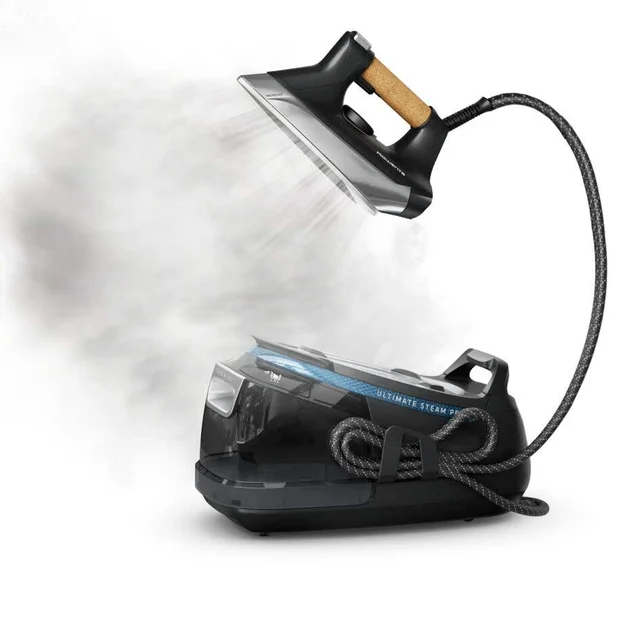
- Buy Rowenta Ultimate Steam Pro High-Pressure Steam Station (DG8668) A high-pressure boiler built to work through a full laundry basket faster than a standalone iron. Amazon
- Buy Panasonic 360 Freestyle Cordless Steam/Dry Iron (NI-QL2000R) The best pick if you want a nimble, no-cord-drag iron rather than a bulky station on your shelf.
- It depends Rowenta Master Steam Station (VR8332) A capable mid-tier station that only earns its keep if you iron enough to justify the bulk. Amazon
- Skip BLACK+DECKER Allure Digital Professional Steam Iron (D3060) A budget iron dressed up with a digital screen that adds cost without fixing the basics. Amazon
What actually matters
- Steam power and consistency - the biggest factor in how fast wrinkles vanish. A pressurized boiler in a station generally produces more steam than a standalone iron can on its own.
- Soleplate and glide - a plate that slides without snagging or sticking makes ironing faster and gentler on fabric; ceramic and quality stainless coatings both glide well.
- Water capacity and refills - bigger tanks mean fewer stops; a removable, refill-anytime tank is a real convenience on long sessions, and boiler tanks dwarf what an iron holds.
- Handling and footprint - weight, whether there's a cord to fight, and how much shelf and board space the unit demands. A cordless iron trades some steam power for freedom of movement.
- Reliability - leaking, spitting, and early failure are the complaints that separate a keeper from a regret; owner reports over time tell you more here than any spec.
- Anti-scale and maintenance - a descaling system matters most in hard-water areas, where mineral buildup is what clogs vents and shortens an appliance's life.
The specs, in plain English
Green flags vs red flags
Green flags
- Strong, consistent steam output - a pressurized boiler if you iron a lot, or a solid continuous rate for a standalone
- A large, removable water tank you can refill mid-session without waiting for the unit to cool
- A smooth soleplate (ceramic or quality stainless) that owners describe as gliding without snagging
- A built-in anti-scale or descaling system, especially if your water is hard
- A long track record of owner reports praising reliability rather than reporting early failures
Red flags
- Repeated owner complaints about water dripping or spitting onto fabric, even where the box promises anti-drip
- A digital display or 'professional' badge on a budget model that adds cost without improving how it irons
- Reports of uneven or inconsistent heating, or units failing within a year or two
- A tiny, non-removable tank that forces constant refills on anything but the smallest load
- A bulky two-piece station bought for a household that only presses a few shirts a week
Who's who: the brands
- Rowenta - A specialist in irons and steam stations, known for high-pressure boiler units and fast-gliding soleplates across mid-tier to flagship models.
- Panasonic - Known for well-regarded standalone irons, including cordless designs with dual-pointed ceramic soleplates for nimble everyday use.
- Philips - A broad range from budget steam irons to boiler-equipped 'PerfectCare' stations, with a focus on descaling and calc-management systems.
- BLACK+DECKER - A budget-focused household brand; its cheaper irons vary a lot in reliability, so owner reports matter more than the feature list here.
- T-fal / Tefal - A mainstream maker (Rowenta's sibling brand in many markets) offering value steam irons with anti-drip and self-clean features.
How to read a listing without getting fooled
Start by deciding which family you're looking at - a standalone iron or a boiler-equipped station - because that single choice matters more than any spec. On a station, look at steam pressure (bars) and tank size; on a standalone iron, look at continuous steam output and how easy the tank is to refill. Treat headline numbers as a rough guide, not gospel: a slightly higher gram-per-minute rating means little if the glide is poor or the unit spits water. Be skeptical of features that pad the price without improving the iron - a digital temperature screen, a 'professional' label, or a long list of steam modes are only worth paying for if the fundamentals (steam, glide, reliability) are already good. Finally, read past the marketing to aggregated owner reports over time; leaking, uneven heat, and early failure are the patterns that predict regret, and they rarely show up on the box.
How much should you spend?
Think in tiers rather than dollars. Budget standalone irons handle occasional light use, but the cheapest ones are where reliability complaints cluster, so a modest step up to a dependable basic iron is usually money well spent. The mid-range is the sweet spot for most households: a good standalone iron here glides well, holds heat, and lasts, and for everyday shirts it's all most people need. Steam stations sit above that, and their extra cost only pays off if your laundry volume justifies it - a boiler is a genuine upgrade for someone pressing linens and bedding weekly, and overkill for someone doing a few shirts. Spending more is worth it for steam power, tank size, and proven durability; it is not worth it for a digital display, a premium badge, or a spec sheet full of modes you'll never use. Match the tier to how much you actually iron, not to the shiniest model on the shelf.
Questions, answered
What's the difference between a steam iron and a steam station?
A standalone steam iron heats water inside the iron itself, so its steam output and tank are limited by the iron's size. A steam station has a separate boiler base connected by a hose; it makes far more pressurized steam and holds much more water, which lets it push moisture through thick fabrics and clear wrinkles faster. Stations cost more and take up more space, so they mainly pay off for people who iron a lot.
Do I actually need a steam station, or is a regular iron fine?
It depends entirely on your laundry volume and storage. If you iron a big basket of shirts, linens, or bedding every week, a station's high-pressure steam and large tank save real time and effort. If you press a handful of shirts a week, a good standalone iron does the job without the bulk, cost, and shelf space a two-piece boiler demands.
Is a cordless iron good enough, or should I get a corded one?
Cordless irons are genuinely convenient - no cord to fight and easy handling around collars and cuffs - but they cool as you use them and must be set back on the charging base to reheat, which interrupts longer sessions. For everyday shirts and small loads they're excellent; for marathon ironing, a corded iron or a station holds heat and steam more consistently.
Do I need distilled water in a steam iron or station?
Many modern irons and stations work with regular tap water, but check your model's manual. In very hard-water areas, mixing in some distilled water and running the appliance's anti-scale or descaling cycle helps prevent the mineral buildup that clogs steam vents or causes spitting. Always follow your specific model's instructions, since some designs require distilled water.
How is a steam iron different from a garment steamer?
Steam irons and stations press fabric flat against a heated soleplate, which is what gives you crisp shirts, sharp creases, and stiff collars. A garment steamer relaxes wrinkles with steam alone while clothes hang, which is gentler and quicker for delicate or hard-to-iron items but won't produce a pressed, crisp finish. Many people own both for different jobs.
Why do some cheap irons leak or spit water?
Usually it's a mix of design and mineral scale. Water dripping through the soleplate at lower temperatures points to weak anti-drip design, while spitting over time often comes from scale clogging the steam vents. Keeping up with descaling helps, but if aggregated owner reports for a specific model repeatedly mention leaking, that's a design problem no maintenance will fully fix.
Or jump to the head-to-head: Rowenta Ultimate Steam Pro High-Pressure Steam Station (DG8668) vs Panasonic 360 Freestyle Cordless Steam/Dry Iron (NI-QL2000R).