Explained
Steam Mops, Explained
After reading this you will know which floors a steam mop is safe for, what the marketing terms actually mean, and which specs decide whether one cleans well or just spreads water around.
In this guide
A steam mop heats tap water into steam and pushes it through a cloth pad to loosen grime and sanitize sealed hard floors without chemicals. That basic promise is nearly identical across every model, which is exactly what trips up first-time buyers: the meaningful differences are hidden in how much you can control the steam, whether the mop can scrub or only dampen, and how you deal with a dirty pad. This guide decodes those differences so you can tell a genuinely useful mop from a well-marketed one.
The 30-second version
- Steam is for sealed floors only. Ceramic tile, stone, and sealed hardwood are fair game; unsealed wood, waxed surfaces, laminate seams, and many vinyl planks can warp, dull, or lift under heat and moisture.
- Steam control is the feature that matters most. Being able to dial output up for grimy tile and down for delicate wood protects finishes and matches the mop to the mess, rather than blasting one setting at everything.
- Scrubbing and wetting are not the same thing. A mop with a flip-down scrubber lifts dried-on grime, while a pad-only mop mostly spreads moisture and leaves baked-on spots for hand work.
- Pad handling decides how unpleasant the job is. Hands-free attach and release keeps you from touching a pad soaked in whatever you just cleaned, which is a real comfort in kitchens and bathrooms.
- Reach and drying time are quiet dealbreakers. A short cord and small tank turn one floor into several trips, and the wettest mops leave streaky, slow-drying, briefly slippery floors.
The products this guide is about
Our verdict on each, with the full reasoning on the companion review.
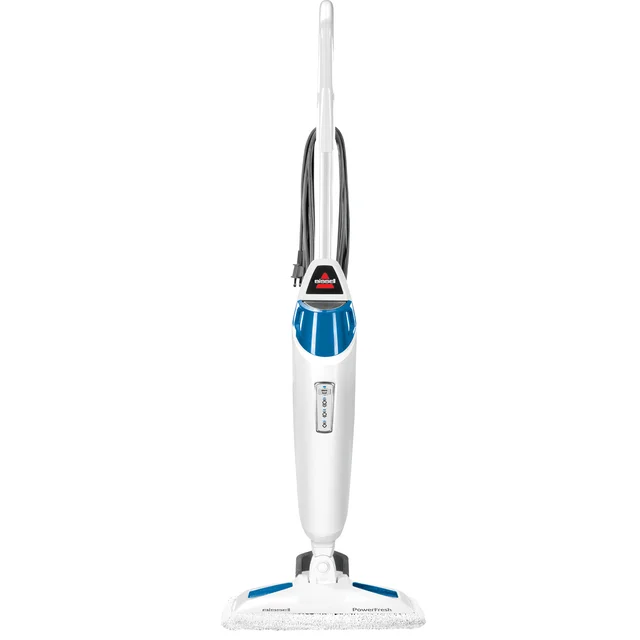
- Buy Bissell PowerFresh Scrubbing & Sanitizing Steam Mop 1940 The most complete all-rounder here, pairing digital steam levels with a flip-down scrubber, held back by a bulkier body and occasional back-vent spitting. Amazon
- Buy Shark Genius Steam Pocket Mop System S6002 A genuinely better pocket mop with hands-free pad release and a steam-blaster trigger, though its pads leave floors damper than the scrubbing Bissell.
- It depends BLACK+DECKER Steam Mop with Smart Select (BDH1720SM) A light, low-cost mop whose Smart Select dial sets steam by floor type, but the small tank and short cord suit small spaces only.
- Skip Shark Steam Pocket Mop S3501 Still sold, but a dated single-steam design that over-wets and offers no control, when newer mops cost little more and do more. Amazon
What actually matters
- Floor compatibility - steam is only safe on sealed hard surfaces, so confirm your floors are rated for it before anything else; the wrong surface can be permanently damaged.
- Steam control - variable or floor-type-matched settings let you protect delicate finishes and hit tough messes harder, instead of living with a single fixed output.
- Scrubbing ability - a built-in scrubber or scrub mode separates a mop that removes dried grime and grout buildup from one that merely wipes.
- Pad handling - how you attach, remove, and clean pads (elastic band, hook-and-loop, pocket wrap, or touch-free release) affects both hygiene and daily hassle.
- Reach: cord length and tank size - these determine whether a large or open-plan floor is a single job or a stop-start chore of unplugging and refilling.
- Drying time - mops that over-wet leave floors damp, streaky, and slick for a few minutes; controlled steam dries faster and cleaner.
- Weight and maneuverability - a heavy body scrubs harder but tires your arm, while a light swivel head reaches corners and edges more easily.
The specs, in plain English
Green flags vs red flags
Green flags
- Two or three steam levels, or a floor-type dial, so you can match output to the surface
- A flip-down scrubber or dedicated scrub mode for grout and dried-on messes
- Washable, reusable pads with a tidy or touch-free removal system
- A long cord and a reasonably sized tank so you can cover a room without constant stops
- Clear maker guidance on which floor types the mop is rated for
- Fast heat-up and a design that dries floors quickly rather than soaking them
Red flags
- A single fixed steam level with no control, which usually over-wets floors
- No scrubbing option if you plan to tackle grout or dried grime
- Fiddly wrap-and-clip pads you must handle by hand while soiled
- A very short cord or tiny tank that forces frequent unplugging and refilling
- Marketing that claims safety on all floors, including unsealed wood or laminate, which is a warning sign
- A dated design still on shelves when newer models add control for only a little more
Who's who: the brands
- Bissell - Cleaning-focused brand known for versatile corded mops with digital steam levels and built-in scrubbers for whole-home use.
- Shark - Popular for pocket-style mops, with higher-end models adding hands-free pad handling and steam-blaster triggers, and older budget models still on sale.
- BLACK+DECKER - Value-oriented maker offering light, simple mops with floor-type dials aimed at apartments and small spaces.
- Hoover - Long-standing floor-care brand with a range of steam mops spanning basic to multi-surface models.
How to read a listing without getting fooled
When you read a steam mop listing, look past the shared promise that it sanitizes with water alone, because nearly every model says that. Instead, hunt for three concrete things. First, steam control: does it offer variable levels, a floor-type dial, or an on-demand trigger, or just one continuous setting? A listing that never mentions levels usually means a single fixed output. Second, scrubbing: the words 'scrubber,' 'scrub mode,' or 'flip-down' signal real grime-lifting ability; their absence means pad-only wiping. Third, the practical numbers, cord length and tank size, which tell you whether a big floor is one job or several. Treat 'sanitizes' and 'kills germs' as table stakes rather than differentiators, and be wary of any listing that claims the mop is safe on unsealed wood, laminate, or unspecified vinyl. Finally, check what pads are included and how they attach, since that decides both hygiene and daily hassle.
How much should you spend?
Spend according to the size and type of floors you clean, not on feature counts you will never use. The cheapest mops typically give you a single continuous steam setting and pad-only cleaning, which is fine for a small apartment with mostly sealed floors and light upkeep. The value sweet spot sits with mid-range corded mops that add variable steam levels and, ideally, a scrubber, because that combination handles the widest range of surfaces and messes and is where most buyers get the most for their money. Stepping up further mainly buys convenience features such as hands-free pad handling, an on-demand trigger, and larger tanks, which are worth it if you mop often, dislike touching dirty pads, or cover large floors. Paying more for a dated design with no steam control is the one clear waste, since newer mops add real control for a modest step up. In short, match your spend to floor type and cleaning frequency, and prioritize control and scrubbing over extras.
Questions, answered
What floors are steam mops safe for?
Sealed hard floors only: ceramic tile, natural stone, and sealed hardwood. Keep them off unsealed or waxed wood, laminate with open seams, and any vinyl the maker does not specifically clear for steam, because heat and moisture can warp, dull, or lift those surfaces. When in doubt, check the floor manufacturer's guidance before the mop's.
Do steam mops actually sanitize, or is that marketing?
They genuinely can, under the right conditions. Hot steam eliminates the large majority of common household bacteria on hard surfaces using water alone, no chemicals. The catch is dwell time: the heat has to sit on a spot long enough, so move slowly over high-touch areas and do not expect the same result from a quick pass.
Can I use tap water, or do I need distilled?
Most makers allow tap water, but recommend distilled or demineralized water in hard-water areas. Minerals build up inside the boiler and can clog steam ports over time, weakening output. If your water is hard, distilled water keeps steam consistent and extends the mop's life.
Is a steam mop better than a regular mop?
For routine cleaning of sealed floors, many owners prefer a steam mop because it sanitizes with heat and skips a bucket of dirty water. A traditional mop still handles large liquid spills and unsealed floors better. Plenty of households keep both, using steam for upkeep and a cloth mop for big messes.
Why do some steam mops leave floors wet and slippery?
Usually because they use continuous steam with no control, which puts down more moisture than the pad can absorb. Mops with variable levels or an on-demand trigger let you use less steam, so floors dry faster and streak less. If quick drying matters to you, prioritize steam control.
How do I keep pads and the mop clean over time?
Wash microfiber pads after each use per the maker's instructions, and let them dry fully to avoid odor. Empty the tank between sessions, and in hard-water areas use distilled water to limit mineral buildup. Models with washable, easily removed pads make this routine far less of a chore.
Or jump to the head-to-head: Bissell PowerFresh Scrubbing & Sanitizing Steam Mop 1940 vs Shark Genius Steam Pocket Mop System S6002.