Explained
String Trimmers, Explained
After reading this you'll know exactly which specs on a string trimmer listing actually matter for your lawn - and which are marketing noise.
In this guide
Buying a cordless string trimmer used to be simple; now every listing throws voltage numbers, amp-hours, and line-feed acronyms at you. The good news is that cordless has gotten good enough to replace gas for most homeowners. The trick is matching a handful of specs - power, cutting width, line feed, and the battery family you're buying into - to the size and thickness of your grass.
The 30-second version
- Voltage is a rough power proxy, not a promise. 40V and 56V brushless trimmers handle real lawns and weeds; 20V tools are for tiny patches and touch-ups only.
- You're buying a battery platform, not just a tool. Packs don't cross brands, so the batteries you already own should heavily influence which trimmer you pick.
- Line feed decides your day-to-day annoyance level. Automatic and bump-feed heads both work, but they trade convenience against price and simplicity in ways worth understanding.
- Cutting swath is real ground speed. A 15-inch cut clears a full lawn noticeably faster than a 12-inch one, which matters more than most buyers expect.
- Weigh the tool with the battery on. A big amp-hour pack adds runtime but also weight, and that changes how the trimmer feels ten minutes into the job.
The products this guide is about
Our verdict on each, with the full reasoning on the companion review.
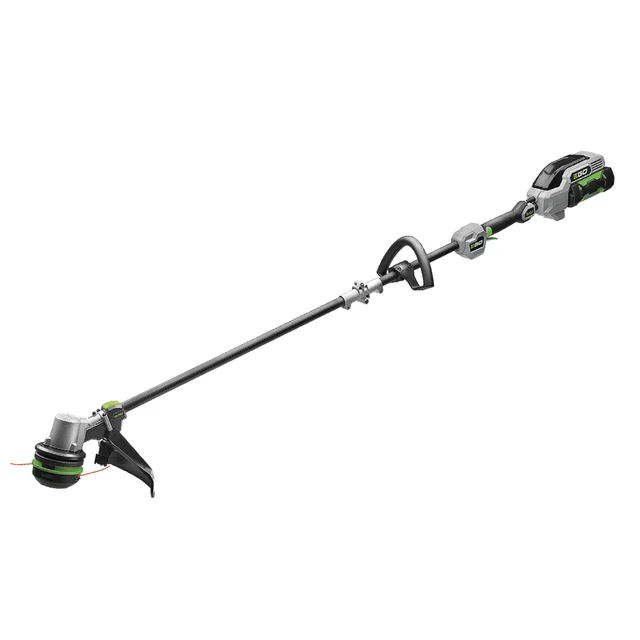
- Buy EGO POWER+ 15" String Trimmer with POWERLOAD (ST1521S) Gas-like 56V power with a push-button line feed that ends spool-winding misery.
- Buy RYOBI 40V 15" Attachment Capable String Trimmer Kit (RY40ST01K) The value pick: one attachment-capable powerhead that grows into a whole yard toolkit.
- It depends Makita 18V X2 (36V) LXT Brushless String Trimmer (XRU15PT) A beautifully balanced trimmer that only makes financial sense if you already live in Makita LXT. Amazon
- Skip BLACK+DECKER 20V MAX EASYFEED 12" String Trimmer/Edger (LSTE525) Light and cheap, but too under-motored and short-running for anyone with a real lawn.
What actually matters
- Power relative to your grass - thin lawn edges need little; thick, wet, or weedy growth needs the torque of a 40V or 56V brushless motor. Under-powering is the most common regret.
- Cutting swath (width) - the diameter the spinning line covers. Wider clears ground faster on open lawns; narrower is more maneuverable around beds and fences.
- Line-feed system - how the tool advances fresh cutting line as it wears. This is the single biggest driver of everyday hassle, so decide what you can live with before you buy.
- Battery platform - the voltage family (20V, 40V, 56V, or 18V-based) that the pack and charger belong to. Committing to one lets future tools share batteries.
- Runtime and the included pack - amp-hours (Ah) determine how long you cut per charge. Check what battery actually ships in the box, not just the maximum the tool supports.
- Weight and balance - a nose-heavy or two-battery tool wears on your arms; a well-balanced one stays comfortable through a whole yard.
- Motor type - brushless motors run cooler, last longer, and squeeze more work from a charge than older brushed motors at the same voltage.
The specs, in plain English
Green flags vs red flags
Green flags
- A brushless motor at 40V or higher if you have a real lawn with any weeds
- A cutting swath of 15 inches or so for open yards, matched to a manageable weight
- A battery family you already own, or one with a broad lineup of other tools you'd want
- A generously sized battery (higher Ah) actually included in the kit, not sold separately
- A clearly explained line-feed system - bump or automatic - with easy-to-find replacement spools
- Owner reports praising balance and low vibration over a full session, not just short tests
Red flags
- A 20V tool being pitched for a full lawn - it will bog down in thick or wet grass
- A tiny included battery (around 1.5Ah) that turns an average yard into a swap-and-recharge chore
- A two-battery design when you don't already own that brand's packs, doubling your entry cost
- Repeated owner complaints about line-feed jams or a head that's hard to re-spool
- Vague listings that tout voltage but hide the swath, motor type, or included amp-hours
- Bargain trimmers on an orphan battery platform with few other tools or spare packs
Who's who: the brands
- EGO - Premium 56V cordless outdoor line known for gas-like power and the fuss-free POWERLOAD automatic line-feed head.
- RYOBI - Value-focused brand with a huge, affordable 40V lineup and attachment-capable tools that grow into a whole yard kit.
- Makita - Pro-grade 18V LXT ecosystem prized for build quality and balance; many trimmers run two 18V packs for 36V power.
- BLACK+DECKER - Light-duty 20V MAX brand aimed at small yards and quick touch-ups rather than heavy weekly mowing.
- DEWALT - Contractor-oriented 20V MAX and 60V FLEXVOLT tools, appealing if you already own the batteries from job-site power tools.
How to read a listing without getting fooled
Start with the two numbers listings love to bury: cutting swath and included amp-hours. A big voltage figure means little if the tool ships with a small battery or a narrow cut. Confirm the motor is brushless, then read what battery actually comes in the box versus the maximum the tool accepts - 'up to' language often means the good pack is sold separately. Translate the line-feed marketing name back into 'bump' or 'automatic,' and check owner reviews specifically for feeding and re-spooling gripes, since that's where cheap tools fall apart. Finally, ignore the bare-tool price if you don't own the battery: the real cost is tool plus pack plus charger.
How much should you spend?
Think in tiers rather than dollars. The cheapest 20V trimmers are genuinely fine for a tiny urban patch or occasional edging, but most people outgrow them fast, so spending a little more on a 40V-class tool usually pays off in fewer battery swaps and years of extra use. The sweet spot for a typical suburban lawn is a mid-range brushless model with a 15-inch swath and a decent included battery. Stepping up to premium buys refinements - automatic line feed, more torque in reserve, better balance - that are worth it if you trim often or fight thick weeds, and skippable if your grass is thin and your yard is small. The biggest hidden cost is batteries: buying into a platform you already own, or one whose packs power other tools, quietly saves the most money over time. Paying premium for a two-battery tool you have to fully kit out from scratch is where value drains fastest.
Questions, answered
Is a cordless string trimmer really powerful enough to replace gas?
For most homeowners, yes. Owner reports suggest that 40V and 56V brushless trimmers handle typical lawns and moderate weeds without complaint. If you're clearing heavy brush or maintaining large acreage, a gas trimmer still has an edge - but for standard suburban lots, battery power is now more than enough.
What's the difference between bump-feed and automatic line feed?
With a bump-feed head, you tap the spinning head on the ground to release more line as it wears. Automatic systems advance or wind fresh line for you at the push of a button, so you never open the head to re-spool by hand. Automatic is more convenient, but follow the maker's loading steps for the line length and method.
How much cutting swath and line thickness do I actually need?
For a full lawn, a 15-inch swath clears ground meaningfully faster than a 12-inch one. For line, the 0.080–0.095 inch range is the homeowner sweet spot - thick enough to power through weeds without snapping constantly. Save the narrow 12-inch tools and thinnest line for tiny yards and light edging.
Do I have to stick with one brand of battery?
It pays to. Batteries don't cross between brands, so if you already own a platform like Makita 18V LXT, RYOBI 40V, or EGO 56V, buying the matching bare tool saves real money. If you're starting fresh, factor the battery and charger into the total cost - that's a big reason two-battery tools only make sense for people already in that ecosystem.
Why do reviewers steer people away from cheap 20V trimmers for real lawns?
They're not bad tools, just mismatched to bigger yards. Owners report the 20V motor bogging down in thick or wet grass, and the small swath plus a short-runtime battery turns an ordinary lawn into a stop-and-swap chore. For a tiny patch they're fine; for anything more, a 40V tool is money better spent.
Or jump to the head-to-head: EGO POWER+ 15" String Trimmer with POWERLOAD (ST1521S) vs RYOBI 40V 15" Attachment Capable String Trimmer Kit (RY40ST01K).