Explained
Chainsaws, Explained
After reading this you'll know how to match a chainsaw to the wood you actually cut, decode a spec sheet, and shop safely without overpaying for power you'll never use.
In this guide
A chainsaw is one of the few power tools that can seriously hurt you, so the buying decision is as much about safety and fit as it is about cutting power. Most first-time buyers get tripped up in two ways: they assume a longer bar or a bigger engine is always better, and they underestimate how much the battery platform (or fuel upkeep) shapes what the saw costs to own. This guide walks you through the jargon so you can pick the right size, the right power source, and the safety features that matter.
The 30-second version
- Match the saw to your wood, not the spec sheet. the diameter of what you cut most often decides your bar length and power far more than a headline voltage or engine number.
- For most homeowners, battery has quietly won. a modern high-voltage cordless saw cuts light-to-moderate firewood at close to small-gas speed with none of the fuel mixing, pull-starting, or engine upkeep.
- The battery platform is the real price tag. the pack and charger are the expensive part, so buying into a system you already own usually saves more than any single feature.
- Safety features are non-negotiable, not upgrades. a chain brake, low-kickback chain, and proper protective gear are what keep a routine cut from becoming an emergency-room visit.
- Longer bars are not automatically better. an oversized bar is heavier, harder to control, and exposes more of the dangerous kickback zone than a beginner needs.
The products this guide is about
Our verdict on each, with the full reasoning on the companion review.
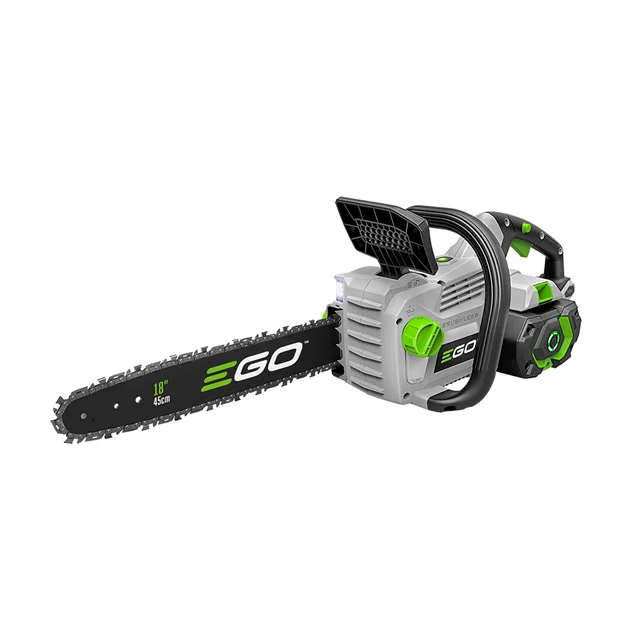
- Buy EGO Power+ 18" Cordless Chain Saw (CS1804) The best all-round homeowner chainsaw: gas-like cutting from a single 56V battery, an 18-inch bar, and genuinely tool-free tensioning.
- Buy Milwaukee M18 FUEL 16" Chainsaw (2727-21HD) A pro-grade 16-inch battery saw that cuts hard and fast, and a no-brainer if you already live on the M18 platform.
- It depends Makita 36V (18V X2) LXT Brushless 16" Chain Saw (XCU04PT) A refined, lighter 16-inch saw that's a great value if you already own Makita 18V LXT batteries, and a pricier proposition if you don't.
- Skip STIHL MS 170 Gas Chainsaw A dependable entry gas saw, but for most homeowners in 2026 the fuel-mixing, pull-starting, and maintenance no longer pay off versus battery.
What actually matters
- Power source (battery, gas, or corded) — battery is the low-hassle default for occasional-to-moderate cutting near a charge; gas still wins for hours of continuous work far from power; corded suits light yard work close to an outlet but ties you to an extension cord.
- Bar length matched to your wood — the bar should be a couple of inches longer than the diameter of what you cut most; a 14-16 inch bar covers most homeowner tasks, and stepping to 18 inches only pays off for larger logs or small felling.
- Cutting power — high-voltage battery platforms (roughly 40V and up) or a small gas engine avoid the bogging-down that makes an underpowered saw slow and unsafe in hardwood.
- Safety systems — an inertia or electric chain brake, a front hand guard, and a low-kickback chain are the features that protect you most and should be present on any saw you consider.
- Ease of living with it — tool-free chain tensioning, an automatic oiler, and a well-balanced, not-too-heavy body determine whether the saw stays properly maintained and comfortable to use.
- Battery ecosystem — if you already own cordless tools, staying on the same battery family (voltage and pack) is often the single biggest cost saver.
- Maintenance appetite — gas rewards you with runtime but asks for fuel mixing, spark plugs, and off-season upkeep; battery and corded saws mostly ask you to keep the chain sharp and oiled.
The specs, in plain English
Green flags vs red flags
Green flags
- An inertia-activated or electric chain brake plus a front hand guard listed as standard equipment.
- A low-kickback chain and a bar length that matches the wood you actually cut.
- Tool-free chain tensioning and an automatic oiler, ideally with a visible oil-level window.
- On battery saws, a brushless motor and a battery that fits a platform you already own or plan to grow into.
- The saw ships as a complete kit (battery and charger, or for gas everything you need to start) and includes protective-gear guidance.
- Reasonable weight and good balance for the bar length, so it isn't tiring or nose-heavy with the battery fitted.
Red flags
- No chain brake, or a listing that is vague about safety features.
- A very long bar paired with a weak motor or small engine, a mismatch that bogs down and handles poorly.
- A low headline voltage or engine size marketed for heavy cutting it can't sustain.
- A proprietary battery with little else in the ecosystem, or no spare packs available, leaving you stuck when the pack ages.
- No automatic oiler, or a manual-only oiling system on anything but the smallest occasional-use saw.
- A rock-bottom price with no mention of a chain brake, oiler, or tensioning system; the savings are coming out of the safety and usability budget.
Who's who: the brands
- EGO - Cordless outdoor-power specialist known for high-voltage 56V tools that push battery saws close to gas performance for homeowners.
- Milwaukee - Pro-focused cordless brand whose M18 platform shares one battery across a huge tool lineup, favored by people already invested in the system.
- Makita - Refined cordless tools known for light weight and balance; its saws often run two 18V LXT packs and share power with a very wide range.
- STIHL - Long-established gas-saw maker with a strong dealer network, dependable engines, and well-known safety features like its Quickstop chain brake.
- Husqvarna - Another heritage gas-and-cordless brand widely used from homeowner yard work up to professional forestry.
- DeWalt - Cordless-tool brand whose saws appeal mainly to people already on its battery platform.
How to read a listing without getting fooled
Start at the two numbers that decide fit: bar length and either voltage (battery) or engine displacement in cc (gas). Match the bar to the diameter of the wood you cut most, then check that the power behind it is enough to keep the chain moving under load rather than the biggest number on the page. Next, scan the safety line: you want an explicit chain brake, a front hand guard, and a low-kickback chain called out by name; if the listing is coy about safety, treat that as a warning. Read runtime and battery claims as best-case figures measured in easy wood, and note that a big high-output pack adds cost and weight. Confirm the saw has an automatic oiler and tool-free tensioning, and check the total weight with the battery fitted, not the bare powerhead, since that's what you'll actually hold. Finally, look at the ecosystem: a saw that shares batteries with tools you own is quietly cheaper than its sticker suggests, while a lone proprietary pack can become a dead end.
How much should you spend?
Spend based on how much wood you cut and which batteries you already own, not on chasing the most power. For occasional firewood, storm cleanup, and the rare small tree, a mid-tier high-voltage cordless saw hits the value sweet spot: enough cutting power for the job, modern safety features, and low day-to-day cost with no fuel to buy. Stepping up to a premium saw is worth it mainly when you cut regularly, want the longest bar, or are extending a battery platform you already trust; paying that premium to cut twice a year is money left in the driveway. The biggest hidden cost is almost always the battery and charger, so if you already own compatible packs a 'bare tool' can be the smartest buy, whereas starting a brand-new platform from scratch pushes the true cost up. Gas saws often look cheapest up front, but factor in fuel, mixing oil, and ongoing engine upkeep before deciding they're actually the frugal choice, and never economize by skipping the protective gear that belongs in the budget alongside the saw.
Questions, answered
Is a battery chainsaw powerful enough, or do I still need gas?
For the large majority of homeowner cutting, a high-voltage battery saw is plenty. Independent testing and owner reports agree that modern cordless saws cut light-to-moderate firewood and hardwood at speeds close to a comparable small gas saw. Gas still earns its place for all-day, back-to-back cutting far from any outlet, because you refuel in seconds instead of waiting on a recharge. If you cut occasionally and stay within reach of a charger, battery is the easier, cleaner pick.
What bar length should I get?
Match the bar to your wood: a good rule is a bar a couple of inches longer than the diameter of what you cut most. A 14-to-16-inch bar handles most limbing, pruning, and firewood up to roughly a foot thick, and it's lighter and easier to control. Move up to 18 inches only if you regularly cut larger logs or drop small trees. Longer is not automatically better, since a big bar is heavier, harder to steer, and exposes more of the kickback-prone tip; beginners are usually safer starting shorter.
How do I use a chainsaw safely as a beginner? (Please read this one.)
Treat the saw with respect and it's a manageable tool; get casual and it's dangerous. Always wear the basics: cut-resistant chaps, gloves, sturdy boots, and eye and ear protection. Make sure your saw has a working chain brake and a low-kickback chain, and understand the kickback zone at the tip of the bar, keeping it clear of unexpected contact. Cut with a firm two-handed grip, never above shoulder height, and never while on a ladder or overreaching. If you're felling anything but the smallest tree, or you feel out of your depth, hire a professional; this guide is general information, not a substitute for hands-on safety training.
Does tool-free chain tensioning really matter?
More than most buyers expect. A chainsaw chain stretches as it heats up and needs re-tensioning during use. A tool-free knob or lever lets you correct it by hand in seconds, which means you'll actually do it, whereas a system that needs a screwdriver and wrench tends to get neglected. A properly tensioned chain cuts cleaner and is safer, so easier adjustment pays off every time you use the saw.
How much maintenance does a chainsaw need?
Every chainsaw needs the chain kept sharp and correctly tensioned, the bar and sprocket cleaned of sawdust, and the oil reservoir topped up with bar oil so the auto-oiler can do its job. A dull chain is slower and more dangerous, so learn to sharpen it or have it done. Battery and corded saws stop there. Gas saws add fuel mixing, spark-plug and air-filter care, and draining or stabilizing fuel for storage, which is the main reason many homeowners now prefer cordless.
Or jump to the head-to-head: EGO Power+ 18" Cordless Chain Saw (CS1804) vs Milwaukee M18 FUEL 16" Chainsaw (2727-21HD).