Explained
Electric Smokers, Explained
After reading, you'll understand how an electric smoker actually works and which specs separate a capable cabinet from a box that can't hold a barbecue temperature.
In this guide
An electric smoker swaps the fire-tending of charcoal and the hopper of a pellet grill for a plug, a thermostat, and a tray of wood, which makes it the lowest-effort way to get real smoked flavor. But the category runs from genuinely capable insulated cabinets to lightweight boxes that can't reach the temperatures barbecue needs. The thing most first-time buyers miss is that features like Wi-Fi and glass doors matter far less than boring fundamentals: whether the heat is truly adjustable, how wood is fed, and how well the box holds temperature in the cold.
The 30-second version
- Convenience is the whole point. you trade some of the deep smoke flavor of charcoal or pellet for set-and-forget consistency and no fire to babysit.
- Adjustable temperature is non-negotiable. a smoker that can't climb past the barbecue range can only do fish and jerky, no matter how nice it looks.
- How wood is fed decides your smoke. side loaders and automatic feeders let you add wood without opening the door and dumping heat, which is what keeps smoke steady.
- Insulation is what makes cold-weather cooking work. double-wall or insulated cabinets hold and recover temperature far better than single-wall or thin aluminum boxes.
- Wi-Fi is a nice-to-have, not a reason to buy. treat an app as a bonus and never accept worse temperature stability just to get phone monitoring.
The products this guide is about
Our verdict on each, with the full reasoning on the companion review.
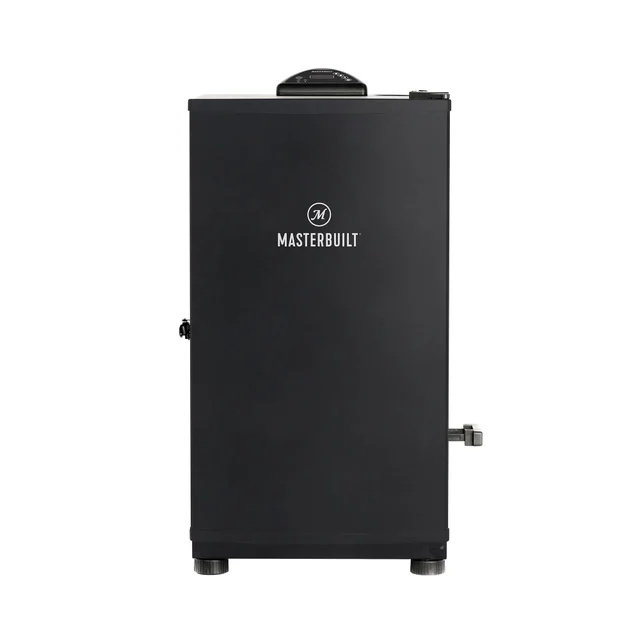
- Buy Masterbuilt 40-Inch Digital Electric Smoker The workhorse: the most rack space and the least fuss for the money, with a side loader so you never open the door to add wood.
- Buy Bradley Original 4-Rack Electric Smoker An automatic wood-puck feeder makes clean, consistent smoke for hours and cold-smokes better than anything else in this group.
- It depends Pit Boss 30-Inch Digital Vertical Smoker with Wi-Fi (PBV30DS) App control and a viewing window at a friendly price, if you can live with some temperature swing and occasional fiddling.
- Skip Smokehouse Products Smokehouse Big Chief Front Load Electric Smoker A cult favorite for salmon and jerky, but with no temperature control it can't cook real barbecue.
What actually matters
- Real temperature control — insist on an adjustable thermostat that can reach and hold barbecue temperatures; fixed-heat boxes physically cannot cook ribs, brisket, or safe poultry.
- Wood-feed system — a side chip loader or an automatic feeder lets you add smoke without opening the door, so you don't lose heat and stall the cook every time you refuel.
- Insulation and cold-weather recovery — double-wall or insulated cabinets keep a steady temperature and bounce back faster after the door opens, which matters most in winter.
- Usable capacity and rack layout — measure what you actually cook; racks that are too shallow or too close together won't fit large cuts like pork butts or full rib racks.
- Control type (digital vs analog) — a clear digital thermostat with a meat probe is easier and more repeatable than an analog dial, though a good analog smoker can still cook beautifully.
- Smoke quality — clean, controllable smoke tastes better than the bitter flavor you get from smoldering a big pile of chips, so how the wood burns matters as much as how much you add.
- Cleanup and durability — removable trays, a grease pan, and washable racks save time after every cook, and a good door gasket keeps smoke and heat where they belong.
The specs, in plain English
Green flags vs red flags
Green flags
- An adjustable thermostat that clearly reaches and holds the barbecue range, not just a single low setting
- A side chip loader or automatic feeder so you can add wood without opening the door
- A double-wall or insulated cabinet, especially if you'll cook in cold weather
- A built-in meat probe and a straightforward, readable control panel
- Removable trays, a grease pan, and racks that pull out for washing
- A door gasket or seal that's designed to be adjusted or replaced rather than glued in for good
Red flags
- No temperature control at all, or a fixed heat setting you can't change
- A stated top temperature too low to cook poultry safely or hold a barbecue temperature
- Thin, lightweight aluminum construction that sheds heat outdoors and in the cold
- Owner reports of wide temperature swings or an element and controller that run inconsistently
- An app marketed as the headline feature while basic temperature stability gets little mention
- A poor or leaky door seal that lets smoke and heat escape and wastes your wood
Who's who: the brands
- Masterbuilt - One of the most popular names in digital electric smokers, known for roomy cabinets and side wood-chip loaders at mid-range prices.
- Bradley - Known for automatic bisquette feeders and separate smoke generators that make clean, steady smoke and genuinely cold-smoke fish and cheese.
- Pit Boss - Value-focused smokers and grills, often with Wi-Fi apps, glass viewing doors, and double-wall cabinets at friendly prices.
- Smokehouse Products - Maker of simple, lightweight cult-favorite boxes (like the Big Chief) built for cold-style smoked salmon and jerky rather than full barbecue.
- Cuisinart - A mainstream kitchen brand that also offers compact vertical electric smokers aimed at beginners and smaller spaces.
How to read a listing without getting fooled
Start with the temperature spec and treat everything else as secondary. Find the maximum temperature and confirm it comfortably clears the barbecue range; if a listing only advertises how simple or cheap it is and stays vague about heat, assume it's a low-fixed-heat box for fish and jerky. Next, look at how wood is fed: 'side loader,' 'chip loader,' or 'automatic feeder' means you can add smoke without opening the door, while 'chip tray' or 'chip pan' means you'll be opening it and losing heat. Read the construction line for 'double-wall' or 'insulated' versus 'single-wall' or 'aluminum,' since that predicts cold-weather performance. Take glossy features like Wi-Fi and glass doors as bonuses, and weigh them against what owners say over time — patterns of complaints about temperature swings, flaky apps, or leaky door seals tell you more than the feature list. Finally, check whether the wood is a standard loose chip you can buy anywhere or a proprietary puck that locks you into one supplier.
How much should you spend?
Spend where it changes the cooking, not where it changes the brochure. The cheapest boxes usually cut the one thing you can't live without — real, adjustable temperature — so the value sweet spot sits at a mid-range digital cabinet that gives you a dependable thermostat, a meat probe, decent capacity, and a no-door-opening way to add wood. Stepping up to premium is worth it mainly for specific reasons: better insulation for cold-weather cooking, an automatic feeder for hours of hands-off smoke, or a true cold-smoking setup for fish and cheese. It's generally not worth paying a premium just for Wi-Fi or a viewing window if it means accepting looser temperature control. And remember the running costs: proprietary wood pucks are an ongoing expense that standard chips avoid, so a smoker that's cheaper up front isn't always cheaper to live with.
Questions, answered
Are electric smokers as good as charcoal or pellet smokers?
For convenience, yes; for pure flavor depth, it depends. An electric element and a tray of wood make cleaner, milder smoke than a charcoal fire and skip the fire-tending entirely, so they're the easiest way to get real smoked flavor. Purists still prefer the deeper smoke ring and heavier bark from charcoal or a pellet grill, but electric wins decisively on set-and-forget ease and steady temperatures.
Do electric smokers work in cold weather?
Some do much better than others, and it comes down to insulation. Single-wall cabinets lose heat when it's near or below freezing and are slow to recover, while double-wall or insulated designs hold temperature far better. Thin aluminum boxes struggle the most. If you plan to smoke in winter, prioritize an insulated body and consider an insulation blanket made for your model.
What's the difference between wood chips, a chip loader, and bisquettes?
Chips are loose wood you add to a tray. A side loader lets you top up those chips without opening the door and dumping heat. Bisquettes are compressed wood pucks that an automatic feeder drops on a timer, so smoke stays steady for hours with no attention — the tradeoff being that they're usually proprietary and cost more over time than plain chips.
Can I use an electric smoker indoors?
No. Electric smokers still produce real smoke and combustion byproducts, so they're built for outdoor use only, like a covered patio with clearance from walls and overhangs — never inside a house, garage, or enclosed porch. Follow the manufacturer's clearance and ventilation guidance, and keep it away from anything flammable.
How much cleanup and maintenance do they need?
Plan on emptying the wood tray and the grease or water pan after each cook and wiping the interior periodically; racks pull out for washing. The heating element itself is low-maintenance, but check the door gasket occasionally, since a leaky seal wastes smoke and heat. Keeping trays and the interior dry between uses helps prevent rust, and insulated cabinets with removable parts make the whole job faster.
Which electric smoker should a first-timer buy?
For most beginners, the safest choice is a mid-range digital cabinet with generous capacity, a simple control panel, a built-in meat probe, and a side loader so early mistakes don't cost you a face full of heat loss. Step up to a bisquette-feeder or cold-smoking setup only if smoked fish and cheese are specifically on your menu, and avoid no-thermostat boxes entirely if you want to cook ribs or brisket.
Or jump to the head-to-head: Masterbuilt 40-Inch Digital Electric Smoker vs Bradley Original 4-Rack Electric Smoker.