Explained
Gas Grills, Explained
After reading this you'll know why even heat and build quality matter more than BTUs or burner counts, and how to read a grill listing without getting fooled.
In this guide
A gas grill is a multi-year purchase, but the numbers printed on the box are almost useless for telling the good ones apart. Shoppers get drawn to five burners and a huge total BTU rating, then discover in the backyard that the grill cooks unevenly and rusts within a season. This guide decodes what those specs actually mean so you can judge a grill on how it cooks and how long it lasts.
The 30-second version
- Even heat beats big power numbers. A well-designed grill spreads heat evenly across the grate, so a lower-BTU model can out-cook a cheaper one claiming far more power.
- Burner count is about size and flexibility, not quality. Three good burners feed most families with room for two-zone cooking; more burners only help if you regularly cook for crowds.
- Build quality is what separates a two-season grill from a ten-year one. Steel thickness and grate coating quality decide whether rust and burn-through kill your grill early.
- Propane is the default, natural gas is the commitment. Propane gives you portability and no install; natural gas means cheaper fuel and no refills but requires a gas line to your patio.
- The spec sheet flatters cheap grills. A dazzling list of burners and BTUs is often the best thing about a budget grill, and owners pay for it later in uneven heat and early rust.
The products this guide is about
Our verdict on each, with the full reasoning on the companion review.
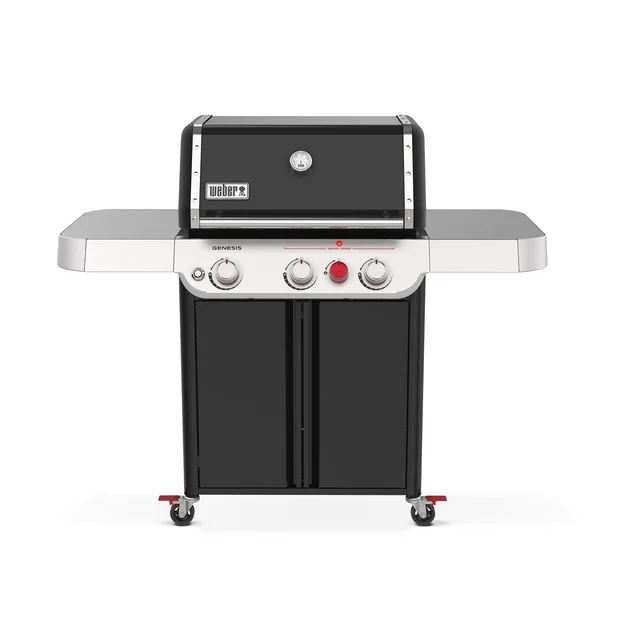
- Buy Weber Genesis E-325 (Liquid Propane) The grill that does everything well and is built to still be doing it in ten years.
- Buy Weber Spirit E-325 (2025, Liquid Propane) Most of the Weber magic - even heat, real searing, honest build - at a mid-range price. Amazon
- It depends Char-Broil Performance Series 4-Burner Gas Grill with Side Burner A lot of grilling real estate and features for budget money - if you accept the durability trade-offs.
- Skip Nexgrill 5-Burner Propane Gas Grill with Side Burner (Stainless) Five burners and a huge BTU number that don't add up to a grill worth buying. Amazon
What actually matters
- Even heat - the ability to cook a full grate without a scorched back row and a raw front. This is the single most important thing a grill does, and it comes from burner design, not raw power.
- Searing power - a dedicated zone that gets genuinely hot for steaks and burgers, rather than broad, medium heat everywhere. Budget grills fake this with big BTU claims.
- Build quality and durability - heavier steel and durable grate coatings are what let a grill survive years of weather and use. Owner reports expose this far better than any spec sheet.
- The right size - match grate area to how many people you actually cook for. Bigger isn't better if the extra space sits cold and the grill is harder to store.
- Warranty and support reputation - long parts coverage only matters if the company honors it. A support team that calls early rust 'normal wear' is a real cost.
- Fuel type - propane versus natural gas changes portability, running cost, and whether you're locked to one spot.
- Grate material - cast iron holds heat and sears well but rusts if the coating chips; stainless resists rust with less babying.
The specs, in plain English
Green flags vs red flags
Green flags
- Reviews and owner reports specifically praise even grate temperatures, not just high heat
- A dedicated sear zone or sear burner for genuinely hot, focused cooking
- Heavier, well-finished build with thicker steel and a solid lid
- A long parts warranty backed by a support team owners say actually honors it
- Straightforward assembly with few part-fit complaints
- The grate size and burner count match how many people you actually cook for
Red flags
- Marketing that leads with a huge total BTU number and a high burner count
- Owner reports of heat pooling to one side or the back of the firebox
- Thin-gauge steel and grate coatings that chip and rust within the first season
- Support commonly described as unresponsive, or that calls early rust 'normal wear'
- Fiddly assembly and frequent alignment or part-fit complaints
- A stainless 'look' that turns out to be thin, low-grade metal underneath
Who's who: the brands
- Weber - The benchmark for even heat and durability; their Genesis and Spirit lines are the ones reviewers keep landing on when build quality matters.
- Char-Broil - Big-box value brand offering lots of grill and features for the money, with durability trade-offs on the budget models.
- Nexgrill - Spec-sheet-forward budget brand known for high burner counts and big BTU numbers that often don't translate to even cooking or longevity.
- Napoleon - Premium Canadian maker known for strong searing systems and stainless build, a common step-up alternative to Weber.
- Broil King - Mid-to-premium brand praised for heavy cast-iron grates and even heat, popular with serious backyard cooks.
How to read a listing without getting fooled
Start by mentally deleting the two numbers the marketing shouts loudest: total BTUs and burner count. Neither tells you how the grill cooks. Instead, look for language about even heat and consistent grate temperatures, and check whether there's a real dedicated sear zone rather than just a big power claim. Then dig into the build: what's the steel gauge, are the grates coated cast iron or stainless, and how heavy is the whole unit? Weight is a rough proxy for material quality. Finally, read owner reports over time, not just first impressions - the questions that matter are how the grill held up after a year or two, whether rust set in, and whether the ignition kept working. A grill that dazzles on the spec sheet but draws durability complaints from owners is the classic trap.
How much should you spend?
Gas grills span from cheap big-box units to premium appliances, and both ends can be smart buys if you go in with clear expectations. Budget grills get you a lot of cooking surface and features for little money, but you're buying a few-season grill that needs babying - keep it covered, clean it, and don't expect it to shrug off years of weather. The mid-range is where most people find the sweet spot: you pay meaningfully more for thicker steel, better even-heating, and a warranty that's actually honored, and that grill tends to last many times longer, making it cheaper per year of use. Stepping up to premium is worth it if you grill often, cook for crowds, or simply want to buy once and not think about it for a decade. It's not worth it if you grill occasionally and store the grill carefully - you'd be paying for capacity and longevity you won't use. The worst value is a cheap grill dressed up with a big spec sheet, because you pay a low price twice: once at the register and again when it rusts out early.
Questions, answered
Do more burners or higher BTUs mean a better grill?
No, and this is the single biggest trap when shopping. A well-designed grill directs heat efficiently to the cooking surface, so a lower-BTU model can out-cook a cheaper grill claiming far more power. Burner count mainly affects cooking-zone flexibility and size, not quality. Judge grills on even heat and build, not on the biggest number on the box.
How many burners do I actually need?
For most families, three burners is plenty - it gives you enough surface for a full meal plus room to set up a two-zone fire for indirect cooking. Step up to four or more only if you regularly cook for large groups or want a dedicated side burner. A quality three-burner beats a flimsy five-burner almost every time.
Propane or natural gas - which should I get?
Propane is the default for most backyards: the tank makes the grill portable and there's no installation. Natural gas means you never refill a tank and fuel is cheaper per cook, but it requires a gas line run to your patio and locks the grill in place. Many models are sold in both versions, so choose based on whether you already have - or want to pay for - a gas line.
Cast iron or stainless steel cooking grates?
Porcelain-coated cast iron holds heat well and leaves great sear marks, but if the coating chips it will rust, which is exactly the failure owners report on budget models. Stainless grates resist rust better and need less babying. Either works if the coating quality is good; on cheap grills, grate coating is often the first thing to fail.
How long should a gas grill last, and how do I make it last?
A budget grill may give you two to four seasons; a well-built one can run a decade or more. The difference is partly metal quality and partly care: use a cover, clean the grates, empty the grease tray, and shield it from constant weather. Rust and burner burn-through are the usual killers, and both are slowed dramatically by keeping the grill covered and dry.
Is a stainless steel grill always more durable?
Not necessarily. 'Stainless' covers a wide range of quality, and thin, low-grade stainless on a budget grill can still discolor, warp, and corrode. What matters is the thickness and grade of the steel, not just the shiny look. A heavier grill with painted steel can easily outlast a lightweight 'stainless' one, so weigh build quality over appearance.
Or jump to the head-to-head: Weber Genesis E-325 (Liquid Propane) vs Weber Spirit E-325 (2025, Liquid Propane).