Explained
Hose Reels, Explained
After reading this you'll know which reel type fits your yard, which specs actually predict durability, and how to avoid the leaks, tangles, and cracked plastic that kill cheap reels.
In this guide
A hose reel looks like a simple thing to buy, but the cheap ones quietly cost you more in leaks, kinks, and cracked plastic within a couple of seasons. The three main styles — a hand-crank wall-mount, a wheeled cart, and a spring-loaded auto-retractable — each solve a different problem, and the specs that matter most (the swivel, the build material, the rewind mechanism) are rarely the ones a listing puts up front. This guide decodes them so you buy for how you actually water.
The 30-second version
- Match the type to your yard. a fixed wall-mount is the most durable and leak-free but you carry the hose; a cart rolls the whole hose to a far corner; an auto-retractable spares you the crank at the cost of a mostly-plastic housing.
- The swivel is where leaks live. a solid brass, sealed spool-to-hose connection stays dry, while pot-metal or plastic swivels are the source of the persistent drip most owners complain about.
- On retractables, the rewind is everything. insist on a governed slow retract and an any-length lock — that single mechanism separates the reels owners keep from the ones that whip back, jam, and tangle.
- Metal outlasts plastic. powder-coated steel or aluminum survives years of sun and freeze; thin plastic housings fade and crack, so weigh convenience against how long you want it to last.
- Any reel that holds water can crack in a freeze. buy with a winter plan — drain the hose and reel, or bring a retractable's cassette indoors, before a hard freeze.
The products this guide is about
Our verdict on each, with the full reasoning on the companion review.
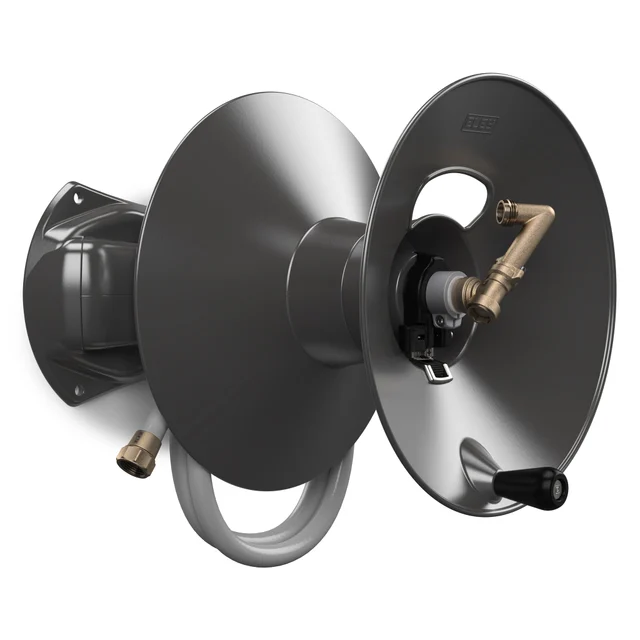
- Buy Eley Rapid Reel Wall-Mount Garden Hose Reel (Model 1041) A powder-coated steel wall reel with a brass leak-free spool that owners keep for a decade-plus.
- Buy Hoselink Retractable Hose Reel (82 ft) The auto-retractable most owners actually stay happy with, thanks to a controlled slow-rewind and any-length lock.
- It depends Eley 4-Wheel Garden Hose Reel Cart (Model 1043Q) The same bulletproof metal reel on pneumatic wheels — brilliant for big lots, overkill for a courtyard.
- Skip Liberty Garden 707-P Wall-Mounted Hose Reel with Plastic Guide A handsome decorative reel whose plastic guide and light-duty swivel don't match its looks.
What actually matters
- Reel type and rewind — this is the first decision. Hand-crank wall-mounts are durable and simple, carts add mobility for big lots, and auto-retractables trade metal build for never touching a crank. Pick the style that matches your yard and patience before you compare anything else.
- The leak-free swivel — the spool-to-hose connection is the number-one failure point. A sealed brass swivel keeps the wall and your shoes dry; a cheap swivel drips forever no matter how good the rest of the reel is.
- Auto-rewind reliability and the any-length lock — on retractables, a controlled slow retract that locks at any length is what separates the good ones from the whip-back reels. This is the single most important thing to vet on a spring reel.
- Build material (all-metal vs plastic) — powder-coated steel and brass fittings shrug off weather for a decade; mostly-plastic housings are lighter and cheaper but wear faster. Know which you're buying and why.
- Hose capacity for your distance — measured in feet at a given hose diameter (commonly 5/8-inch). Buy for the distance you actually water; overloading a reel past its rating causes tangles and hard cranking.
- Mounting and portability — a fixed wall-mount needs solid anchoring into studs or masonry; a cart needs storage space and rolls where you need it. The right answer depends on whether you move the hose around the property.
- Freeze and weather resistance — UV stabilization keeps housings from going brittle in the sun, and a freeze plan keeps trapped water from cracking fittings over winter.
The specs, in plain English
Green flags vs red flags
Green flags
- A solid brass, sealed swivel or spool at the reel-to-hose connection
- An all-metal body — powder-coated steel or aluminum with brass fittings
- On retractables, an explicitly governed slow retract plus an any-length lock
- Mounting flexibility (parallel or perpendicular to the wall) and hardware rated for studs or masonry
- A stated hose capacity that matches your watering distance, with a UV-stabilized or drinking-water-safe rating
- A meaningful manufacturer warranty, which signals confidence in the build
Red flags
- A plastic hose guide arm — a known wear point that owners report cracking
- A pot-metal or plastic swivel, or vague wording that hides what the connection is made of
- A spring retractable with no mention of a controlled retract or any-length lock (expect whip-back and tangles)
- Decorative styling emphasized over materials — looks that outrun the engineering
- Proprietary click-on fittings that won't accept standard garden-hose threads, if you care about swapping parts
- No guidance on winterizing or draining, on a reel that will hold water through a freeze
Who's who: the brands
- Eley - Known for all-metal, powder-coated steel reels with a patented brass leak-free spool; the buy-it-once end of the market in both wall-mount and wheeled-cart form.
- Hoselink - Best known for auto-retractable reels with a governed slow rewind and any-length lock, sold as complete kits with hose and nozzle.
- Liberty Garden - Makes decorative cast-aluminum wall reels with attractive finishes; strong on looks, but plastic guides and lighter-duty parts can undercut the styling.
- Suncast - A widely available maker of budget-to-mid plastic-bodied reels and hideaway cabinets, common for shoppers prioritizing low price and tidy looks over longevity.
How to read a listing without getting fooled
Read a hose-reel listing from the connection outward. First find what the swivel and spool are made of — the word you want is brass and sealed; if the listing only says the reel is “durable” without naming the swivel material, assume it's the weak point. Next pin down the body: powder-coated steel or aluminum is all-metal, while “weather-resistant” or “lightweight” usually means plastic. On a retractable, hunt specifically for the words controlled or governed retract and any-length lock; their absence is the single biggest predictor of whip-back and tangle complaints. Then check the real capacity, given as feet at a diameter, and whether a hose is included or bought separately (premium metal reels often ship without one). Finally, look for mounting hardware ratings and a winterizing note. Photos flatter every reel equally, so let the materials words — not the finish — drive your read.
How much should you spend?
Think in tiers rather than numbers. The cheapest reels win on price but tend to lose it back in leaks, kinks, and cracked plastic within a season or two, so the very bottom of the market is usually a false economy. The value sweet spot is a well-built metal wall-mount with a proper brass swivel: it costs more up front but is the reel you can reasonably expect to outlast several hoses, which makes it the cheapest to own over time. Pay up beyond that only for a specific need — a wheeled cart because you genuinely move the hose across a large property, or a quality auto-retractable because never cranking again is worth a plastic housing to you. Spending more does not buy durability if the money goes toward decorative styling; a handsome finish over a plastic guide and a light-duty swivel is where premium-looking mid-range reels disappoint. Match the spend to build quality and to how you actually water, not to looks.
Questions, answered
Which is better — a wall-mount, a cart, or an auto-retractable reel?
It depends on your yard and your patience. A fixed wall-mount is the most durable and the easiest to keep leak-free, but you carry the hose to the job. A cart rolls the whole hose to a far corner, which matters on big lots but is heavy to store. An auto-retractable spares you the crank and tidies the hose automatically, at the cost of a mostly-plastic housing and usually a narrower, lower-flow hose.
Do auto-retractable reels really rewind reliably, or do they whip back?
The good ones control the return. Better designs retract slowly and lock at any length instead of snapping back, and independent testing and owner reports single those out as the ones people stay happy with. Cheap spring reels are where the whipping, jamming, and tangling complaints cluster, so the retract mechanism and the any-length lock are the single most important things to check before buying.
What actually makes a reel leak-free at the connection?
The spool-to-hose swivel. Reels with a solid brass swivel and a sealed spool stay dry, while pot-metal or plastic swivels are where owners report the persistent drips that soak the wall or your shoes. If a listing won't tell you what the swivel is made of, treat that as a warning sign.
How much hose capacity do I need, and does it matter?
Capacity is given as feet at a diameter, like 100 feet of 5/8-inch hose. Buy for the distance you actually water — more isn't automatically better. Overloading a reel past its rated capacity is a common cause of tangles and hard cranking, so a reel sized to your yard works better than a bigger one stuffed full.
Can I leave a hose reel outside all winter?
Metal, powder-coated reels tolerate weather well, and UV-stabilized retractables are built to live outdoors, but water left inside any reel can freeze and crack the fittings. In freezing climates, drain the hose and reel — or bring a retractable's cassette inside — before a hard freeze. That freeze plan matters more than the housing material.
Does the hose usually come with the reel?
Not always. Auto-retractable reels typically ship as complete kits with the hose (and often a nozzle) included, while premium metal wall-mounts and carts are frequently sold as the reel only, so you buy the hose separately. Check the listing before you assume, and budget for a good hose if it isn't included.
Or jump to the head-to-head: Eley Rapid Reel Wall-Mount Garden Hose Reel (Model 1041) vs Hoselink Retractable Hose Reel (82 ft).