Explained
Patio Heaters, Explained
After reading, you'll know whether propane or electric infrared fits your space, how to read BTU and wattage claims, and which safety features actually matter.
In this guide
Patio heaters split into two honest camps: propane towers that throw big heat across an open patio, and electric infrared units that quietly warm a covered spot with no fuel or fumes. The single mistake that trips up first-time buyers is picking on price or looks before matching the heater to their actual space. Get the fuel-to-space match right and everything else falls into place.
The 30-second version
- Match the fuel to the space first. propane for open, well-ventilated patios and decks; electric infrared for covered patios, pergolas, and balconies where fumes would be dangerous.
- Bigger BTU means more spread-out heat, so an open group needs 40,000+ BTU, while a small covered nook is comfortable on 1,500 watts of radiant infrared.
- Safety features are non-negotiable: look for an anti-tilt shut-off and, on gas units, a thermocouple that cuts fuel if the flame goes out.
- Wind is the enemy of every patio heater, so favor sheltered placement and plan to bring tall or tabletop units inside during gusts.
- Tabletop propane units disappoint as real heaters, because low BTU and a tiny bottle mean little warmth and short run time; treat them as ambiance only.
The products this guide is about
Our verdict on each, with the full reasoning on the companion review.
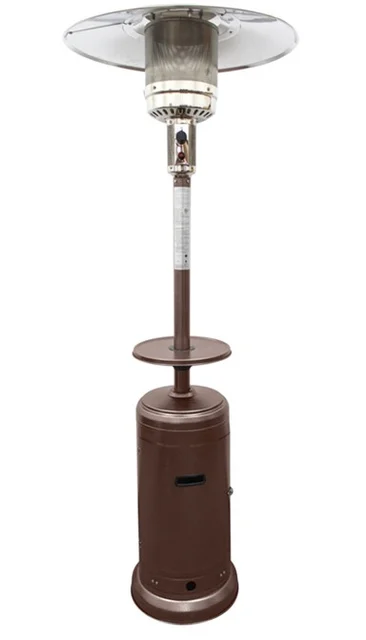
- Buy AZ Patio Heaters Hiland HLDS01-CG 48,000 BTU Propane Patio Heater The classic 87-inch mushroom-top propane tower that actually warms an open patio. Amazon
- Buy Dr. Infrared Heater DR-238 Carbon Infrared Patio Heater (1500W) A plug-in carbon infrared bar for wall or ceiling mounting, the no-fuel pick for a covered patio or balcony. Amazon
- It depends AZ Patio Heaters Hiland HLDS01-GTSS Quartz Glass Tube Propane Patio Heater (Stainless) A striking dancing-flame glass column that trades some output and durability for looks.
- Skip Mr. Heater MH11TTPH 11,000 BTU Table Top Patio Heater A 35-inch tabletop propane heater the maker rates for 275 sq ft and about 2 hours on a 1 lb cylinder.
What actually matters
- Fuel type decides almost everything else. Propane delivers far more heat but must be used outdoors; electric infrared is clean and quiet but directional and modest.
- Heat output (BTU or watts) determines how large an area you can actually warm. Undersize it and you'll be cold; the number has to fit the space, not the other way around.
- Coverage and directionality matter because propane radiates heat outward in a rough circle, while infrared only warms what it points at. A big open yard needs spread; a seating nook is fine with a beam.
- Safety and stability - anti-tilt shut-off, thermocouple, weatherproofing, and a weighted or well-anchored base - separate a safe heater from a hazard, regardless of how warm it gets.
- Wind resistance is a real spec even though it's rarely printed. Open, gusty spaces strip heat away and can affect an open flame, so placement and shelter count.
- Run time and refueling shape the daily experience: a full-size tank runs a tower most of an evening, while a tiny bottle in a tabletop unit lasts only a couple of hours.
- Clearances and placement protect your home. Every unit lists minimum distances from walls, railings, and overhead cover that you must respect.
The specs, in plain English
Green flags vs red flags
Green flags
- Clearly stated BTU or wattage that matches the size of your space rather than a vague 'heats large areas' claim
- Anti-tilt shut-off plus, on gas units, a thermocouple listed as standard equipment
- A weighted, fillable, or securely mountable base that keeps a tall unit stable
- A weatherproof or IP rating on any electric unit meant to live outdoors
- Honest guidance from the maker about outdoor-only use for propane and covered-space suitability for electric
- Wheels or wall-mount hardware that make a heavy or fixed unit practical to position
Red flags
- Impressive-looking output claims with no BTU or wattage number to back them up
- A propane unit marketed as safe for indoor, garage, tent, or enclosed-porch use
- A tall or tabletop design with a light, unweighted base that tips easily
- No mention of anti-tilt or flame-failure protection anywhere in the specs
- A fragile decorative element, like a thin glass tube, with no note on handling or replacement
- A tiny tabletop propane heater sold as a primary heat source rather than an accent
Who's who: the brands
- AZ Patio Heaters (Hiland) - The default name in freestanding patio heat, known for classic mushroom-top propane towers, glass-tube flame heaters, and weatherproof electric infrared bars.
- Bromic - A premium brand focused on architectural gas and electric radiant heaters often specified for restaurants, patios, and high-end outdoor installs.
- Fire Sense - A widely stocked maker of propane towers, tabletop units, and electric infrared heaters at accessible price points.
- Dr. Infrared Heater - Electric infrared specialist; its DR-238 is a plug-in 120V carbon infrared bar with 900W, 1200W and 1500W settings for wall or ceiling mounting where no-fuel operation matters.
- Mr. Heater - Best known for portable propane radiant heaters aimed at flexible spot heating; its tabletop patio heater is rated at 8,000 to 11,000 BTU and up to 2 hours on a 1 lb cylinder.
How to read a listing without getting fooled
Start with the fuel type, because it frames every other spec: propane means outdoor-only use, tanks, and clearance discipline, while electric means a plug, no fumes, and a covered-space fit. Then find the actual output number. For gas, that's BTU; for electric, watts. Treat prose like 'heats large areas' as marketing until you see a figure you can size against your space. Check that safety features are named explicitly, not implied. Anti-tilt shut-off and a thermocouple should be listed for gas; a weatherproof rating should be listed for outdoor electric. Look at the base and mounting: a tall flame on a light or narrow base is a tip risk no matter what the shut-off promises. Finally, read the run-time and fuel details so you know whether you're getting an evening of warmth or a two-hour novelty, and always cross-check the listed clearances against where you actually plan to put it.
How much should you spend?
Think of price in tiers rather than dollars. Entry-level tabletop propane units are the cheapest way in, but they buy so little heat and run time that most people regret them as a primary heater; spend here only if you truly want an ambiance accent. The value sweet spot sits with a standard full-size propane tower or a weatherproof electric infrared bar, where a mid-range outlay gets you genuinely useful warmth plus real safety features. Paying a premium makes sense when you're buying a specific benefit you'll actually use, such as a decorative glass-tube flame for its looks or a higher-grade weatherproof electric unit for a permanent covered install. Paying more does not automatically buy more heat, though. A pricier glass-tube heater can put out fewer BTUs than a plain tower, so the extra cost is for aesthetics, not warmth. Match the spend to the job, and don't over-buy output for a small covered nook or under-buy it for an exposed open deck.
Questions, answered
Should I choose propane or electric infrared?
It depends on your space, not on which is 'better.' Propane throws far more heat and is the right choice for open, well-ventilated patios and decks, but it must be used outdoors and needs generous clearances. Electric infrared produces no fumes and is the appropriate pick for covered patios, pergolas, and balconies, though it warms directionally and can't blanket a big open yard. Decide open-versus-covered first and the fuel choice usually makes itself.
How much heat do I actually need for my space?
Size the output to the area. A large, open patio where a group gathers wants a high-output propane tower in the 40,000-plus BTU range so the warmth spreads outward. A small, covered nook or balcony is comfortable on a 1,500-watt radiant infrared unit aimed at the seating. Undersizing is the most common regret, so if in doubt, favor more output for exposed spaces and directional infrared for tight covered ones.
How far should a patio heater be from walls, railings, and overhead cover?
Always follow the specific clearances printed in your model's manual, but the general rule for tall gas heaters is to stay well clear of anything combustible: for the Hiland towers the manuals call for at least 3 feet from the sides and 2 feet from the top. Never run a tall propane heater directly under a low umbrella, awning, tent, or combustible ceiling, and keep furniture, cushions, and plants out of the hot zone. Electric infrared units have their own listed clearances too, so respect the marked minimums even though the housing runs cooler.
Can I use a propane patio heater indoors, in a garage, or on an enclosed porch?
No. Propane patio heaters are for outdoor, well-ventilated use only. Burning propane consumes oxygen and produces carbon monoxide, an odorless gas that can be deadly in enclosed or poorly ventilated spaces, so never run one in a garage, tent, screened room, or enclosed porch. If your space is covered or partly enclosed, that's exactly where a plug-in electric infrared heater belongs, because it produces no combustion fumes.
What is a tip-over (anti-tilt) shut-off, and should I rely on it?
An anti-tilt shut-off is a switch that automatically cuts the gas or power if the heater tilts past a set angle, and gas models pair it with a thermocouple that shuts off fuel if the flame goes out. Treat both as backstops, not a license to be careless. Still place heaters on level ground, keep any weighted base filled, and bring tall or tabletop units inside in strong wind. Tabletop propane units in particular sit high on a small base and are easy to knock over, so stability habits matter more than the sensor.
Do patio heaters work in wind, and how large an area do they warm?
Wind is the enemy of all patio heaters. A high-output propane tower can warm a rough circle several feet across in calm conditions, but a stiff breeze strips that heat away and can affect the flame, so shelter the area or shut it down in gusts. Electric infrared warms people and objects in its direct line rather than the air, which helps a little in light wind but still fades in fully open, breezy spots. Small tabletop units have the least reach and struggle outside a calm, sheltered corner.
Or jump to the head-to-head: AZ Patio Heaters Hiland HLDS01-CG 48,000 BTU Propane Patio Heater vs Dr. Infrared Heater DR-238 Carbon Infrared Patio Heater (1500W).