Explained
Outdoor Pizza Ovens, Explained
After reading this, you'll know exactly which fuel type, size and features fit how you actually cook, and you'll be able to read any pizza oven spec sheet without being fooled by big temperature numbers.
In this guide
Outdoor pizza ovens promise pizzeria-quality pies in your backyard, and the good ones deliver, but the category is crowded with jargon about fuel types, peak temperatures and stone materials that make it hard to compare models. The single biggest thing that trips up first-time buyers is fixating on the highest advertised temperature, when what really separates a great oven from a frustrating one is how evenly it holds heat and how forgiving it is while you learn. This guide decodes the specs so you can match an oven to how you actually plan to cook.
The 30-second version
- Gas is the easy path, wood is the flavor path. so decide up front whether hands-off convenience or smoky char matters more to you, because most ovens commit to one philosophy.
- Peak temperature is table stakes, not a differentiator. nearly every modern oven exceeds what you need for Neapolitan pizza, so judge heat evenness across the stone instead.
- Match the mouth to the pizza. a 16-inch opening gives room to launch and turn full pies, while a 12-inch oven keeps things compact but limits you to smaller pizzas.
- Budget for accessories, not just the oven. a peel and an infrared thermometer are near-mandatory, and any wood burner or cover is usually sold separately.
- Build quality shows up over seasons. insulation, stainless steel and a real warranty are what keep an oven producing good pizza years after the honeymoon bake.
The products this guide is about
Our verdict on each, with the full reasoning on the companion review.
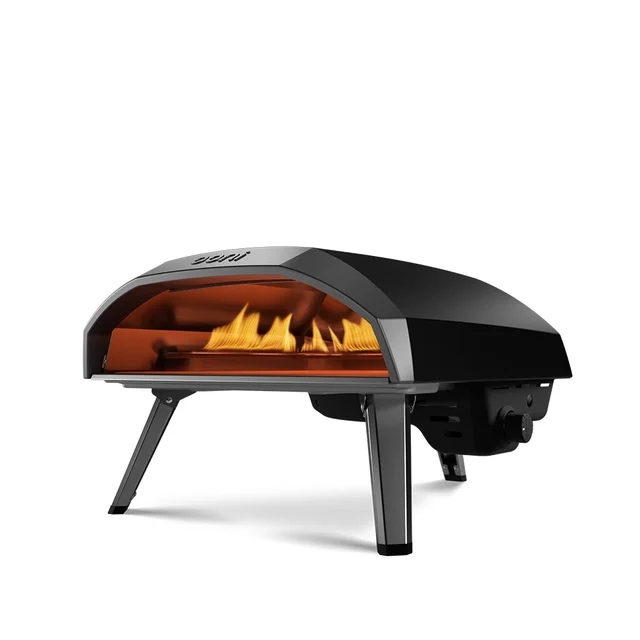
- Buy Ooni Koda 16 The most versatile all-rounder: gas-simple, big enough for 16-inch pies, and consistently praised for hands-off heat. Amazon
- Buy Gozney Roccbox The premium-feeling dual-fuel pick with a safe-touch shell and the build quality chefs keep coming back to. Amazon
- It depends Solo Stove Pi Prime A tidy, beginner-friendly propane oven that punches above its tier, provided you never want wood fire. Amazon
- Skip Bertello Outdoor Pizza Oven A clever budget multi-fuel oven with real quirks; the low entry price comes with a learning curve most people would rather avoid.
What actually matters
- Fuel type decides your entire experience: gas (propane) is dial-and-go and easiest to learn, wood delivers authentic smoke and char but demands fire management, and dual-fuel gives you both at added cost and complexity.
- Heat evenness matters more than peak heat, because an oven that runs hot on one side burns your crust edge while leaving the center raw, forcing constant rotation.
- Cooking capacity should match the pizza size you actually want; a bigger opening is more versatile for full pies and roasts but takes more space and fuel to heat.
- Heat-up time and recovery affect how quickly you start and how fast the stone reheats between pizzas when you're feeding a crowd.
- Build quality and insulation determine how well the oven holds temperature, how safe it is to stand near, and how many seasons it survives outdoors.
- Portability is worth weighing if you want to take the oven camping or store it away, since the most capable ovens tend to be the heaviest and bulkiest.
- Warranty and brand support are a real signal of durability and your safety net if a stone cracks or a burner fails.
The specs, in plain English
Green flags vs red flags
Green flags
- An even-heat design (such as a wraparound or L-shaped burner) that reviewers and owners credit with fewer hot spots
- A thick, quality baking stone that recovers heat quickly between pizzas
- Clear, honest sizing so you know the largest pizza it truly fits, not just the maximum on paper
- Good insulation or a cool-touch shell that holds temperature and is safer to stand near
- A meaningful warranty and a brand with a track record of supporting owners and selling replacement parts
Red flags
- Marketing that leans entirely on a headline peak temperature while saying nothing about heat evenness
- Owner reports of persistent hot spots that require constant rotation to avoid burning
- A steep learning curve or fiddly setup on an oven pitched at beginners
- Essential extras (peel, cover, wood burner, thermometer) quietly required but sold separately with no bundle
- Thin, flimsy construction, a short warranty, or no obvious source for replacement stones and parts
Who's who: the brands
- Ooni - The category's most popular name, known for approachable, versatile ovens and even-heat gas burners across a wide range of sizes.
- Gozney - The premium, chef-favored maker known for dense build quality, strong insulation and dual-fuel flexibility.
- Solo Stove - Known for clean, beginner-friendly design, stainless construction and a generous warranty, with a focus on simple propane operation.
- Bertello - A budget-friendly, inventive brand best known for a multi-fuel design that can burn gas and wood at the same time.
How to read a listing without getting fooled
When you scan a product listing, resist the urge to rank ovens by their biggest temperature number, because nearly all of them clear the bar for great pizza; that spec is a filter, not a tiebreaker. Instead, look for how the oven distributes heat (a wraparound or L-shaped burner and good insulation are the tells), and read the fine print on pizza size, since a '16-inch oven' and a '16-inch pizza' are not always the same thing once you account for the peel and the room to turn. Check what's actually in the box: a listing that looks cheap often assumes you'll separately buy a peel, a cover, a propane tank or a wood burner, so add those in before comparing. Finally, weigh owner reports over glossy copy: patterns about hot spots, learning curve, stone cracking or thin metal tell you far more about living with an oven than the headline numbers do.
How much should you spend?
Think of pizza ovens in three broad tiers. Budget models are genuinely tempting and can hit pizzeria temperatures, but you often pay for that low price with a steeper learning curve, less even heat and more frequent rotation, so they reward tinkerers more than people who just want a reliable weeknight pizza. The mid-range is where most buyers find their value sweet spot: solid, even-heating gas ovens that are easy to learn and well built, with the main trade-off being size or the lack of a wood option. Spending up into the premium tier buys you better insulation, denser construction, cool-touch shells, larger capacity or true dual-fuel flexibility, and it's worth it if you'll cook often, cook for a crowd, or care about owning a refined piece of kit; it's less worth it if you're an occasional cook who mostly makes one 12-inch pizza at a time. Whatever tier you choose, leave room in your budget for a peel and an infrared thermometer, since they do more for your results than a marginal step up in oven price.
Questions, answered
Should a first-time buyer get gas or wood-fired?
For most beginners, gas is the smarter start. A propane oven holds a steady temperature with the turn of a dial, so you can concentrate on shaping and launching dough rather than managing a fire. Wood adds authentic smoke and a bit of theater but demands more attention and practice. If you think you'll want both eventually, look at a dual-fuel oven that runs on gas and accepts a separate wood burner, or a multi-fuel model that can burn both at once.
Do I really need such a high temperature? My kitchen oven goes to 550F.
Yes, and that gap is the whole point. Neapolitan-style pizza cooks in 60-90 seconds and needs roughly 850-950F to puff the crust and char the edge before the base burns. A kitchen oven maxing out near 550F takes many minutes and can't produce that texture. Outdoor ovens exist specifically to reach heat a standard oven can't.
Can these ovens cook anything besides pizza?
Absolutely. Because they run far hotter than a kitchen oven, people use them for flatbreads, roasted vegetables, fish, steaks and other high-heat cooking. A larger oven with more interior room gives you the most flexibility for non-pizza dishes, while compact models are better suited to single pizzas and modest sides.
What accessories do I actually need to get started?
Plan on at least a pizza peel for launching and turning pies, and an infrared thermometer so you know when the stone is at temperature; that reading is often the difference between a perfect base and a burnt one. A propane tank usually isn't included, a cover is worth having for storage, and any wood burner is typically a separate purchase. Some brands sell starter bundles that fold several of these together.
How much space do I need and where can I put one?
Most outdoor pizza ovens are countertop or tabletop units with folding or fixed legs, so a sturdy, heat-safe outdoor surface with clearance around it is enough. They must be used outdoors for ventilation, never indoors. Measure your table and your peel against the oven's footprint before buying, since the largest-capacity ovens need noticeably more bench space.
Can I leave the oven outside all year?
They're built for outdoor use, but none should sit uncovered in the elements indefinitely. Owners report the best longevity when the oven is stored under a fitted cover or brought inside during wet or freezing weather. Stainless steel and powder-coated finishes resist corrosion better, but a cover is still the simplest way to protect your investment and keep the stone dry.
Or jump to the head-to-head: Ooni Koda 16 vs Gozney Roccbox.