Explained
Snow Blowers, Explained
After reading this you'll know exactly which type of snow blower fits your snowfall, your driveway surface, and how much you're willing to fuss with a machine.
In this guide
A snow blower is one of those purchases where the wrong choice becomes obvious the first time a real storm hits - and by then it's too late. The single biggest thing that trips people up is buying for the winter they wish they had instead of the one they actually get, then discovering their machine stalls in the heavy pile the plow leaves at the curb. This guide decodes the handful of terms that actually decide whether a blower is right for you.
The 30-second version
- Stages matter more than brand. A single-stage machine handles light snow on pavement; a two-stage machine handles deep, wet snow, plow piles, and gravel driveways - decide this first and the rest gets easy.
- Match the machine to your worst snow, not your average. The end-of-driveway pile the municipal plow packs at your curb is the real test, and it's what separates capable blowers from disappointing ones.
- Gas buys unlimited run time; cordless buys silence and zero upkeep. Modern cordless two-stage machines have closed most of the power gap, so the honest trade-off is finite battery life versus fuel and maintenance.
- Your driveway surface can rule out half the options. If you have gravel or stone, a single-stage blower is simply off the table because its auger scrapes the ground and will fling rocks.
- Clearing width is about speed, not just power. A wider machine finishes faster but is heavier to store and steer, which is why self-propelled drive matters on anything longer than a couple of car lengths.
The products this guide is about
Our verdict on each, with the full reasoning on the companion review.
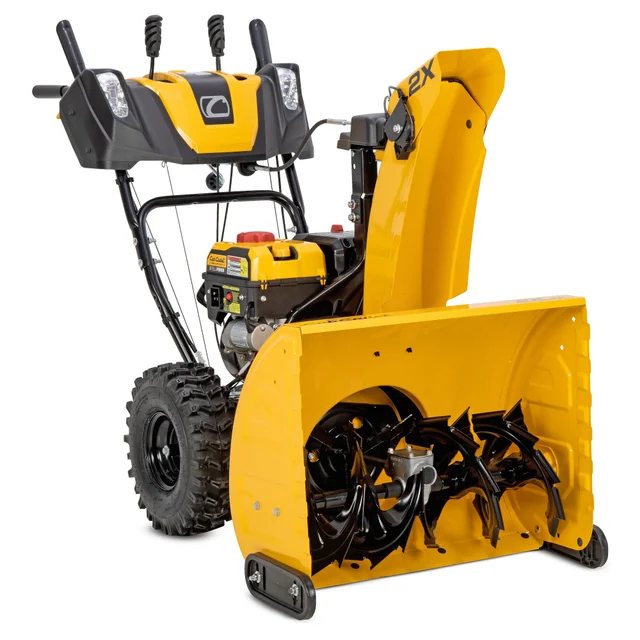
- Buy Cub Cadet 2X 26" IntelliPOWER Snow Blower A do-everything gas two-stage that eats deep, wet, end-of-driveway snow for breakfast.
- Buy Greenworks 80V 24" Two-Stage Cordless Snow Blower Two-stage clearing power without a drop of gas, and it's quiet enough to run before sunrise.
- It depends Cub Cadet 1X 21" LHP Snow Blower A light, nimble gas single-stage that's perfect for small paved drives and useless for much else.
- Skip Snow Joe 24V-X2-SB18 48-Volt Cordless Snow Blower (18") A tempting budget cordless that runs out of both power and battery right when you need it. Amazon
What actually matters
- Number of stages - this is the master decision. Single-stage for light-to-moderate snow on paved surfaces only; two-stage for deep, wet snow, packed plow piles, and gravel driveways.
- Your snowfall reality - how much snow you actually get, and how wet and heavy it tends to be, decides how much machine you need. Light, dry dustings are forgiving; wet coastal snow and blizzards are not.
- Driveway surface - paved versus gravel is a hard fork. A single-stage auger touches the ground, so it can only run on pavement; gravel demands a two-stage with adjustable skid shoes.
- Power source - gas gives you unlimited run time and raw grunt but comes with fuel, oil, fumes, and seasonal upkeep. Cordless is quiet, push-button, and maintenance-free but limited by battery charge.
- Clearing width and drive - width sets how many passes you make, and self-propelled drive keeps a wide machine from becoming a wrestling match on long or wide driveways.
- Startup reliability in deep cold - electric start on gas models earns its keep on a frigid morning; cordless machines are button-and-go by nature.
- Storage space and weight - a big two-stage machine needs real garage room and is heavy to maneuver, which is a genuine constraint for tight spaces or smaller users.
The specs, in plain English
Green flags vs red flags
Green flags
- Two-stage design if you get real snow, wet snow, or have a gravel driveway
- A clean-out tool that clips onto the machine, so you're never tempted to clear a clog by hand
- Self-propelled drive with power steering on any wide or heavy machine
- Electric start on gas models, or button start on cordless, for reliable cold-morning starts
- Adjustable skid shoes if your driveway is gravel or uneven
- Controls large and clearly marked enough to operate with winter gloves on
Red flags
- A single-stage machine being sold as an all-purpose blizzard-buster - it isn't
- A budget cordless promising to handle deep or wet snow on a small battery and narrow auger
- No stowable clean-out tool, or a chute that clogs easily in wet snow per owner reports
- A wide, heavy machine with no drive assist, which becomes exhausting on a long driveway
- Any single-stage blower recommended for a gravel driveway - it will throw rocks
- Runtime claims that quietly assume light, dry snow when your winters are heavy and wet
Who's who: the brands
- Cub Cadet - Well-known for capable gas snow blowers, from compact single-stage models up to burly two-stage machines with electric start.
- Greenworks - A cordless-focused brand that has pushed battery snow blowers into genuinely capable two-stage territory on higher-voltage platforms.
- Snow Joe - Budget-oriented electric and cordless outdoor tools; fine for light touch-up duty but easy to over-buy expectations against.
- Toro - A long-standing name in snow blowers, widely respected for reliable single-stage machines and strong snow-throwing performance.
- Ariens - A heritage brand best known for rugged, high-capability two-stage machines aimed at serious snow country.
- EGO - A cordless power-tool brand whose battery platform extends to snow blowers favored for quiet, maintenance-free operation.
How to read a listing without getting fooled
Start with two numbers and one word on the listing: the number of stages, the clearing width in inches, and whether it says paved-only or gravel-safe. If it's a single-stage machine, mentally cap it at light-to-moderate snow on pavement no matter how impressive the marketing sounds. On cordless models, don't be dazzled by voltage alone - a high number on a narrow single-stage auger still won't move a heavy plow pile, so read owner reports for how it does in wet snow specifically. Check whether self-propelled drive is included or just optional, since that one detail changes how the machine feels on a long driveway. Finally, look for the boring safety line: a stowable clean-out tool and glove-friendly controls tell you the maker thought about how the machine is actually used in a storm.
How much should you spend?
Spend according to your snow and your driveway, not the calendar sale. The value sweet spot for most homeowners in real snow country is a mid-tier two-stage machine - single-stage bargains feel like savings until the first heavy storm defeats them, which makes the cheapest option the most expensive mistake. Cordless two-stage machines sit at the top of the range because you're effectively paying for batteries and a charger up front, but that buys you years of skipping gas, oil, and maintenance, so weigh it as a long-term cost rather than a sticker. Stepping up in price is worth it when it buys stages, drive assist, or clearing width you'll genuinely use; it's wasted when you're buying blizzard capability for a short, flat, paved driveway that only ever sees a few inches. Match the machine to the winter you actually get and the money sorts itself out.
Questions, answered
How do I safely clear a clogged chute or auger?
Never, ever clear a clog with your hand - not even with the machine switched off. Shut the engine or motor down completely, wait for all moving parts to stop, and use the clean-out tool that clips to the machine (or a sturdy stick) to push the packed snow free. The impeller can hold spring tension and snap around suddenly even when the power is off, and that is a common cause of serious snow blower injuries. Keep your hands and feet well clear of the auger and impeller at all times.
Single-stage or two-stage - which do I actually need?
Single-stage machines scrape close to the ground and do well on flat, paved driveways with light-to-moderate snow, but the auger touches the surface so they can't run on gravel. Two-stage machines have a raised auger plus an impeller that throws snow much farther, handle deep and wet snow and heavy plow piles, and work on gravel. If you routinely get big storms, or have a long or gravel drive, go two-stage.
Can a cordless electric snow blower really replace a gas one?
A cordless two-stage machine can genuinely rival gas for most homeowners now, with the main trade-off being finite run time per charge. Cordless single-stage units are best kept to lighter duty. If your driveway is very large or you regularly face deep, wet snow, keep spare charged batteries on hand or stick with gas for unlimited run time.
Can I use a single-stage snow blower on a gravel driveway?
No. A single-stage auger contacts the ground to scrape snow, so on gravel or stone it will pick up and throw rocks - dangerous to people and property, and hard on the machine. For gravel, choose a two-stage model with adjustable skid shoes so you can set the auger above the surface.
What maintenance does a snow blower actually need?
Gas models need fresh oil, a good spark plug, fuel stabilizer or draining before storage, and occasional belt and shear-pin checks. Cordless models skip nearly all of that - you mainly keep the batteries charged and stored somewhere mild, and clear packed snow off the machine after use. Whatever you own, wipe it down and let it dry before storing so parts don't rust or freeze together.
How much clearing width do I need?
Wider clears faster but weighs more and needs more storage. For a typical suburban driveway, a machine in the low-to-mid twenties of inches strikes a good balance; go wider only if your driveway is long or wide and you have a self-propelled drive to move the extra weight for you.
Or jump to the head-to-head: Cub Cadet 2X 26" IntelliPOWER Snow Blower vs Greenworks 80V 24" Two-Stage Cordless Snow Blower.