Explained
Charcoal Grills, Explained
After reading, you'll understand what makes a charcoal grill hold heat, cook two ways at once, and last for years, so you can read any listing without getting fooled.
In this guide
A charcoal grill looks simple, but the cheap one and the one that lasts a decade can look nearly identical on a shelf. What separates them is mostly invisible on the spec sheet: how thick the metal is, how tightly the vents and lid seal, and whether you can easily build a fire that's hot on one side and gentle on the other. This guide decodes the jargon so you can tell a real bargain from a false one.
The 30-second version
- Charcoal trades convenience for flavor and heat. you get higher searing temperatures and smoky taste, but you accept a slower start, live-fire management, and ash cleanup that gas and pellet grills mostly spare you.
- Build quality beats the feature list. thick porcelain-enameled steel or cast aluminum holds temperature and resists rust for years, while thin steel warps, chips, and rusts long before the fancy accessories ever pay off.
- The vents are your throttle. on a charcoal grill you control heat entirely with airflow, so tight-fitting top and bottom dampers and a lid that seals well are what let you dial in low-and-slow instead of just burning hot.
- Two-zone cooking is the whole skill. banking the coals to one side gives you a hot zone to sear and a cool zone to cook through gently, and the best grills make that setup easy with basket holders or a shape that does it for you.
- Match the size to your crowd, not the biggest number. a standard kettle feeds most families, and oversizing just wastes fuel and space, so weigh cooking area against how you actually cook.
The products this guide is about
Our verdict on each, with the full reasoning on the companion review.
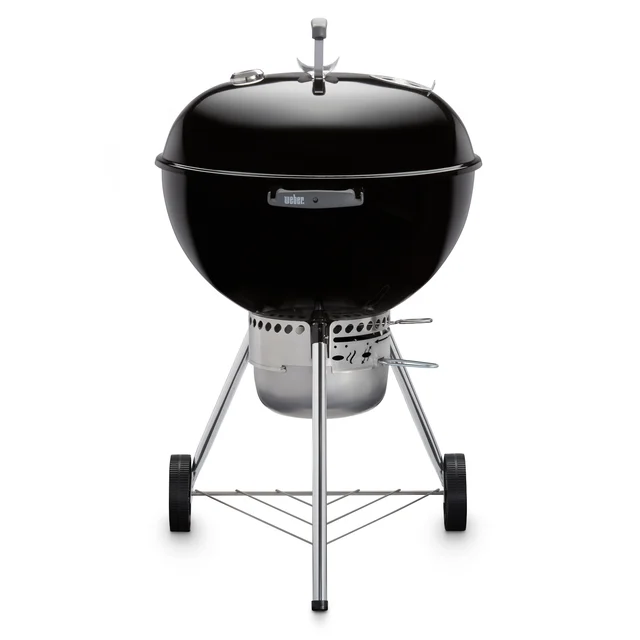
- Buy Weber Original Kettle Premium 22" The default charcoal kettle for a reason: heavy porcelain build, a proper ash catcher, and a hinged grate at a sane price.
- Buy Weber Master-Touch 22" The Premium kettle plus the extras that actually matter for versatility: a modular grate, warming rack, char-baskets, and a lid holder.
- It depends PK Grills PK300 Grill & Smoker A rust-proof cast-aluminum capsule with four-point venting and a naturally huge two-zone spread, if you'll pay flagship money for it.
- Skip Char-Griller 22" Kettle Charcoal Grill & Smoker A cheap porcelain kettle that looks the part, but thinner steel and looser fit-and-finish undercut the small savings.
What actually matters
- Build and heat retention — thick porcelain-enameled steel or cast aluminum holds a steady temperature and shrugs off rust; thin coated steel loses heat, warps, and corrodes once the coating chips. This single factor decides whether a grill lasts one season or ten.
- Airflow control — precise, tight-fitting top and bottom vents (a bonus if intake and exhaust adjust independently) are the only way to regulate heat on charcoal. Loose or crude dampers make holding a low temperature for smoking a constant fight.
- Lid seal and fit — a lid that sits flush traps heat and lets the vents actually control the burn; a warped or loose lid leaks air, spikes your temperature, and burns through fuel.
- Two-zone / indirect capability — char-basket fuel holders or a long capsule shape make it easy to set up separate hot and cool zones, which is what lets one grill sear a steak and slow-cook ribs.
- Ash management — an enclosed sweep-and-catch system or a dump bucket turns cleanup into a one-minute chore instead of a dusty mess, and it matters every single cook.
- Cooking area and portability — primary grate space should match your typical crowd; a warming rack adds holding room without more footprint. Weight matters only if you plan to move or travel with it.
- Warranty — a long body warranty (a decade or more) signals the maker trusts the metal to survive years of heat cycles; a short warranty is a quiet admission that it might not.
The specs, in plain English
Green flags vs red flags
Green flags
- Heavy, thick porcelain-enameled bowl and lid, or a rust-proof cast-aluminum or ceramic body
- A lid that closes flush with tight-fitting top and bottom vents you can fine-tune
- Included char-baskets, a capsule shape, or another feature that makes two-zone setup easy
- An enclosed ash sweep-and-catch system or a simple dump bucket
- A long body warranty measured in a decade or more
- A hinged or modular grate so you can add fuel or swap in accessories
Red flags
- Thin, lightweight steel that flexes, or a coating described only as 'painted' rather than porcelain-enameled
- A loose or warped lid and crude, rattly vents that don't hold a setting
- A short warranty (just a couple of years) on the body and lid
- Owner reports of early chipping, rust, or heat that swings hard and won't settle
- A headline cooking-area number that only adds up once you include the warming rack
- A price that seems too good next to a familiar-looking design, usually a sign the savings came out of the metal
Who's who: the brands
- Weber - The default name in charcoal kettles, known for thick porcelain bowls, easy ash cleanup, and long warranties.
- PK Grills - Makes rust-proof cast-aluminum capsule grills prized by two-zone enthusiasts for fine airflow control.
- Char-Griller - Budget-focused brand with familiar kettle and barrel designs, generally built to a lower price point.
- Kamado Joe - Known for thick ceramic kamado grills that excel at heat retention and low-and-slow cooking.
- Napoleon - Offers charcoal kettles and hybrids with a focus on accessories and modular grate systems.
How to read a listing without getting fooled
Start with what the metal actually is, not what it looks like. 'Porcelain-enameled steel' is good, but the listing rarely tells you the gauge, so lean on the grill's weight and the length of the warranty as proxies: heavier and longer-warrantied almost always means thicker, more durable metal. Next, separate the primary cooking area from any total that bundles in a warming rack, because the primary grate is what you cook on. Read the vent description carefully: two adjustable dampers (top and bottom) are the minimum, and independent control at each end is a plus for precision. Treat words like 'painted finish', 'lightweight', or a warranty of only a year or two as quiet warnings. Finally, skim long-term owner reports for mentions of rust, chipping, warping, or trouble holding a low temperature; those real-world patterns tell you more than any spec line.
How much should you spend?
You're mostly paying for metal and precision, not gadgets. The cheapest grills cut cost exactly where it hurts, thinner steel and looser fit, so the rock-bottom option often costs more over time as it rusts out and gets replaced. The value sweet spot sits at a solid mid-range kettle with a thick porcelain body, a real ash-catcher, and a long warranty; that's all the grill most people ever need. Stepping up buys genuine versatility, a modular grate, warming rack, and char-baskets, which is worth it only if you'll actually sear, smoke, and bake rather than just grill burgers on weekends. Flagship cast-aluminum or ceramic cookers command a real premium for rust-proof, heirloom-grade builds and superb two-zone control; they pay off for devoted cooks but are overkill for casual use. Spend up on build and airflow, which last, before you spend on accessories, which you can add later.
Questions, answered
Is a charcoal grill worth it over gas or pellet?
It depends on what you value. Charcoal gives you higher searing heat and the smoky flavor many people prefer, and the grills are simpler and cheaper with fewer parts to fail. The trade-off is a longer startup, hands-on fire management, and ash cleanup. If push-button convenience and precise temperature matter most, gas or pellet fits better; if flavor and price-to-performance win, charcoal is the pick.
How much cooking area do I actually need?
A standard-size kettle with roughly the area of a large round grate suits most families and comfortably fits a full round of burgers or a couple of chickens. If you regularly cook for crowds you'll want that space plus a warming rack for holding food; if you cook for one or two, a smaller grill saves fuel and storage space.
Can you really smoke low-and-slow on a kettle?
Yes. Bank the coals to one side to make a two-zone fire, put the food on the cool side, close the lid, and use the top and bottom vents to hold a low temperature. Char-basket fuel holders and tight-fitting dampers make this much easier, which is exactly why precise airflow control and a good lid seal matter when you're choosing a grill.
Should I use lump charcoal or briquettes?
Both work. Lump lights fast, burns hotter, and gives a cleaner flavor, but it burns unevenly and doesn't last as long, so it suits quick, high-heat searing. Briquettes burn steady and long at a moderate temperature, which makes holding a target temperature easier, so they're friendlier for beginners and for low-and-slow cooks. Many people keep both on hand.
Will a cheap charcoal grill rust out?
Often, yes. Thin porcelain-coated steel is prone to chipping, and once the coating is scratched, rust sets in, so owners of budget kettles frequently report shorter lifespans. Heavier porcelain-enameled bowls and rust-proof cast aluminum hold up far longer, which is why the small upfront savings on a bargain model tend to disappear over a few seasons.
How do I control the temperature without knobs?
Airflow is your only dial. Opening the vents feeds the fire more oxygen and raises the heat; closing them down starves it and lowers the heat. Make small adjustments and give the grill several minutes to respond, and keep the lid closed as much as possible so the vents, not stray air leaks, are what set your temperature.
Or jump to the head-to-head: Weber Original Kettle Premium 22" vs Weber Master-Touch 22".