Explained
Composters, Explained
After reading, you'll know which of the four composter types fits your home, and you won't be fooled by a countertop gadget marketed as making compost when it doesn't.
In this guide
The word "composter" now covers four very different machines that do not produce the same thing. Some make real, finished compost you can dig into a garden bed; one popular type just dries and grinds your food scraps into a crumble that still has to break down elsewhere. The single biggest mistake first-time buyers make is matching the wrong machine to their space and expectations, so start there before you compare any specs.
The 30-second version
- There are four categories, not one. Barrel tumblers, insulated stationary bins, worm bins, and electric countertop units are sold under the same word but do genuinely different jobs.
- Electric countertop "composters" don't make compost. They dehydrate and grind scraps into a dry crumble in hours; that crumble is a pre-compost material you still have to finish in soil or a bin, not garden-ready compost.
- If you have any outdoor space, an outdoor unit wins. A tumbler or insulated bin makes real compost with no electricity and no recurring filter costs, and it handles more waste than a countertop gadget.
- Turning effort decides whether you'll keep using it. A geared crank or a no-turn design is the difference between a composter you maintain and one you abandon in the yard.
- The mix matters as much as the machine. Balancing wet "greens" and dry "browns," plus controlling moisture, drives speed and odor far more than any single feature on the box.
The products this guide is about
Our verdict on each, with the full reasoning on the companion review.
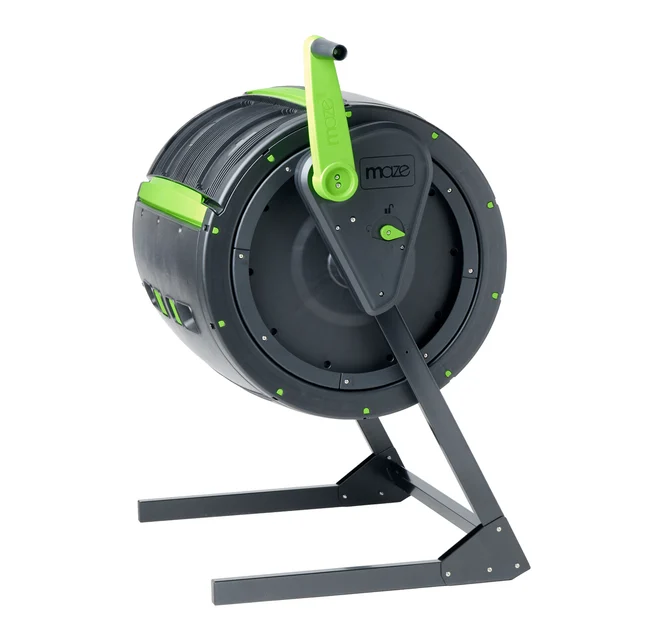
- Buy Maze Easy-Turn 65 Gal Compost Tumbler A big dual-chamber barrel with a geared crank that makes turning a full load genuinely easy.
- Buy HOTBIN 200L Composter An insulated stationary bin that holds real heat, composting fast and even through winter.
- It depends FoodCycler Eco 5 A quiet countertop unit that shrinks food scraps into a dry crumble in hours; useful, but it is not finished compost.
- Skip Lomi 3 Marketed as making "compost" on your counter, but it mostly dehydrates and grinds, for a premium and ongoing pod costs.
What actually matters
- What the output actually is. Decide up front whether you want finished compost (tumbler, insulated bin, or worm bin) or just food-waste reduction (electric countertop). This one choice rules out half the market for you.
- Capacity vs. your waste stream. Batch tumblers are compact but a weekend of heavy garden clean-up can overwhelm them; continuous-feed stationary bins swallow much more. Countertop units only hold a few days of kitchen scraps.
- Turning and aeration. Compost needs air. A geared crank makes turning a heavy, wet tumbler manageable; insulated bins skip turning but need a bulking agent so air can move; worm bins rely on the worms.
- Heat retention. Composting makes its own heat, and trapping it is what lets a bin work fast and keep going through winter. Thin-walled bins slow to a crawl in cold weather.
- Pest and odor resistance. Sealed, off-ground, or filtered designs beat an open pile handily. Indoors, a carbon filter controls kitchen smell.
- Batch method (single vs. dual chamber). A dual-chamber tumbler lets one side cure while you keep feeding the other, giving a near-continuous supply instead of one stop-start load.
- Running costs and power. Outdoor units are a one-time purchase; electric units draw grid power and need replacement carbon filters, and some push consumable additive pods.
The specs, in plain English
Green flags vs red flags
Green flags
- The listing is honest about what the output is, especially electric units that call the result a "soil amendment" or "pre-compost" rather than "finished compost."
- A geared crank or clearly low-effort turning mechanism on a tumbler.
- Dual chambers on a tumbler, so you can cure and feed at the same time.
- Insulated walls and a filtered vent on a stationary bin, pointing to real heat retention and odor control.
- A sealed body and off-ground stand or tight-fitting lid for pest resistance.
- No proprietary pods required to run an electric unit, and clearly stated filter replacement intervals.
Red flags
- An electric countertop unit marketed as making "compost in hours" without acknowledging the crumble still has to finish breaking down.
- A bare drum tumbler with no gearing, which becomes a wrestling match once it's full and wet.
- Thin single-wall bins sold as "fast" with no mention of insulation.
- A premium price for a static bin or countertop unit that does the same core job as cheaper models but leans on marketing spin.
- Locked-in consumable pods or additives you must keep buying to get results.
- Vague capacity claims with no sense of how much waste per week the unit actually handles.
Who's who: the brands
- Maze - Known for large dual-chamber outdoor tumblers with geared cranks that make turning a full load manageable.
- HOTBIN - Makes thick insulated stationary hot bins built to compost fast and keep working through winter.
- FoodCycler - A widely used electric countertop food-waste reducer; honest that its output is a dry crumble, not finished compost.
- Lomi - A popular countertop appliance that dehydrates and grinds scraps but markets the result heavily as "compost."
- Vitamix (FoodCycler line) - Backs the FoodCycler line of countertop food recyclers aimed at cutting kitchen food-waste volume and odor.
How to read a listing without getting fooled
Start by finding the one fact many listings bury: what the output actually is. If a unit plugs into the wall and finishes in hours, it makes dehydrated ground scraps, no matter how often the page says "compost" — treat that crumble as something you'll still mix into soil or a bin. For outdoor units, read past the headline gallons: check whether a tumbler is single or dual chamber (dual is worth a lot), whether the crank is geared or a bare drum, and whether a stationary bin is actually insulated or just a thick-looking plastic box. Scan for the recurring costs hidden below the fold: carbon filters and, on some electric models, pods you have to keep buying. And weigh the specs against your own waste stream and space, because a bin that's perfect for a serious gardener is overkill for an apartment and vice versa.
How much should you spend?
Think in terms of what you're actually paying for. A basic outdoor tumbler is the value sweet spot for most people with a yard: mid-range money buys dual chambers and a geared crank, which is where the real day-to-day payoff is. Spending up on an insulated stationary bin is worth it only if you compost a lot and want the fastest finished product year-round; for a casual composter that premium is hard to justify. Worm bins are inexpensive and space-efficient if you're willing to tend the worms. On the electric side, remember the sticker price isn't the whole story: grid electricity and replacement filters are ongoing, and any model that pushes consumable pods raises the true cost further. Paying a premium for a countertop unit that does the same core drying-and-grinding job as a cheaper one, just with louder compost marketing, is where buyers most often overspend.
Questions, answered
Do electric countertop "composters" actually make compost?
Mostly no. They dry and grind your scraps into a dehydrated crumble in a few hours. Finished compost is the stable, cured product of microbes working over weeks. The crumble still has to be mixed into soil or added to a real compost bin to break down, so these are best understood as food-waste reducers. They're genuinely useful for that, but "compost in hours" oversells what comes out.
Tumbler or stationary bin, which composts faster?
A well-insulated stationary hot bin generally reaches and holds high temperatures better, so it can finish faster and even keep working in winter. A tumbler is faster than an open pile and much easier to aerate, but it cools between turns. Both beat an unmanaged heap: the tumbler wins on convenience and pest control, the insulated bin wins on raw speed and capacity.
What can I compost, and what should I avoid?
Fruit and vegetable scraps, coffee grounds, eggshells, and plenty of dry "browns" like leaves and cardboard are ideal. In backyard tumblers and bins, avoid meat, fish, dairy, and oily foods, which attract pests and smell. Worm bins are also picky and don't like citrus, onion, or spicy scraps in quantity. Many electric countertop units can handle a wider range, but check the manual before adding bones or large pits.
How do I keep pests and smells down?
Sealed designs help a lot: an off-ground tumbler or an insulated bin with a filtered vent are far more pest- and odor-resistant than an open pile. The bigger lever is what you add. Keep a balance of greens and browns, skip meat and dairy in backyard systems, and don't let it go soggy. Odor almost always means too wet or too much nitrogen, not a fault with the bin.
I live in an apartment with no outdoor space. What are my options?
Two realistic paths: a compact worm bin, which makes real castings if you're willing to tend the worms, or an electric countertop unit, which cuts food-waste volume and kitchen odor overnight. If you go electric, have a plan for the crumble: mix small amounts into potted plants, share it with a neighbor's garden, or add it to a municipal green-bin or community compost program. On its own the crumble is a pre-compost material, not a finished soil to pile onto plants undiluted.
How long until I actually have usable compost?
For outdoor units, expect weeks per batch, faster in a hot insulated bin, slower in a cool-weather tumbler that cools between turns. Worm bins produce castings over a similar span of weeks to months depending on volume. Electric countertop units finish a cycle in hours, but again, that's dehydrated crumble, not cured compost; the actual composting still happens afterward in soil or a bin.
Or jump to the head-to-head: Maze Easy-Turn 65 Gal Compost Tumbler vs HOTBIN 200L Composter.