Explained
Premium Gas Grills, Explained
After reading this you'll know which parts of a gas grill your money should go into, why a big BTU number can be a red herring, and how to tell real build quality from a fancy badge.
In this guide
Once you pass the big-box specials, gas grill prices climb fast and the reasons get harder to see. The money goes into things you can't judge from across a showroom floor: the metal in the burners, the thickness of the firebox, how the grates hold heat, and how long the warranty really lasts. This guide decodes those specs so you can tell the difference between a grill that will sear well and last a decade and one that's charging flagship money for a familiar name.
The 30-second version
- Build quality lives where you can't see it. the firebox, burner metal, and grate weight matter far more than the shiny finish or the number of features listed on the box.
- A big BTU number is a weak signal. raw heat output tells you little about even cooking; a thick firebox and quality burners that hold and spread heat matter much more than a high total.
- Grate material is a trade-off, not a ranking. cast iron sears harder and holds more heat but needs care, while thick stainless resists rust and asks for less upkeep.
- Warranty depth is a build-quality tell. a maker who covers the cook box, burners, and grates for years is telling you those parts are built to last that long.
- Premium turns into a badge tax fast. extra burners you never light, an outdoor-kitchen name, or 'smart' features you won't use are exactly where a premium price stops being value.
The products this guide is about
Our verdict on each, with the full reasoning on the companion review.
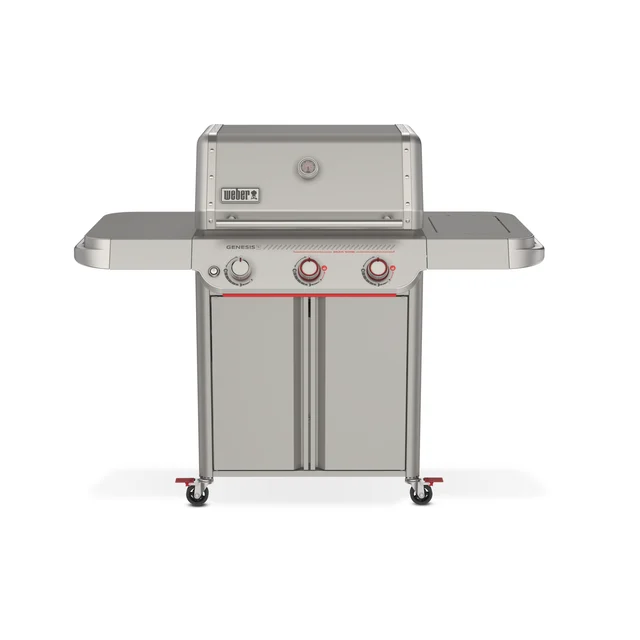
- Buy Weber Genesis S-335 The value-premium standard: a thick cast-aluminum cook box, a dedicated sear zone, and Weber's deep warranty for a lot less than a flagship.
- Buy Broil King Regal S590 Pro A searing-and-rotisserie machine with heavy reversible cast-iron grates, an infrared side burner, and a rear rotisserie burner standard.
- It depends Weber Summit FS38 S Weber's flagship is superbly built, but it's a lot of burners, cabinet, and money for capacity most households never use.
- Skip Bull Angus A respected outdoor-kitchen name at a flagship price, but the build, heat evenness, and real-world support don't keep up with a Weber or Broil King.
What actually matters
- Firebox and hood construction — the single biggest jump from cheap to premium is a thick cast-aluminum or heavy-gauge stainless cook box instead of thin stamped metal. It holds heat, evens out the temperature across the grates, resists warping, and is the real longevity tell.
- Burner material and zoning — heavy stainless or cast burners outlast thin tubes and rust out slower; the number of burners only helps if they let you build separate heat zones for searing on one side and cooking gently on the other.
- Grate material and heat retention — heavy grates are what actually put a sear on food. Porcelain-enameled cast iron, bare cast iron, and thick stainless each behave differently on heat holding, rust, and upkeep.
- Sear zone or infrared burner — a small, very hot area for steakhouse-style crusts. Genuinely useful if you chase a sear, pointless if you mostly grill burgers and vegetables.
- Flare-up and grease management — heat-diffusion bars or plates over the burners and a grease tray that's easy to reach keep fat off the flames and cut flare-ups and cleanup headaches.
- Ignition reliability — a grill you have to coax to light is a daily annoyance; this varies more by brand reputation than by the spec sheet.
- Right-sized capacity — cooking area and burner count matched to how you actually cook, so you're not paying to heat a cabinet you never fill.
The specs, in plain English
Green flags vs red flags
Green flags
- A thick cast-aluminum or heavy-gauge stainless cook box, described by weight or gauge rather than just 'stainless steel'
- Heavy, substantial grates (porcelain-enameled cast iron or thick stainless rod) that the listing quantifies rather than glosses over
- Multi-year warranty coverage that spells out the cook box, burners, and grates separately
- Heat-diffusion bars or plates over the burners and an easy-to-reach grease tray
- A brand with a real parts network so worn igniters, burners, and grates are a quick fix, not a reason to replace the grill
- Independent testing and long-run owner reports that describe even heating and years of service
Red flags
- A giant BTU number used as the headline selling point while the firebox metal goes unmentioned
- Vague material language like 'premium stainless' with no gauge, thickness, or weight given
- A long list of burners and gadgets on a lightweight body — features stacked on a thin firebox
- A warranty that's short, or generous 'on paper' but paired with widespread complaints about service
- Repeated owner reports of uneven heat, hot spots, rust-through, or ignition failure
- A flagship price justified mainly by an outdoor-kitchen name or 'smart' features rather than build
Who's who: the brands
- Weber - The mainstream benchmark for premium value; known for heavy cast-aluminum cook boxes, reliable ignition, deep warranties, and an unmatched parts network.
- Broil King - Enthusiast favorite for searing and rotisserie, with heavy cast-iron grates and heat-diffusion systems geared toward high-heat cooking.
- Napoleon - Feature-forward premium brand often bundling infrared sear and rear rotisserie burners, popular with cooks who want the extras included.
- Bull - An outdoor-kitchen and built-in name where you're partly paying for the island aesthetic; judge it on cooking fundamentals, not just looks.
- Lynx / Alfresco / DCS - High-end built-in outdoor-kitchen brands aimed at permanent installations, where premium pricing reflects the luxury category as much as the grilling.
How to read a listing without getting fooled
Read a premium grill listing from the inside out. Skip past the headline BTU number and the burner count first, and hunt for how the maker describes the cook box: real build language quantifies the metal ('cast aluminum', a stainless gauge, a shipping weight), while thin marketing says only 'premium stainless steel'. Next, check the grate material and weight, because that determines both searing and upkeep. Then read the warranty as a spec in its own right: a maker willing to cover the firebox, burners, and grates for years is quietly telling you how long those parts last, so a short or vaguely worded warranty is a warning even on a good-looking grill. Treat sear zones, rotisserie burners, and side burners as reasons to buy only if you'll cook with them, not as tie-breakers. Finally, weigh independent testing and owner reports over the spec sheet for the two things numbers can't capture: whether the grill heats evenly and whether it lights every time.
How much should you spend?
Think of grill pricing in tiers rather than exact figures. Big-box entry grills save money by using thin fireboxes and lightweight parts that lose heat and rust out, so stepping up to the true premium tier genuinely buys you a heavier cook box, better burner and grate metal, and a warranty that outlasts the receipt. That first step up is where most of the value is. Above it sits a flagship tier with more burners, bigger cabinets, and outdoor-kitchen styling, and this is where spending more stops tracking with better everyday cooking. Pay for a flagship only if you'll truly use the extra capacity or need a built-in for an island; otherwise the core sear-and-cook experience of a well-built premium grill is close to a flagship's for a lot less. The worst value is a flagship price justified mainly by a badge, extra burners you'll rarely light, or smart features you won't use. Aim for the model that puts its money into the firebox, burners, grates, and warranty, and stop there.
Questions, answered
Is a higher BTU number always better?
No. BTU is just the total heat the burners can put out, and a big number on a thin, leaky firebox cooks worse than a moderate one on a heavy, heat-holding box. Even, stable heat comes from the quality of the firebox, burners, and grates, not from a headline BTU figure. Treat a very high BTU number that's used as the main selling point as a distraction, not a feature.
Cast iron or stainless grates: which should I get?
It's a trade-off, not a ranking. Heavy cast iron, especially porcelain-enameled, holds and radiates more heat, so it sears hard and leaves bold grill marks, but bare cast iron needs seasoning and can rust if you neglect it. Thick stainless rod resists rust and needs little care but stores slightly less heat. Pick cast iron if searing is your priority and you'll maintain it; pick porcelain-coated cast iron or heavy stainless if low upkeep matters more.
Do I actually need a sear burner or a rotisserie?
Only if you'll use them. A dedicated sear or infrared burner gets a small area much hotter for steakhouse-style crusts, and a rear rotisserie burner is genuinely great for whole chickens and roasts. But if you mostly grill burgers and vegetables, a strong main-burner sear covers you, and those extras are just optional cost. Buy a feature because you'll cook with it, not because the spec sheet lists it.
How much does the warranty really matter?
A lot, and it doubles as a build-quality signal. Burners, igniters, and grates are wear items, so a grill you can keep running for a decade is far better value than a cheaper one you replace in three years. Look for multi-year coverage that names the cook box, burners, and grates separately, and favor brands with a real parts network so a worn part is a quick fix. Be wary of a warranty that reads generously but comes with widespread complaints about actual service.
Can I convert a grill between natural gas and propane?
Sometimes, but don't assume it. Propane and natural gas run at different pressures and need different burner orifices, so a grill has to be designed as convertible and paired with the correct conversion kit. Check that the specific model supports your fuel before buying, and treat gas conversion as a job to do carefully and by the maker's instructions rather than a casual swap.
Or jump to the head-to-head: Weber Genesis S-335 vs Broil King Regal S590 Pro.