Explained
Raised Garden Beds, Explained
After reading, you'll understand bed materials, how depth and soil capacity work, and how to compare raised beds on more than looks.
In this guide
Most raised bed regrets come from three things. People buy on overall height and end up with a shallow box on legs. They pick a large footprint without pricing the soil to fill it. And they choose a material without knowing how long it will last outdoors.
The 30-second version
- Bed depth matters more than overall height, since legs can hide a shallow planting box.
- Soil is often the biggest cost, so use the maker's stated cubic feet to price the fill.
- Coated steel and composite last longest, while untreated wood weathers and fabric wears out soonest.
- Modular kits can change shape, which helps if your garden layout is still evolving.
- Warranty conditions vary, including registration requirements and exclusions for painting.
The products this guide is about
Our verdict on each, with the full reasoning on the companion review.
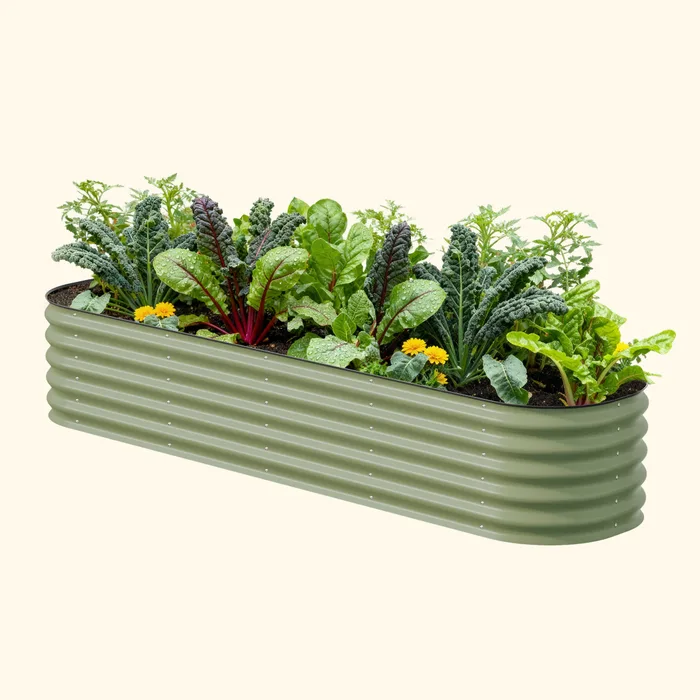
- Buy Vego Garden 17" Tall 9-in-1 Modular Metal Raised Garden Bed A coated steel kit that builds nine different layouts at 17 inches tall, from a narrow 2 x 2 ft box to a 5 x 5 ft square. Amazon
- Buy Greenes Fence Premium Cedar Raised Garden Bed 4 ft x 8 ft x 10.5 in (RC6T21B) An untreated, US-made cedar bed with 3/4-inch boards that slides together without tools and stacks higher later.
- Buy Birdies Large Modular Steel Raised Garden Bed 15" Tall A 6-in-1 modular steel bed in 24 gauge ZAM coated steel with stainless bolts, internal bracing and a limited lifetime warranty.
- It depends Frame It All 4' x 8' Raised Garden Bed - GardenBLOX Classic A tool-free composite board kit that comes in four heights and will not rot, but costs more as you stack it taller.
- It depends Smart Pot Raised Bed Planter A partitioned fabric bed in 6, 8 or 12 foot lengths that sets up in minutes and folds away empty.
- Skip Best Choice Products Raised Garden Bed, Elevated Wooden Planter Box - 48x24x30in A 30-inch-tall fir planter on legs whose bed is only 8.75 inches deep and rated for 200 lbs. Amazon
What actually matters
- Depth - The depth of the soil box sets which crops you can grow. Deeper beds also dry out more slowly.
- Soil capacity - Cubic feet tells you how much mix to buy. Multiply length, width and depth in feet if the maker does not list it.
- Material - Steel, cedar, composite and fabric differ in lifespan, look and cost. Pick based on how long you want the bed to last.
- Coatings - Steel beds rely on metallic and paint coatings to resist rust. Look for a named coating and a food-safe finish.
- Assembly - Tool-free joints and snap-lock brackets save time. Bolted kits can be sturdier but take longer.
- Expandability - Stackable posts and modular panels let you add depth or area later. That spreads the cost over seasons.
- Warranty - A stated term shows confidence in the material. Read the conditions before you modify the bed.
The specs, in plain English
Green flags vs red flags
Green flags
- The maker lists soil capacity for every size or layout.
- A named steel coating or untreated, food-safe wood.
- A stated warranty term with clear conditions.
- Stackable or modular parts so the bed can grow later.
- Stainless or corrosion-resistant hardware.
Red flags
- An elevated planter with a shallow box and a low weight capacity.
- No depth or soil capacity on the product page.
- Images that show a different size or model from the listing.
- Softwood frames sold without any rot-resistance claim.
- No warranty term anywhere on the maker's site.
Who's who: the brands
- Vego Garden - US brand known for modular coated-steel raised beds in many heights and layouts.
- Birdies - Modular steel bed brand dating to 2007, known for beds made from Australian BlueScope ZAM steel.
- Greenes Fence - Maker of tool-free, untreated cedar raised bed kits made in the USA and shipped from Cleveland, Ohio.
- Frame It All - Maker of tool-free composite board raised beds and borders.
- Smart Pot - Fabric container brand known for grow bags and fabric raised beds.
How to read a listing without getting fooled
Start with the depth of the soil box, not the overall height, and make sure the listing states it. Find the soil capacity in cubic feet and price the fill before choosing a size. Check what the frame is made of and whether the maker names the coating or wood treatment. For modular kits, look for a table of layouts and volumes. Read the warranty term and conditions on the maker's site. Finally, compare the product images with the size you are buying, since some listings reuse photos from other sizes.
How much should you spend?
Budget beds are usually fabric, thin softwood or small elevated planters, and they often skip warranties and soil specs. Mid-range beds include cedar kits, composite systems and most modular steel beds, with clear volumes and longer lifespans. Premium options are taller or larger steel beds and add-on systems. Remember that soil can match or exceed the cost of the frame for a deep bed, so budget for both.
Questions, answered
Where should I put a raised bed?
Most vegetables do best in a spot with plenty of direct sun. Place the bed on level ground near a water source. Leave room to walk and kneel around it.
What should I fill a raised bed with?
Most gardeners use a blend of topsoil and compost or a raised bed mix. Follow the maker's guidance and the needs of your crops. Top up with compost each season as the soil settles.
How wide should a raised bed be?
Many gardeners keep beds about 4 feet wide so they can reach the middle from either side. Against a wall or fence, narrower beds are easier to reach. Long, narrow beds suit rows of one crop.
Can I put a raised bed on a patio or deck?
You can, but check drainage and weight. A filled bed is heavy, so confirm your deck can carry it. Fabric beds and elevated planters are common choices for patios.
Or jump to the head-to-head: Vego Garden 17" Tall 9-in-1 Modular Metal Raised Garden Bed vs Greenes Fence Premium Cedar Raised Garden Bed 4 ft x 8 ft x 10.5 in (RC6T21B).