Explained
Pruning Shears, Explained
After reading, you'll understand bypass and anvil cutting, how to read cut capacity and hand-size guidance, and how to spot a pruner you can repair.
In this guide
Pruning shears look simple, which is why so many people buy the wrong pair. The biggest trap is the cutting action: an anvil or ratchet pruner sold as all-purpose will crush the soft living stems that make up most garden work. The second is fit, since a pruner that opens wider than your hand or puts the blade on the wrong side for a lefty is tiring to use. The third is buying a tool that cannot be sharpened or repaired.
The 30-second version
- Buy bypass for living plants, and keep anvil or ratchet pruners for dead, dry wood.
- Cut capacity is a ceiling, so a 1-inch or 25 mm rating gives headroom rather than a target to cut at.
- Hand size matters, and good makers say which hand sizes each model suits.
- Left-handers need a stated ambidextrous or left-handed design, because a right-handed blade hides the cut.
- Replaceable parts make a pruner cheaper over time, since a new blade costs less than a new tool.
The products this guide is about
Our verdict on each, with the full reasoning on the companion review.
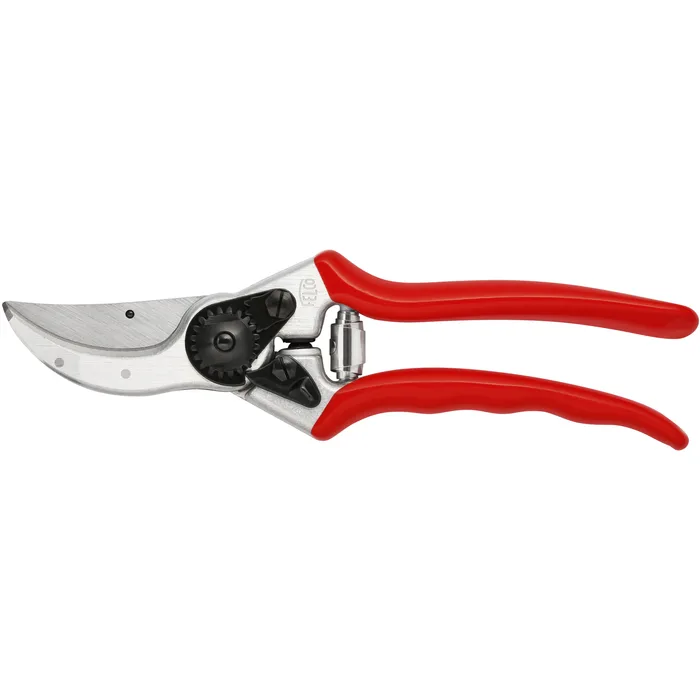
- Buy FELCO 2 The classic Swiss bypass pruner: forged aluminum handles, a 25 mm stated cut, a fully repairable design and a lifetime warranty. Amazon
- Buy Hoss Pruning Shears A forged aluminum bypass pruner with a stated 1-inch cut, a PTFE-coated blade and a layout Hoss says works in either hand.
- Buy Corona ClassicCUT Bypass Pruner, 1 in. (BP 3180D) A forged-steel bypass pruner for bigger hands, with a resharpenable blade and a lifetime warranty. Amazon
- It depends GARDENA Garden Secateurs ExpertCut A German-made bypass pruner with an adjustable grip width for small to medium hands, usable left or right handed.
- It depends Darlac DP1030A Expert Bypass Pruner A drop-forged UK bypass pruner that pairs a 25 mm cut with slim handles meant to suit small hands. Amazon
- Skip Radius Garden 8" 2-in-1 Ratcheting Anvil Pruner (AP03-R01) A ratcheting anvil pruner sold as an all-purpose tool, when an anvil blade is the wrong choice for most live pruning.
What actually matters
- Cutting action - Bypass blades slide past a hook like scissors and leave a clean cut. Anvil blades press onto a flat surface, which can crush living tissue.
- Cut capacity - This is the thickest stem the maker says the tool will handle. Working at the limit strains the pivot and your wrist.
- Hand fit - Handle spread and grip shape decide how hard each cut feels. A catch with several positions lets you narrow the opening.
- Handedness - Right-handed pruners put the blade where a lefty cannot see the cut. Ambidextrous or dedicated left-handed models fix that.
- Blade steel - Hardened carbon or stainless steel holds an edge longer. Makers sometimes state hardness on the HRC scale.
- Sap control - Sap grooves and non-stick coatings stop resin from gumming the blade. That keeps cuts smooth through a long session.
- Repairability and warranty - Replaceable blades and springs let you rebuild the tool. A long warranty shows the maker expects it to last.
The specs, in plain English
Green flags vs red flags
Green flags
- The maker states cut capacity, length and weight on the product page.
- Hand-size and handedness guidance is published for each model.
- Replacement blades and springs are sold for the exact model.
- A bypass cutting action for a general-purpose pruner.
- A clearly stated warranty term.
Red flags
- An anvil or ratchet pruner marketed as an all-purpose garden pruner.
- Boilerplate copy that claims one tool prunes, saws and shears.
- No cut capacity, or conflicting weights on the same page.
- No replacement parts or warranty term anywhere on the maker's site.
- A right-handed tool sold without saying so.
Who's who: the brands
- FELCO - Swiss maker of the FELCO 2, known for fully repairable pruners and a wide range of hand sizes and left-handed models.
- Corona - US tool brand known for forged ClassicCUT pruners and lifetime warranties, now part of the Venanpri group with Bellota and Burgon & Ball.
- GARDENA - German garden brand whose secateurs carry long guarantees and stated hardness figures.
- Darlac - UK pruner specialist known for drop-forged Expert models with replaceable blades.
- Hoss - US homesteading tool seller known for wheel hoes and a budget forged pruner with an ambidextrous design.
How to read a listing without getting fooled
Start with the cutting action, because no spec makes up for an anvil blade on living stems. Then find the stated cut capacity and treat it as a ceiling. Look for hand-size and handedness guidance next; Felco, Corona and Gardena all publish it, and its absence is worth noting. Check whether the blade is described as replaceable or resharpenable, and whether the maker sells parts for that exact model. Finally, read the warranty term on the maker's site rather than a retailer listing. If a page gives two different weights or uses generic copy that could describe any tool, treat the rest of its claims with caution.
How much should you spend?
Budget pruners can cut well when new, but they usually skip replacement parts, publish thin specs and carry short or vague warranties. Mid-range pruners add forged construction, better steel and clearer hand-size guidance, and often a long warranty. Premium pruners like the FELCO 2 cost more up front but are designed to be taken apart, sharpened and rebuilt with parts sold by the maker, which can make them the cheapest option over many years. Spend more if you prune often or have specific hand-fit needs, and less if you prune a few times a season.
Questions, answered
How often should I sharpen pruning shears?
Sharpen whenever cuts start to tear or crush rather than slice cleanly. Heavy users may touch up the edge every few weeks in season, while occasional gardeners might sharpen once or twice a year. Follow the maker's guidance for the angle and tool. A sharp blade also reduces hand strain.
Should I clean pruners between plants?
Wiping sap and debris off the blade after each session keeps the action smooth and slows rust. Many gardeners also clean blades between plants when cutting out diseased growth, to avoid spreading it. Dry the tool before storing it.
What is the difference between pruners and loppers?
Pruners are one-handed and handle stems up to roughly an inch. Loppers have long handles worked with both arms for thicker branches. Use a pruning saw beyond a lopper's capacity.
Do electric pruners make sense for home gardens?
Battery pruners are aimed at people making thousands of cuts, such as vineyard and orchard workers. For a home garden, a good manual bypass pruner is lighter, simpler and far cheaper. They can help gardeners with limited grip strength, so weigh that against the cost.
Or jump to the head-to-head: FELCO 2 vs Hoss Pruning Shears.