Explained
Pressure Washers, Explained
After reading this, you'll be able to look at any pressure washer listing and know whether its numbers are honest, whether it's powerful enough for your jobs, and where it's likely to break first.
In this guide
A pressure washer turns your garden hose into a cleaning tool strong enough to strip grime off driveways, siding, patio furniture, and cars. The catch is that the category is drowning in inflated numbers: brands advertise peak 'max' pressures the machine only touches for a split second, while the specs that actually predict cleaning power sit in the fine print. For nearly all home use, a modern electric model is the right call - the real decisions are how much honest power you need, corded versus cordless, and whether the fittings will survive more than a season.
The 30-second version
- Rated PSI beats max PSI. The big number on the box is usually a momentary peak; the smaller 'rated' figure is what the machine sustains while actually cleaning.
- GPM matters as much as PSI. Pressure loosens grime, but water flow is what rinses it away - around 1.2 GPM sustained is the healthy floor for home machines.
- Electric is now the default for homes. Modern corded and battery washers handle vehicles, siding, decks, and patios as well as gas for typical jobs, with none of the fuel, oil, or winterizing hassle.
- Fittings fail first. Plastic garden-hose inlets, couplings, and trigger-gun connections are the most common failure points in owner reports - metal fittings at those spots tend to outlast plastic.
- Cordless costs flagship money. Battery-powered washers are only worth the premium if you regularly clean beyond an outlet's reach or already own the brand's battery ecosystem.
The products this guide is about
Our verdict on each, with the full reasoning on the companion review.
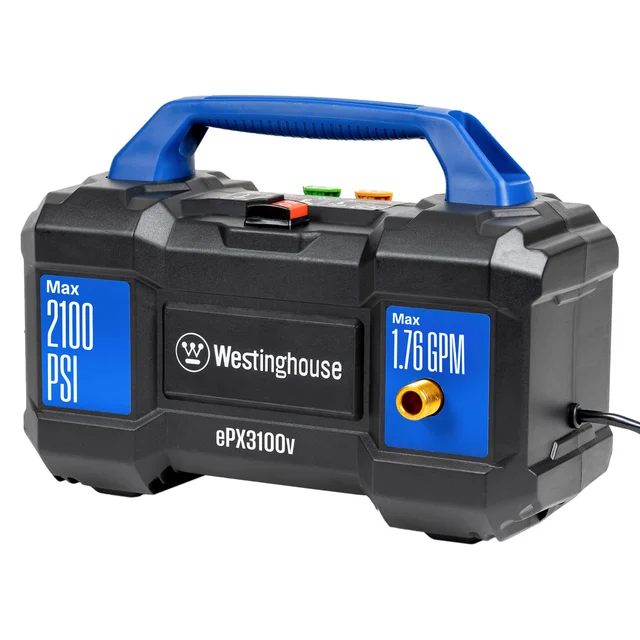
- Buy Westinghouse ePX3100v A tiny, grab-and-go corded washer that cleans far above its size and price class. Amazon
- Buy Karcher K1800PS Cube Straightforward rated output, tidy cube design, and the polish of an established pressure washer brand. Amazon
- It depends EGO Power+ HPW3204-2 Cordless Pressure Washer Gas-level power with zero cords - if you can stomach flagship pricing and battery logistics. Amazon
- Skip Sun Joe SPX3000 The decade-old bestseller now trails newer rivals on build quality, and owner reports of leaks are too common to ignore. Amazon
What actually matters
- Sustained cleaning power - the combination of rated PSI and GPM during real use, not the startup spike. Roughly 1800-2400 PSI with about 1.2 GPM covers most residential jobs.
- Honest ratings - a clearly stated 'rated' number (or a PWMA rating, if the maker cites one) tells you what you're actually buying; a lone 'max' number tells you much less.
- Build quality at the failure points - metal or brass fittings on the hose inlet, couplings, and gun connection are a good predictor of whether the machine survives past its first couple of seasons.
- Weight and storage footprint - the washer you actually use is the one that's easy to grab; under about 20 pounds and shelf-storable is the convenience sweet spot for occasional home use.
- Power source - corded 120V is cheaper, lighter, and runs forever; cordless buys you outlet-free reach at a steep price and weight penalty.
- Included accessories - quick-connect nozzle tips, a turbo nozzle, a foam cannon, and onboard detergent tanks change how useful the machine is day to day, and buying them separately adds up.
- Trigger auto-stop - a total-stop system that shuts the motor off when you release the trigger cuts noise, energy use, and pump wear.
The specs, in plain English
Green flags vs red flags
Green flags
- A clearly stated rated PSI and GPM, not just a headline 'max' figure
- Metal or brass fittings at the garden-hose inlet, hose coupling, and trigger-gun connection
- A total-stop trigger system that shuts the motor off between sprays
- A 3-year or longer warranty, which signals the maker expects it to last
- Light, compact body (under about 20 pounds) with onboard storage for the gun, nozzles, and cord
- Useful accessories in the box: multiple quick-connect tips, a turbo nozzle, or a foam cannon
Red flags
- A huge 'max PSI' on the box with no rated figure anywhere in the listing
- Plastic garden-hose inlet and plastic couplings - the parts owner reports say leak or crack first
- Recurring owner reports of pressure loss after a season, often a stuck unloader valve with no user fix
- A design that hasn't changed in many years while same-tier rivals rebuilt around its weak points
- Cordless models sold at flagship prices without batteries or charger included in the kit
- A very short pressure hose on a machine with no wheels - you'll be dragging the unit constantly
Who's who: the brands
- Karcher - German brand with a long record in consumer pressure washers; known for compact designs and refined fit-and-finish.
- Westinghouse - A value-focused name whose compact electric washers have drawn good owner reports for their price class.
- EGO - A 56V battery platform; its cordless flagship washer reaches up to 3200 PSI, priced accordingly and most sensible if you already own EGO batteries.
- Sun Joe - The long-time internet-favorite budget brand; enormous installed base and generous accessories, but its best-known model has aged behind better-built same-tier rivals.
- Ryobi - Home-center staple with a wide corded and battery lineup; convenient if you're already in its battery ecosystem and value easy parts availability.
- Greenworks - Electric outdoor-tool specialist offering capable corded and cordless washers across price tiers, generally competitive on features per tier.
How to read a listing without getting fooled
Start by ignoring the biggest number on the page. Find the rated PSI and GPM - if the listing shows only a 'max' figure, assume the sustained output is meaningfully lower and treat the machine as a tier below its marketing. Check what the fittings are made of: photos usually reveal whether the garden-hose inlet and gun connection are metal or plastic, and owner reviews will tell you quickly if they leak. Look at the accessory list for quick-connect tips, a turbo nozzle, or a foam cannon, since buying those separately erodes any sticker savings. Note the hose length and whether the unit has wheels or a carry handle - that determines how it actually feels to use. Finally, scan longer-term owner reports for the phrase 'lost pressure': repeated mentions point to unloader-valve or seal problems that short honeymoon reviews never catch.
How much should you spend?
Cost in this category is driven mostly by power source, rated output, and build materials - not by cleaning ability for typical home jobs. The value sweet spot for most homeowners is a compact corded electric unit in the budget-to-mid tiers: honestly rated around 1800-2100 PSI, light enough to carry one-handed, with metal fittings at the failure points. Stepping up a tier buys refinement - onboard storage, nicer accessories - rather than dramatically more cleaning power, and it's worth it if you value tidy storage. The big jump to flagship pricing comes with cordless battery platforms, and that premium only makes sense if you regularly clean beyond the reach of an outlet or already own the brand's batteries. Spending more does not pay off if everything you wash sits near a plug; spending less than the honest-budget tier usually means plastic fittings and inflated ratings that cost you a replacement machine within a couple of seasons.
Questions, answered
How much PSI do I actually need for home use?
A sustained 1800-2400 PSI with around 1.2 GPM handles most residential jobs - vehicles, siding, decks, furniture, and light concrete. Higher pressure mainly speeds up large driveway jobs, and it raises the risk of damaging wood, window seals, and car paint if you get careless with narrow nozzles.
Do I need a gas pressure washer, or is electric enough?
For home use, electric is now the default recommendation. Modern corded and battery models clean as well as many gas units for typical tasks while being quieter, lighter, cheaper to run, and free of fuel, oil changes, and winterizing. Gas can still make sense for sustained heavy-duty work or very large properties with serious concrete.
Why is the PSI on the box so much higher than what reviewers measure?
Many brands advertise a momentary 'max' PSI that the pump touches only briefly, not the sustained working pressure. The more honest number is the 'rated' figure in the fine print. When comparing two machines, compare rated to rated - an 1800 PSI rated unit can out-clean a '2000+ max' one.
Is a cordless pressure washer worth it?
Only in specific situations. If everything you wash is within reach of an outlet and a hose, a corded unit does the same jobs for a fraction of the cost and weight. Cordless earns its flagship premium when you clean far from power - boats, fence lines, rental properties - or when you already own the brand's batteries from a mower or blower, which removes most of the added cost.
What breaks first on cheap pressure washers?
Owner reports often point to fittings and seals: plastic garden-hose inlets, hose couplings, and trigger-gun connections that weep or crack, plus internal unloader valves that stick and cause sudden pressure loss - often on some units. Machines with metal fittings at those points tend to draw fewer of these complaints.
Can a pressure washer damage my car, deck, or siding?
Yes, if misused. Narrow-angle nozzles at close range can strip car paint, etch soft wood, force water behind siding, and blow out window seals. Use wide-angle tips and keep the nozzle moving and at a sensible distance for delicate surfaces - a foam cannon plus a wide rinse tip is the safe routine for vehicles. Save the turbo and narrow tips for concrete and stone.
Or jump to the head-to-head: Westinghouse ePX3100v vs Karcher K1800PS Cube.