

Garden & Outdoor Living
The Best Electric Pressure Washers for Home Use: 4 Compared (and One to Skip)
Four electric pressure washers compared on real cleaning power, build quality, portability, and long-term reliability for typical home jobs.
The short version
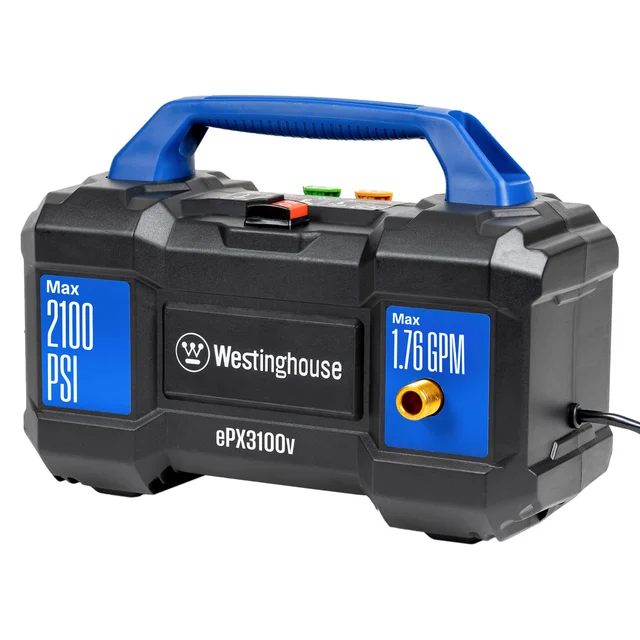
For most homes, buy the Westinghouse ePX3100v: it handles cars, patios, siding, and furniture with ease, weighs almost nothing, and includes a foam cannon at a budget tier. If you want nicer fit-and-finish and a plain rated spec, the Karcher K1800PS Cube is the straightforward runner-up. The EGO Power+ HPW3204-2 is the performance king and fully cordless, but it only makes sense at its flagship price if you need outlet-free reach or already own EGO batteries. Skip the Sun Joe SPX3000 - the long-time bestseller's plastic fittings, leak reports, and dated design have been overtaken at the same price tier. Best for: weekend home cleaning - pick the Westinghouse unless you need cordless power, then go EGO.
Our picks at a glance
- Westinghouse ePX3100v - Buy. A tiny, grab-and-go corded washer that cleans far above its size and price class.
- Karcher K1800PS Cube - Buy. Straightforward rated output, tidy cube design, and the polish of an established pressure washer brand.
- EGO Power+ HPW3204-2 Cordless Pressure Washer - It depends. Gas-level power with zero cords - if you can stomach flagship pricing and battery logistics.
- Sun Joe SPX3000 - Skip. The decade-old bestseller now trails newer rivals on build quality, and owner reports of leaks are too common to ignore.
The verdict in 30 seconds
What mattered most
- Pressure (as rated)
- Water flow
- Power source
- Weight & portability
- Included accessories
- Build & reliability reputation
For driveways, siding, patio furniture, and cars, a good electric pressure washer has quietly replaced gas for most homeowners: quieter, lighter, and nearly maintenance-free. We compared four current models across the price spectrum - a compact corded value pick, a tidy cube-style unit from the category's oldest brand, a cordless flagship, and the long-running bestseller that owner reports suggest has been passed by. Two earn a clear buy, one depends on your budget and battery ecosystem, and one we'd now skip.
A tiny, grab-and-go corded washer that cleans far above its size and price class.
Best for: Most homeowners with typical weekend jobs - cars, patios, furniture, siding - who want the least fuss per cleaning session.
- Compact, lightweight body (under 20 lbs) that stores on a shelf and carries in one hand
- Strong real-world cleaning for cars, patios, siding, and furniture, with a pro-style gun and steel extendable wand
- Three quick-connect tips plus a detachable foam cannon and flexible easy-coil hose included
- Total Stop System kicks the motor off when you release the trigger, saving energy and pump wear
- Not the tool for deep-set driveway stains or large concrete areas - flow and pressure are mid-pack
- No wheels or onboard cord reel, so cable management is on you
- Headline max-PSI figure is higher than the sustained rated output, as with most budget corded units
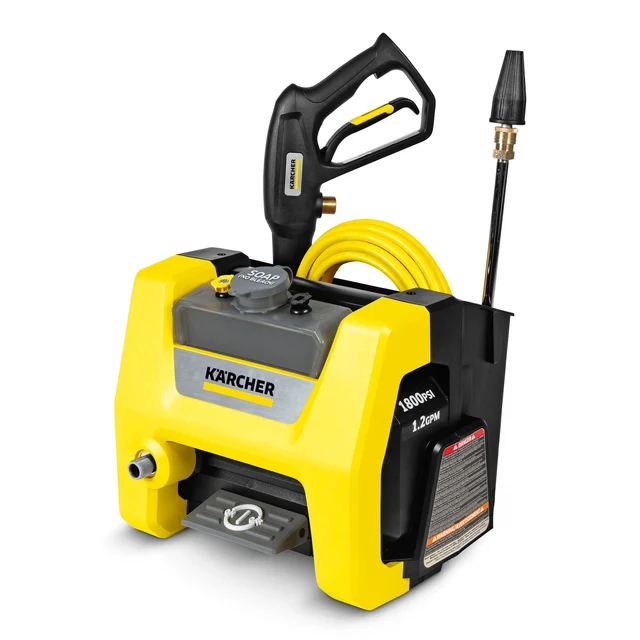
Straightforward rated output, tidy cube design, and the polish of an established pressure washer brand.
Best for: Buyers who value truth-in-specs, tidy storage, and refined accessories over headline PSI numbers.
- Rated 1800 PSI at 1.2 GPM, a plain working figure rather than a bigger peak number
- Stable, compact cube form with onboard accessory storage and an integrated detergent tank
- Well-made gun, wand, and turbo nozzle; owners often praise fit-and-finish and easy setup
- Compact cube form that is easy to carry and store
- Modest flow rate means big concrete jobs take patience
- A compact unit means repositioning more often than with a wheeled full-size unit
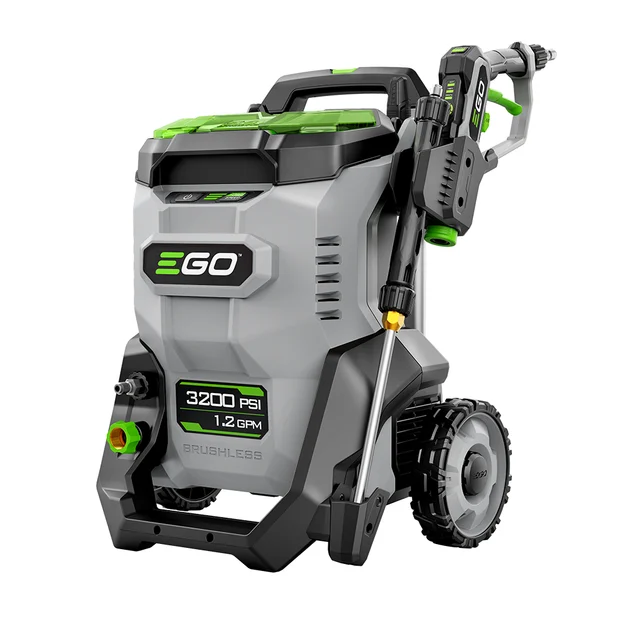
Gas-level power with zero cords - if you can stomach flagship pricing and battery logistics.
Best for: Large properties, detailers, and existing EGO battery owners who need cordless reach and maximum electric power.
- Up to 3200 PSI by combining any two 56V ARC Lithium batteries - the strongest cleaning of this group by far
- Fully cordless: wash the boat, the far fence line, or a rental property with no outlet in sight
- Up to 60 minutes of runtime on one charge with the two included 6.0Ah batteries
- Doubles as a smart buy if you already own EGO mower or blower batteries
- Kit with two 6.0Ah batteries costs several times what a capable corded unit does
- Batteries add weight, and long high-power sessions will outlast a single charge
- EGO's own page currently lists this kit as coming soon, so availability is uncertain
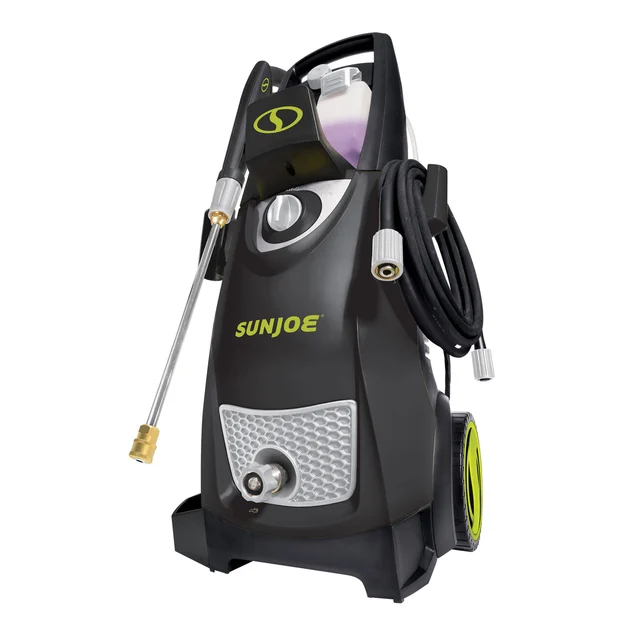
The decade-old bestseller now trails newer rivals on build quality, and owner reports of leaks are too common to ignore.
Best for: Hard to recommend today - the Westinghouse ePX3100v costs about the same tier and is better built.
- Dual onboard detergent tanks and five quick-connect nozzles included
- Huge installed base means parts, fixes, and how-to help are easy to find
- Owners repeatedly report leaks at the plastic garden-hose inlet, hose coupling, and trigger-gun fitting
- Reports of pressure loss and internal unloader-valve failures after a season or two of use
- Headline 2030 PSI is a peak figure, not a sustained working pressure
- Plasticky fittings and connectors feel dated next to same-tier competitors
| Criteria | Westinghouse ePX3100v Top pick Buy it Buy | Karcher K1800PS Cube Buy it Buy | EGO Power+ HPW3204-2 Cordless Pressure Washer It depends Buy | Sun Joe SPX3000 Skip it Buy |
|---|---|---|---|---|
| Best for | Most homeowners with typical weekend jobs - cars, patios, furniture, siding - who want the least fuss per cleaning session. | Buyers who value truth-in-specs, tidy storage, and refined accessories over headline PSI numbers. | Large properties, detailers, and existing EGO battery owners who need cordless reach and maximum electric power. | Hard to recommend today - the Westinghouse ePX3100v costs about the same tier and is better built. |
| Price tier | $ · budget | $$ · mid-range | $$$$ · flagship | $ · budget |
| Pressure (as rated) | 2100 PSI max / 1800 rated | 1800 PSI rated | Up to 3200 PSI max | 2030 PSI max |
| Water flow | 1.76 GPM max / 1.2 rated | 1.2 GPM rated | 1.2 GPM (up to 2.0 max) | 1.76 GPM max |
| Power source | Corded 120V | Corded 120V | Two 56V batteries (cordless) | Corded 120V |
| Weight & portability | Under 20 lbs, one-hand carry | Compact cube | Heavier once batteries are in | Wheeled upright unit |
| Included accessories | 3 quick-connect tips + foam cannon | Gun, wand, turbo nozzle, onboard storage | Multiple nozzles, batteries + charger in kit | 5 nozzles, dual detergent tanks |
| Build & reliability reputation | Strong owner satisfaction, metal gun fittings | Owners often praise fit-and-finish | Cordless 56V platform | Recurring owner reports of leaks and pressure loss |
| Warranty | 3-year limited | Check maker | 5-year tool / 3-year battery | Check maker |
| Price tier | $ · budget | $$ · mid-range | $$$$ · flagship | $ · budget |
Which one is right for you?
- Most homeowners with typical weekend jobs - cars, patios, furniture, siding - who want the least fuss per cleaning session. Buy it Westinghouse ePX3100v
- Buyers who value truth-in-specs, tidy storage, and refined accessories over headline PSI numbers. Buy it Karcher K1800PS Cube
- Large properties, detailers, and existing EGO battery owners who need cordless reach and maximum electric power. It depends EGO Power+ HPW3204-2 Cordless Pressure Washer
- Hard to recommend today - the Westinghouse ePX3100v costs about the same tier and is better built. Skip it Sun Joe SPX3000
How we judged the field
We don’t run a spray-nozzle lab. Instead, we synthesized maker specifications with large volumes of aggregated owner reports - the long-tail experiences that show up only after a machine has spent a season or two in a garage. Four things mattered most: real sustained cleaning power (not peak marketing PSI), build quality at the failure-prone points (fittings, couplings, unloader valves), portability and storage for a tool most people use twice a month, and honest value within each price tier. Check current availability before buying, since stock changes.
Westinghouse ePX3100v
Buy itThe ePX3100v is the answer to the question most homeowners are actually asking: what’s the least expensive, least annoying machine that will genuinely clean my car, patio, furniture, and siding? Westinghouse lists it at 17.6 pounds, so it stores on a shelf and carries in one hand. Owners praise the pro-style gun. Westinghouse includes three quick-connect tips and a detachable foam cannon, and the Total Stop System spins the motor down the instant you release the trigger. Its limits are honest ones: mid-pack flow means big concrete areas take patience, and there are no wheels or cord reel. But as a default recommendation for typical weekend jobs, nothing here matches its combination of price tier, portability, and build.
Karcher K1800PS Cube
Buy itKarcher is one of the best-known names in pressure washers, and the K1800PS Cube shows that pedigree. Its 1800 PSI at 1.2 GPM is a plain working rating rather than a startup spike, which can make it more useful in practice than rivals with bigger numbers on the box. The cube layout is clever: stable on its base with onboard accessory storage and a detergent tank. Owners often note the fit-and-finish of the gun, wand, and turbo nozzle. The trade-offs are a modest flow rate that makes large driveways slow going and a compact footprint that means repositioning the unit more often than with a wheeled full-sizer. If you’d rather have a refined, honestly-rated tool than chase peak PSI, this is the one.
EGO Power+ HPW3204-2 Cordless Pressure Washer
It dependsThe EGO is the most powerful machine in this comparison and the only one with no cord at all. It combines any two 56V ARC Lithium batteries to deliver up to 3200 PSI - territory that overlaps entry gas machines - with up to 60 minutes of runtime on one charge from the two included 6.0Ah batteries. EGO lists a 5-year tool warranty and a 3-year battery warranty. So why ‘it depends’? The two-battery kit sits at a flagship tier that buys several corded washers, batteries add weight, and hard runs at full power will outlast a single charge. EGO’s own page currently lists the kit as coming soon, so availability is uncertain. If you already own EGO batteries, or you regularly clean beyond the reach of an outlet, it’s superb. If everything you wash is near a plug, the premium is hard to justify.
Sun Joe SPX3000
Skip itThe SPX3000 has been the internet’s default budget pressure washer for over a decade, and that longevity is exactly the problem: the design has barely moved while the competition rebuilt around its weaknesses. Owner reports keep circling the same failure points - the plastic garden-hose inlet that leaks or blows off, weeping high-pressure couplings and trigger-gun fittings, and an internal unloader valve that can stick and kill pressure entirely, . Its headline 2030 PSI is a peak figure, and the gap between peak and sustained pressure is something the better brands are more upfront about. To be fair, the dual detergent tanks and five included nozzles remain generous, and the enormous installed base means help is easy to find. But when the Westinghouse ePX3100v occupies the same budget tier with stronger owner-reported durability, there is no longer a scenario where the SPX3000 is the right first choice.
Westinghouse ePX3100v vs Karcher K1800PS Cube: which should you buy?
These two are closer than their spec sheets suggest. The Westinghouse advertises a higher max PSI, but the Karcher’s 1800 PSI is a plain rated figure - in real cleaning sessions they likely land in the same class, comfortably handling vehicles, siding, patios, and furniture. The Westinghouse wins on price tier, on the included foam cannon, and on sheer grab-and-go convenience; it’s the machine you’ll never hesitate to pull out for a ten-minute job. The Karcher wins on integration and refinement: onboard storage for everything, an integrated detergent tank, a turbo nozzle that speeds up stubborn grime, and a plainly stated rating. Pick the Westinghouse if value and portability lead your list - it’s our overall pick for most homes. Pick the Karcher if you’re happy to pay one tier up for tidier storage and nicer accessories.
What to look for
- Rated PSI, not ‘max’ PSI. A clearly stated rated figure predicts real cleaning power better than a peak number.
- GPM matters as much as PSI. Flow is what rinses grime away - around 1.2 GPM sustained is the healthy floor for home machines.
- Metal fittings at the failure points. Brass or metal garden-hose inlets, couplings, and gun connections tend to outlast plastic ones.
- Total-stop trigger systems. Auto shutoff when you release the trigger cuts noise, energy use, and pump wear.
- Weight and storage footprint. The washer you use is the one that’s easy to carry and put away; under 20 pounds is the convenience sweet spot.
- Corded unless you truly need cordless. Batteries add flagship cost and weight - worth it only for outlet-free properties or existing battery ecosystems.
Our final take
The electric pressure washer market rewards honesty and portability over spec-sheet bravado. The Westinghouse ePX3100v is the buy for most homes: budget tier, genuinely capable, and so easy to deploy that your outdoor surfaces will actually stay clean. The Karcher K1800PS Cube is the runner-up for buyers who want a plain rated output and premium fit-and-finish in a tidy, storable package. The EGO Power+ HPW3204-2 is the aspirational machine - unmatched electric power and total cordless freedom - but only rational at its flagship tier if you need what only it can do. And the Sun Joe SPX3000, for all its years of service as the internet’s favorite cheap washer, has aged out of the recommendation: the same money now buys better-built machines that won’t spring leaks a season in.
Questions, answered
How much PSI do I actually need for home use?
Roughly 1800 to 2400 PSI with around 1.2 GPM handles most residential jobs: vehicles, siding, decks, furniture, and light concrete. Higher pressure mainly speeds up large driveway jobs - and can damage wood, window seals, and car paint if misused.
Is an electric pressure washer really enough, or do I need gas?
For home use, electric is now the default recommendation. Modern corded and battery models clean as well as many gas units for typical tasks, while being quieter, lighter, cheaper to run, and free of fuel, oil changes, and winterizing chemicals. Gas can still make sense for sustained heavy-duty use.
Why do skip-worthy models advertise such high PSI numbers?
Many brands advertise a momentary 'max' PSI that the pump touches only briefly at startup, not the sustained working pressure. Check the 'rated' figure in the fine print; that is the number that better predicts real cleaning power.
Is the cordless EGO worth the flagship price?
It depends on your property and what you already own. If you have outlets within reach of everything you wash, a corded unit does the same jobs for a fraction of the cost. If you need to clean far from power - boats, fence lines, rental properties - or you already own EGO 56V batteries, the HPW3204-2 is the strongest electric washer here and the premium starts to make sense.
What's the most common failure point on budget electric pressure washers?
Owner reports often point to fittings and seals: plastic garden-hose inlets, hose couplings, and trigger-gun connections that weep or crack, plus stuck internal unloader valves that cause sudden pressure loss. Models with metal fittings and plain rated figures tend to draw fewer of these complaints.
Deciding between the top two? See our head-to-head: Westinghouse ePX3100v vs Karcher K1800PS Cube.
More in Garden & Outdoor Living
Pressure Washers, Explained Plain-English guide → Westinghouse ePX3100v vs Karcher K1800PS Cube Head-to-head →  The Best Robot Lawn Mowers: 4 Compared (and One to Skip)
  The Best Snow Blowers: 4 Compared (and One to Skip)
  The Best Cordless String Trimmers: 4 Compared (and One to Skip)
  The Best Wheelbarrows & Garden Carts: 4 Compared (and One to Skip)