

Outdoors & Fitness
The Best Robot Lawn Mowers: 4 Compared (and One to Skip)
We compared four current robot mowers on navigation, slope handling, lawn-size capacity, obstacle avoidance, anti-theft and rain performance.
The short version
Robot mowers have gone wire-free, and the RTK-GPS crowd now leads the pack. The Mammotion Luba 2 AWD is our top pick: all-wheel drive plus satellite navigation lets it handle steep, big or awkward lawns without a buried wire. The Segway Navimow i105E is the smarter buy for a typical small-to-mid flat lawn, offering easy wire-free mowing at a mid-range price. Husqvarna's Automower 435X AWD is superb but flagship-priced and still leans on a boundary-wire install, so it's a 'depends.' The Worx Landroid Vision's camera-only navigation remains too unreliable to recommend. Best for: most people are best served by the Luba 2 AWD for demanding yards or the Navimow i105E for straightforward ones.
The verdict in 30 seconds
What mattered most
- Navigation
- Wire-free out of the box
- Best lawn size
- Slope handling
- Obstacle avoidance
- Anti-theft & rain sensor
Robot mowers have quietly crossed a line: the best ones now map your yard with RTK satellite positioning or onboard cameras instead of the buried boundary wire that used to make setup a weekend project. That shift also split the field. Some models glide across half an acre and climb banks a push mower would slide down; others promise wire-free freedom their software can't quite deliver. We lined up four of the most talked-about 2026 machines, sorted the genuinely great from the merely clever, and flagged one we'd pass on.
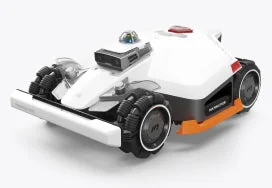
An all-wheel-drive, wire-free workhorse that shrugs off slopes and big lawns most rivals won't touch.
Best for: Larger, sloped or awkward yards where wire-free coverage and traction matter more than a low price.
- True all-wheel drive climbs steep banks and pushes through damp or uneven turf
- RTK-GPS navigation means no boundary wire to bury; you map the yard by walking it once
- Handles large properties and multiple zones that smaller mowers can't finish in a day
- GPS tracking, PIN lock and a motion alarm for anti-theft, plus a rain sensor and app scheduling
- Needs a reasonably clear view of the sky; heavy tree canopy can starve the RTK signal
- Leaves an uncut border along edges and fences that you'll still trim by hand
- App and firmware occasionally need a reboot or update to behave
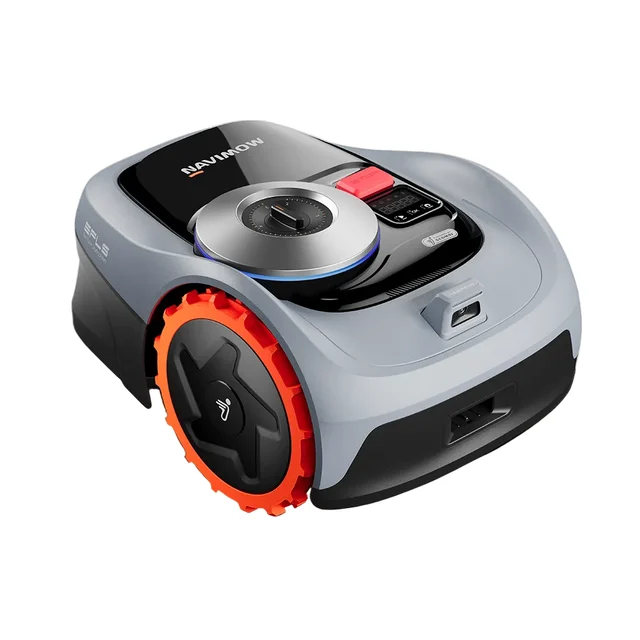
The easiest wire-free mower to live with for a typical suburban lawn, at a sane price.
Best for: Owners of flat-to-gently-rolling small or mid-size lawns who want set-and-forget mowing without fuss.
- RTK positioning paired with a camera-based virtual fence keeps it inside the lines without a buried wire
- Genuinely simple setup and a tidy, quiet machine that reviewers consistently praise for reliability
- Camera vision helps it slow for and steer around people, pets and obstacles
- Anti-theft GPS and PIN, a rain sensor, and app control come standard
- Built for smaller lawns; larger properties need a pricier i-series model
- Slope ability is modest next to all-wheel-drive rivals
- Still needs clear sky for RTK and leaves edges for you to finish
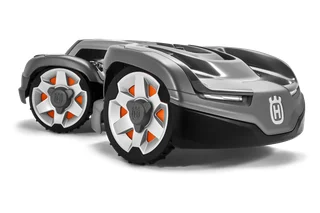
A bulletproof, terrain-crushing flagship that's superb hardware wrapped in an old-school install and a steep price.
Best for: Buyers with steep, intricate or premium landscapes who want proven durability and will pay for it, wire and all.
- Articulated all-wheel drive tackles very steep, rough and complex gardens with ease
- Long-proven reliability and all-weather build; it mows methodically in rain and shrugs off years of use
- Cellular GPS tracking, PIN and alarm make it one of the harder mowers to steal and lose
- Systematic, quiet cutting and a mature app ecosystem
- Relies on a buried boundary wire (or Husqvarna's separately-purchased satellite system) rather than out-of-the-box wire-free navigation
- Flagship pricing that's hard to justify for an ordinary lawn
- Narrow cutting width means longer run times on big open areas
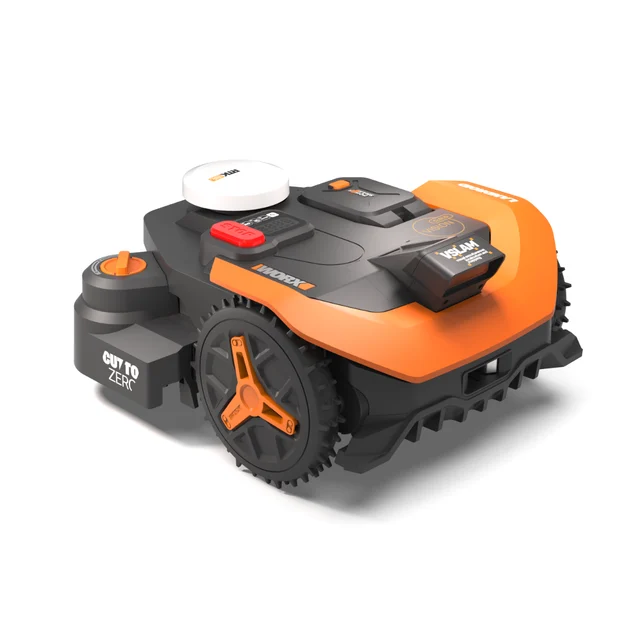
A clever camera-guided concept whose navigation still isn't dependable enough to trust with your lawn.
Best for: Almost no one right now; the vision-only approach is promising but not yet reliable enough to recommend over an RTK mower.
- No boundary wire and no antenna to site; the AI camera reads grass versus not-grass on its own
- An offset cutting disc trims closer to edges than most robots manage
- Shares 20V batteries with the wider Worx cordless-tool range
- Owners report the camera navigation is inconsistent, wandering, missing patches or stalling in shadow, glare or dry, patchy grass
- Obstacle handling and coverage lag well behind RTK-based rivals, so it needs babysitting
- Best suited to small, simple lawns; slopes and clutter expose its limits
| Criteria | Mammotion Luba 2 AWD Top pick | Segway Navimow i105E | Husqvarna Automower 435X AWD | Worx Landroid Vision |
|---|---|---|---|---|
| Verdict | Buy it | Buy it | It depends | Skip it |
| Best for | Larger, sloped or awkward yards where wire-free coverage and traction matter more than a low price. | Owners of flat-to-gently-rolling small or mid-size lawns who want set-and-forget mowing without fuss. | Buyers with steep, intricate or premium landscapes who want proven durability and will pay for it, wire and all. | Almost no one right now; the vision-only approach is promising but not yet reliable enough to recommend over an RTK mower. |
| Price tier | $$$ · premium | $$ · mid-range | $$$$ · flagship | $$ · mid-range |
| Navigation | RTK-GPS + vision, wire-free | RTK-GPS + camera fence, wire-free | Boundary wire + GPS (satellite optional) | AI camera / VSLAM, wire-free |
| Wire-free out of the box | Yes | Yes | No — buried wire | Yes |
| Best lawn size | Large / multi-zone | Small to mid-size | Mid to large, complex | Small, simple |
| Slope handling | Excellent (AWD) | Moderate | Excellent (AWD) | Modest |
| Obstacle avoidance | Good | Fair | Basic (bump + GPS) | Inconsistent |
| Anti-theft & rain sensor | GPS, PIN, alarm + rain sensor | GPS, PIN + rain sensor | Cellular GPS, PIN, alarm + all-weather | PIN + rain sensor |
| Setup effort | Moderate (walk to map) | Easy | High (wire install) | Easy but finicky |
| Price tier | $$$ · premium | $$ · mid-range | $$$$ · flagship | $$ · mid-range |
Which one is right for you?
- Larger, sloped or awkward yards where wire-free coverage and traction matter more than a low price. Buy it Mammotion Luba 2 AWD
- Owners of flat-to-gently-rolling small or mid-size lawns who want set-and-forget mowing without fuss. Buy it Segway Navimow i105E
- Buyers with steep, intricate or premium landscapes who want proven durability and will pay for it, wire and all. It depends Husqvarna Automower 435X AWD
- Almost no one right now; the vision-only approach is promising but not yet reliable enough to recommend over an RTK mower. Skip it Worx Landroid Vision
How we judged the field
We don’t run our own mowing lab. Instead we synthesize independent testing, long-term owner reports, and the manufacturers’ own specifications, then weigh them against the things that actually decide whether a robot mower earns its keep. Navigation came first: whether a model goes wire-free with RTK-GPS or cameras, or still needs a buried boundary wire, changes both setup effort and long-term reliability. From there we looked at slope and traction (all-wheel drive versus two-wheel), realistic lawn-size capacity, how well each machine detects and avoids obstacles, and the practical safety net of anti-theft features and a working rain sensor. Where owners and reviewers disagreed with the spec sheet, we trusted the pattern of real-world reports.
A quick note on the category: prices have not fallen as fast as the marketing suggests, and a cheap wire-free mower that wanders or stalls is worse value than a dependable one that costs more. That framing shaped our verdicts.
Mammotion Luba 2 AWD — buy
The Luba 2 AWD is the machine that best captures why people get excited about this category. It skips the boundary wire entirely, using RTK-GPS to hold its position, and its genuine all-wheel drive lets it climb steep banks and grind through damp, uneven turf that leaves two-wheel mowers spinning. On large or multi-zone properties it just keeps working, and the app-based setup, where you walk the perimeter once, is far less painful than trenching a wire around the garden. Anti-theft GPS, a PIN, an alarm and a rain sensor round out a serious package. It isn’t flawless: RTK wants a clear-ish view of the sky, so heavy tree canopy can interrupt it, it leaves a border you’ll still trim, and the software occasionally needs a nudge. For demanding yards, those are easy trade-offs to accept.
Segway Navimow i105E — buy
If the Luba is the overachiever, the Navimow i105E is the sensible everyday choice. It pairs RTK positioning with a camera-based virtual fence to stay inside the lines without a wire, and reviewers repeatedly single it out for how painless it is to set up and how quietly and reliably it plods along. The camera helps it slow for and route around people, pets and obstacles, and it ships with the expected anti-theft GPS, PIN and rain sensor. The limits are honest ones: it’s built for smaller lawns, its slope ability is modest, and like every RTK mower it needs sky visibility and leaves edges for you. For a flat-to-rolling suburban lawn, it delivers most of the wire-free magic for far less money and stress.
Husqvarna Automower 435X AWD — it depends
The Husqvarna is the most capable and best-built mower here, and also the hardest to recommend without caveats. Its articulated all-wheel-drive chassis eats steep, rough, intricate gardens, it mows methodically in the rain, and it carries the brand’s long reputation for lasting years of hard use. Cellular GPS tracking, a PIN and an alarm make it a nightmare to steal. The friction is twofold. First, this flagship model still leans on a traditional buried boundary wire (Husqvarna’s wire-free satellite option is a separate, pricier ecosystem), so setup is real work rather than an app walkthrough. Second, it’s flagship-priced, which is tough to justify unless your landscape truly demands it. Superb hardware, old-school terms; right for some yards, overkill for most.
Worx Landroid Vision — skip
The Landroid Vision is the most tempting idea in this group and the one we’d steer you away from. Its pitch is elegant: no wire and no antenna to place, with an AI camera that reads grass versus not-grass on its own, plus an offset disc that trims closer to edges than most robots. In practice, owners repeatedly describe the vision navigation as inconsistent, wandering off course, missing patches, or stalling in shadow, glare, or dry, uneven grass. Obstacle handling and overall coverage trail the RTK competition, so it ends up needing the kind of supervision a robot mower is supposed to eliminate. On a small, simple, well-lit lawn it can muddle through, but for the same money you can buy a mower that reliably does the job. The concept deserves another generation; this one we’d pass on.
Mammotion Luba 2 AWD vs Segway Navimow i105E: which should you buy?
These are our two picks, and they barely compete because they’re built for different yards. The Luba 2 AWD is the answer when your lawn fights back: hills, damp patches, large or divided areas, and terrain where traction decides everything. Its all-wheel drive and generous capacity go where the Navimow can’t, and you pay a premium for that reach. The Navimow i105E is the answer when your lawn is cooperative: flat to gently rolling, small to mid-size, and mostly open to the sky. There it’s easier to set up, quieter to live with, and a lot cheaper, giving you the wire-free convenience without the flagship outlay. Put simply, buy the Luba if the yard is the problem, and the Navimow if the yard is easy and you just want it handled. Both go wire-free, both include anti-theft and rain sensing, and both leave a border you’ll occasionally trim.
What to look for
- Navigation type: RTK-GPS or camera-based systems let you skip the buried boundary wire; wire-based mowers are more setup work but immune to canopy and signal issues.
- Drive and slopes: all-wheel drive matters if you have hills, banks, or damp ground; two-wheel models suit flat lawns.
- Lawn-size rating: match the model’s recommended maximum area to your actual lot so it can finish in a cycle.
- Obstacle avoidance: camera and sensor systems that slow for people, pets and objects are worth prioritizing in a busy yard.
- Anti-theft: look for GPS tracking, a PIN, and an alarm, since these machines live outdoors unattended.
- Rain and weather handling: a rain sensor is standard, but check whether the mower keeps working or pauses in wet conditions.
- Edge cutting: expect to trim borders by hand regardless; offset-blade designs help but don’t eliminate it.
- Sky visibility: if your yard is heavily shaded by trees, a wire-based system may be more dependable than RTK.
Our final take
Wire-free robot mowers have genuinely arrived, but the badge alone doesn’t guarantee a good machine. The Mammotion Luba 2 AWD is our overall pick because it combines wire-free setup with the traction and capacity to handle yards that defeat everything else, and the Segway Navimow i105E is the smarter, cheaper choice for the many people whose lawns are simply flat and modest. Husqvarna’s Automower 435X AWD is a superb piece of engineering that asks for a flagship budget and a wired install, so it’s a considered ‘depends’ rather than a blanket recommendation. The Worx Landroid Vision, meanwhile, is a reminder that a brilliant concept still has to work in the yard, not just on paper, and its camera navigation isn’t there yet. Buy for your specific lawn, not the marketing, and you’ll get a mower that quietly earns its place all season.
Questions, answered
Do robot mowers really work without a boundary wire now?
The best ones do. Instead of a wire buried around the lawn, RTK-GPS models like the Luba 2 AWD and Navimow i105E use satellite positioning (often paired with a camera) to know exactly where they are, so you 'draw' the yard by walking the perimeter once in the app. The main catch is that RTK needs a reasonably open view of the sky, so dense tree cover can interrupt it. Traditional wire-based mowers such as the Husqvarna Automower 435X AWD trade that setup convenience for rock-solid, canopy-proof reliability.
Will a robot mower handle my slopes?
It depends heavily on drive type. All-wheel-drive machines like the Luba 2 AWD and Husqvarna 435X AWD can climb steep banks and push through damp or uneven turf, while two-wheel-drive models like the Navimow i105E are happier on flat-to-gently-rolling ground. If your yard has real hills, prioritize an AWD model; owner reports consistently show two-wheel mowers slipping or getting stuck where AWD ones keep going.
Are they safe around kids and pets, and can they be stolen?
Modern robot mowers run small, shielded blades that stop quickly when lifted or tilted, and camera models can slow for and steer around people and pets. For theft, every mower here includes a PIN lock, and the Luba 2 AWD, Navimow and Husqvarna add GPS tracking and an alarm so a stolen unit can be located and disabled. As with any powered garden equipment, supervise young children and pets while it's running.
Do they cut in the rain, and what about the edges?
All four have a rain sensor and the sturdier models will keep mowing in wet weather, though many owners schedule around rain to avoid clumping and lawn ruts. Edges are the common weak spot: most robot mowers leave a few inches uncut along fences and walls because the blade sits inboard of the wheels, so you'll still trim borders occasionally. The Worx Landroid Vision's offset disc trims closer than most, but that alone doesn't offset its navigation shortcomings.
How big a lawn can these cover?
Match the machine to your yard. The Navimow i105E and Worx Landroid Vision are built for smaller lawns, the Luba 2 AWD stretches comfortably across large or multi-zone properties, and the Husqvarna 435X AWD sits in the mid-to-large, complex-garden bracket. Buying too small means the mower can't finish in a cycle; buying too big just wastes money. Manufacturers publish a recommended maximum area for each model, so check yours against your lot before choosing.
More Outdoors & Fitness reviews
 The Best Rowing Machines: 4 Compared (and One to Skip)
  Best Running Shoes for Beginners: Daily Trainers Compared
  The Best Ski Goggles: 4 Compared (and One to Skip)
  The Best Backpacking Sleeping Bags: 4 Compared (and One to Skip)
  The Best Backpacking Sleeping Pads: 4 Compared (and One to Skip)
  The Best Squat Racks: 4 Compared (and One to Skip)