

Outdoors & Fitness
The Best Wheelbarrows & Garden Carts: 4 Compared (and One to Skip)
We compared a steel wheelbarrow, a 4-wheel poly dump cart, a convertible yard cart, and a dual-wheel poly barrow on capacity, stability, tires, and dump effort.
The short version
There's no single "best wheelbarrow" — the right tool depends on what you're moving and where. The Gorilla Carts 7 cu ft poly dump cart is the easiest recommendation for most people: it's stable, hauls a lot, and dumps without lifting. The Jackson M6T22 steel barrow is the durable specialist for dense loads and narrow paths. The WORX Aerocart is a smart pick if versatility and low-lift dumping matter more than capacity. The dual-wheel poly barrow is the one to skip — it splits the difference and does the heavy jobs poorly. Best for: pick a dump cart for volume, a steel barrow for muscle, and buy both before you buy the in-between.
Our picks at a glance
- Jackson M6T22 6 Cu. Ft. Steel Contractor Wheelbarrow - Buy. The seamless-steel workhorse that shrugs off wet concrete, gravel, and everything you'd never trust to plastic.
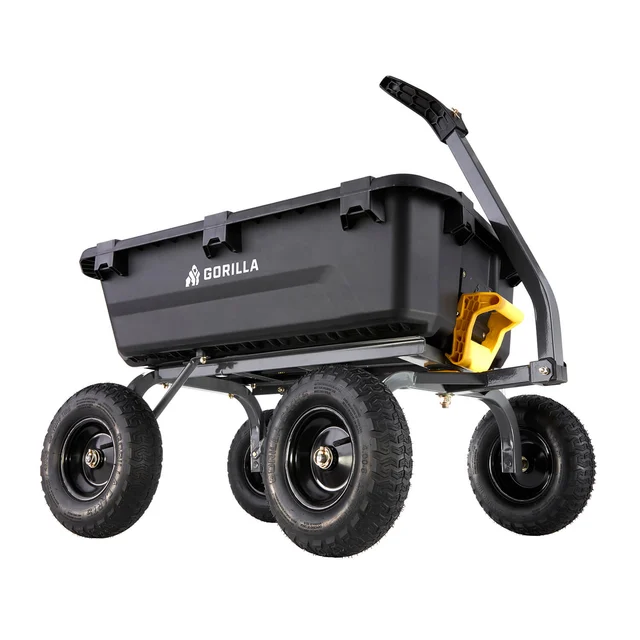
- Gorilla Carts 7 Cu. Ft. Heavy-Duty Poly Yard Dump Cart (GCG-7) - Buy. Four wheels, a 1,200 lb rating, and a quick-release bed that dumps the load so your back never has to.
- WORX Aerocart WG050 8-in-1 Yard Cart - It depends. A clever convertible that dumps, dollies, and moves plants — as long as you don't ask it to haul like a real barrow.
- True Temper RP810 8 Cu. Ft. Dual-Wheel Poly Wheelbarrow - Skip. The dual-wheel poly barrow promises the best of both worlds and lands awkwardly between them.
The verdict in 30 seconds
What mattered most
- Tray capacity
- Load ability
- Wheel setup & stability
- Tire type
- Tray material
- Unload effort
"Wheelbarrow" now covers everything from a one-wheel steel tub you tip by hand to a four-wheel poly cart that dumps a quarter-ton at the pull of a pin. We looked at how independent testing and years of owner reports line up across four very different designs. Two are easy recommendations, one is a genuinely great tool for a specific person, and one is the classic trap: a barrow that looks like it does everything and ends up doing the heavy stuff badly.
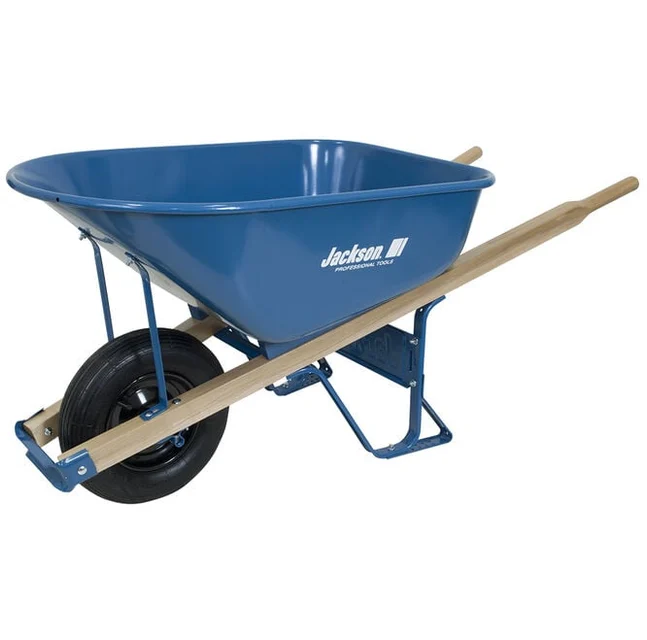
The seamless-steel workhorse that shrugs off wet concrete, gravel, and everything you'd never trust to plastic.
Best for: Anyone hauling heavy, dense material through tight spaces who wants a barrow that outlasts them.
- Deep 6 cu ft seamless steel tray takes dense loads (soil, gravel, concrete) without flexing or cracking
- Single pneumatic wheel pivots on the spot, so it threads gates and garden beds a wide cart can't
- Patented leg stabilizers make it noticeably harder to tip sideways when parked and loading
- One wheel means the load balances on your arms and wrists on uneven ground
- Pneumatic tube can go flat and needs the occasional top-up
Four wheels, a 1,200 lb rating, and a quick-release bed that dumps the load so your back never has to.
Best for: Homeowners and gardeners who move a lot of volume across open yards and want to stop lifting to unload.
- Rated to a manufacturer-stated 1,200 lb and holds a big 7 cu ft poly bed, so you make fewer trips
- Four wheels carry the weight for you — no balancing act — and the front axle turns tight
- Pull one pin and the bed tilts to dump; owners consistently call this the feature they can't give up
- Bulky footprint and a wide wheelbase don't fit through narrow gates or crowded beds
- Heavier to get moving on soft lawn or up a slope than a single-wheel barrow
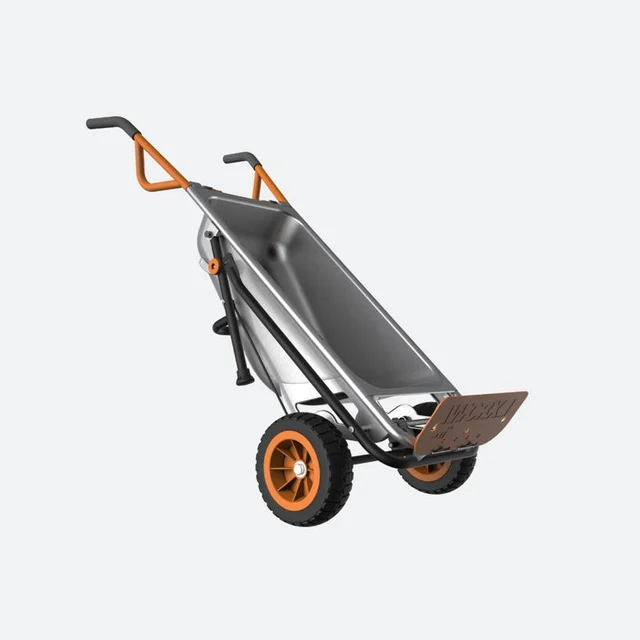
A clever convertible that dumps, dollies, and moves plants — as long as you don't ask it to haul like a real barrow.
Best for: Small-property owners short on storage who value versatility and low-lift dumping over raw load capacity.
- Flat-free poly tires never puncture and never need inflating
- Converts between wheelbarrow, dolly, plant mover, cylinder carrier and more — genuinely space-saving in a small shed
- Two-wheel front geometry lets it dump forward with almost no lifting, which owners with back issues single out
- Modest 300 lb wheelbarrow-mode rating and a shallow tray — it's a mover, not a heavy hauler
- Costs more than a good steel barrow and a dump cart do individually, and the folding parts add rattle over time
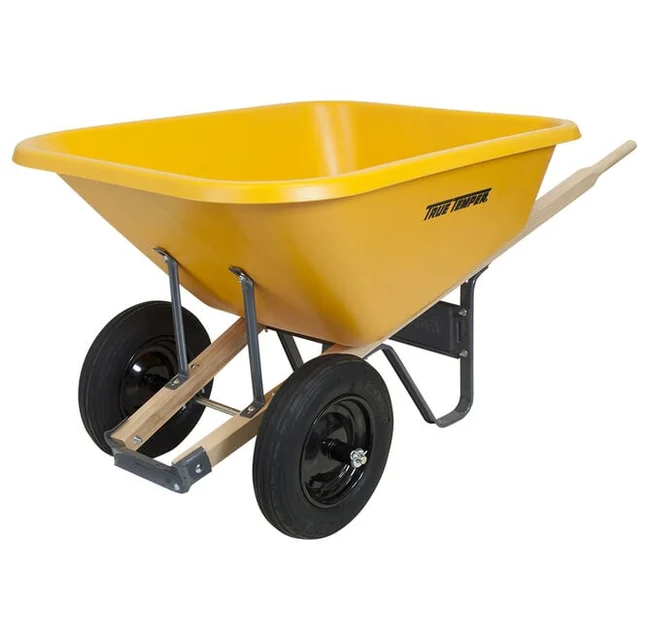
The dual-wheel poly barrow promises the best of both worlds and lands awkwardly between them.
Best for: Almost no one over a steel single-wheel barrow (for heavy work) or a four-wheel dump cart (for volume).
- Two front wheels stop it tipping side-to-side, which helps on slopes and while loading
- Big 8 cu ft poly tray is light, rust-proof, and rinses clean
- Fine for bulky-but-light loads like leaves, mulch, and prunings
- Poly tray flexes and can crack under dense loads (wet soil, gravel, concrete) — the exact jobs steel handles
- You still have to lift and tip 8 cu ft to unload, and two wheels make that tip clumsier than one
- Owners report the roomy tray tempts overloading, which strains the frame and defeats the point
| Criteria | Jackson M6T22 6 Cu. Ft. Steel Contractor Wheelbarrow | Gorilla Carts 7 Cu. Ft. Heavy-Duty Poly Yard Dump Cart (GCG-7) Top pick | WORX Aerocart WG050 8-in-1 Yard Cart | True Temper RP810 8 Cu. Ft. Dual-Wheel Poly Wheelbarrow |
|---|---|---|---|---|
| Verdict | Buy it | Buy it | It depends | Skip it |
| Best for | Anyone hauling heavy, dense material through tight spaces who wants a barrow that outlasts them. | Homeowners and gardeners who move a lot of volume across open yards and want to stop lifting to unload. | Small-property owners short on storage who value versatility and low-lift dumping over raw load capacity. | Almost no one over a steel single-wheel barrow (for heavy work) or a four-wheel dump cart (for volume). |
| Price tier | $$ · mid-range | $$$ · premium | $$$ · premium | $$ · mid-range |
| Tray capacity | 6 cu ft steel | 7 cu ft poly | ~3 cu ft steel (barrow mode) | 8 cu ft poly |
| Load ability | Heavy dense loads | Manufacturer-stated 1,200 lb | Manufacturer-stated 300 lb (barrow mode) | Bulky light loads only |
| Wheel setup & stability | Single wheel — agile, tip by hand | 4 wheels — carries weight, very stable | Dual front wheels — dumps forward | Dual front wheels — steadier but clumsy dump |
| Tire type | Pneumatic (tube) | Pneumatic | Flat-free (no inflation) | Pneumatic (tube) |
| Tray material | Seamless steel | Poly | Steel | Poly |
| Unload effort | Lift and tip by hand | Pull pin, bed dumps itself | Tilts forward, low lift | Lift and tip 8 cu ft by hand |
| Best use | Dense loads, tight spaces | High volume across open yards | Versatile light moving, small sheds | Light bulky yard debris |
| Price tier | $$ · mid-range | $$$ · premium | $$$ · premium | $$ · mid-range |
Which one is right for you?
- Anyone hauling heavy, dense material through tight spaces who wants a barrow that outlasts them. Buy it Jackson M6T22 6 Cu. Ft. Steel Contractor Wheelbarrow
- Homeowners and gardeners who move a lot of volume across open yards and want to stop lifting to unload. Buy it Gorilla Carts 7 Cu. Ft. Heavy-Duty Poly Yard Dump Cart (GCG-7)
- Small-property owners short on storage who value versatility and low-lift dumping over raw load capacity. It depends WORX Aerocart WG050 8-in-1 Yard Cart
- Almost no one over a steel single-wheel barrow (for heavy work) or a four-wheel dump cart (for volume). Skip it True Temper RP810 8 Cu. Ft. Dual-Wheel Poly Wheelbarrow
How we judged the field
We don’t run our own test track. Instead we synthesize independent testing, long-term owner reports, and the published specs each maker stands behind, then weigh them against how these tools actually get used in a yard. “Best wheelbarrow” turns out to be the wrong question — a one-wheel steel barrow and a four-wheel dump cart are almost different tools — so we judged each design on what it’s built to do.
The criteria that mattered most: tray capacity (cubic feet of volume) balanced against load rating (the weight the frame can actually take); stability, which is really a trade between one, two, and four wheels; tire type, weighing puncture-proof convenience against a softer pneumatic ride; tray material, where seamless steel and poly each win different jobs; unload effort, because a cart that dumps itself saves your back on every trip; and assembly and handling, since a barrow you dread wheeling is a barrow you won’t use.
Jackson M6T22 6 Cu. Ft. Steel Contractor Wheelbarrow - buy
This is the shape most people picture when they hear “wheelbarrow,” and it earns the recommendation by being relentlessly good at the hard stuff. The seamless steel tray takes 6 cubic feet of the loads plastic hates — wet concrete, gravel, dense soil — and doesn’t flex or crack. The single pneumatic wheel is the point: it lets the barrow pivot on the spot and squeeze through a gate or between raised beds that a wide cart can’t approach. Jackson’s patented leg stabilizers add a genuinely useful touch, making it harder to tip sideways while you load. The honest trade is that one wheel puts the load on your arms and wrists over rough ground, and the pneumatic tube will eventually want air or a patch. For anyone moving heavy material through tight spaces, that’s a trade worth making.
Gorilla Carts 7 Cu. Ft. Heavy-Duty Poly Yard Dump Cart (GCG-7) - buy
If the Jackson is about muscle, the Gorilla is about not needing any. Four wheels carry the load so you never balance it, the poly bed holds a big 7 cubic feet, and the frame carries a manufacturer-stated 1,200 lb rating — meaning fewer trips for the same pile of mulch or soil. The feature owners refuse to give up is the quick-release dump: pull a single pin and the bed tilts to empty itself, no lifting. The front axle steers, so despite the size it turns tighter than you’d expect. The catch is footprint. A wide four-wheel cart won’t thread a narrow gate or a crowded bed, and it’s heavier to start rolling on soft lawn or up a grade. On open ground moving volume, though, nothing here is easier to live with.
WORX Aerocart WG050 8-in-1 Yard Cart - it depends
The Aerocart is the most interesting tool in this group and the one most likely to be wrong for you. It folds and reconfigures into a wheelbarrow, a dolly, a plant mover, a cylinder carrier and more, which makes it a real space-saver in a small shed — one tool instead of five. Its flat-free poly tires never puncture, and the two-wheel front geometry lets it tip forward and dump with almost no lifting, something owners with back trouble call out again and again. But it is a mover, not a hauler: the wheelbarrow-mode rating is a modest 300 lb and the tray is shallow, so it can’t replace a proper barrow for heavy loads. It also costs more than a good steel barrow and a dump cart bought separately, and the folding joints can develop rattle. Right tool for a small property that prizes versatility; wrong tool if you mainly need to move weight.
True Temper RP810 8 Cu. Ft. Dual-Wheel Poly Wheelbarrow - skip
The dual-wheel poly barrow sounds like the sensible compromise — the stability of extra wheels, the light weight of plastic, a huge 8 cubic foot tray — and in practice it lands in no-man’s-land. The two front wheels do stop it tipping sideways, which is nice on a slope. But you still have to lift and tip a full 8 cubic feet to unload, and two wheels make that tip clumsier than a single-wheel barrow’s clean roll-forward dump. Worse, poly flexes and can crack under the dense loads a big tray invites you to pile in, and owners report the roomy tub simply tempts overloading, straining the frame. For light bulky debris it’s fine. For anything else, a steel single-wheel barrow does the heavy work better and a four-wheel dump cart does the volume better — leaving little reason to buy the in-between.
Gorilla Carts 7 Cu. Ft. Poly Dump Cart vs Jackson M6T22 Steel Wheelbarrow: which should you buy?
These are the two strongest picks, and they suit different yards. The Gorilla dump cart wins for most people because it removes the two hardest parts of moving material: balancing the load and lifting to unload. Four wheels and a 1,200 lb rating mean you can pile it high and let a pin do the dumping, ideal for open lawns and big jobs. The Jackson wins when space and density decide it. A single steel-tray barrow threads gates and garden beds the cart can’t reach, and it laughs off wet concrete and gravel that would flex a poly bed. Short version: buy the Gorilla if your work is high-volume across open ground, and the Jackson if it’s heavy material in tight quarters. Plenty of serious gardeners eventually own both — and that pairing beats any single do-everything barrow.
What to look for
- Match wheels to the job: one wheel for maneuverability and tight spaces, four wheels for stability and no-lift dumping, dual wheels only if you specifically want anti-tip loading and light loads.
- Read the weight rating, not just the volume: a big tray filled with wet soil can exceed what a light frame handles. Prioritize a strong frame and stated load rating for heavy material.
- Steel for dense loads, poly for light bulky ones: steel resists cracking and abrasion; poly is lighter and rust-proof but flexes under weight and cold.
- Decide on tires up front: pneumatic rides softest under heavy loads but needs air; flat-free never punctures but rides firmer — great for a barrow that sits between uses.
- Favor a self-dumping design if your back matters: a pin-release dump cart or forward-tilting cart spares you the lift on every single trip.
- Check the footprint against your gates and paths before buying anything four-wheeled.
Our final take
Stop looking for the one perfect wheelbarrow — the category has split into specialists, and the winners here win by owning their lane. For most homeowners moving mulch, soil, and yard waste across open ground, the Gorilla Carts 7 cu ft dump cart is the easiest tool to live with: stable, high-capacity, and self-emptying. If your work is dense material in narrow spaces, the Jackson M6T22 steel barrow is the tougher, nimbler choice and will likely outlast everything else you own. The WORX Aerocart is a genuinely smart buy for a small property where versatility and a bad back matter more than raw capacity. And the dual-wheel poly barrow is the one to walk past — it promises a compromise and delivers a tool that does the heavy jobs poorly. Buy for the loads you actually move, and if in doubt, a dump cart plus a steel barrow covers nearly everything.
Questions, answered
Single wheel, dual wheel, or four wheels — which is most stable?
Four wheels are the most stable by far: the cart stands on its own and never balances on you, which is why a dump cart is the low-effort choice for open ground. A single wheel is the least stable but the most maneuverable — it pivots in place and tips to dump easily. Dual front wheels sit in between: they resist tipping sideways while you load, but you still carry and tip the load yourself, and two wheels make that tip more awkward than one.
Flat-free or pneumatic tires — which should I get?
Pneumatic (air-filled) tires roll softest over bumps and cushion heavy loads, but they can puncture and lose pressure, so you'll top them up occasionally or fix a flat. Flat-free tires (solid foam or polyurethane) never go flat and are maintenance-free, which owners love, though they ride a touch firmer. For heavy dense loads, most people prefer a good pneumatic tire; for a barrow that sits in the shed for months, flat-free saves the hassle.
Steel tray or poly tray — which lasts longer?
It depends on the load. A seamless steel tray takes dense, abrasive, and heavy material — gravel, wet concrete, rock — without flexing and generally outlasts poly for hard use, though it can dent and eventually rust if scratched. Poly is lighter, rust-proof, and rinses clean, but it flexes and can crack under dense loads or in cold weather. Poly is fine for leaves, mulch, and light soil; choose steel if you're regularly hauling heavy material.
Does a bigger tray (more cubic feet) mean I can carry more weight?
Not necessarily. Cubic feet measures volume; the weight rating is a separate limit set by the frame, wheels, and tray. A big 8 cu ft poly tray can be filled with light mulch all day but will strain if you pack it with wet soil, because the weight climbs faster than the frame can handle. Match the tool to the material: high volume of light debris favors a large tray, while dense heavy loads favor a strong frame and a higher stated weight rating over sheer size.
Are these hard to assemble?
Most arrive partly assembled and need the wheel, legs, and handles bolted on — typically a 20-to-45-minute job with basic tools. Steel single-wheel barrows are the simplest. Four-wheel dump carts have more hardware and take longer, and convertible carts have the most parts to fit. Owners' most common tip is to leave every bolt finger-tight until the frame is fully together, then tighten everything down so the holes line up.
Deciding between the top two? See our head-to-head: Gorilla Carts 7 Cu. Ft. Heavy-Duty Poly Yard Dump Cart (GCG-7) vs Jackson M6T22 6 Cu. Ft. Steel Contractor Wheelbarrow.
More Outdoors & Fitness reviews
 The Best Yoga Mats: Grip, Cushioning, and Durability Compared
  The Best Golf Bags: 4 Compared (and One to Skip)
  The Best Punching Bags: 4 Compared (and One to Skip)
  The Best Smart Bike Trainers: 4 Compared (and One to Skip)
  The Best Snowshoes: 4 Compared (and One to Skip)
  The Best Spin Bikes: 4 Compared (and One to Skip)