

Outdoors & Fitness
The Best Chainsaw Chaps: 4 Compared (and One to Skip)
We compared four currently sold chainsaw leg protectors on the certification actually printed on the label, how much of the leg the pad covers, the lengths and waist ranges offered, and what each maker says about washing and retiring them.
The short version
The STIHL Pro Mark Wrap Chaps are the pick if you want the most leg covered, because they wrap the lower leg instead of hanging in front of it and carry nine layers of Avertic Pro, UL Classified to ASTM F1897. The Husqvarna Technical Apron Wrap is the default choice for a homeowner: UL certified to ASTM F1897, apron wrap coverage, a wedge pocket, and it is stocked almost everywhere. Clogger Zero Gen2 pants suit climbers and anyone running a saw all day in heat, but they are trousers you wear all shift rather than something you buckle on for twenty minutes, so confirm whether the version you order covers the back of the calf. Skip the Oregon 563979 one-size chaps: they are UL Classified and cheap, but a single fixed 36 inch length sold as one size fits all is a fit compromise, and fit is what decides where the pad actually sits. Whatever you buy, check for a genuine UL mark and file number, because UL Solutions put out a warning in February 2026 about chaps carrying a fraudulent UL file number. Best for: anyone who runs a chainsaw on the ground, at any skill level.
Our picks at a glance
- STIHL Pro Mark Wrap Chaps - Buy. Professional wrap chaps that carry the protective pad around the lower leg instead of only across the front of it.
- Husqvarna Technical Apron Wrap Chainsaw Chaps - Buy. The default homeowner chap: UL certified, apron wrap coverage, a wedge pocket, and available almost anywhere saws are sold.
- Clogger Zero Gen2 Light and Cool Men's UL Chainsaw Pants - It depends. Certified chainsaw trousers built for climbers and all day sawyers, which is a different job from a chap you buckle on and take off.
- Oregon Protective Chainsaw Chaps, Black, One Size Fits All (563979) - Skip. UL Classified and cheap, but a single fixed length sold as one size fits all gives up the one variable that decides where the pad sits.
The verdict in 30 seconds
What mattered most
- Style
- Back of leg covered
- Certification as published
- Protective pad
- Outer shell
- Lengths offered
Chainsaw chaps are not padding. Inside the shell is a pad of long loose fibres, and when a running chain cuts the outer layer those fibres get dragged into the drive sprocket and jam the saw. That is the whole mechanism, and it means two unglamorous things decide whether a pair works: whether the pad is where your leg is, and whether the pad is still clean and uncut. We looked at four leg protectors that are sold in the US right now, judged on published certification, coverage, sizing and the maker's own care instructions.
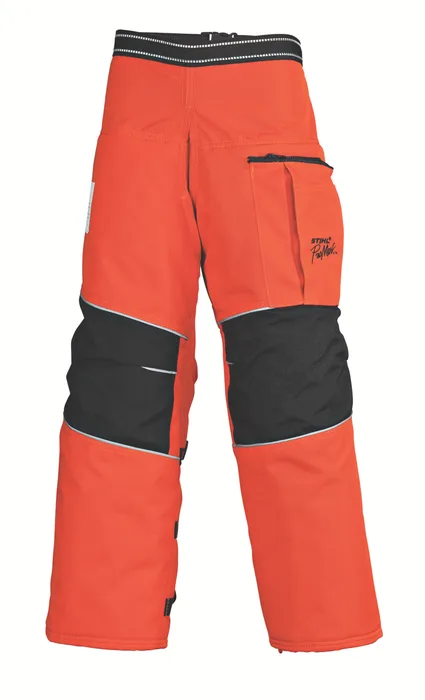
Professional wrap chaps that carry the protective pad around the lower leg instead of only across the front of it.
Best for: Anyone felling, bucking or clearing storm damage often enough that the extra layers and lower-leg wrap are worth the weight and the cost.
- STIHL describes these as wrap-around chaps with full lower-leg cutting protection, so a contact that comes across the side or back of the calf still meets protective fibre.
- Nine layers of Avertic Pro by Engtex, three more than STIHL's standard apron chaps, and UL Classified to the ASTM F1897 performance standard using the F1414 test method.
- Three lengths (32, 36 and 40 inches), a reflective waistband, a zipper cargo pocket and an abrasion-resistant knee, and STIHL calls them wash and wear.
- The wrap is around the lower leg. STIHL does not claim rear coverage of the thigh, so the back of the thigh is still open.
- STIHL's UL classification wording covers operators of gas-powered chainsaws, so battery saw users should read the label and the battery saw FAQ below.
- STIHL does not publish the shell fabric or a waist range, and the lengths stop at 40 inches, so very tall operators may run short.
- Sold through STIHL dealers rather than shipped from STIHL's own site, and it is the most expensive chap here.
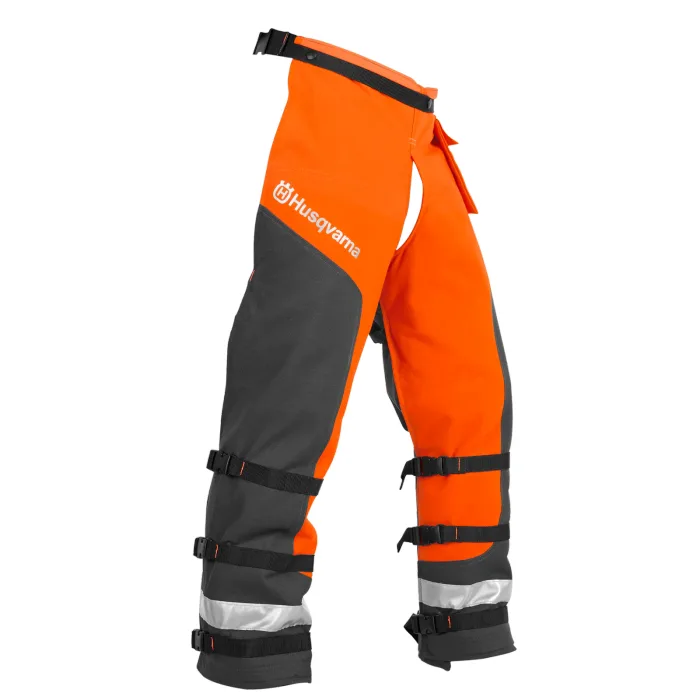
The default homeowner chap: UL certified, apron wrap coverage, a wedge pocket, and available almost anywhere saws are sold.
Best for: The homeowner or part time firewood cutter who wants a properly certified chap without hunting a specialist supplier.
- Husqvarna lists ASTM F1897, ANSI Z133.1, UL certification and compliance with OSHA 1910.266 on the product page itself.
- Apron wrap cut carries protection around the front and onto the sides of the leg, which is more than a flat front apron gives you.
- Five layers of TEK WARP under a PVC coated 1000 denier polyester shell, with a felling wedge and gear pocket and Delrin buckles.
- Wrap is partial. The back of the thigh and calf are still open, unlike a true full wrap.
- Only two size bands, 36/38 and 40/42, with the waist topping out at 42 inches, so tall or large operators are squeezed.
- Husqvarna specifies cold water, mild detergent and hang drying with no chlorine bleach, which is fussier than some rivals.
- Bulkier and warmer than purpose built chainsaw trousers if you are wearing it all day.
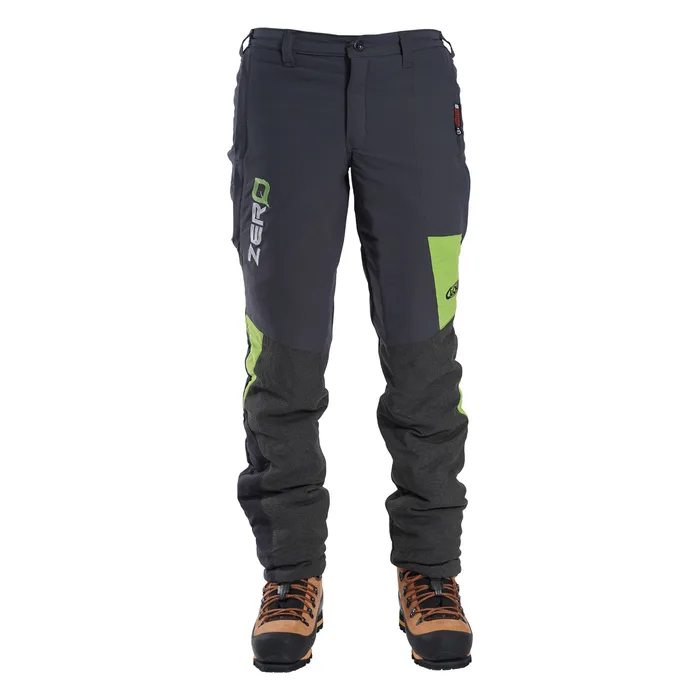
Certified chainsaw trousers built for climbers and all day sawyers, which is a different job from a chap you buckle on and take off.
Best for: Climbing arborists and anyone running a saw for hours in heat, who will genuinely wear certified legwear more often if it breathes.
- Clogger sells these as UL chainsaw pants, so check the label for the UL mark and ASTM F1897 reference as you would with any chap.
- Built as light, breathable trousers for all day wear, which is the point of choosing pants over a chap.
- Sized as trousers rather than one-size chaps, so the protective panel follows your leg length.
- Chainsaw trousers commonly protect the front of the leg only, so confirm whether the version you order covers the back of the calf.
- You wear trousers for the whole shift. A chap comes off at the truck, which many ground workers actually prefer.
- Priced well above any chap here, and a torn pair is a whole garment replaced rather than a chap swapped out.
- Fit matters more than with a chap, because you cannot cinch a trouser leg into position the way you can a strap.
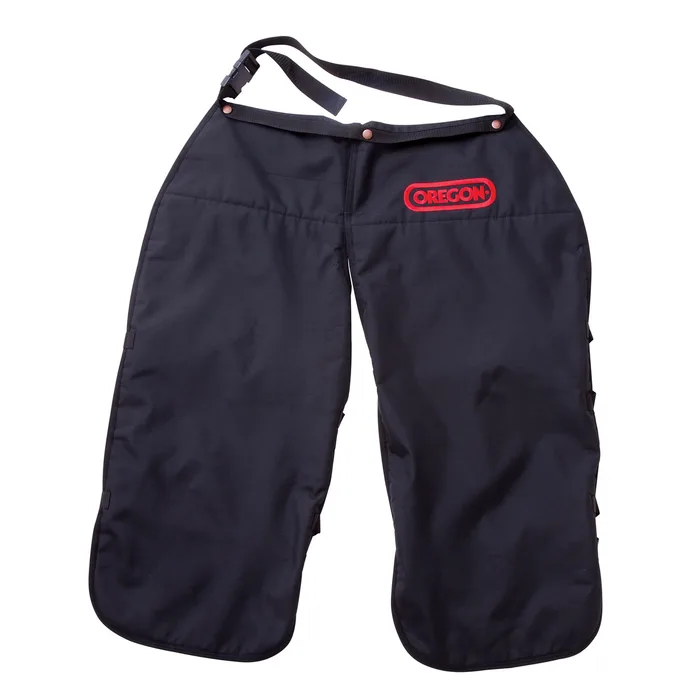
UL Classified and cheap, but a single fixed length sold as one size fits all gives up the one variable that decides where the pad sits.
Best for: Almost nobody as a first choice, though it is defensible as a spare pair kept in a truck for a visitor whose size you do not know.
- UL Classified, so a third party has evaluated it rather than the seller simply asserting a standard.
- Eight layers of breathable warp knit under a 600 denier Oxford shell, and Oregon says it is machine washable.
- Waist adjusts to 46 inches and the length adjusts a little at top snaps, which covers a slice of the size range.
- Oregon publishes one length, 36 inches, for every buyer. Chaps only protect where they are, and a hem that stops short of the boot top or drags on the ground is a real loss of coverage.
- Apron style, front only. There is no rear or calf coverage in this SKU, so an inside or back of leg contact meets trousers.
- The top snap adjustment shortens the garment from the waist, which moves the whole pad up the leg rather than trimming the hem.
- For a modest step up in price you can buy a chap sold in three or more discrete lengths, which is a better use of the money than eight layers.
| Criteria | Pro Mark Wrap Chaps Top pick | Technical Apron Wrap Chainsaw Chaps | Zero Gen2 Light and Cool Men's UL Chainsaw Pants | Protective Chainsaw Chaps, Black, One Size Fits All (563979) |
|---|---|---|---|---|
| Verdict | Buy it | Buy it | It depends | Skip it |
| Best for | Anyone felling, bucking or clearing storm damage often enough that the extra layers and lower-leg wrap are worth the weight and the cost. | The homeowner or part time firewood cutter who wants a properly certified chap without hunting a specialist supplier. | Climbing arborists and anyone running a saw for hours in heat, who will genuinely wear certified legwear more often if it breathes. | Almost nobody as a first choice, though it is defensible as a spare pair kept in a truck for a visitor whose size you do not know. |
| Price tier | $$$ · premium | $$ · mid-range | $$$ · premium | $ · budget |
| Style | Wrap chaps (lower leg) | Apron wrap chaps | Chainsaw trousers | Apron chaps |
| Back of leg covered | Lower leg wrapped; thigh rear open | No, front and partial side | Maker page did not load; check the version | No, front only |
| Certification as published | UL Classified, ASTM F1897 | UL certified, ASTM F1897, ANSI Z133.1 | UL, per product name | UL Classified |
| Protective pad | Nine layers Avertic Pro | Five layers TEK WARP | Maker page did not load | Eight layers warp knit |
| Outer shell | Not published | 1000D polyester, PVC coated | Maker page did not load | 600D Oxford |
| Lengths offered | 32, 36 and 40 in | 36/38 and 40/42 bands | Maker page did not load | One length, 36 in |
| Size range | Waist not published | Waist to 42 in | Maker page did not load | One size, waist to 46 in |
| Extras | Reflective waistband, zip cargo pocket | Felling wedge and gear pocket | Maker page did not load | None listed |
Which one is right for you?
- Anyone felling, bucking or clearing storm damage often enough that the extra layers and lower-leg wrap are worth the weight and the cost. Buy it STIHL Pro Mark Wrap Chaps
- The homeowner or part time firewood cutter who wants a properly certified chap without hunting a specialist supplier. Buy it Husqvarna Technical Apron Wrap Chainsaw Chaps
- Climbing arborists and anyone running a saw for hours in heat, who will genuinely wear certified legwear more often if it breathes. It depends Clogger Zero Gen2 Light and Cool Men's UL Chainsaw Pants
- Almost nobody as a first choice, though it is defensible as a spare pair kept in a truck for a visitor whose size you do not know. Skip it Oregon Protective Chainsaw Chaps, Black, One Size Fits All (563979)
How we judged the field
Five things decide whether a pair of chainsaw chaps does anything for you. First, certification: the label should name ASTM F1897 and carry a genuine UL mark and file number, because that is the only evidence anyone has actually run the garment through the standard cut test rather than sewing thick fabric together. Second, coverage: the standard sets minimum pad dimensions, but the standard cannot make the pad sit over the part of your leg the chain reaches, and a front apron leaves the back and inside of the thigh with nothing but trousers. Third, length and size range, which sounds like a comfort issue and is not. The hem needs to sit at the boot top, and a maker who offers three or five lengths lets you get there in a way that one universal length cannot. Fourth, the shell, because the pad is only protective while it is clean and dry, and a tough coated shell is what keeps bar oil and sawdust out of it. Fifth, the care instructions the maker publishes, since harsh cleaning can degrade cut-through protection and every brand here words its washing advice differently.
The field splits three ways, and the split is more about how you work than how much you spend. Apron chaps are the cheap, common answer: a flat panel across the front of each leg, easy to strap on, easy to shed. Wrap chaps carry the pad around the leg and cost more in weight and heat. Chainsaw trousers are certified legwear you wear all shift, which is the right answer for climbers and the wrong answer for someone who does four hours of firewood a year. We took one strong example of each, plus the budget apron chap that most casual buyers actually put in the basket, so the comparison reflects the real decision rather than a spec sheet contest.
STIHL Pro Mark Wrap Chaps
Buy itThe STIHL Pro Mark Wrap Chaps are the professional end of STIHL’s leg protection, and the page backs that up. Nine layers of Avertic Pro by Engtex sit in each leg, three more than STIHL’s standard apron chaps, and the garment is UL Classified as chainsaw cut-resistant leg protection using the ASTM F1414 test method and the ASTM F1897 performance standard. What earns it the top spot is geometry: STIHL describes these as wrap-around chaps with full lower-leg cutting protection, so contact across the side or back of the calf still meets protective fibre. It comes in 32, 36 and 40 inch lengths, measured from the waist down, with a reflective waistband, a zipper cargo pocket and an abrasion-resistant knee, and STIHL calls it wash and wear. The costs are real. It is the most expensive chap here, it is sold through STIHL dealers, STIHL does not publish the shell fabric or waist range, and the wrap is on the lower leg, so the back of the thigh is still open. This is for the person cutting often enough to want the extra layers and the calf covered.
Husqvarna Technical Apron Wrap Chainsaw Chaps
Buy itThe Husqvarna Technical Apron Wrap is the chap most people should default to, and the reasons are unglamorous. Husqvarna states ASTM F1897, ANSI Z133.1, UL certification and OSHA 1910.266 compliance on its own product page, which is more than a lot of listings manage. The construction is five layers of TEK WARP under a PVC coated 1000 denier polyester shell, with acetal Delrin buckles and a pocket sized for a felling wedge, and the apron wrap cut takes protection around the front and onto the sides rather than leaving a flat panel dangling. It is stocked at essentially every Husqvarna dealer and a lot of general retailers, which matters more than it sounds, because the chaps you can actually try on for length are the ones that will fit. The limits are the fit range and the coverage. Two size bands, 36/38 and 40/42, and a waist that stops at 42 inches, leaves larger operators out. And this is not a full wrap: the back of the thigh and calf are uncovered. For a homeowner or weekend firewood cutter, that is a sensible trade.
Clogger Zero Gen2 Light and Cool Men’s UL Chainsaw Pants
It dependsClogger Zero Gen2 pants are the answer to a question chaps cannot answer, which is what you wear when you are running a saw for eight hours or hanging in a harness. Clogger sells them as UL chainsaw pants, built light and breathable for all day wear, and sized as trousers so the protective panel follows your leg. We could not load Clogger’s product page to confirm the layer count, weight or size range, so check the label. Two things stop this being a straight recommendation. Chainsaw trousers commonly protect the front of the leg only, so confirm whether the version you order covers the back of the calf, or it covers less of the leg than a wrap chap does. And trousers are a commitment: you cannot buckle them on for twenty minutes and take them off at the truck, and a chain strike retires the whole garment. If heat or climbing is why you have been skipping leg protection, this fixes that. Otherwise a chap is the simpler buy.
Oregon Protective Chainsaw Chaps, Black, One Size Fits All (563979)
Skip itThe Oregon 563979 is the pair a lot of people buy without thinking about it, and the reason to skip it is in Oregon’s own specification. It is a decent apron chap on paper: UL Classified, eight layers of breathable warp knit under a 600 denier Oxford shell, machine washable, and a waist that adjusts to 46 inches. But Oregon publishes exactly one length, 36 inches, and sells it as one size fits all. Chaps only protect the part of the leg they are covering, and OSHA’s logging standard says leg protection should run the full length of the thigh to the top of the boot. A universal 36 inches will be too long on plenty of people and too short on plenty of others, and the top snap adjustment shortens the garment from the waist, which slides the whole pad up the leg rather than trimming the hem. Add that it is a flat front apron with no rear or calf coverage in this SKU, and the modest saving buys you a fit compromise on the one thing you cannot fix afterwards.
Sources
Specs in this review come from these pages.
- ASTM F1897 Standard Specification for Leg Protection for Chain Saw Users (store.astm.org)
- OSHA 29 CFR 1910.266, Logging Operations (osha.gov)
- USDA Forest Service Tech Tip 0451-2324P-MTDC, Inspecting, Cleaning, Repairing, and Retiring Chain Saw Chaps (fs.usda.gov)
- USDA Forest Service National Saw Program, Effectiveness of Chainsaw Chaps Against Battery-Powered Chainsaws (wta.org)
- ISO 11393-2, Protective clothing for users of hand-held chainsaws, leg protectors (iso.org)
- UL Solutions warning over unauthorized chainsaw chaps sold online (ul.com)
STIHL Pro Mark Wrap Chaps vs Husqvarna Technical Apron Wrap Chainsaw Chaps: which should you buy?
Both of our buy picks are properly certified chaps, so the choice is not about whether they work. It is about how much of your leg you want covered and what you are willing to carry to get it. The STIHL wraps the lower leg, which means a back-of-calf contact still meets protective fibre, it has nine layers to the Husqvarna’s five, and it comes in three lengths (32, 36 and 40 inches) so you can get the hem closer to the right height. The Husqvarna is an apron wrap: protection across the front and around onto the sides, nothing behind, in two broad size bands. In exchange the Husqvarna costs less, has a wedge pocket, and is sitting on a shelf at your local dealer where you can hold it against your leg before you pay.
Here is the practical way to choose. If you cut for more than a few hours at a stretch, work on slopes or in blowdown where the saw ends up in awkward positions, or a standard size band has never sat right on you, buy the STIHL and accept the weight and the cost. If you are dropping a few trees a year, bucking firewood on flat ground in warm weather, and the honest risk is that heavy chaps stay in the shed, buy the Husqvarna, because certified leg protection you actually put on beats better leg protection you do not. One rule applies to both: measure from your belt line to the top of your foot before ordering, not your trouser inseam.
What to look for
- A real UL mark and file number: the label should name ASTM F1897 and carry a UL mark with a file number you can check against UL’s certification database, because UL Solutions warned in February 2026 about chaps sold online with a fraudulent file number.
- Length before layer count: a maker offering three or five discrete lengths is giving you something a maker offering eight layers in one universal size cannot, since the hem needs to end around the boot top for the pad to be where the chain goes.
- Where the pad wraps: apron chaps cover the front, apron wrap adds the sides, full wrap carries protection around the leg, and only the last one puts fibre behind your calf.
- A tough coated shell: oil soaked into the pad acts as an adhesive and reduces protection, so a heavy denier coated outer that keeps bar oil and sawdust out is doing safety work, not just wearing well.
- The washing instructions on the garment: they differ by brand, from hand wash only to machine wash warm and tumble dry, and bleach or a pressure washer will degrade the pad in any of them.
- Buckles and straps you will actually fasten: loose chaps shift out of position, and a snug fit and correct length are what put the pad where the chain goes.
Our final take
Chainsaw chaps are one of the few pieces of safety kit where the cheap version and the good version work by exactly the same mechanism. The difference is where the pad sits and whether it is still in good condition. Buy something with a genuine UL mark and an ASTM F1897 reference, buy it in a length that puts the hem at your boot top, keep bar oil out of it, and retire it the moment the pad itself is cut. The STIHL Pro Mark Wrap is the most protection here and the Husqvarna Technical Apron Wrap is the sensible everyday answer. Do not let a low price talk you into a one-size garment, and do not let the heat talk you out of wearing anything at all.
Questions, answered
Does OSHA actually require chainsaw chaps, and does that apply to me at home?
OSHA 29 CFR 1910.266 is the logging standard, and it says the employer shall provide at no cost, and assure that each employee who operates a chain saw wears, leg protection constructed with cut-resistant material such as ballistic nylon. It also says that protection has to cover the full length of the thigh to the top of the boot on each leg. That is an employer duty in logging operations, so it does not reach you cutting firewood in your own yard. It is still the benchmark everyone in the trade works to, and it is worth knowing that the regulation names a material property rather than naming ASTM F1897 or a Forest Service specification. Buying to the ASTM standard is how you satisfy the spirit of it.
What does ASTM F1897 actually require?
F1897 is the US specification for leg protection for chain saw users, and the current edition is F1897-25, published in December 2025. In ASTM's words it covers minimum requirements for the design, performance, testing and certification of protective clothing for a saw operator's legs, and it expects garments to be maintained in accordance with the manufacturer's instructions. The cut test runs a powered saw chain into the garment under controlled conditions, which is why a certification mark means more than a layer count.
Is a UL mark the thing I should look for?
Yes, and it is worth checking properly rather than glancing at it. UL is a third party that certifies chainsaw leg protection, and STIHL, Husqvarna and Oregon all state UL certification or classification on their own product pages. The reason to look closely is that in February 2026 UL Solutions published a warning about chainsaw chaps sold online under the GDLIN and Proyama names that displayed a UL file number belonging to another maker, and advised owners to remove them from service. The label should carry a UL mark, a file number and the ASTM standard, and you can check a file number against UL's own certification database. Buying from the manufacturer or an established forestry supplier is the simplest way to avoid the problem.
Do chaps still work with a battery or electric chainsaw?
The concern is reasonable on the face of it, because a petrol saw stops partly by the clutch letting go under load, and a brushless motor does not have a clutch. It has been tested, though. During the development of ASTM F1897-25, side by side standardised testing was run with both petrol and battery saws, and certified chaps performed as well against both. The USDA Forest Service National Saw Program issued a bulletin summarising this and noting that the viral videos showing chaps failing often used retired or damaged chaps and atypical setups. F1897-25 was published in December 2025 and includes performance testing with both saw types. One caveat is fair: the same bulletin notes that high end professional battery saws may make more torque than the consumer units in those videos, so read your own label.
If a saw cuts my chaps, can I patch them and carry on?
It depends entirely on what got cut. A hole or tear in the outer shell alone can usually be patched, and doing it promptly keeps oil and sawdust off the pad. Damage to the protective pad itself is different: a cut pad should be taken out of service, and OSHA's logging standard requires damaged protective equipment to be repaired or replaced before work begins. Never stitch through the pad to repair it, because that pins the fibres in place and stops them being dragged into the sprocket, which is the entire mechanism. If the fibres have been pulled by a chain strike, that pair has done its job.
Deciding between the top two? See our head-to-head: STIHL Pro Mark Wrap Chaps vs Husqvarna Technical Apron Wrap Chainsaw Chaps.
More Outdoors & Fitness reviews
 The Best Chainsaws for Homeowners: 4 Compared (and One to Skip)
  The Best Checked Luggage: 4 Large Suitcases Compared (and One to Skip)
  The Best Climbing Chalk: 4 Compared (and One to Skip)
  The Best Climbing Harnesses: 4 Compared (and One to Skip)
  The Best Rock Climbing Shoes: 4 Compared (and One to Skip)
  The Best Composters: 4 Compared (and One to Skip)