

Garden & Outdoor Living
The Best Patio Heaters: 4 Compared (and One to Skip)
We compared four real patio heaters across propane and electric on heat output, coverage, wind resistance, safety, and value.
The short version
Most people warming an open patio should buy the 48,000 BTU Hiland propane tower - it throws real, spread-out heat and has anti-tilt shut-off built in. If your area is covered, the Dr. Infrared DR-238 electric infrared bar gives instant, fuss-free warmth with no fuel or fumes. The quartz glass-tube propane heater looks gorgeous but costs more for fewer BTUs and a fragile tube, so it's a your-priorities call. Skip the Mr. Heater 11,000 BTU tabletop unit: the maker rates it for 275 sq ft and about 2 hours on a 1 lb cylinder. Match the heater to your space first, then to fuel preference. Best for: open patios lean propane tower, covered patios lean electric infrared.
Our picks at a glance
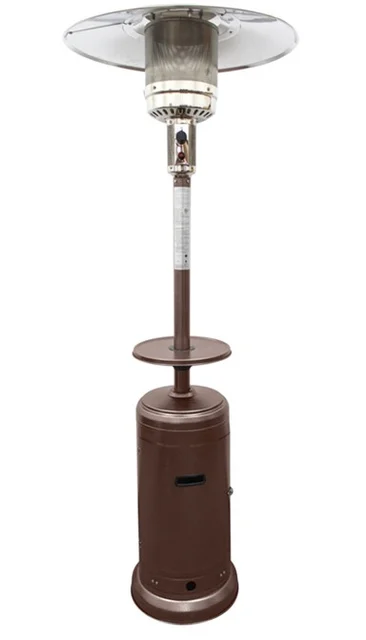
- AZ Patio Heaters Hiland HLDS01-CG 48,000 BTU Propane Patio Heater - Buy. The classic 87-inch mushroom-top propane tower that actually warms an open patio.
- Dr. Infrared Heater DR-238 Carbon Infrared Patio Heater (1500W) - Buy. A plug-in carbon infrared bar for wall or ceiling mounting, the no-fuel pick for a covered patio or balcony.
- AZ Patio Heaters Hiland HLDS01-GTSS Quartz Glass Tube Propane Patio Heater (Stainless) - It depends. A striking dancing-flame glass column that trades some output and durability for looks.
- Mr. Heater MH11TTPH 11,000 BTU Table Top Patio Heater - Skip. A 35-inch tabletop propane heater the maker rates for 275 sq ft and about 2 hours on a 1 lb cylinder.
The verdict in 30 seconds
What mattered most
- Fuel type
- Heat output
- Best environment
- Wind resistance
- Setup & portability
- Safety features
Patio heaters split into two honest camps: propane towers that throw serious heat over open space, and electric infrared units that quietly warm a covered spot without fuel or fumes. We pulled together independent testing and owner reports to sort a tall propane workhorse, a weatherproof electric infrared bar, a good-looking glass-tube flame heater, and a tabletop propane unit that most buyers regret. Two are easy recommendations, one is a your-space-decides pick, and one is a skip.
The classic 87-inch mushroom-top propane tower that actually warms an open patio.
Best for: Open decks and patios where you want real, spread-out warmth for a group.
- 48,000 BTU output genuinely heats an open area, not just the person directly under it
- Runs off a standard 20 lb propane tank hidden in the base, with the maker lists about 8-10 hours on high
- Thermocouple and anti-tilt devices are listed as standard, and the base houses the tank
- Wheels and a built-in table make a heavy unit easy to reposition
- Tall and top-heavy, so it needs a level surface and should come inside in high wind
- Propane means outdoor-only use and buying/refilling tanks
Own the AZ Patio Heaters Hiland HLDS01-CG 48,000 BTU Propane Patio Heater? Tell us how it held up.
Thanks. Counted, and shown once enough owners have weighed in.
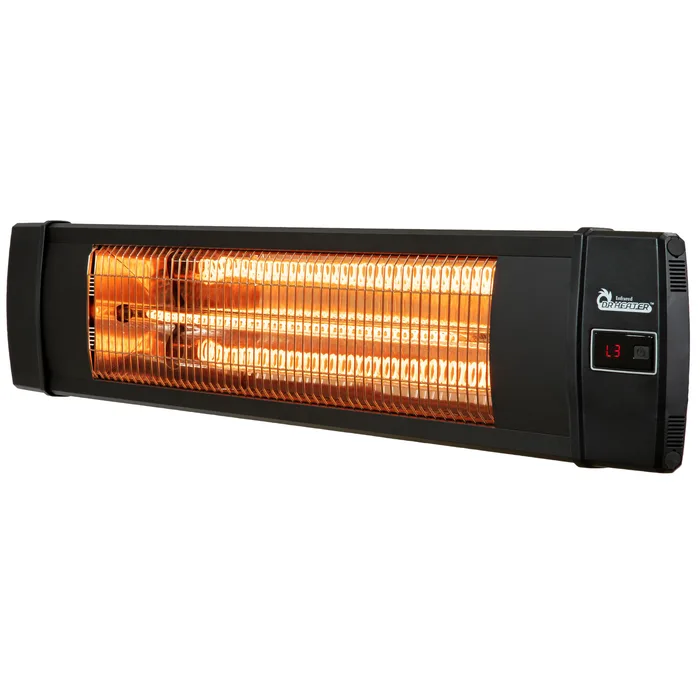
A plug-in carbon infrared bar for wall or ceiling mounting, the no-fuel pick for a covered patio or balcony.
Best for: Covered patios, pergolas, and balconies where mounting and no-fuel convenience matter most.
- Three heat settings (900W, 1200W and 1500W) on a standard 120V outlet, with no fuel to run out and no tank to refill
- Weatherproof anodized aluminum housing the maker rates for indoor and outdoor use, with wall and ceiling brackets included
- No flame or fumes, plus automatic tip-over and over-temperature protection and ETL certification listed by the maker
- A remote is included for switching heat levels from your seat
- Directional heat only warms what it points at; it won't blanket an open yard the way propane does
- 1500W is modest, and the maker's page publishes no IP rating or coverage area
- The manual asks for 1 m (39.4 in) between the front of the heater and people or combustibles, and recommends a weather-proof outlet outdoors
Own the Dr. Infrared Heater DR-238 Carbon Infrared Patio Heater (1500W)? Tell us how it held up.
Thanks. Counted, and shown once enough owners have weighed in.
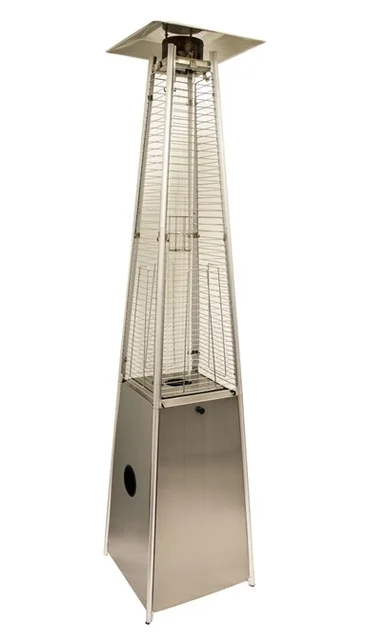
A striking dancing-flame glass column that trades some output and durability for looks.
Best for: Buyers who want a decorative flame feature and will treat the glass tube carefully.
- The visible flame inside the quartz glass tube is a genuine centerpiece owners love
- 40,000 BTU still delivers meaningful warmth for a small gathering
- Safety valve shuts the unit off automatically if tilted, plus thermocouple protection
- Wheels make it easy to reposition
- Costs more than the plain mushroom tower while putting out fewer BTUs
- The quartz glass tube is fragile - owners report cracks from knocks, wind, or rough transport
Amazon had no buyable listing for this when we last checked. The link still works if it returns.
Find it on Amazon Read our detailed assessmentOwn the AZ Patio Heaters Hiland HLDS01-GTSS Quartz Glass Tube Propane Patio Heater (Stainless)? Tell us how it held up.
Thanks. Counted, and shown once enough owners have weighed in.
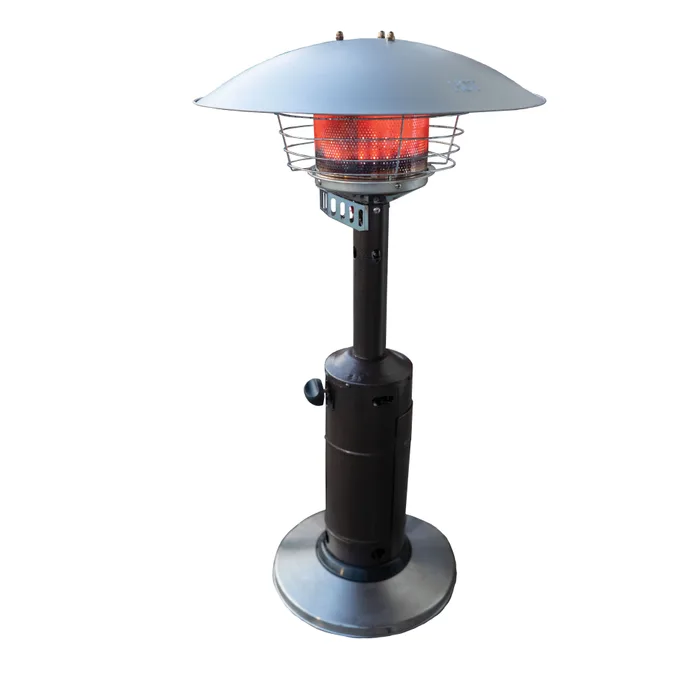
A 35-inch tabletop propane heater the maker rates for 275 sq ft and about 2 hours on a 1 lb cylinder.
Best for: Almost no one as a primary heater; at best a brief ambiance accent on a calm evening.
- Light at a listed 10 lb and 35 inches tall, so it lifts onto a table and moves easily
- Adjustable 8,000 to 11,000 BTU with electronic ignition, a tip-over switch and a steel wire guard
- Tops out at 11,000 BTU and a maker-rated 275 sq ft, a fraction of what a full-size tower covers
- Up to 2 hours at max output on a 1 lb cylinder, per the maker, so an evening means swapping bottles
- The maker's spec table lists no high-limit safety shut-off, and a tall flame on a tabletop needs a stable surface and calm air
Own the Mr. Heater MH11TTPH 11,000 BTU Table Top Patio Heater? Tell us how it held up.
Thanks. Counted, and shown once enough owners have weighed in.
| Criteria | AZ Patio Heaters Hiland HLDS01-CG 48,000 BTU Propane Patio Heater Top pick Buy it Buy | Dr. Infrared Heater DR-238 Carbon Infrared Patio Heater (1500W) Buy it Buy | AZ Patio Heaters Hiland HLDS01-GTSS Quartz Glass Tube Propane Patio Heater (Stainless) It depends | Mr. Heater MH11TTPH 11,000 BTU Table Top Patio Heater Skip it Buy |
|---|---|---|---|---|
| Best for | Open decks and patios where you want real, spread-out warmth for a group. | Covered patios, pergolas, and balconies where mounting and no-fuel convenience matter most. | Buyers who want a decorative flame feature and will treat the glass tube carefully. | Almost no one as a primary heater; at best a brief ambiance accent on a calm evening. |
| Price tier | $$ · mid-range | $$ · mid-range | $$$ · premium | $$ · mid-range |
| Fuel type | Propane (20 lb tank) | Electric (900/1200/1500W, 120V plug-in) | Propane (20 lb tank) | Propane (1 lb cylinder) |
| Heat output | 48,000 BTU - high | 1500W electric - modest | 40,000 BTU - high | 11,000 BTU - low |
| Best environment | Open patios and decks | Covered patios, pergolas, balconies | Small open patios | Table accent only |
| Wind resistance | Good, but bring in during gusts | Poor - heat blows away in open air | Fair - flame affected by wind | Poor - tips and struggles |
| Setup & portability | Rolls on wheels; tank swaps | Wall or ceiling mount; no fuel | Rolls on wheels; tank swaps | Portable, about 2 hours per cylinder |
| Safety features | Anti-tilt + thermocouple shut-off | Tip-over + over-temperature shut-off | Tilt safety valve + thermocouple | Tip-over switch + wire guard |
| Price tier | $$ · mid-range | $$ · mid-range | $$$ · premium | $$ · mid-range |
Which one is right for you?
- Open decks and patios where you want real, spread-out warmth for a group. Buy it AZ Patio Heaters Hiland HLDS01-CG 48,000 BTU Propane Patio Heater
- Covered patios, pergolas, and balconies where mounting and no-fuel convenience matter most. Buy it Dr. Infrared Heater DR-238 Carbon Infrared Patio Heater (1500W)
- Buyers who want a decorative flame feature and will treat the glass tube carefully. It depends AZ Patio Heaters Hiland HLDS01-GTSS Quartz Glass Tube Propane Patio Heater (Stainless)
- Almost no one as a primary heater; at best a brief ambiance accent on a calm evening. Skip it Mr. Heater MH11TTPH 11,000 BTU Table Top Patio Heater
How we judged the field
We don’t run our own heat lab. Instead we synthesize independent testing, manufacturer specifications, and aggregated owner reports to judge patio heaters on the things that actually matter after the box is opened: how much usable warmth they deliver, how large an area that warmth covers, how they hold up in wind, how safe and stable they are, and whether the running costs and hassle are worth it.
The single biggest factor is matching the heater to the space. Propane towers put out big BTU numbers and can warm an open patio, but they must be used outdoors and need clearance from anything combustible. Electric infrared units produce less total heat and aim it directionally, but they’re clean, quiet, and the right answer under a covered ceiling. We weighted safety features - anti-tilt shut-off, thermocouples, weatherproofing, and base stability - heavily, because a heater that tips or overheats is a hazard regardless of how warm it gets.
AZ Patio Heaters Hiland HLDS01-CG 48,000 BTU Propane Patio Heater
Buy itThis 87-inch mushroom-top tower is the category’s default for a reason. At 48,000 BTU it produces enough heat to warm a group standing around it, not just the one person directly beneath the reflector. The maker lists about 8-10 hours of run time on high from a standard 20 lb tank that hides inside the base, and the wheels plus a built-in drink table make a genuinely heavy unit easy to move. Safety-wise it covers the basics: a thermocouple shuts the gas off if the flame dies, and an anti-tilt switch cuts fuel if it’s knocked over. The trade-offs are inherent to the format - it’s tall and top-heavy, needs a level surface, and should come inside in high wind - but for open-air warmth it’s the most reliable, no-drama choice here.
Dr. Infrared Heater DR-238 Carbon Infrared Patio Heater
Buy itIf your patio is covered, this plug-in carbon infrared bar is the smarter buy. It runs on a standard 120V outlet with three heat settings (900W, 1200W and 1500W), so there is no fuel to run out. The maker builds the housing from weatherproof anodized aluminum, rates the heater for indoor and outdoor use, includes wall and ceiling brackets and a remote, and lists automatic tip-over and over-temperature protection plus ETL certification. The limits are physics and placement. At 1500W it is directional and modest, so it warms what it points at rather than blanketing a big open yard, and a cold, exposed, windy space will overwhelm it. The manual asks for 1 m (39.4 in) between the front of the heater and people or combustible materials, and recommends a weather-proof outlet when it runs outside; the maker’s page does not publish an IP rating. Under a pergola, awning, or balcony ceiling, exactly where you can’t safely run propane, it’s the low-maintenance winner.
AZ Patio Heaters Hiland HLDS01-GTSS Quartz Glass Tube Propane Heater
It dependsThe glass-tube heater is the one people point at. A visible flame dances up the quartz glass column, and owners love it as a patio centerpiece. At 40,000 BTU it still delivers real warmth for a small gathering, and it adds a tilt safety valve on top of the usual thermocouple. Two things keep it out of the top spot. First, it costs more than the plain mushroom tower while putting out fewer BTUs, so you’re paying for the aesthetics. Second, the quartz glass tube is fragile - owners report cracks from knocks, gusts, or rough transport, and a broken tube is an annoying replacement. If the look matters to you and you’ll treat it gently, it’s a lovely thing to own; if you just want maximum heat per dollar, it isn’t.
Mr. Heater MH11TTPH 11,000 BTU Table Top Patio Heater
Skip itThe tabletop unit is the one to walk past. It’s light at a listed 10 lb, stands 35 inches tall, lights electronically, and Mr. Heater lists a tip-over switch and a steel wire guard. The problem is the numbers on the maker’s own spec table. Output adjusts from 8,000 to 11,000 BTU, and the maker rates it for up to 275 square feet, a small patch around one table. Run time is up to 2 hours at max output on the 1 lb propane cylinder that sits in its base, so a full evening means swapping bottles. The spec table also lists no high-limit safety shut-off, and a tall flame sitting on a table wants a stable surface and calm air. As an occasional ambiance piece it’s fine, but as a heater meant to keep a group warm it falls short, which is why it’s a skip.
Sources
Specs in this review come from these pages.
- AZ Patio Heaters, 87" Tall Outdoor Patio Heater with Table, Hammered Bronze (HLDS01-CGT) product page (azpatioheaters.com)
- Dr. Infrared Heater, DR-238 Carbon Infrared Outdoor Heater product page (drheaterusa.com)
- AZ Patio Heaters, Tall Quartz Glass Tube Heater, Stainless Steel (HLDS01-GTSS) product page (azpatioheaters.com)
- Mr. Heater, 11,000 BTU Table Top Patio Heater product page (mrheater.com)
HLDS01-CG vs DR-238: which should you buy?
These two are the strongest picks, and choosing between them is really a question about your space rather than the products. The HLDS01-CG propane tower wins on raw heat and coverage: 48,000 BTU spreads warmth across an open deck or patio in a way no 1500W electric can match, and it’s freestanding so you can put it wherever the crowd gathers. The cost is fuel management, outdoor-only operation, and generous clearances. The DR-238 electric infrared wins on convenience and fit for covered spaces: mount it once, plug it in, and enjoy instant, fume-free warmth with essentially no running hassle - but only where its directional heat and covered ceiling make sense. Open and exposed? Take the propane tower. Covered pergola, awning, or balcony? Take the electric infrared. Many people who entertain in both settings end up owning one of each.
What to look for
- Match fuel to space. Propane for open, well-ventilated areas; electric infrared for covered patios, pergolas, and balconies where fumes are unsafe.
- Check the BTU or wattage against your area. Big open space needs 40,000+ BTU; a small covered nook is fine with 1500W of radiant infrared.
- Demand real safety features. Look for anti-tilt shut-off and, on gas units, a thermocouple. Confirm a stable base.
- Respect clearances. Never run a gas heater under a low umbrella, tent, or combustible ceiling, and keep it clear of walls, railings, and furniture per the manual.
- Think about run time and refills. A 20 lb tank runs a tower for hours; a small 1 lb bottle in a tabletop unit empties quickly.
- Plan for wind. All patio heaters lose ground in gusts, so favor sheltered placement and bring tall or tabletop units in during high wind.
Our final take
Buy the heater your space actually calls for. For an open patio or deck, the Hiland HLDS01-CG 48,000 BTU propane tower is the dependable default - plenty of spread-out heat, standard tank runtime, and the expected anti-tilt and thermocouple safety. For a covered patio, pergola, or balcony where propane doesn’t belong, the Dr. Infrared DR-238 electric infrared bar gives you instant, fuel-free warmth with far less fuss. The quartz glass-tube heater is a beautiful splurge if the flame feature and a fragile tube are worth the premium to you. And the Mr. Heater 11,000 BTU tabletop unit is the one clear skip: too little heat and about 2 hours per 1 lb cylinder. Decide open versus covered first, and the right heater picks itself.
Questions, answered
How far should a patio heater be from walls, railings, and overhead cover?
Always follow the specific clearances printed in your model's manual, but the general rule for tall gas heaters is to keep well clear of anything combustible: for the Hiland towers the manuals call for at least 3 feet from the sides and 2 feet from the top. Never run a tall propane heater directly under a low umbrella, awning, tent, or a combustible ceiling, and keep furniture, cushions, and plants out of the hot zone. Electric infrared units have their own listed clearances too - respect the marked minimums even though they run cooler at the housing.
Can I use a propane patio heater indoors, in a garage, or on an enclosed porch?
No. Propane heaters like the Hiland towers and the tabletop unit are for outdoor, well-ventilated use only. Burning propane consumes oxygen and produces carbon monoxide, an odorless gas that can be deadly in enclosed or poorly ventilated spaces, so never operate one in a garage, tent, screened room, or enclosed porch. If your space is covered or partly enclosed, that's exactly where a plug-in electric infrared heater like the DR-238 makes sense, because it produces no combustion fumes.
What is a tip-over (anti-tilt) shut-off, and does every heater here have one?
An anti-tilt shut-off is a switch that cuts the gas or power automatically if the heater is tilted past a set angle, and gas models also use a thermocouple that shuts off fuel if the flame goes out. The Hiland tower and glass-tube models list anti-tilt protection, the Dr. Infrared DR-238 lists tip-over and over-temperature protection, and the Mr. Heater tabletop lists a tip-over switch. Treat it as a backstop, not a license to be careless: still place heaters on level ground, keep any weighted base filled where applicable, and bring tall or tabletop units inside in strong wind, since the tabletop model in particular is easy to knock over.
Propane or electric - which is safer and which should I choose?
Neither is simply 'safer'; they suit different spaces. Propane delivers far more heat for open areas but requires outdoor-only use, tank handling, and combustion-clearance discipline. Electric infrared produces no fumes and is the appropriate choice for covered patios, pergolas, and balconies, but it warms directionally and can't blanket a large open yard. Pick based on your space first: open and exposed favors the propane tower; covered or enclosed favors the electric infrared.
Do patio heaters work in wind, and how large an area do they actually warm?
Wind is the enemy of all patio heaters. A 48,000 BTU propane tower can warm a rough circle several feet across in calm conditions, but a stiff breeze strips that heat away and can affect the flame, so shelter the area or shut it down in gusts. Electric infrared warms people and objects in its direct line rather than the air, which helps a little in light wind but still fades in fully open, breezy spots. The 11,000 BTU tabletop unit has the least reach of the group and struggles outside of a calm, sheltered corner.
Deciding between the top two? See our head-to-head: AZ Patio Heaters Hiland HLDS01-CG 48,000 BTU Propane Patio Heater vs Dr. Infrared Heater DR-238 Carbon Infrared Patio Heater (1500W).
More in Garden & Outdoor Living
Patio Heaters, Explained Plain-English guide → AZ Patio Heaters Hiland HLDS01-CG 48,000 BTU Propane Patio Heater vs Dr. Infrared Heater DR-238 Carbon Infrared Patio Heater (1500W) Head-to-head →  The Best Patio Umbrellas: 6 Compared (and One to Skip)
  The Best Pellet Grills: 4 Compared (and One to Skip)
  The Best Outdoor Pizza Ovens: 4 Compared (and One to Skip)
  The Best Premium Gas Grills: 4 Compared (and One to Skip)