

Garden & Outdoor Living
The Best Pellet Grills: 4 Compared (and One to Skip)
We compared four current wood-pellet smoker-grills on temperature stability, searing, smoke flavor, app control, build and support.
The short version
Pellet grills should be set-and-forget, so temperature stability and support matter more than headline features. The Traeger Ironwood XL is built for the steadiest hands-off smoking, earning our top pick if you will pay premium. The Weber Searwood 600 is the value winner, smoking and searing to 600°F for less. The Camp Chef Woodwind 24 is a flavor-and-searing standout, but its best tricks depend on paid add-ons. The Pit Boss Navigator 850 looks like a bargain but draws too many owner reports of temperature swings, safety scares and spotty support to recommend. Best for: most buyers, the Weber Searwood 600; for the steadiest hands-off smoking, the Traeger Ironwood XL.
Our picks at a glance
- Traeger Ironwood XL - Buy. A large, WiFi-connected pellet grill for people who want to press a button and trust the result.
- Weber Searwood 600 - Buy. A strong all-round value that smokes and sears, and Weber's follow-up to its SmokeFire.
- Camp Chef Woodwind 24 - It depends. A flavor-and-features standout with a pull-knob ash cleanout, but the best of it costs extra.
- Pit Boss Navigator 850 - Skip. A lot of grill for the money on paper, undermined by owner reports of shaky temps, safety scares and uneven support.
The verdict in 30 seconds
What mattered most
- Temperature stability
- Searing / high heat
- Smoke flavor & wood control
- App & smart control
- Build & durability
- Support & warranty
Wood-pellet grills promise set-and-forget smoking with real hardwood flavor, but the gap between the best and the worst is wider than the spec sheets suggest. We weighed four current 2026 models on the things owners actually complain about: how tightly they hold temperature, whether they can sear, how good the app is, and how the company treats you when something breaks. Two are easy recommendations, one is a great grill with a catch, and one is a bargain we'd steer most people away from.
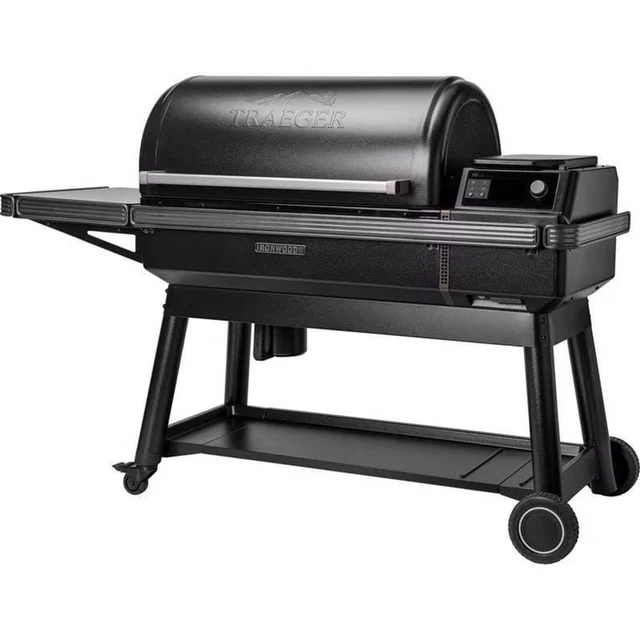
A large, WiFi-connected pellet grill for people who want to press a button and trust the result.
Best for: Buyers who want the most consistent low-and-slow results and the deepest support network, and will pay for it.
- Built around a WiFIRE controller meant to hold a set temperature hands-off
- Large 924 sq in capacity plus Super Smoke mode and the WiFIRE app
- A 10-year limited warranty and a wide accessory range make long-term ownership low-stress
- Premium price for the size, and it tops out at 500°F so it is a smoker first and a searing grill a distant second
- You are buying into Traeger's ecosystem and app, which some owners find more locked-down than rivals
Own the Traeger Ironwood XL? Tell us how it held up.
Thanks. Counted, and shown once enough owners have weighed in.
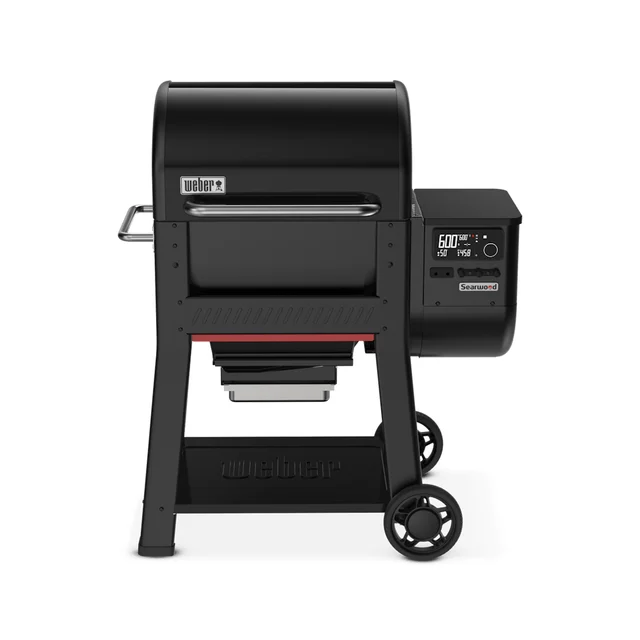
A strong all-round value that smokes and sears, and Weber's follow-up to its SmokeFire.
Best for: Most buyers who want one grill that smokes well and sears real steaks without a premium-tier price.
- Heats up in 15 minutes or less and reaches 600°F with a full-grate DirectFlame sear zone, so it actually grills, not just smokes
- The Rapid React PID controller is designed to recover heat quickly after the lid is opened
- Clean Weber Connect app, sensible side-hopper design and Weber's build quality and support reputation
- At 648 sq in it has less cooking area than the big premium rigs, so large gatherings can crowd it
- Single-piece sear zone means less flexibility than a true two-zone setup for simultaneous low-and-slow plus searing
Own the Weber Searwood 600? Tell us how it held up.
Thanks. Counted, and shown once enough owners have weighed in.
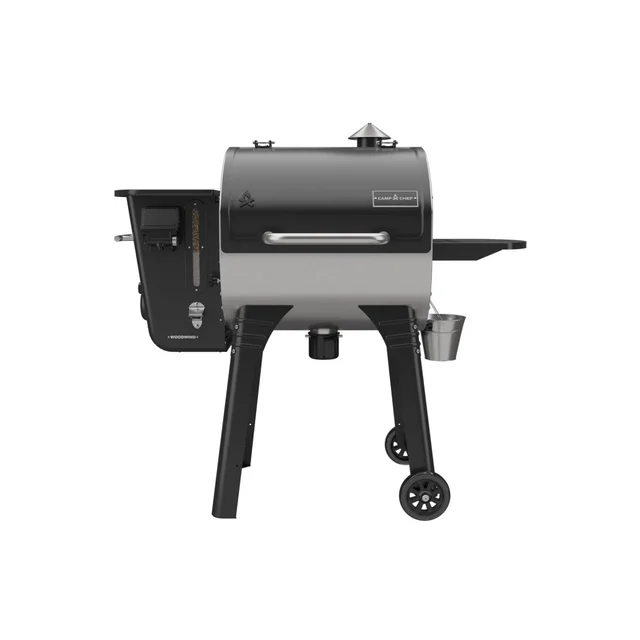
A flavor-and-features standout with a pull-knob ash cleanout, but the best of it costs extra.
Best for: Flavor-focused cooks who want searing and easy cleanup and do not mind paying for the add-ons.
- Slide-and-Grill direct-flame mechanism plus the optional Sidekick propane burner add high-heat searing
- Pull-knob ash cleanout empties into a removable ash cup, and the Slide and Grill system gives direct-flame access
- A full-color WiFi controller and the Camp Chef Connect app make day-to-day cooking convenient
- The searing that makes it special often means buying the propane Sidekick add-on, pushing the real-world price up
- The Camp Chef Connect app is less polished than Traeger's or Weber's, and assembly is more involved
Own the Camp Chef Woodwind 24? Tell us how it held up.
Thanks. Counted, and shown once enough owners have weighed in.
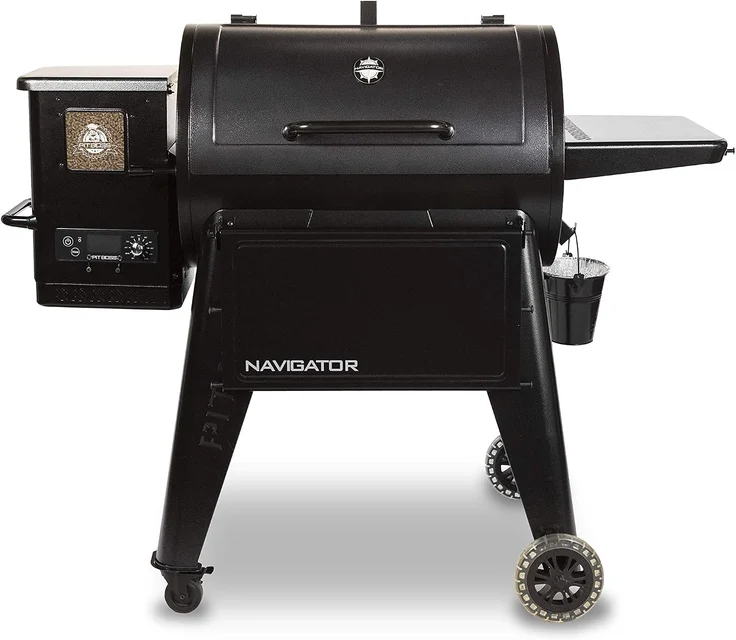
A lot of grill for the money on paper, undermined by owner reports of shaky temps, safety scares and uneven support.
Best for: Bargain hunters who will babysit their cooks and tinker, not set-and-forget smokers who want reliability.
- Big 932 sq in cooking area and a Flame Broiler lever for direct-flame searing at a budget price
- WiFi and Bluetooth control plus a 5-year warranty look generous on the spec sheet
- Owner reports repeatedly describe wide temperature swings in wind or cold, plus scattered runaway-fire and auger-jam incidents across the lineup
- Recurring complaints about controller/WiFi glitches, paint and finish wear, and inconsistent customer service
Own the Pit Boss Navigator 850? Tell us how it held up.
Thanks. Counted, and shown once enough owners have weighed in.
| Criteria | Traeger Ironwood XL Top pick Buy it Buy | Weber Searwood 600 Buy it Buy | Camp Chef Woodwind 24 It depends Buy | Pit Boss Navigator 850 Skip it Buy |
|---|---|---|---|---|
| Best for | Buyers who want the most consistent low-and-slow results and the deepest support network, and will pay for it. | Most buyers who want one grill that smokes well and sears real steaks without a premium-tier price. | Flavor-focused cooks who want searing and easy cleanup and do not mind paying for the add-ons. | Bargain hunters who will babysit their cooks and tinker, not set-and-forget smokers who want reliability. |
| Price tier | $$$ · premium | $$ · mid-range | $$$ · premium | $ · budget |
| Temperature stability | Excellent - built for hands-off holding | Very good - PID controller | Very good - PID controller | Inconsistent - owners report swings in wind/cold |
| Searing / high heat | Limited (500°F max), smoker-first | Strong - 600°F DirectFlame sear zone | Strong with Slide-and-Grill or Sidekick add-on | Direct-flame Flame Broiler, results vary |
| Smoke flavor & wood control | Excellent with Super Smoke mode | Very good | Excellent, a flavor standout | Good when temps behave |
| App & smart control | Polished WiFIRE ecosystem | Clean Weber Connect app | Functional but less refined app | WiFi/Bluetooth, but glitch reports |
| Build & durability | Premium, heavy-duty | Solid Weber quality | Sturdy, more assembly | Budget steel, finish-wear complaints |
| Support & warranty | 10-year limited warranty | Strong Weber support reputation | See maker for warranty terms | 5-yr warranty, inconsistent service reports |
| Cooking capacity | Very large (924 sq in) | Moderate (648 sq in) | Large | Large (932 sq in) |
| Price tier | $$$ · premium | $$ · mid-range | $$$ · premium | $ · budget |
Which one is right for you?
- Buyers who want the most consistent low-and-slow results and the deepest support network, and will pay for it. Buy it Traeger Ironwood XL
- Most buyers who want one grill that smokes well and sears real steaks without a premium-tier price. Buy it Weber Searwood 600
- Flavor-focused cooks who want searing and easy cleanup and do not mind paying for the add-ons. It depends Camp Chef Woodwind 24
- Bargain hunters who will babysit their cooks and tinker, not set-and-forget smokers who want reliability. Skip it Pit Boss Navigator 850
How we judged the field
We do not run our own lab. Instead we synthesize maker specifications and aggregated owner reports to find where the marketing and the reality diverge. For pellet grills, the spec sheet is the easy part; the honest signal is in how a grill behaves over months of real cooks.
Five things mattered most. First, temperature stability: a pellet grill’s entire promise is holding a set temperature unattended, so we weighted how tightly each model tracks in real conditions, including wind and cold. Second, searing and high-heat ability, since a grill that only smokes is only half a grill. Third, smoke flavor and wood control. Fourth, the smart controller and app, because a flaky controller ruins everything downstream. And fifth, build quality and support, which is what you lean on when a part fails in year two.
Traeger Ironwood XL
Buy itThe Ironwood XL is the grill we recommend when someone wants to stop thinking about the grill. It is built around a WiFIRE controller meant to hold a set temperature hands-off. You get 924 square inches, Super Smoke mode for heavier smoke flavor, and the WiFIRE app with reliable probe integration. Add a wide accessory catalog and a 10-year limited warranty, and it is the lowest-stress long-term ownership story here. The trade-offs are honest: it is priced at a premium for the size, and at 500°F max it is a smoker first, so it will not sear like a dedicated grill. You are also buying into Traeger’s ecosystem, which some owners find more closed than rivals.
Weber Searwood 600
Buy itThe Searwood is the value pick and Weber’s follow-up to the SmokeFire. It heats up in 15 minutes or less, reaches 600°F, and includes a full-grate DirectFlame sear zone, so it genuinely grills as well as smokes. The Rapid React PID controller is designed to recover heat quickly after the lid is opened, and the Weber Connect app handles remote monitoring. Build quality and support carry Weber’s usual reputation. Its limits are size and flexibility: at 648 square inches the cooking area is smaller than the big premium rigs, and the single-piece sear zone is less versatile than a true two-zone layout. For most buyers who want one grill that does both jobs without a premium price, it is the smart choice.
Camp Chef Woodwind 24
It dependsThe Woodwind is the enthusiast’s pick, and whether it is right for you hinges on how you plan to use it. Its Slide-and-Grill direct-flame mechanism, plus the optional Sidekick propane burner, add searing capability, and the pull-knob ash cleanout empties into a removable ash cup. The full-color WiFi controller and Camp Chef Connect app make daily cooking convenient. The catch is cost and polish: the searing that makes it special usually means buying the Sidekick add-on, which raises the real-world price, and the Camp Chef Connect app trails Traeger’s and Weber’s. Assembly is also more involved. Great for flavor-focused cooks who want searing and easy cleanup, less ideal if you want everything in the box for one clean price.
Pit Boss Navigator 850
Skip itOn paper the Navigator 850 is a lot of grill for a little money: 932 square inches, a Flame Broiler lever for direct-flame searing, WiFi and Bluetooth, and a 5-year warranty. In practice, it is the one we steer most people away from. Owner reports across Pit Boss’s lineup repeatedly describe wide temperature swings in wind or cold, along with scattered but serious runaway-fire and auger-jam incidents. Layer on recurring complaints about controller and WiFi glitches, paint and finish wear, and customer service that is fast for some and frustrating for others, and the value math falls apart. Since the whole point of a pellet grill is hands-off reliability, a grill you have to babysit is not a bargain. Fine for a tinkerer on a tight budget; wrong for a set-and-forget smoker.
Sources
Specs in this review come from these pages.
Traeger Ironwood XL vs Weber Searwood 600: which should you buy?
This is the real decision for most shoppers, because both are easy recommendations at different price points. Choose the Ironwood XL if hands-off consistency and maximum capacity are worth a premium; it is built as the hands-off low-and-slow machine, but it tops out at 500°F and costs more. Choose the Searwood 600 if you want one grill that smokes reliably and also sears real steaks to 600°F for meaningfully less money. Unless you specifically need the Traeger’s larger cook area or ecosystem, the Weber is the better value, which is why it is our runner-up and the value winner.
What to look for
- Temperature stability first: a proven PID controller matters more than any headline feature on a set-and-forget grill.
- Searing capability: if you want steaks, prioritize models that hit 600°F or offer a direct-flame or dedicated sear zone.
- App and controller quality: WiFi is genuinely useful for long cooks, but only if the controller behind it is reliable.
- Ash and grease cleanout: easy ash removal (like Camp Chef’s pull-knob system) saves real hassle over a season.
- Warranty and support reputation: long warranties mean little without responsive service, so weigh owner reports on how claims actually go.
- Pellet handling: a sealed, well-sized hopper and dry pellet storage prevent the jams and swings that plague every brand.
Our final take
Buy the Traeger Ironwood XL if you want hands-off smoking and a long warranty, and you will pay premium for peace of mind. For most people, the Weber Searwood 600 is the smarter buy: smoking, true 600°F searing, and a mid-range price. Step up to the Camp Chef Woodwind 24 if flavor, searing, and easy cleanup lead your list and you are comfortable paying for the add-ons that unlock its best. And skip the Pit Boss Navigator 850: it is cheap for a reason, and on a grill whose entire job is to be reliable, that is the wrong place to save.
Questions, answered
Are pellet grills the same as gas grills?
No. Pellet grills burn compressed hardwood pellets fed by an auger and controlled by a thermostat, giving real wood-smoke flavor and precise low-and-slow temperatures. Gas grills prioritize fast, high, direct heat and add no smoke flavor. The models here are wood-pellet smoker-grills, a different category from gas.
Can a pellet grill sear a steak?
Some can. The Weber Searwood 600 reaches 600°F with a DirectFlame sear zone, and the Camp Chef Woodwind sears via its Slide-and-Grill or optional Sidekick burner. Smoker-first models like the Traeger Ironwood XL top out lower, so if searing matters, prioritize high-heat and direct-flame features.
Why is the Pit Boss the one to skip if it is the cheapest?
Price is exactly the trap. Owner reports across the lineup describe wide temperature swings in wind or cold, occasional runaway-fire and auger-jam incidents, controller and WiFi glitches, and inconsistent customer service. For hands-off smoking where reliability is the whole point, those risks outweigh the low price for most buyers.
How much maintenance do pellet grills need?
Plan on emptying ash, cleaning the grease system, and keeping pellets bone-dry so the auger does not jam. Camp Chef's pull-knob ash cleanout empties into a removable ash cup. Damp or low-quality pellets are a common cause of temperature problems and jams on every brand, so buy fresh pellets and store them sealed.
Do I need the WiFi and app features?
They are genuinely useful for long cooks, letting you watch temperatures and probe readings from inside. Traeger's WiFIRE and Weber Connect are the two major maker apps here. They are a convenience, not a requirement, and are only as good as the controller behind them, which is where budget models tend to fall short.
Deciding between the top two? See our head-to-head: Traeger Ironwood XL vs Weber Searwood 600.
More in Garden & Outdoor Living
Pellet Grills, Explained Plain-English guide → Traeger Ironwood XL vs Weber Searwood 600 Head-to-head →  The Best Outdoor Pizza Ovens: 4 Compared (and One to Skip)
  The Best Premium Gas Grills: 4 Compared (and One to Skip)
  The Best Electric Pressure Washers for Home Use: 4 Compared (and One to Skip)
  The Best Pruning Shears: 6 Compared (and One to Skip)