Explained
Snowboard Bindings, Explained
After reading, you'll understand binding flex, the main entry systems, mounting patterns and how to size bindings to your boots.
In this guide
Binding listings are full of proprietary names for baseplates, straps and highbacks. Underneath, a few things decide the ride: how stiff the binding is, how you get in and out, what fits your board and boots, and what the maker warrants. Most first-time buyers pick on looks and end up with a flex that fights their boots.
The 30-second version
- Flex should match your riding, with softer for learning and park and stiffer for speed and carving.
- Match binding flex to boot flex, since a stiff binding cannot make up for a soft boot.
- Entry style changes daily life, from classic straps to rear entry to strapless step-in systems.
- Step-in bindings need matching boots, so they are a system purchase, not just a binding.
- Check the mounting pattern, because older boards may need a separate disc.
The products this guide is about
Our verdict on each, with the full reasoning on the companion review.
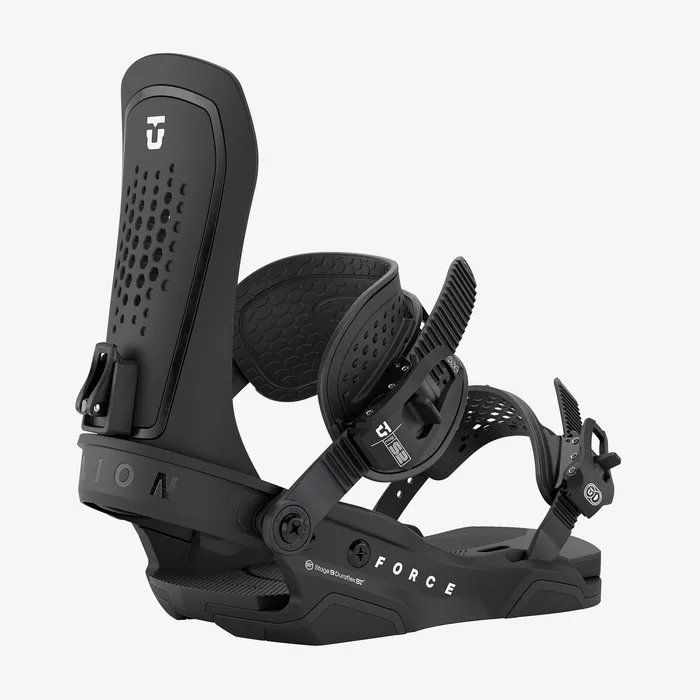
- Buy Union Force A durable, responsive all-mountain two-strap binding with a lifetime warranty on its key parts.
- Buy Rome Trace AW Snowboard Bindings A forgiving, medium-flex two-strap binding with Rome's AsymWrap chassis at a mid-range price.
- It depends Flow NX2 A stiff, rear-entry binding that saves time strapping in, if you take the time to set it up.
- Skip Burton Step On Re:Flex Snowboard Bindings A convenient step-in binding that only works if you also buy Step On boots.
What actually matters
- Flex - Makers rate flex on their own scales, so compare within a brand. Softer is forgiving; stiffer is responsive.
- Baseplate - The base that sits on the board and carries the load. Materials range from nylon composites to aluminum.
- Heelcup or heelhoop - The rear loop that holds your heel. Aluminum versions are common on durable bindings.
- Highback - The back support that drives heelside turns. Forward lean adjustment tilts it for more response.
- Straps and ratchets - Ankle and toe straps hold the boot; ratchets tighten them. Better straps spread pressure without hot spots.
- Entry system - Two-strap bindings are the standard. Rear-entry and step-in systems trade adjustability for speed.
- Mounting - Disks or mounting systems must match your board's insert pattern, such as 4x4, 2x4, 3-hole or Channel.
The specs, in plain English
Green flags vs red flags
Green flags
- A published flex rating and riding style.
- Aluminum heelcup or heelhoop.
- Lifetime warranty on the baseplate.
- Disks for all common mounting patterns included.
- A clear size chart by boot size.
Red flags
- No flex or riding style information.
- Very short or unstated warranty.
- Step-in bindings with no mention of boot compatibility.
- Sizes that don't match your boot size.
- Missing disc for an older board pattern.
Who's who: the brands
- Union - Binding-focused company known for durable two-strap bindings like the Force.
- Burton - Snowboard pioneer that makes strap bindings and the Step On system.
- Rome - Vermont snowboard brand known for its AsymWrap chassis and adjustable bindings.
- Flow - Rear-entry binding line now sold by the Nidecker group.
- Nidecker - Swiss snowboard company that also sells the Supermatic step-in binding.
How to read a listing without getting fooled
Start with the riding style and flex rating, and compare those within the same brand. Next check the baseplate and heelcup materials and the warranty on each part. Confirm the entry system and whether it needs special boots. Then check the mounting section for your board's insert pattern, and finally use the size chart with your boot size. A published weight and a named material for each part are good signs of a brand that expects scrutiny.
How much should you spend?
Budget and mid-range bindings usually use nylon composite baseplates and softer flex, which suits beginners and park riders. Premium bindings add aluminum heelcups, magnesium or aluminum hardware and stiffer, more tuned flex. Rear-entry and step-in systems cost more for the convenience. Spending more is worth it when you ride often and want durability or a specific feel.
Questions, answered
Can I use ski bindings or boots on a snowboard?
No. Snowboard bindings and boots are a separate system from skis. You need snowboard boots in snowboard bindings. Hard-boot alpine snowboard setups exist, but they use their own plate bindings.
How tight should snowboard bindings be?
Tight enough that your heel doesn't lift, but not so tight that your feet go numb. The ankle strap does most of the holding. Loosen the straps on the lift to let blood flow.
What binding angles should a beginner use?
Many beginners start with a slight duck stance, with both feet angled a little outward. It makes riding in either direction easier. Adjust from there as you learn what feels natural.
How long do snowboard bindings last?
Several seasons for most riders, depending on use. Straps and ratchets wear first, and makers often sell replacement parts. A lifetime baseplate warranty covers the part that is hardest to replace.
Or jump to the head-to-head: Union Force vs Rome Trace AW Snowboard Bindings.