Explained
Avalanche Airbag Packs, Explained
After reading, you'll understand how electric and cartridge airbags differ, what EN 16716 covers, and how refills and air travel work.
In this guide
First-time buyers often compare airbag packs like ordinary ski packs, by litres and pockets, and miss the parts that decide day-to-day ownership. The inflation system determines what each practice pull costs and how you fly. Certification and back length matter more than an extra pocket. And an airbag is an addition to a beacon, probe, shovel and training, not a substitute for any of them.
The 30-second version
- An airbag is an extra layer, not a replacement for a beacon, probe, shovel, or avalanche training.
- Electric systems cost more up front, but makers such as Ortovox let you test activation without paying for refills.
- Cartridge systems need a refill after every pull, so check where you can refill or exchange near where you ski.
- Look for EN 16716:2017, and find it in the maker's own data sheet or declaration of conformity.
- Flying rules differ by system, so read the maker's travel instructions before you book.
The products this guide is about
Our verdict on each, with the full reasoning on the companion review.
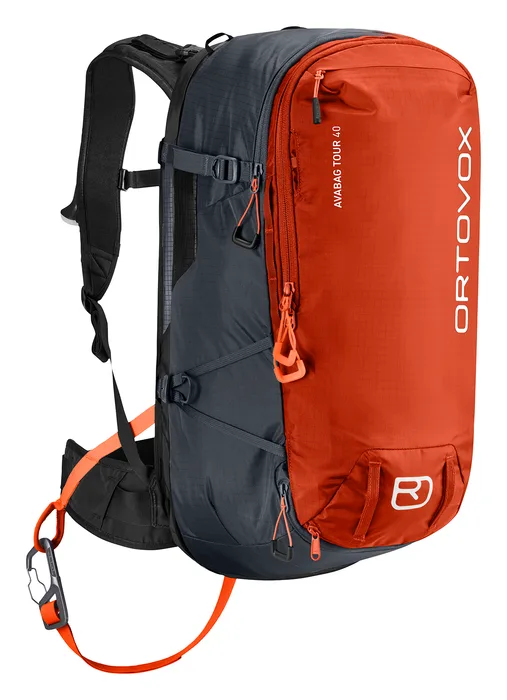
- Buy Ortovox Avabag Litric Tour 40 A 40 litre touring airbag pack with Ortovox's electric LiTRIC system, USB-C charging, and unlimited test activations at no extra cost.
- Buy BCA Float 32 Avalanche Airbag 2.0 BCA's best-selling Float pack: 32 litres, a 150 litre airbag, and a compressed-air cylinder you can refill at authorized locations. Amazon
- It depends Mammut Tour 30 Removable Airbag 3.0 A lightweight 30 litre touring pack whose Removable Airbag System 3.0 can move to other compatible packs, sold without a cartridge. Amazon
- Skip ABS Vario Set Easy.Tech 30L A twin-airbag touring set with a mechanical EASY.TECH trigger that is heavy, sold without a cartridge, and thinly documented on its product page.
What actually matters
- Inflation system - Electric systems use supercapacitors or a fan powered by a battery, while cartridge systems release compressed gas. The system decides your practice costs, refill logistics and travel rules.
- Certification - EN 16716:2017 is the European standard for avalanche airbag systems. Makers state it on data sheets or declarations of conformity, which are the documents to check.
- Airbag volume - The standard sets a minimum volume of 150 litres, according to ABS's summary. Some makers state their volume, and some product pages do not.
- Weight with energy source - A pack's listed weight may exclude the cartridge or cylinder. Compare complete, ready-to-deploy weights where the maker gives them.
- Refills and practice - Each cartridge pull needs a refill or replacement. Regular practice makes the pull automatic, so factor in what each practice costs.
- Fit - Back length or torso range matters as much as on any pack. Some airbag packs are sold in one size only.
- Rescue gear layout - A separate pocket for shovel and probe gets them out fast. Check that it is not buried inside the main compartment.
The specs, in plain English
Green flags vs red flags
Green flags
- EN 16716:2017 shown in the maker's data sheet or declaration of conformity
- Complete weight listed with the cartridge, cylinder or electric system included
- Clear refill or exchange information for your region
- Maker-published air travel instructions
- A separate, quickly accessed shovel and probe compartment
Red flags
- No standard or certification listed anywhere in the maker's documents
- Weight quoted without the cartridge and no complete weight given
- Cartridge types that the maker says are not sold in your country
- Only one back length when you are outside that size
- Listings that present the airbag as a substitute for a beacon, probe and shovel
Who's who: the brands
- Ortovox - Known for avalanche safety gear and the electric LiTRIC airbag system with USB-C charging.
- BCA - Backcountry Access, known in North America for Float compressed-air airbags, beacons and avalanche education.
- Mammut - A Swiss mountain brand whose Removable Airbag System 3.0 moves between compatible packs, alongside Alpride E2 electric packs.
- ABS - A long-running airbag maker known for its TwinBag system with two independent airbags.
- Alpride - Maker of the E2 supercapacitor airbag system used in packs from several brands.
How to read a listing without getting fooled
Start with the inflation system, because it determines most of the ownership costs. Then find the standard: open the maker's declaration of conformity or technical data sheet and look for EN 16716:2017 and a notified body. Next, check the weight line carefully, since many listings quote the pack without the cartridge or cylinder, and compare complete weights. Look for whether the energy source is included in the box, where refills happen, and the maker's flying instructions. Finally, check the back length or torso range against your own measurement and look at where the shovel and probe live.
How much should you spend?
Avalanche airbag packs sit in the mid-range to premium tiers. Cartridge packs such as the BCA Float range tend to be the mid-range way in, but add the cost of the cylinder or cartridge and every refill. Electric packs sit in the premium tier and cost more up front, though free practice deployments and simpler travel can offset that for people who ski and fly often. Removable systems and modular zip-on bases can spread the cost across several pack sizes. Budget for a beacon, probe, shovel and an avalanche course first, since an airbag does not replace them.
Questions, answered
How long does an avalanche airbag last?
It depends on the maker. Mammut's manual says its Removable Airbag System 3.0 should be replaced after a maximum of 10 years from manufacture or 40 deployments, given good storage. Ortovox offers a two-year warranty extended to five years when you register the LiTRIC system. Check your own manual for service intervals.
Do I need to weigh my cartridge?
For some cartridge systems, yes. Mammut's manual says to check the filling pressure before use, either by the gauge or by weighing a cartridge without a gauge. Electric systems like Ortovox LiTRIC show charge on an LED display instead, and Ortovox says there is no weighing needed.
Can I use another brand's cartridge in my pack?
Generally not. Mammut says to use only Mammut or Snowpulse cartridges in its airbags, and ABS says its cartridges may only be filled in ABS filling systems. Use the cartridge type your maker specifies.
Should I service my airbag after an avalanche?
Yes, follow the maker's instructions. Mammut says any use in an avalanche can damage the system and that maintenance after such use must be done by Mammut Customer Service. Inspect the airbag, housing and straps after every deployment too.
Or jump to the head-to-head: Ortovox Avabag Litric Tour 40 vs BCA Float 32 Avalanche Airbag 2.0.