Explained
Avalanche Shovels, Explained
After reading, you'll understand what blade material, certification, shaft lock, handle type and hoe mode mean, and which ones matter for rescue.
In this guide
First-time buyers often assume any shovel that digs snow will do. Rescue digging is different: avalanche debris can be dense, you may need to move a lot of it fast, and the shovel has to survive prying. Spec sheets add jargon like UIAA 156, 7075 aluminum and ovo-concave on top. This guide explains the terms so you can read a maker's page and spot the gaps.
The 30-second version
- Aluminum beats plastic, because avalanche debris can be hard enough to need a metal blade.
- Look for UIAA 156, the standard for avalanche rescue shovels, on the maker's own page.
- Bigger blades move more snow, while thinner, smaller blades save weight.
- A telescopic shaft needs a solid lock, or the shovel flexes while you dig.
- Hoe mode is a bonus, not a requirement, and not every shovel in a family has it.
The products this guide is about
Our verdict on each, with the full reasoning on the companion review.
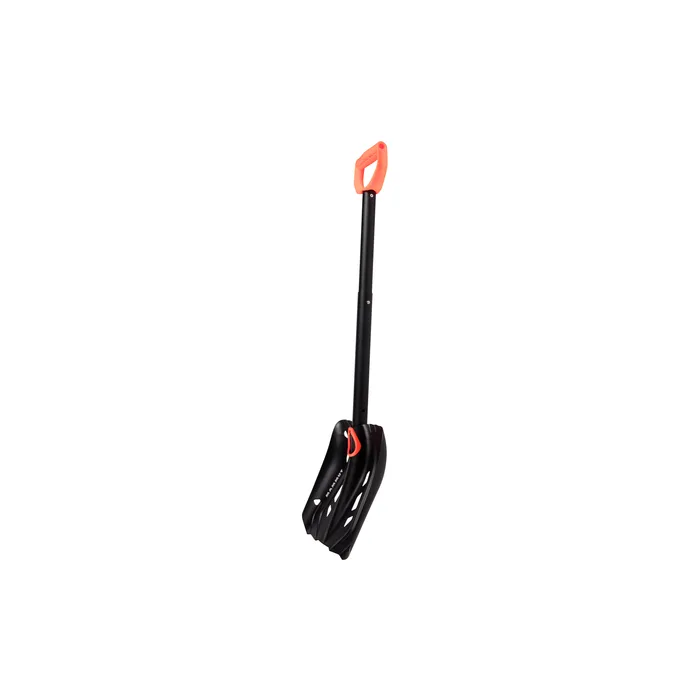
- Buy Mammut Alugator Pro Light Hoe A large, certified aluminum blade with a D-grip and a hoe function, at a weight that still packs small.
- Buy BCA Dozer 2T A large 6061 T6 aluminum blade with an extendable T-grip, UIAA 156 certification and a 3-year warranty.
- It depends Mammut Alugator Ultra The lightest shovel here at 395 g, built from thin 7075 aluminum for ski mountaineering.
- Skip SnowClaw A 6.4 oz high-impact copolymer scoop with no shaft and no rescue certification listed.
What actually matters
- Blade material - Aluminum alloys such as 6061 T6 and 7075 are common in rescue shovels. They are stiff enough to cut into debris without flexing.
- Certification - UIAA 156 is the avalanche rescue shovel standard. If a maker's page does not list it, treat the shovel as uncertified.
- Blade size - A larger blade moves more snow per scoop. A smaller blade saves weight but takes longer to clear a burial.
- Shaft and lock - Telescoping shafts collapse for packing and extend for digging. A lock keeps the shaft rigid under load.
- Handle type - T-grips are often lighter, while D-grips give more leverage and fit big gloves. Pick what suits your hands.
- Hoe mode - This lets you angle the blade like a garden hoe to pull snow toward you. It helps when excavating a burial.
- Packed weight and length - Listed weight and collapsed length decide if the shovel fits your pack and whether you carry it every time.
The specs, in plain English
Green flags vs red flags
Green flags
- The maker's page lists UIAA 156 certification.
- The blade is aluminum, with the alloy named.
- Blade dimensions and weight are published.
- The shaft has a described lock or locking mechanism.
- The page lists collapsed and extended lengths.
Red flags
- The blade is plastic or the material is not stated.
- No certification appears on the maker's page.
- The shovel has no shaft or only a very short handle.
- The product is marketed for cars and camping as much as for backcountry skiing.
- The page lists weight but no blade dimensions or lock details.
Who's who: the brands
- Mammut - Swiss maker whose Alugator line covers ultralight to hoe-equipped shovels with UIAA 156 certification.
- BCA - Backcountry Access, known for its Dozer shovel range in multiple blade sizes and grips.
- Black Diamond - Makes the Transfer, Evac and Deploy shovels with anodized aluminum blades.
- Voile - Offers forged 6061-T6 aluminum scoops and a Hoback series with a hoe function.
- G3 and Pieps - G3 sells the AVI Shovel in a welded 6061 T6 aluminum build, and Pieps makes quick lock T and C shovels.
How to read a listing without getting fooled
Start with the blade: the material, the alloy and the dimensions, then the weight and collapsed length. Check for UIAA 156 on the maker's own page, not just a retailer listing. Look for how the shaft locks and what the handle is, and confirm hoe mode on the exact model, since families often share a name but not features. If a page leaves out blade size or the lock, treat that as a gap to resolve before you buy.
How much should you spend?
Aluminum rescue shovels sit in a mid-range to premium tier, with ultralight alloys and extra features like hoe mode pushing toward premium. Budget scoops are cheaper because they are plastic or uncertified, and that is where the savings come from. For a safety tool, spend on a certified aluminum blade first, then on weight savings or extras if you need them.
Questions, answered
How do I know if a shovel is certified?
Look on the maker's product page for UIAA 156, the avalanche rescue shovel standard. Mammut and BCA both list it on the shovels here. If the page is silent, assume it is not certified. A retailer's claim is not a substitute for the maker's.
Can I use a regular garden or utility shovel?
Not as a rescue shovel. It is usually too heavy and too long to carry, and it is not built or tested for avalanche rescue. Pack-sized telescopic aluminum shovels are made for this job.
Do I need a saw built into the shovel?
Not for rescue. Some models add a snow saw for snowpack tests, but it is an extra. BCA's table lists a snow saw on some Dozer models, and it is worth checking the exact model if you want one.
How should I carry the shovel?
Keep it in an easy-access pocket of your pack so you can pull it out fast, with the blade and shaft separate or assembled as the maker intends. Practice assembling it with gloves on. A pack designed for ski gear helps.
Or jump to the head-to-head: Mammut Alugator Pro Light Hoe vs BCA Dozer 2T.