

Ski & Snowboard
The Best Avalanche Shovels: 4 Compared (and One to Skip)
We compared four backcountry rescue shovels on blade material and size, shaft and locking, handle type, packed weight, and hoe mode.
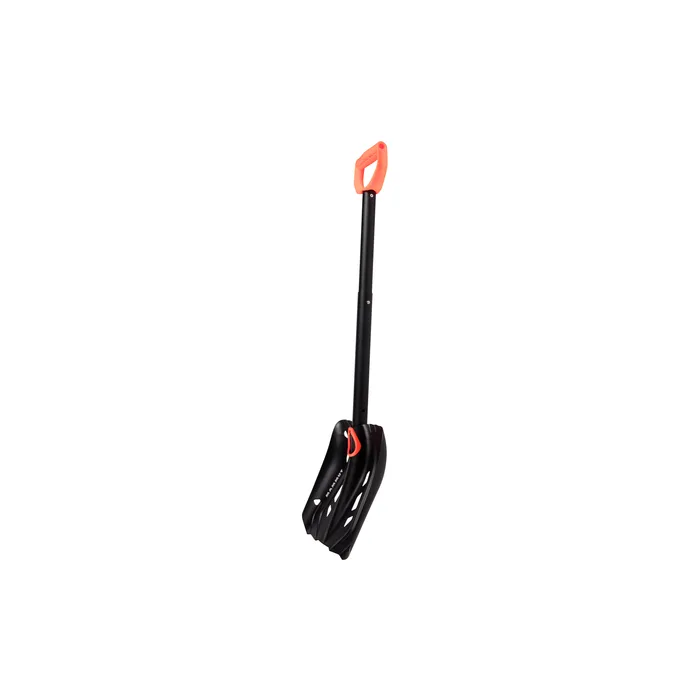
The short version
The Mammut Alugator Pro Light Hoe is our top pick: a large hardened aluminum blade, a D-grip, an automatic spring lock, UIAA 156 certification, and a hoe function for moving dense debris. The BCA Dozer 2T is the value pick, with a similar blade size, a T-grip, UIAA 156 certification and a 3-year warranty, but no hoe mode. The Mammut Alugator Ultra suits ski mountaineers who count grams, since it is the lightest shovel here at 395 g, but its blade is only 1 mm thick. The SnowClaw is the one to skip as rescue equipment: it is a lightweight copolymer scoop with no shaft and no certification listed. Check the beacon first in our beacon comparison, and carry the shovel in a pack that fits, as covered in our ski bag review. Best for: backcountry skiers who want a certified aluminum shovel they can trust to dig through avalanche debris.
Our picks at a glance
- Mammut Alugator Pro Light Hoe - Buy. A large, certified aluminum blade with a D-grip and a hoe function, at a weight that still packs small.
- BCA Dozer 2T - Buy. A large 6061 T6 aluminum blade with an extendable T-grip, UIAA 156 certification and a 3-year warranty.
- Mammut Alugator Ultra - It depends. The lightest shovel here at 395 g, built from thin 7075 aluminum for ski mountaineering.
- SnowClaw - Skip. A 6.4 oz high-impact copolymer scoop with no shaft and no rescue certification listed.
The verdict in 30 seconds
What mattered most
- Blade material
- Blade size
- Listed weight
- Shaft
- Locking
- Handle
An avalanche shovel is the tool that actually gets a buried person out, and the gap between a rescue shovel and a snow toy is bigger than it looks. The things that separate them are blade metal, blade size, how the shaft telescopes and locks, handle shape, and weight in the pack. We compared three UIAA-certified aluminum shovels from Mammut and BCA with one very different product, the plastic SnowClaw, and checked every figure against each maker's own page. Anything a maker does not publish is left out here rather than guessed.
A large, certified aluminum blade with a D-grip and a hoe function, at a weight that still packs small.
Best for: Regular backcountry skiers who want the most capable certified shovel here.
- The blade is hardened, anodized aluminum at 24 cm wide and 27.5 cm long, certified to the UIAA 156 avalanche shovel standard.
- The shaft is an oval telescopic design with an automatic spring lock, and the ergonomically shaped D-grip is made for shovel control.
- Mammut lists a hoe function, with variable shaft positioning that lets it work as a 90 degree pick.
- At 675 g it is heavier than the ultralight options.
- Collapsed it is 68 cm long, which is longer than most compact tour shovels.
- It sits at the premium end of the shovel field.
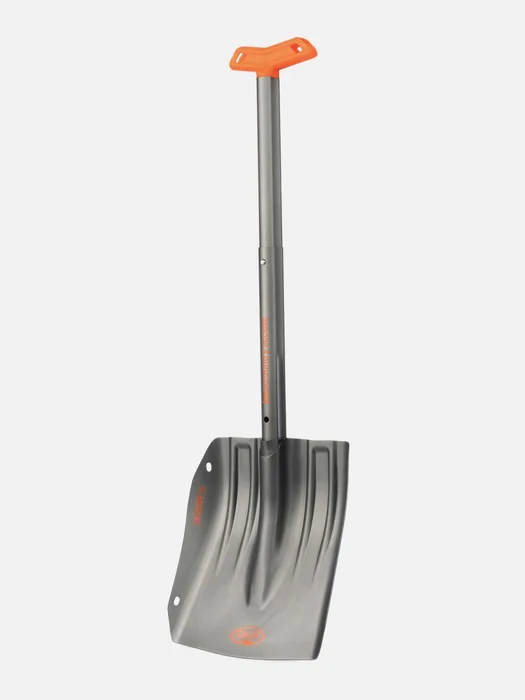
A large 6061 T6 aluminum blade with an extendable T-grip, UIAA 156 certification and a 3-year warranty.
Best for: Skiers who want a large certified blade without paying for extras like a hoe.
- The blade is 6061 T6 aluminum at 25 x 29 cm, the Large size in the Dozer range, with a flat stomp edge.
- BCA lists certification to the UIAA 156 standard, plus a limited 3-year warranty.
- The ovo-concave shaft is designed to resist breakage while prying, and the whole shovel weighs 680 g.
- Its feature table shows no hoe mode on the 2T; the 2H and 2H-S carry that.
- The product page does not describe the locking mechanism, so check it in person before you buy.
- The T-grip gives less leverage than a D-grip for some hands.
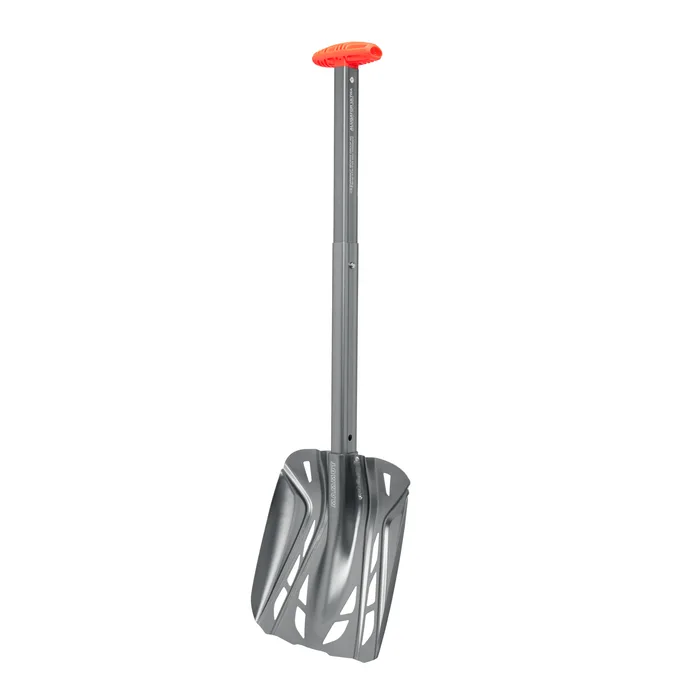
The lightest shovel here at 395 g, built from thin 7075 aluminum for ski mountaineering.
Best for: Ski mountaineers and fast-and-light tourers who prioritize pack weight and accept a smaller, thinner blade.
- Mammut lists a weight of 395 g with a 7075 aerospace-grade aluminum blade.
- It is UIAA 156 certified, with a telescopic shaft that collapses to 39 cm and an automatic spring lock.
- It packs to 55 cm overall, so it disappears in a small pack.
- The blade is just 1 mm thick, which Mammut describes as welded construction from thin aluminum.
- At 22 x 24 cm the blade is smaller than the Pro Light Hoe and Dozer 2T.
- Mammut does not mention a hoe mode on the page, and it is a premium purchase.
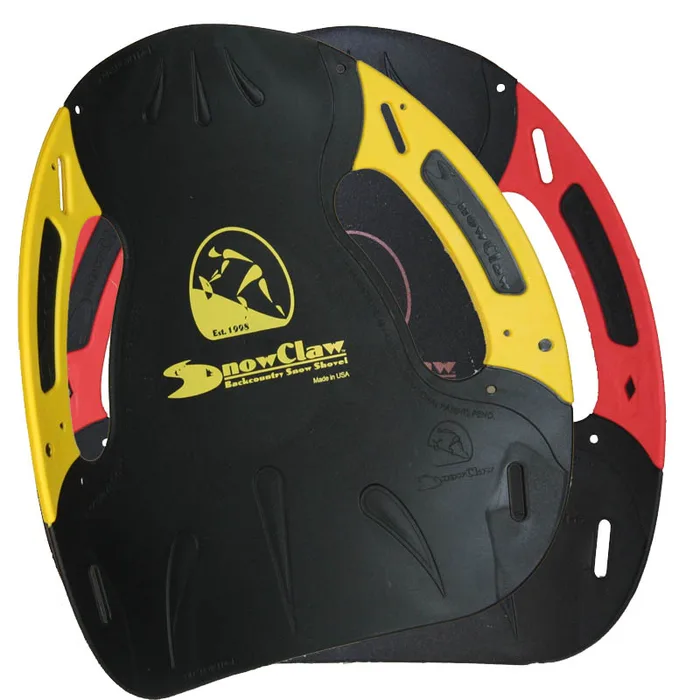
A 6.4 oz high-impact copolymer scoop with no shaft and no rescue certification listed.
Best for: Car trunk or snowmobile emergencies and light snow camping, not avalanche burial rescue.
- SnowClaw lists a weight of 6.4 oz, which is very light.
- It is made from a high-impact copolymer that SnowClaw says resists cracking to minus 20 F.
- The maker says it doubles as an emergency splint and snow anchor.
- It is a flat plastic scoop with no telescoping shaft or handle, so digging means pulling it toward you by hand.
- SnowClaw's site lists no UIAA or other shovel certification.
- Plastic cannot cut through dense or refrozen avalanche debris the way an aluminum blade can.
- The maker markets it to car, snowmobile and camping buyers as well as backcountry skiers, so it is not built around burial rescue.
| Criteria | Mammut Alugator Pro Light Hoe Top pick | BCA Dozer 2T | Mammut Alugator Ultra | SnowClaw |
|---|---|---|---|---|
| Verdict | Buy it | Buy it | It depends | Skip it |
| Best for | Regular backcountry skiers who want the most capable certified shovel here. | Skiers who want a large certified blade without paying for extras like a hoe. | Ski mountaineers and fast-and-light tourers who prioritize pack weight and accept a smaller, thinner blade. | Car trunk or snowmobile emergencies and light snow camping, not avalanche burial rescue. |
| Price tier | $$$ · premium | $$ · mid-range | $$$ · premium | $ · budget |
| Blade material | Hardened, anodized aluminum | 6061 T6 aluminum | 7075 aluminum, 1 mm thick | High-impact copolymer |
| Blade size | 24 x 27.5 cm | 25 x 29 cm | 22 x 24 cm | About 12 x 11.25 in overall |
| Listed weight | 675 g | 680 g | 395 g | 6.4 oz |
| Shaft | Oval telescopic | Ovo-concave, extendable | Telescopic, I-beam inspired | None |
| Locking | Automatic spring lock | Not described on page | Automatic spring lock | Not applicable |
| Handle | D-grip | Extendable T-grip | Symmetrical T-grip | None |
| Hoe mode | Yes | Not on the 2T | Not mentioned | No |
| UIAA 156 certified | Yes | Yes | Yes | None listed |
Which one is right for you?
- Regular backcountry skiers who want the most capable certified shovel here. Buy it Mammut Alugator Pro Light Hoe
- Skiers who want a large certified blade without paying for extras like a hoe. Buy it BCA Dozer 2T
- Ski mountaineers and fast-and-light tourers who prioritize pack weight and accept a smaller, thinner blade. It depends Mammut Alugator Ultra
- Car trunk or snowmobile emergencies and light snow camping, not avalanche burial rescue. Skip it SnowClaw
How we judged the field
Five things matter in a rescue shovel. Blade material decides whether you can cut through hard debris, so hardened aluminum beats plastic. Blade size sets how much snow you move per scoop. The shaft and its lock decide whether the shovel builds quickly and stays rigid under load. Handle type, T or D, affects leverage and comfort in gloves. Packed weight and collapsed length decide whether you carry it every day, and hoe mode adds speed when you are moving debris sideways.
The field splits into certified aluminum shovels, which are what guides and rescue teams carry, and non-certified novelty or utility scoops. We picked three certified aluminum shovels that cover premium, value and ultralight needs, then a real plastic scoop as the skip. Every figure comes from each maker’s own page, and anything unpublished is omitted. Black Diamond, Voile, G3 and Pieps also make good shovels, but their pages were out of stock, uncertified or missing specs when we checked.
The Mammut Alugator Pro Light Hoe is the most complete shovel here. The blade is hardened, anodized aluminum measuring 24 x 27.5 cm, with sharpened edges, integrated steps and stabilization ribs, and it is certified to the UIAA 156 avalanche shovel standard. The oval telescopic shaft locks with an automatic spring lock, and the ergonomically shaped D-grip is built for shovel control. Mammut also lists a hoe function, and says the variable shaft positioning lets you use it as a 90 degree pick. At 675 g it is not the lightest option, and the 68 cm collapsed length is longer than the compact tour shovels, so it needs a pack with enough room. But it handles both the first digging and the heavy excavation that follows. If you will carry one shovel for years of regular backcountry days, this is the one to pick. It is the best fit for committed skiers and guides.
The BCA Dozer 2T is the sensible default. The blade is 6061 T6 aluminum at 25 x 29 cm, with a flat stomp edge, and BCA lists certification to the UIAA 156 standard. The shaft is an ovo-concave design that BCA says is built to resist breakage while prying, and the extendable T-grip takes it from 59 cm assembled to 79 cm extended. Weight is 680 g, and BCA backs it with a limited 3-year warranty. The catch is features: the feature table on BCA’s page shows hoe mode only on the 2H and 2H-S, not the 2T, and the page does not describe the lock, so handle it in a shop first. It also lacks the D-grip option Mammut offers. For most recreational backcountry skiers who want a large certified blade and not much else, the 2T gives about as much shovel as you need. It is for skiers who put money into a course instead of extras.
The Mammut Alugator Ultra is built around one number, 395 g. Mammut makes the blade from aerospace-grade 7075 aluminum, welded from material only 1 mm thick, and the telescopic shaft has an I-beam inspired profile that collapses to 39 cm. Overall it packs to 55 cm, it is UIAA 156 certified, and it has the same automatic spring lock as the other Alugators and a symmetrical T-grip. The trade-offs are plain: the 22 x 24 cm blade is the smallest of the three aluminum shovels, the thin blade has less margin than a heavier one, and Mammut does not mention a hoe mode. That is a fair deal for ski mountaineers on long, light days where every gram counts and a team will dig together. If you ski ordinary tours, the extra weight of the Pro Light Hoe buys real digging capacity. The Ultra is for the weight-focused few.
The SnowClaw is a real product with a real use, but that use is not avalanche rescue. SnowClaw describes it as a high-impact copolymer scoop that weighs 6.4 oz, measures 12 x 11.25 x 0.25 inches, and resists cracking down to minus 20 F. It folds into a rigid U-shape and can double as a splint or anchor, according to the maker. It also has no telescoping shaft and no handle, so you dig by pulling snow toward you with both hands, and its site lists no UIAA or other shovel certification. Avalanche debris can be dense and hard, and a flat plastic scoop is the wrong tool for it. SnowClaw positions itself for snowmobilers, campers and car emergencies as well as skiers, and for those jobs it can make sense. For a partner burial it is a poor choice, so look at a certified aluminum shovel instead. It is best treated as a car kit item.
Mammut Alugator Pro Light Hoe vs BCA Dozer 2T: which should you buy?
The Pro Light Hoe and the Dozer 2T have nearly the same blade footprint, the same certification and nearly the same weight at 675 g and 680 g. The differences are the Mammut’s D-grip, listed automatic spring lock and hoe function, against the BCA’s lower tier, T-grip and 3-year warranty. If you value a hoe for pulling debris, or you prefer a D-grip, the Mammut earns its premium.
If you mostly want a dependable certified blade and you plan to spend the savings on a rescue course, the Dozer 2T is the better value. Whichever you choose, put it next to your beacon and probe in the same pack pocket so you can reach all three fast. Our beacon comparison covers the transmitting side of the kit.
What to look for
- Blade material: Choose aluminum, such as 6061 T6 or 7075, rather than plastic, because avalanche debris can be hard to cut.
- Certification: Look for UIAA 156 on the maker’s page, which is the standard for avalanche rescue shovels.
- Blade size: A larger blade, around 24 to 25 cm wide and 27.5 to 29 cm long here, moves more snow per scoop.
- Shaft and lock: A telescopic shaft with a positive lock, such as Mammut’s automatic spring lock, keeps the shovel rigid while you dig.
- Handle type: D-grips give leverage and fit thick gloves, while T-grips are often lighter, so test both with your gloves on.
- Weight and packed length: Compare the listed weight and collapsed length with your pack, and check hoe mode if you want it.
Our final take
Buy the Mammut Alugator Pro Light Hoe if you want the most capable certified shovel here, with a large aluminum blade, D-grip, spring lock and hoe function. Buy the BCA Dozer 2T if you want a large certified blade, a 3-year warranty and a lower tier. Pick the Mammut Alugator Ultra only if pack weight is your overriding concern and you accept a smaller, thinner blade. Skip the SnowClaw for avalanche work: it has no shaft and no certification listed. Pair whichever shovel you choose with a beacon and a probe, and practice with them often.
Questions, answered
Do I really need an aluminum shovel, or is a plastic one enough?
For avalanche rescue, aluminum is the standard. Avalanche debris can set like concrete, and a metal blade is far better at cutting into it than a plastic one. The three aluminum shovels here are listed as UIAA 156 certified, the standard for avalanche rescue shovels. The plastic SnowClaw lists no such certification, so it is not a substitute.
How big should the blade be?
A larger blade moves more snow per scoop, which matters when time is short. The BCA Dozer 2T and Mammut Pro Light Hoe both have blades roughly 24 to 25 cm wide and 27.5 to 29 cm long. The Alugator Ultra trades blade size and thickness for weight. Most people are better served by the larger blade unless pack weight is a hard constraint.
Is a T-grip or D-grip better?
A D-grip gives more leverage and is easy to hold in thick gloves, while a T-grip is usually a little lighter. The Pro Light Hoe uses a D-grip and the Dozer 2T and Alugator Ultra use T-grips. Try both with your gloves on if you can, since hand size and glove thickness matter.
What does hoe mode do?
Hoe mode lets you set the blade at an angle to the shaft so you can pull snow toward you, which is useful when excavating a burial. Mammut lists a hoe function on the Pro Light Hoe. BCA's feature table shows hoe mode on the 2H and 2H-S rather than the 2T. It is helpful but not essential.
Is a shovel enough on its own?
No. A shovel works together with a beacon and a probe, plus training and practice. Our beacon comparison covers the transmitting side, and a good pack or ski bag keeps the kit organized. A course on companion rescue is more valuable than any single piece of gear.
Deciding between the top two? See our head-to-head: Mammut Alugator Pro Light Hoe vs BCA Dozer 2T.
More Ski & Snowboard reviews
 The Best Boot Dryers: 4 Compared (and One to Skip)
  The Best Kids Snowsuits: 4 Compared (and One to Skip)
  The Best Ski Bags: 4 Compared (and One to Skip)
  The Best Ski Boot Bags: 4 Compared (and One to Skip)
  The Best Ski Boot Heaters: 4 Compared (and One to Skip)
  The Best Ski Boots: 4 Compared (and One to Skip)