

Ski & Snowboard
The Best Kids Ski Helmets: 4 Compared (and One to Skip)
We compared four kids' snow helmets on the safety standards each maker lists, rotational protection, fit system, size range and what you get for the money.
The short version
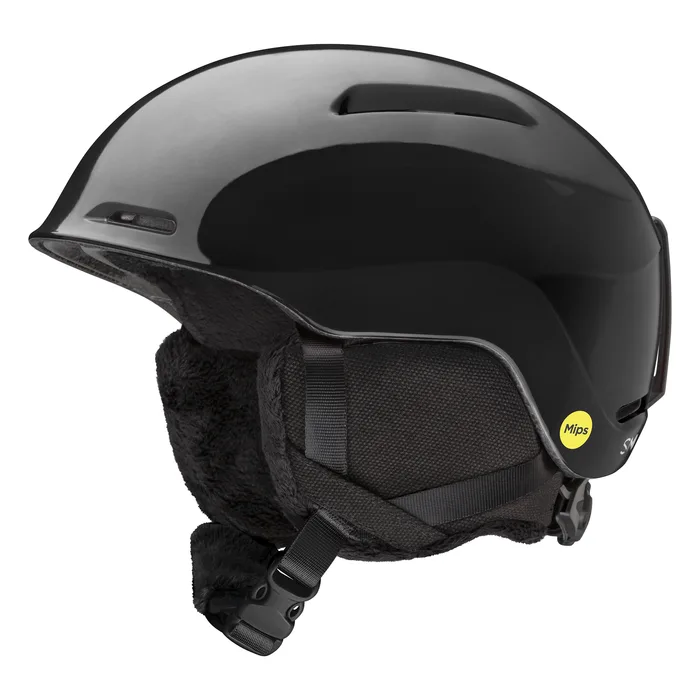
The Smith Glide Jr. Mips is our top pick: Smith lists both ASTM F2040 and CE EN 1077:2007 Class B, it has a Mips layer and a dial fit, and it comes in three youth sizes at 350 g for the YM. The OutdoorMaster REINDEER + HAPPY VALLEY Kids Snow Bundle is the value pick, pairing a helmet that OutdoorMaster says meets ASTM F2040-18 and CE EN 1077:2007 Class B with kids' goggles at a budget price, though it has no rotational layer. The Bern Nino DVRT Winter Helmet depends on how your family uses it: it suits 5 to 8 year olds who want one helmet for bike and ski, but Bern lists ASTM F2040 and bike standards, not EN 1077. Skip the Anon Rime 3 Kids helmet: it sits in the same price tier as the Smith, yet its page does not name which standards it meets, it has no rotational system and it uses an elastic fit instead of a dial. Best for: parents who want a clearly certified, adjustable helmet that a child will keep wearing all day.
Our picks at a glance
- Smith Glide Jr. Mips - Buy. A light youth helmet with Mips, a dial fit and both ASTM F2040 and CE EN 1077 Class B listed by Smith.
- OutdoorMaster REINDEER + HAPPY VALLEY Kids Snow Bundle - Buy. A budget helmet and goggle set whose helmet OutdoorMaster says meets ASTM F2040-18 and CE EN 1077:2007 Class B.
- Bern Nino DVRT Winter Helmet - It depends. A light bike and ski helmet for ages 5 to 8, certified to ASTM F2040 and bike standards, with Bern's DVRT padding.
- Anon Rime 3 Kids Ski & Snowboard Helmet - Skip. A tough multiseason hardshell whose product page does not name its standards and has no rotational system or dial.
The verdict in 30 seconds
What mattered most
- Certifications listed by maker
- Rotational system
- Sizes
- Maker age guidance
- Fit adjustment
- Listed weight
A kids' ski helmet is one of the few pieces of ski gear where the label matters more than the look. The two snow helmet standards to check are ASTM F2040 in the US and EN 1077 in Europe, and a growing number of kids' helmets add a rotational layer such as Mips. We compared a Mips helmet with both snow certifications, a budget helmet and goggle bundle, a bike and ski hybrid built for ages 5 to 8, and a popular multiseason helmet whose product page does not name its standards. For the adult version, see our separate ski helmets guide, and for the rest of the outfit our kids' snowsuits guide.
A light youth helmet with Mips, a dial fit and both ASTM F2040 and CE EN 1077 Class B listed by Smith.
Best for: Parents who want one clearly certified, Mips-equipped helmet that adjusts as a child grows through the youth sizes.
- Smith lists ASTM F2040 and CE EN 1077:2007 Class B, so the helmet is covered on both sides of the Atlantic.
- A Mips layer is built in, which Smith says reduces rotational forces caused by angled impacts.
- Three youth sizes (YXS, YS, YM) and a stated 350 g for the YM, which Smith calls the widest youth size range in its line.
- Smith's product page does not give the head circumference for each youth size, so you need the separate size guide or a try-on.
- The vents are fixed, so there is no way to close them on very cold days.
- It costs more than the budget bundle and does not include goggles.
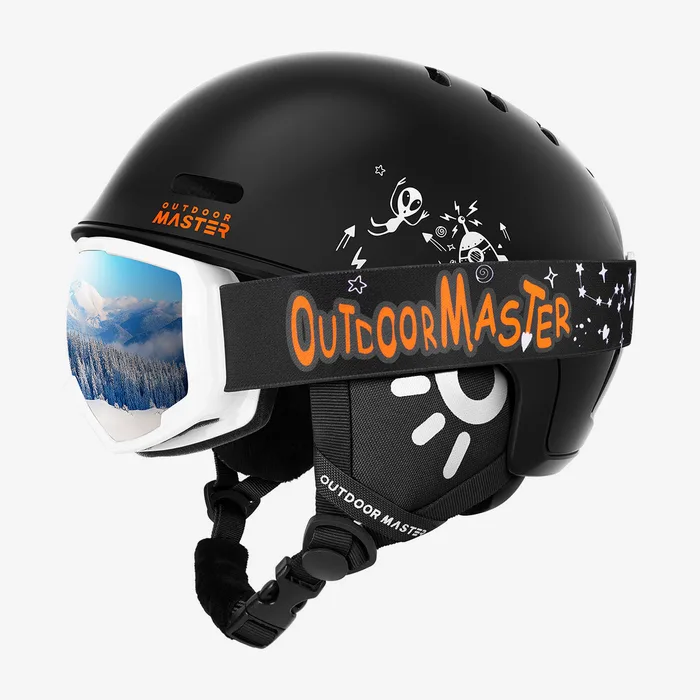
A budget helmet and goggle set whose helmet OutdoorMaster says meets ASTM F2040-18 and CE EN 1077:2007 Class B.
Best for: Families buying a first helmet and goggles for a younger child on a tight budget who still want both snow standards listed.
- OutdoorMaster states the REINDEER helmet meets ASTM F2040-18 and CE EN 1077:2007 Class B.
- In-mold construction, an adjustable dial and 12 vents, plus a detachable fleece lining and removable earmuffs.
- The set includes HAPPY VALLEY kids' goggles, and the store lists 30-day returns and a 2-year warranty.
- No rotational system such as Mips is listed.
- Only two sizes, XS (48 to 52 cm) and S (52 to 56 cm), so older kids with larger heads will outgrow it.
- The goggles are bundled in, so you pay for them even if your child already has a pair that fits.
- No helmet weight is listed on the product page.
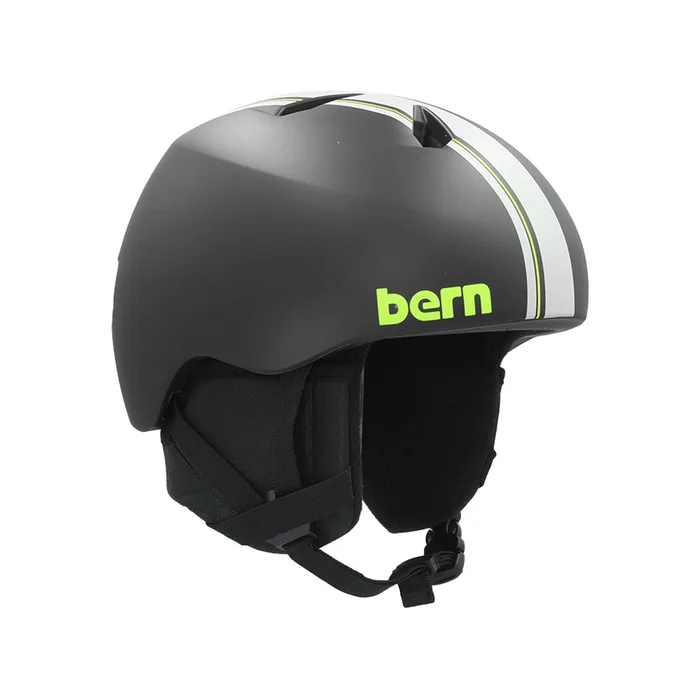
A light bike and ski helmet for ages 5 to 8, certified to ASTM F2040 and bike standards, with Bern's DVRT padding.
Best for: Families in the US who want a single light helmet a 5 to 8 year old can wear on the bike in summer and on the slopes in winter.
- Bern lists ASTM F2040 plus the US CPSC bike standard (for persons age 5 and older) and EN1078, so one helmet covers bike and snow.
- A stated average weight of 310 g, the lightest figure listed in this group, with a Compass Fit dial.
- DVRT padding, which Bern describes as integrated sliding layers that help redirect impact energy.
- Bern does not list EN 1077, the European snow helmet standard, on the product page.
- Bern sizes it for children ages 5 to 8, so it is outgrown sooner than the Smith.
- Only two sizes, XS/S and S/M, with no centimetre ranges in the product text.
- Seven vents, fewer than the budget bundle's twelve.
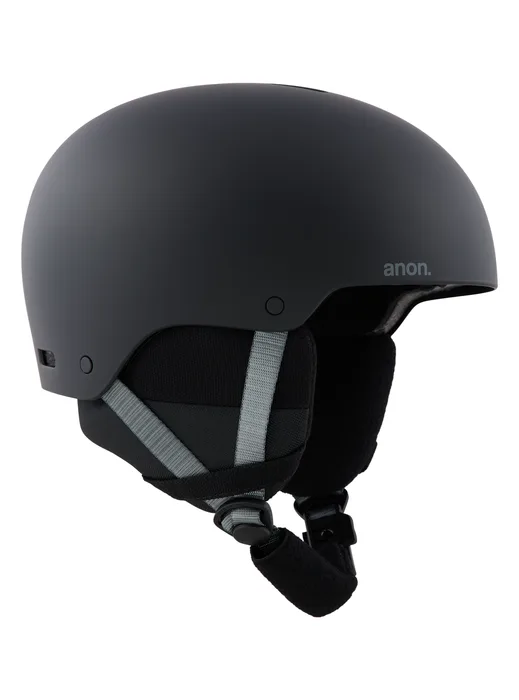
A tough multiseason hardshell whose product page does not name its standards and has no rotational system or dial.
Best for: Few buyers: the Smith gives named certifications, Mips and a dial at a similar price tier.
- Injection-molded ABS Endura shell that Anon describes as ding-resistant for daily use.
- Fidlock magnetic buckle that closes with one hand, and a removable liner and ear pads.
- Regular and Round Fit shapes, plus a 1-year warranty and a 2-year crash replacement policy.
- Anon calls it multiseason certified for ski/snowboard, bike and skate but the product page does not say which standards, so you cannot check ASTM F2040 or EN 1077 from it.
- No Mips or other rotational system is listed, unlike the Smith at a similar price tier.
- An elastic auto-adjust closure instead of a dial, so you cannot fine-tune the fit over a hat or as the child grows.
- No helmet weight is listed.
| Criteria | Smith Glide Jr. Mips Top pick | OutdoorMaster REINDEER + HAPPY VALLEY Kids Snow Bundle | Bern Nino DVRT Winter Helmet | Anon Rime 3 Kids Ski & Snowboard Helmet |
|---|---|---|---|---|
| Verdict | Buy it | Buy it | It depends | Skip it |
| Best for | Parents who want one clearly certified, Mips-equipped helmet that adjusts as a child grows through the youth sizes. | Families buying a first helmet and goggles for a younger child on a tight budget who still want both snow standards listed. | Families in the US who want a single light helmet a 5 to 8 year old can wear on the bike in summer and on the slopes in winter. | Few buyers: the Smith gives named certifications, Mips and a dial at a similar price tier. |
| Price tier | $$ · mid-range | $ · budget | $$ · mid-range | $$ · mid-range |
| Certifications listed by maker | ASTM F2040, CE EN 1077:2007 Class B | ASTM F2040-18, CE EN 1077:2007 Class B | ASTM F2040, CPSC bike (age 5+), EN1078 | Says multiseason certified; standards not named |
| Rotational system | Mips | None listed | DVRT sliding-layer padding | None listed |
| Sizes | YXS, YS, YM | XS 48-52 cm, S 52-56 cm | XS/S, S/M | S/M 48-51 cm, L/XL 52-55 cm (Regular) |
| Maker age guidance | Not stated | Not stated | Ages 5-8 | Not stated |
| Fit adjustment | Dial | Dial | Compass Fit dial | Elastic auto-adjust |
| Listed weight | 350 g (YM) | Not listed | 310 g average | Not listed |
| Construction | In-mold shell fused to EPS | In-mold | Zipmold liquid injected foam | Injection-molded ABS hardshell |
| Extras | Plush liner, removable goggle strap lock | Goggles included, removable fleece lining and earmuffs, 12 vents | 7 vents, audio and light compatible | Fidlock magnetic buckle, removable liner and ear pads |
Which one is right for you?
- Parents who want one clearly certified, Mips-equipped helmet that adjusts as a child grows through the youth sizes. Buy it Smith Glide Jr. Mips
- Families buying a first helmet and goggles for a younger child on a tight budget who still want both snow standards listed. Buy it OutdoorMaster REINDEER + HAPPY VALLEY Kids Snow Bundle
- Families in the US who want a single light helmet a 5 to 8 year old can wear on the bike in summer and on the slopes in winter. It depends Bern Nino DVRT Winter Helmet
- Few buyers: the Smith gives named certifications, Mips and a dial at a similar price tier. Skip it Anon Rime 3 Kids Ski & Snowboard Helmet
How we judged the field
Five things matter most in a kids ski helmet. First, the certification: ASTM F2040 is the US snow sports helmet specification and EN 1077 is the European one, and the label should name them. Second, rotational protection such as Mips, which is added on top of those standards. Third, a fit system that can be adjusted with a dial, because kids wear hats, grow and lose weight in their cheeks between seasons. Fourth, a size range that actually matches your child’s head. Fifth, the comfort details, such as liners, ear pads and goggle fit, that decide whether a child keeps the helmet on all day.
The market splits into dedicated snow helmets, budget bundles sold with goggles, and multisport helmets that cover bike and snow. We picked one of each type, plus a popular multiseason helmet that shows why reading the certification line matters. We left out the adult picks from our ski helmets guide and focused on helmets sold specifically in kids’ and youth sizes.
Smith Glide Jr. Mips
Buy itThe Smith Glide Jr. Mips is the helmet we would point most parents to first. Smith lists both ASTM F2040 and CE EN 1077:2007 Class B, so it is covered for skiing in North America and Europe, and it adds a Mips layer that Smith says reduces rotational forces caused by angled impacts. The shell is in-mold construction fused to the EPS foam, which keeps the stated weight to 350 g in the YM size. An adjustable dial handles fit changes on the hill, the plush liner adds warmth, and the goggle strap lock can be removed when goggles go under the helmet. Smith says the Glide Jr. has the widest youth size range in its line, covering YXS, YS and YM. The trade-offs are fixed vents that cannot be closed on the coldest days and a product page that does not print the centimetre range for each size, so use Smith’s size guide or a try-on. It is for parents who want named certifications, Mips and a dial in one helmet.
OutdoorMaster REINDEER + HAPPY VALLEY Kids Snow Bundle
Buy itThe OutdoorMaster REINDEER + HAPPY VALLEY Kids Snow Bundle is the value pick because the helmet’s certification line is clear and the price tier is low. OutdoorMaster states the REINDEER helmet meets ASTM F2040-18 and CE EN 1077:2007 Class B, the same two snow standards the Smith lists. It uses in-mold construction, has 12 vents, an adjustable dial, a detachable fleece lining, removable earmuffs and a soft chin band, and the bundle adds HAPPY VALLEY kids’ goggles with a double-layer lens. The sizes are XS (48 to 52 cm) and S (52 to 56 cm), and the store lists 30-day returns and a 2-year warranty. What you give up is rotational protection: no Mips or similar system is listed. There is also no helmet weight on the page, and you pay for goggles even if you already own a pair. It is for families equipping a younger child for the first time on a tight budget.
Bern Nino DVRT Winter Helmet
It dependsThe Bern Nino DVRT Winter Helmet makes sense for a specific family. Bern sizes it for children ages 5 to 8 and lists ASTM F2040, compliance with the US CPSC bike helmet standard for persons age 5 and older, and EN1078, so it is a single helmet for bike and ski days. It has Bern’s Compass Fit dial, seven vents, Zipmold liquid injected foam and a stated average weight of 310 g, the lowest listed weight here. Bern’s DVRT padding uses integrated sliding layers that Bern says help redirect impact energy. The catch is that Bern does not list EN 1077 on the product page, which matters if you ski in Europe or your child joins a program that asks for it. The 5 to 8 age range also means it is outgrown sooner than the Smith, and the two sizes, XS/S and S/M, come without centimetre ranges in the product text. Our kids’ bike helmets guide covers the summer-only Nino. It is for US families who want one helmet across seasons.
Anon Rime 3 Kids Ski & Snowboard Helmet
Skip itThe Anon Rime 3 Kids helmet is a popular, durable hardshell, but it is hard to recommend at its price tier. Anon describes it as multiseason certified for ski/snowboard, bike and skate, with an injection-molded ABS Endura shell, a removable liner and ear pads, a Fidlock magnetic buckle, and Regular and Round Fit shapes. The problem is what the product page leaves out. It does not name which standards the helmet meets, so a parent cannot confirm ASTM F2040 or EN 1077 from the listing. No Mips or other rotational system is listed. The fit relies on an elastic auto-adjust closure rather than a dial, so you cannot tighten it over a thin hat or snug it up mid-season. No weight is listed either. Anon does offer a 1-year warranty and a 2-year crash replacement policy, which is a real plus. Still, the Smith Glide Jr. Mips sits in the same mid-range tier and gives named certifications, Mips and a dial, so most parents should skip the Rime 3.
Sources
Specs in this review come from these pages.
- Smith Glide Jr. Mips product page (smithoptics.com)
- OutdoorMaster REINDEER + HAPPY VALLEY Kids Snow Bundle product page (outdoormaster.com)
- Bern Nino DVRT Winter Helmet product page (bernhelmets.com)
- Anon Kids' Rime 3 helmet product page (Burton) (burton.com)
- ASTM F2040 Standard Specification for Helmets Used for Recreational Snow Sports (store.astm.org)
- Mips (mipsprotection.com)
Smith Glide Jr. Mips vs OutdoorMaster REINDEER + HAPPY VALLEY Kids Snow Bundle: which should you buy?
The Smith Glide Jr. Mips and the OutdoorMaster bundle list the same two snow standards, ASTM F2040 and CE EN 1077:2007 Class B, so the choice is not about basic certification. The Smith adds a Mips layer, a third youth size and a published weight of 350 g for the YM. The OutdoorMaster adds goggles, more vents and removable earmuffs at a lower price tier, but no rotational system.
If your budget allows, buy the Smith: Mips is the clearest safety difference between the two, and the three youth sizes give a longer runway as your child grows. Pick the OutdoorMaster if you need both helmet and goggles for a younger child and the budget is fixed, or if you are outfitting several kids at once. Either way, measure your child’s head, check the size chart and try the helmet on with goggles before the first ski day.
What to look for
- Named snow standards: look for ASTM F2040 or EN 1077 by name on the product page or the label, not just the word certified.
- Rotational protection: Mips or a similar system is added on top of the impact standards and is worth having when fit and price are close.
- A dial fit: a dial lets you tighten the helmet over a hat and keep it snug as your child grows through a season.
- Size in centimetres: measure the head just above the eyebrows and match it to the maker’s chart rather than guessing by age.
- Goggle compatibility: try the helmet on with your child’s goggles and check there is no gap between the goggle and the helmet brim.
- Crash replacement terms: helmets are designed to be replaced after a significant impact, so a crash replacement policy has real value.
Our final take
For most families the Smith Glide Jr. Mips is the helmet to buy: Smith lists both ASTM F2040 and CE EN 1077 Class B, it adds Mips and a dial, and it spans three youth sizes. If the budget is tight, the OutdoorMaster REINDEER + HAPPY VALLEY bundle lists the same two snow standards and throws in goggles, at the cost of rotational protection. The Bern Nino DVRT Winter Helmet is a smart single helmet for US families with a 5 to 8 year old who rides bikes too, as long as EN 1077 does not matter to you. Skip the Anon Rime 3 Kids helmet unless Anon confirms its standards, because the Smith offers more for a similar price tier.
Questions, answered
Which certification should a kids ski helmet have?
In the US, look for ASTM F2040, the ASTM specification for helmets used for recreational snow sports. In Europe the snow helmet standard is EN 1077, which comes in Class A and Class B. A helmet that lists both is covered whether you ski in North America or Europe. Bike standards such as CPSC and EN1078 are useful for a multisport helmet, but they are not snow helmet standards on their own. If a product page does not name any standard, ask the maker before you buy.
Is Mips worth it on a kids helmet?
Mips is a low-friction layer inside the helmet that the makers say reduces rotational forces in angled impacts. It is added on top of the normal impact standards, not in place of them. In this group only the Smith lists Mips, and Bern uses its own DVRT padding for a similar goal. If two helmets fit equally well and both list the snow standards, the one with a rotational system is the better pick. Fit still comes first, because a loose helmet with Mips protects worse than a snug one without it.
How do I size a kids ski helmet?
Wrap a soft tape around the head just above the eyebrows and note the circumference in centimetres, which is how Anon and OutdoorMaster publish their charts. Pick the size whose range includes that number, and if your child sits between sizes, try both if you can. The helmet should sit level, just above the eyebrows, and not rock when you move it with the strap fastened. Try it on with the goggles your child will wear so there is no gap at the forehead.
Can my child use a bike helmet for skiing?
Only if the helmet is certified for snow as well, as the Bern Nino DVRT Winter Helmet is with ASTM F2040. A bike-only helmet is built and tested for different conditions and usually has open vents and no ear coverage. Multisport helmets that list a snow standard plus bike standards are a sensible choice for families who want one helmet. Check the product page or the label inside the helmet for the snow standard by name.
When should a kids ski helmet be replaced?
Replace it after any significant crash, even if you cannot see damage, because the foam is designed to crush once. Anon backs its helmets with a 2-year crash replacement policy, and OutdoorMaster offers a helmet replacement program, so check the maker's terms after an impact. Kids also outgrow helmets, and a helmet that can no longer be tightened to a snug fit, or that sits high on the forehead, needs replacing. Hand-me-downs are only worth using if you know the helmet's history.
Deciding between the top two? See our head-to-head: Smith Glide Jr. Mips vs OutdoorMaster REINDEER + HAPPY VALLEY Kids Snow Bundle.
More Ski & Snowboard reviews
 The Best Kids Skis: 4 Compared (and One to Skip)
 The Best Kids Snowsuits: 4 Compared (and One to Skip)
 The Best Ski Bags: 4 Compared (and One to Skip)
 The Best Ski Bindings: 4 Compared (and One to Skip)
 The Best Ski Boot Bags: 4 Compared (and One to Skip)
 The Best Ski Boot Heaters: 4 Compared (and One to Skip)