Explained
Kids Ski Helmets, Explained
After reading, you'll understand which snow helmet standards to look for, what Mips and other rotational systems do, and how to size a helmet so it actually fits your child.
In this guide
Most first-time buyers pick a kids' ski helmet by color and a rough age range, then find it wobbles or leaves a gap above the goggles. The bigger trap is the certification line: some listings say a helmet is certified without naming the standard, and some multisport helmets list bike standards but not a snow one. Sizing is by head circumference in centimetres, not age, and charts vary between brands. Knowing a handful of terms makes the listing much easier to read.
The 30-second version
- Look for a named snow standard, such as ASTM F2040 in the US or EN 1077 in Europe, not just the word certified.
- Bike standards are not snow standards, so a multisport helmet should list a snow standard as well as CPSC or EN1078.
- Rotational systems are an extra layer, and Mips or similar designs are added on top of the impact standards rather than replacing them.
- Size by centimetres, not age, measuring just above the eyebrows and matching the number to the maker's chart.
- A dial fit earns its place, because it lets you snug the helmet over a hat and keep it tight as your child grows.
The products this guide is about
Our verdict on each, with the full reasoning on the companion review.
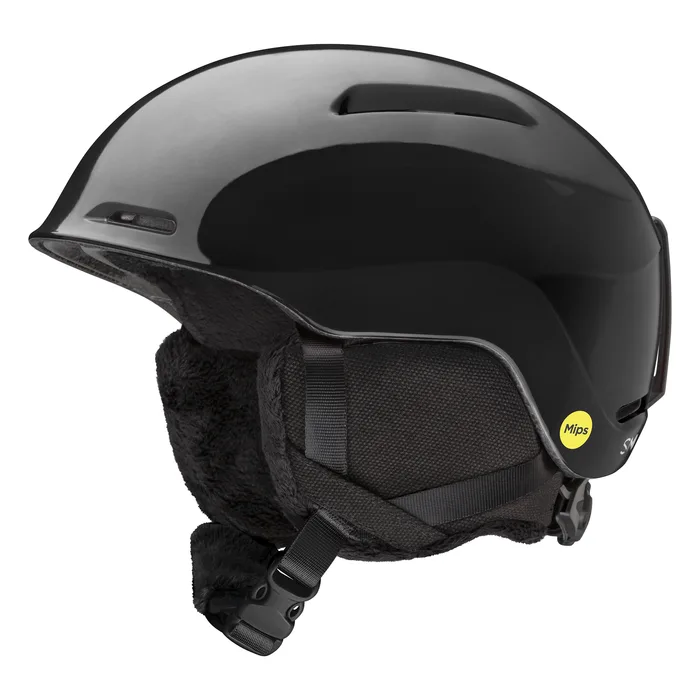
- Buy Smith Glide Jr. Mips A light youth helmet with Mips, a dial fit and both ASTM F2040 and CE EN 1077 Class B listed by Smith. Amazon
- Buy OutdoorMaster REINDEER + HAPPY VALLEY Kids Snow Bundle A budget helmet and goggle set whose helmet OutdoorMaster says meets ASTM F2040-18 and CE EN 1077:2007 Class B.
- It depends Bern Nino DVRT Winter Helmet A light bike and ski helmet for ages 5 to 8, certified to ASTM F2040 and bike standards, with Bern's DVRT padding.
- Skip Anon Rime 3 Kids Ski & Snowboard Helmet A tough multiseason hardshell whose product page does not name its standards and has no rotational system or dial. Amazon
What actually matters
- Snow certification - ASTM F2040 and EN 1077 are the two common snow helmet standards. A helmet that names one or both on the product page or inside label is far easier to trust than one that just says certified.
- EN 1077 class - EN 1077 has Class A and Class B. Most recreational helmets, including the ones in our comparison that list EN 1077, are Class B.
- Rotational protection - Mips is a low-friction layer that the makers say reduces rotational forces in angled impacts. Some brands use their own systems, such as Bern's DVRT padding.
- Fit system - A dial at the back tightens the helmet evenly and is easy to adjust with gloves on. Elastic auto-adjust systems are simpler but cannot be fine-tuned.
- Size range - Kids' heads grow, so check where your child sits within the size range. A helmet at the bottom of its range will last longer than one already at the top.
- Goggle fit - The helmet and goggles should meet with no gap at the forehead. Many brands design helmets and goggles to work together, so try them as a pair.
- Warmth and comfort - Removable liners and ear pads let you adapt to cold and warm days. A comfortable helmet is a helmet a child will not try to take off.
The specs, in plain English
Green flags vs red flags
Green flags
- The product page names ASTM F2040, EN 1077, or both.
- A rotational system such as Mips is listed.
- A dial fit system that adjusts with gloves on.
- A published size chart in centimetres for each size.
- Removable liner and ear pads for changing conditions.
Red flags
- The listing says certified but never names a snow standard.
- A multisport helmet lists bike standards only.
- No size chart, or sizing by age alone.
- The helmet rocks or slides when fastened, even on the tightest setting.
- A used helmet with an unknown crash history.
Who's who: the brands
- Smith - Known for snow helmets and goggles designed to work together, including the Mips-equipped Glide Jr. for kids.
- Giro - A long-running helmet maker with several kids' snow helmets, including Mips versions of its Crue and Neo Jr. models.
- Anon - Burton's helmet and goggle brand, with kids' helmets ranging from the multiseason Rime 3 to WaveCel models.
- Bern - Known for multiseason helmets that cross over between bike and snow, including the kids' Nino line.
- OutdoorMaster - A direct-to-consumer brand selling budget snow helmets and goggles, often as bundles.
How to read a listing without getting fooled
Start with the certification line and look for named standards: ASTM F2040, EN 1077 and the EN 1077 class. If a page only says certified, treat that as a question for the maker rather than an answer. Next check for a rotational system, then the fit system, then the size chart in centimetres. Weight is useful when it is listed, since a lighter helmet is easier for a small child to wear all day, but many kids' listings leave it out. Finally, read what is included, because bundles with goggles change what you are paying for.
How much should you spend?
Kids' ski helmets fall into three tiers. The $ · budget tier includes basic in-mold helmets and helmet and goggle bundles, which can still list both snow standards but usually skip rotational protection. The $$ · mid-range tier is where Mips, better fit dials and multisport certification appear, and it is where most families get the best value. The $$$ · premium tier adds newer impact technologies, extra fit adjustments and lighter builds. Paying more does not guarantee better certification, so read the standards line before the price.
Questions, answered
Does my child need a ski helmet for lessons?
Many ski schools ask or require that children wear a helmet, so check with your resort before booking. Even where it is not required, a helmet is standard kit for kids on the hill. Bring it to the first lesson already sized with the goggles your child will use.
Should I buy a size up so it lasts longer?
No. A helmet only works if it fits snugly now, so pick the size whose range includes your child's current head measurement. A dial fit lets you loosen it slightly as they grow, and buying in the lower half of a size range gives you more time.
Can my child wear a hat under the helmet?
A thin liner or skull cap can work with a dial fit helmet, as long as the helmet still sits level and snug. A thick beanie usually pushes the helmet up and away from the forehead. Most kids' snow helmets have their own liner and ear pads, so a hat is rarely needed.
Is a used kids helmet safe?
Only if you know it has never been in a significant crash and the foam and straps are in good condition. Helmet foam is built to crush once, and damage may not be visible. If you do not know its history, buy new.
Or jump to the head-to-head: Smith Glide Jr. Mips vs OutdoorMaster REINDEER + HAPPY VALLEY Kids Snow Bundle.