Explained
Kids Snowsuits, Explained
After reading, you'll understand which snowsuit specs matter, which marketing words to ignore, and how to size a suit to last.
In this guide
Most parents shop for snowsuits by warmth and color, then find out at the sledding hill that the suit soaks through at the seat. The spec that decides that is the waterproof rating, together with how the seams are sealed, and many budget suits do not publish one. The second trap is sizing: a suit that fits in November can be short by March. Knowing a handful of terms makes listings much easier to compare.
The 30-second version
- Waterproof and water resistant are different claims, so look for a water column rating in mm on the maker's page.
- Seam sealing matters as much as fabric, because fully taped seams stop leaks at stitch holes.
- More insulation is not always better, since an active child who sweats gets cold later.
- Growth systems can add a season, by releasing extra length in the sleeves and legs.
- Never buckle a car seat over a snowsuit, because the AAP says bulky clothing should not be worn under the harness.
The products this guide is about
Our verdict on each, with the full reasoning on the companion review.
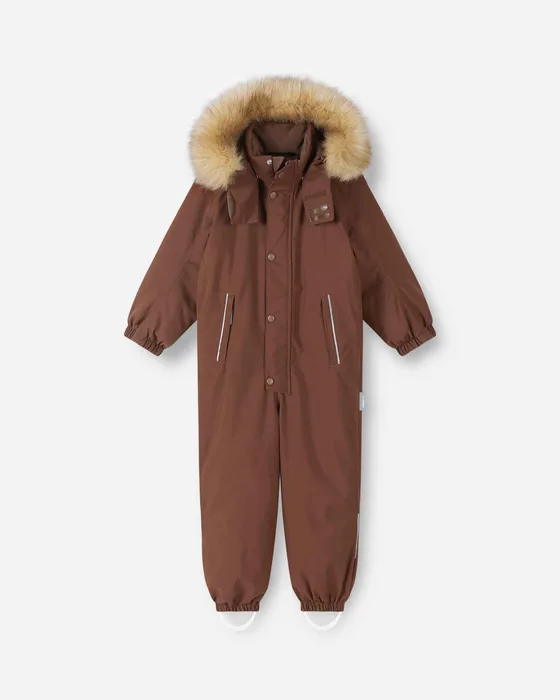
- Buy Reima ReimaTec Winter Overall Stavanger A heavy-duty Nordic play snowsuit with taped seams and Reima's highest durability rating.
- Buy Burton Toddlers' 2L One Piece A toddler ski suit with 15,000 mm waterproofing, fully taped seams and two inches of Room-to-Grow.
- It depends Obermeyer Quinn One-Piece A feature-rich kids ski suit with mapped insulation and I-Grow, but no published waterproof number.
- Skip Arctix Kids Dancing Bear Insulated Snowsuit Coveralls A cheap, warm coverall that its maker describes as water and wind resistant, not waterproof.
What actually matters
- Water column (mm) - This is how much water pressure the fabric resists before leaking. Kids kneeling and sitting in snow create pressure, so a published figure is worth looking for.
- Seam sealing - Fully taped seams cover every stitch line. Critical seam sealing covers only the most exposed seams.
- Breathability (g/m2/24h) - This measures how much moisture vapor escapes. Higher numbers help active kids stay dry from the inside.
- Insulation weight - Grams of fill per square meter give a rough warmth comparison within one insulation type. Mapped insulation puts more in the body and less in the limbs.
- Abrasion resistance - Some makers publish Martindale cycles. It tells you how the fabric holds up to rough play.
- Growth system - Extensions in the sleeves and legs let the suit keep up with growth spurts. Check how many inches the maker states.
- PFAS status - Water repellent finishes have long used PFAS chemicals. Many makers now state whether their finish is PFAS-free, and Obermeyer says the Quinn cannot ship to California or New York because it contains PFAS.
The specs, in plain English
Green flags vs red flags
Green flags
- A water column rating in mm on the maker's page
- Fully taped seams stated, not just sealed seams
- Reinforced seat and knees
- A stated growth system with inch or cm figures
- Clear insulation weights and a PFAS statement
Red flags
- Water resistant used where you expected waterproof
- A temperature rating with no unit or test method
- Waterproofing shown only as a slider or bar
- Only critical seams sealed on a suit meant for wet play
- No size chart tied to height and weight
Who's who: the brands
- Reima - A Finnish kidswear maker known for durable everyday play outerwear with published technical ratings.
- Burton - A snowboard brand whose kids and toddler outerwear includes the Room-to-Grow extension system.
- Obermeyer - A ski apparel maker known for kids ski suits with its I-Grow extension system.
- Arctix - A budget outerwear brand selling insulated snow pants, bibs and coveralls.
How to read a listing without getting fooled
Start with the waterproof rating and look for a number in mm, then check the seam line: fully taped is what you want for wet snow play. Next, read the insulation weights and any warmth rating the maker gives, and match them to your climate rather than buying the warmest suit available. Then open the size chart and size by height and weight, not age, and check whether a growth system is listed with real figures. Finally, read the small print near the add to cart button, where Obermeyer, for example, notes PFAS content and shipping limits.
How much should you spend?
Budget coveralls sit in the lowest tier and usually save money by skipping waterproof membranes, full seam taping and published ratings. Mid-range suits from ski brands tend to publish ratings, tape every seam and add growth systems. Premium suits add tougher fabrics, mapped insulation or more features, and the extra cost often pays back in a suit that survives to a younger sibling. Spending a little more once can cost less than replacing a soaked-through budget suit midwinter.
Questions, answered
How do I wash a kids snowsuit?
Follow the care label, which for the Reima Stavanger means washing inside out at 40 °C, removing the faux fur first and skipping fabric softener. Close zippers and hook-and-loop tabs before washing so they do not snag. Softener and some detergents can reduce water repellency. Re-treat the outer fabric with a DWR product if water stops beading.
What should my child wear under a snowsuit?
A wicking base layer, such as merino or synthetic long underwear, keeps sweat off the skin. Add a fleece mid layer on very cold days, especially under a lightly insulated suit. Avoid cotton, which holds moisture and makes kids cold once they stop moving. Warm socks, mittens and a hat matter as much as the suit.
Is a ski suit different from a play snowsuit?
Ski suits often add helmet compatible hoods, glove clips and features like lift pass pockets, and are sized to fit over ski boots. Play suits from brands like Reima focus on abrasion resistance and daily wear. Either works for sledding if it has a waterproof rating and taped seams. Choose based on how your child spends most winter days.
Can a snowsuit be handed down?
Yes, if the fabric and seams survive the first child. Tough fabrics, reinforced knees and seats, and good care make a hand-me-down more likely. Check the seam tape and the DWR before the second winter, and re-treat if needed. A suit with a growth system may also last one child two seasons before it is handed down.
Or jump to the head-to-head: Reima ReimaTec Winter Overall Stavanger vs Burton Toddlers' 2L One Piece.