Explained
Ski Boot Bags, Explained
After reading, you'll understand what boot bag capacity, pocket layouts, materials and travel features mean, and which ones fit how you get to the mountain.
In this guide
Boot bags look alike in photos, and first-time buyers often pick on colour or the biggest liter number. The real differences are in how the boots are stored, whether the base keeps water out and how the bag carries once it is full. Many product pages also skip basics like weight or boot size limits. Knowing which details to look for makes comparison much quicker.
The 30-second version
- Separate boot pockets matter, because they keep wet boots away from dry clothing.
- Capacity should match your kit, with around 50 liters for boots and helmet and more for full layers.
- A waterproof base helps, since bags spend time on wet floors and car parks.
- Check the boot size limit, as makers such as Thule list Mondopoint 30.5 and Kulkea Mondo 31.
- Travel features vary a lot, from straps that stow for check-in to pass-throughs for a rolling ski bag.
The products this guide is about
Our verdict on each, with the full reasoning on the companion review.
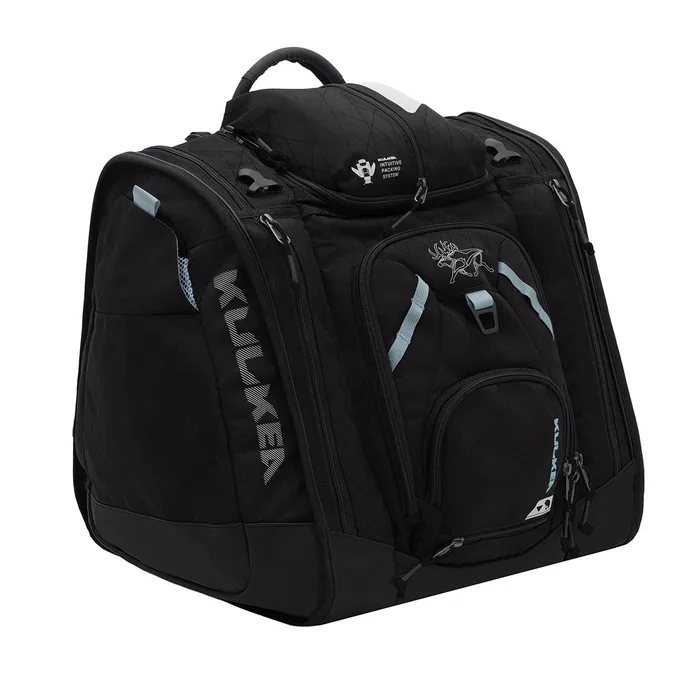
- Buy Kulkea Boot Trekker 70L A 70 liter boot backpack with two ventilated boot pockets, a waterproof base and travel-ready straps.
- Buy Dakine Boot Pack 50L A light 50 liter boot backpack with a tarp-lined boot compartment and a padded helmet pocket.
- It depends Thule RoundTrip Boot Backpack 60L A 60 liter boot backpack with a standing mat that clips onto a Thule rolling ski bag.
- Skip Sportube Freerider Boot Bag A heavy 70 liter boot bag with no published dimensions, a short warranty and a PFAS warning.
What actually matters
- Boot compartments - Separate side pockets or one shared compartment. Separate, ventilated pockets keep boots apart and help them air out.
- Capacity - Listed in liters. It tells you whether the bag holds just boots and a helmet or a full day of layers.
- Base material - Tarpaulin, TPU or coated fabric on the bottom keeps snowmelt out. Drain grommets let water escape.
- Helmet storage - A padded pocket, a top compartment or an external sling. Padding protects goggles and helmet shells from scratches.
- Carry system - Padded shoulder straps, a back panel and a waist belt. These matter when the bag weighs a lot once boots are inside.
- Travel features - Straps that stow away and pass-throughs for rolling luggage. They decide how well the bag survives airline handling.
- Weight and warranty - A heavy empty bag adds to every walk. A longer warranty shows the maker's confidence.
The specs, in plain English
Green flags vs red flags
Green flags
- Separate, ventilated boot pockets.
- A stated maximum boot size.
- A waterproof or tarpaulin base with drainage.
- A published weight.
- A clearly stated warranty.
Red flags
- No dimensions listed.
- No weight or a very heavy empty bag.
- Warranty terms missing from the product page.
- Chemical warnings such as PFAS notices on the page.
- Stock that is unavailable from the maker with no clear alternative.
Who's who: the brands
- Kulkea - Makes ski and snowboard boot bags and travel packs with detailed feature lists.
- Dakine - Makes snow bags and packs, including the recycled-polyester Boot Pack 50L.
- Thule - Makes the RoundTrip range of ski bags and boot packs designed to travel together.
- Sportube - Sells ski travel gear, including the Freerider soft boot bag.
How to read a listing without getting fooled
Start with how the bag stores boots: separate pockets or a shared compartment, and whether the maker states a maximum boot size. Next check capacity against what you carry, then look at the base material and any drainage. Read the carry system and travel features if you will walk any distance or check the bag on a flight. Finally look for a published weight, dimensions and warranty. If a page leaves out dimensions or weight, you are left guessing about airline limits and comfort, which is a reason to compare with a bag that publishes them.
How much should you spend?
Budget boot bags are usually simple totes or packs with a shared boot compartment and little padding, which is fine for short walks from the car. Mid-range bags add tarp-lined compartments, padded helmet pockets and lighter recycled fabrics. Premium bags bring separate ventilated boot pockets, waterproof bases, full carry systems with waist belts and longer warranties, and some are designed to pair with a matching ski bag. Pay for the travel features only if you actually fly or carry the bag a long way.
Questions, answered
Should I put my helmet inside or outside the bag?
Inside is safer for travel, and some makers say so directly; Kulkea warns against using its helmet sling on checked baggage. Outside storage, such as a sling, lets a damp helmet air out on the way home. A padded helmet pocket or top compartment protects the shell and goggles from scratches. For flights, pack the helmet inside with goggles in a soft pouch.
Can I use a boot bag for snowboard boots?
Usually yes. Dakine and Thule both describe their boot compartments as fitting ski or snowboard boots. Snowboard boots are softer and often easier to fit, though very large sizes can still be tight. Check the stated size limit where one is given.
Is a boot bag the same as a ski touring pack?
No. A boot bag carries boots and gear to the hill and stays in the car or lodge. A touring pack is worn while skiing and carries avalanche safety gear, water and layers. Our ski touring backpack guide covers those.
How long should a boot bag last?
With reasonable care, many years. Zippers and the base usually wear first, so look for sturdy zippers and a coated or tarpaulin bottom. Warranties in this group range from one year for the Sportube to two years for the Kulkea. Drying the bag out after each trip helps avoid smell and mildew.
Or jump to the head-to-head: Kulkea Boot Trekker 70L vs Dakine Boot Pack 50L.