

Ski & Snowboard
The Best Boot Dryers: 4 Compared (and One to Skip)
We compared silent convection dryers, a forced-air unit for families and a wall-mount garage dryer against a collapsible budget model, on dry time, noise and material safety.
The short version
The PEET Original is our pick: silent convection, safe on leather and molded liners, sips 36 watts, made in the USA with a 25-year warranty. The DryGuy Force Dry DX is the fast pick: two pairs dry in one to two hours with a timer. The GearDryer Wall Mount 12 suits households that treat drying as infrastructure. Skip the Dr. Prepare folding dryer: the collapsible arms sag under real ski boots and the build is disposable. Best for: skiers, workers and parents who are tired of damp liners.
Our picks at a glance
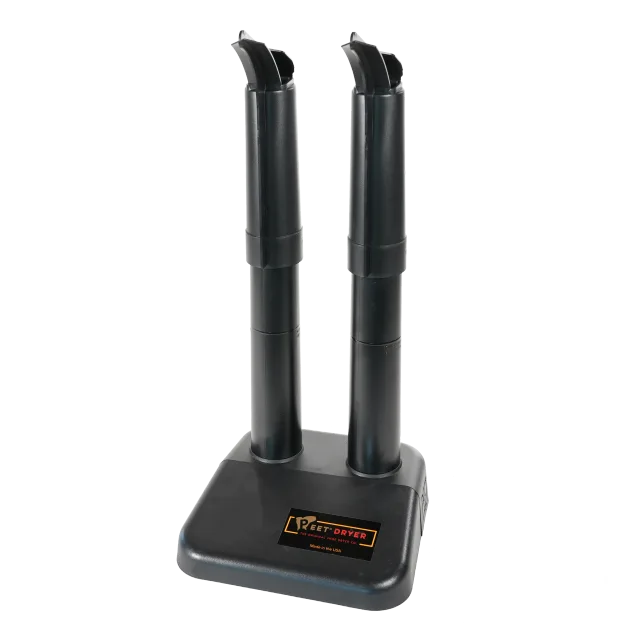
- PEET Original Dryer - Buy. The silent overnight convection dryer that has been the standard since 1968: safe on everything, made in the USA.
- DryGuy Force Dry DX - Buy. Forced air plus 105-degree heat dries two pairs of boots or gloves in one to two hours.
- GearDryer Wall Mount 12 - It depends. A wall-mounted forced-air station for the garage or mudroom that turns drying into infrastructure.
- Dr. Prepare Folding Boot Dryer - Skip. A collapsible forced-air dryer with a timer that trades build quality for a low price.
The verdict in 30 seconds
What mattered most
- Drying method
- Capacity
- Dry time
- Noise
- Materials safety
- Warranty / origin
Wet boots at 6 a.m. are a problem with two solutions: slow, silent convection drying that runs overnight, or forced air that moves a lot of moisture fast. We compared the classic overnight dryer, the family-size forced-air unit, a wall-mount garage machine and the cheap folding dryer that keeps showing up in search results.
The silent overnight convection dryer that has been the standard since 1968: safe on everything, made in the USA.
Best for: Skiers, workers and hunters who want boots reliably dry by morning with zero noise or babysitting.
- Natural thermal convection with no fan, so it runs completely silently and can stay plugged in 24/7.
- Gentle barely-warm air is safe on leather, custom-molded ski boot liners, neoprene and waterproof-breathable membranes.
- Draws about 36 watts, is made in the USA, and carries a 25-year warranty.
- Slow by design: a soaked boot takes 6 to 8 hours, so it is an overnight appliance, not a quick fix.
- Dries one pair at a time; families with multiple wet pairs will need multiple units or a forced-air dryer.
- No timer or controls: it is always on, which is the point but also the limit.
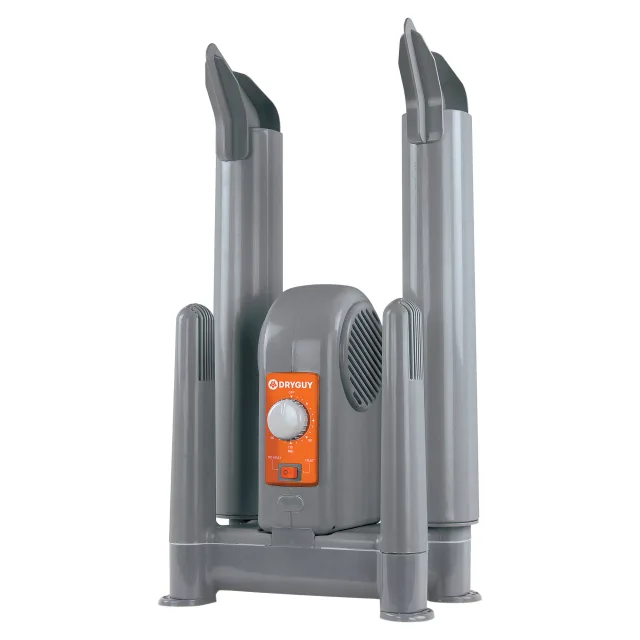
Forced air plus 105-degree heat dries two pairs of boots or gloves in one to two hours.
Best for: Families and multi-sport households that need gear dry fast between sessions.
- Fan-driven forced air with gentle 105 F heat dries two pairs in a claimed 1 to 2 hours.
- Two removable extension tubes accommodate boots up to 16 inches tall, and four ports handle boots and gloves together.
- A heat/no-heat switch plus an auto-off timer, so it is safe to run and forget.
- The fan produces a low hum around 45 dB: quiet, but not silent like a convection dryer.
- Uses roughly 150 to 180 watts, several times the draw of the PEET.
- Warm air is still gentle, but owners of delicate leather and glued footwear often prefer no-heat mode.
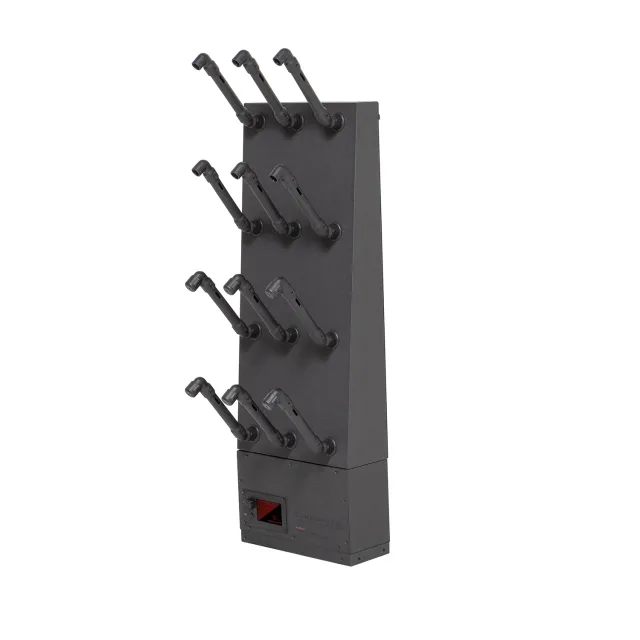
A wall-mounted forced-air station for the garage or mudroom that turns drying into infrastructure.
Best for: Ski families, hunters and workshops that run a gear-drying station all season.
- Wall-mount design with 12 drying ports and twin fans moves a serious amount of air for multiple users at once.
- Configurable port attachments handle boots, gloves, helmets and waders on one unit.
- Plugs into a standard outlet and is built for permanent installation in a garage or mudroom.
- Costs several times a countertop dryer, and you give it wall space permanently.
- Overkill for one or two pairs of boots; it pays off only when a household dries gear constantly.
- Fan noise is part of the deal on a unit this size.
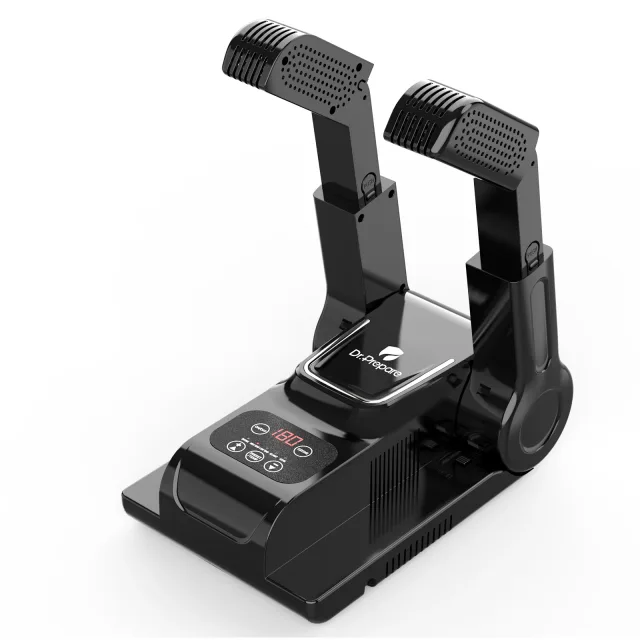
A collapsible forced-air dryer with a timer that trades build quality for a low price.
Best for: Rarely the right call: a fixed-arm budget dryer or a used PEET is a better buy.
- Folding design packs flat for a closet or a ski bag.
- Forced warm air with an auto-off timer up to 180 minutes.
- Cheap enough to be a second dryer for a cabin or a dorm.
- The folding telescoping arms flex under tall, heavy ski boots and owners report them sagging over time.
- Thin plastic construction and no meaningful US service network: when a hinge or fan fails, the unit is disposable.
- A small ozone feature on some models adds a function of dubious value to dry boots.
| Criteria | PEET Original Dryer Top pick | DryGuy Force Dry DX | GearDryer Wall Mount 12 | Dr. Prepare Folding Boot Dryer |
|---|---|---|---|---|
| Verdict | Buy it | Buy it | It depends | Skip it |
| Best for | Skiers, workers and hunters who want boots reliably dry by morning with zero noise or babysitting. | Families and multi-sport households that need gear dry fast between sessions. | Ski families, hunters and workshops that run a gear-drying station all season. | Rarely the right call: a fixed-arm budget dryer or a used PEET is a better buy. |
| Price tier | $ · budget | $$ · mid-range | $$$ · premium | $ · budget |
| Drying method | Thermal convection, silent | Forced air + gentle heat | Forced air, wall-mounted | Forced air + heat |
| Capacity | 1 pair | 2 pairs | Up to 12 ports | 1 pair |
| Dry time | 6 to 8 hours | 1 to 2 hours | 1 to 2 hours | 1 to 3 hours |
| Noise | Silent | Low fan hum (~45 dB) | Fan audible | Fan audible |
| Materials safety | Safest, gentle warm air only | Safe; heat/no-heat switch | Safe | Care needed on delicate liners |
| Warranty / origin | 25-year, made in USA | Limited, imported | Limited, imported | Limited, imported |
| Best for | Overnight silent drying | Fast family drying | Permanent gear station | Occasional light use only |
Which one is right for you?
- Skiers, workers and hunters who want boots reliably dry by morning with zero noise or babysitting. Buy it PEET Original Dryer
- Families and multi-sport households that need gear dry fast between sessions. Buy it DryGuy Force Dry DX
- Ski families, hunters and workshops that run a gear-drying station all season. It depends GearDryer Wall Mount 12
- Rarely the right call: a fixed-arm budget dryer or a used PEET is a better buy. Skip it Dr. Prepare Folding Boot Dryer
How we judged the field
Four things decide whether a boot dryer earns its spot by the door: how fast it dries, how loud it is, whether it is gentle on leather and molded liners, and whether it survives a few seasons. Dry time splits the field into overnight convection units and forced-air machines, and the right answer depends on when you need the boots next.
We picked the classic silent convection dryer, the leading forced-air two-pair unit, a wall-mount multi-port dryer and the cheap folding model that dominates the budget listings.
The PEET Original is the boot dryer as appliance: two upright tubes on a base, no fan, no buttons, no settings. Warmed air rises through the DryPorts by natural convection, dries a pair overnight, and draws about 36 watts, so it can run 24/7 without noticing the bill. The design has been in continuous production since 1968, is made in the USA, and carries a 25-year warranty, which is the strongest longevity signal in this comparison.
Its gentleness is the technical point, not just a feature. The air is barely warm, so it will not shrink leather, delaminate glued soles or overcook a custom-molded liner. The trade-off is time: six to eight hours for wet boots, one pair at a time. If you want silent, safe and forever, it is the pick.
The Force Dry DX is the answer when overnight is not fast enough. A fan pushes warmed air, capped at about 105 F, through four ports with removable extension tubes tall enough for 16-inch boots, and the maker rates it at one to two hours for two pairs. A heat/no-heat switch and an auto-off timer mean you can leave it running without babysitting, which makes it the practical pick for households that generate wet boots and gloves every afternoon.
It is not silent: the fan produces a low hum around 45 dB, noticeable in a hallway but fine in a mudroom. It also draws 150-plus watts versus the PEET’s 36, and the gentle-heat mode still runs warmer than pure convection. For speed and capacity without risk, it is the right machine.
The Wall Mount 12 is drying as infrastructure: a fixed unit for a garage or mudroom with twelve ports, twin fans and interchangeable attachments for boots, gloves, helmets and waders. It plugs into a standard outlet and turns a gear-heavy household’s drying into a station rather than a chore.
Whether it makes sense is a volume question. For a couple of pairs a day, a countertop dryer is cheaper and simpler; the GearDryer pays off for ski families, hunters and teams that have several sets of wet gear most days of the week. If that is your house, it is the most capable option here. If it is not, it is an expensive wall ornament.
The Dr. Prepare folding dryer is the budget listing you will meet first, and it is the one we would skip. The collapsible design folds flat and runs forced air with a timer up to 180 minutes, which sounds ideal until you hang a heavy ski boot on a telescoping arm. Owners report the arms sagging and the thin plastic flexing under tall boots, and the build is disposable in the sense that there is no service network behind it.
Some versions add an ozone function, which sounds like a feature and acts like a marketing bullet. For a dryer you will run nightly all winter, the saving over a fixed-arm budget unit or a used PEET does not survive the first cracked hinge.
PEET Original vs DryGuy Force Dry DX: which should you buy?
The two winners split on time. The PEET is silent, safe on everything, sips power and outlasts the house; it just takes all night. The Force Dry DX trades a soft fan hum and more watts for a one-to-two-hour turnaround on two pairs.
For one or two people drying boots overnight, buy the PEET. For a household that needs boots and gloves dry between morning and afternoon sessions, buy the Force Dry DX.
What to look for
- Convection vs forced air: silent overnight vs fast turnaround; pick by when you need the boots.
- Material safety: gentle heat or no heat for leather, liners and waterproof membranes.
- Capacity: one pair, two pairs, or a wall of ports, matched to your household.
- Timer and auto-off: forced-air units should shut themselves off; convection can run continuously.
- Build and warranty: a dryer you run nightly all winter should outlast more than a season.
- Fixed arms over folding: collapsible designs trade rigidity for packability, and boots are heavy.
Our final take
For most skiers, workers and parents, the PEET Original is the dryer to buy once: silent, gentle, cheap to run and warranted for 25 years. If speed or two pairs matter, the DryGuy Force Dry DX is the forced-air pick. The GearDryer Wall Mount 12 is right only for houses that dry gear constantly. Skip the folding Dr. Prepare: the sagging arms and disposable build cost more than the savings. Whatever you buy, drying liners nightly is what actually keeps boots from smelling by February.
Questions, answered
Are boot dryers safe for custom-molded ski boot liners?
Yes for the gentle options. Convection dryers like the PEET use barely warm air and are safe on Intuition-style molded liners, leather and waterproof membranes. Forced-air units are also safe at their low temperatures, but use the no-heat setting if you are worried about glued or delicate footwear. What damages liners is real heat: a radiator, a fireplace or a shop-vac held against the liner.
How fast do boot dryers actually work?
Damp boots dry overnight on convection and in 1 to 3 hours on forced air. Soaked boots take longer on both. If you ski daily, convection is enough because overnight is the interval that matters. If you need morning-to-afternoon turnaround, forced air is the tool.
Do boot dryers help with smell?
Yes, indirectly. Odor-causing bacteria and fungus thrive in damp liners, so drying boots promptly after each use prevents most of the smell that builds up over a season. Some dryers add ozone or UV features; those are secondary to simply getting the moisture out every night.
Convection or forced air for ski boots?
Convection if you want silent, cheap-to-run, safest-on-materials overnight drying. Forced air if you have multiple pairs, wet gloves, or a schedule that needs a two-hour turnaround. For a one-pair-at-night routine, convection wins; for a family of four, forced air or a wall-mounted multi-port unit pays for itself.
Deciding between the top two? See our head-to-head: PEET Original Dryer vs DryGuy Force Dry DX.
More Ski & Snowboard reviews
 The Best Ski Bags: 4 Compared (and One to Skip)
  The Best Ski Boot Heaters: 4 Compared (and One to Skip)
  The Best Ski Gloves: 4 Compared (and One to Skip)
  The Best Ski Goggles: 4 Compared (and One to Skip)
  The Best Ski Helmets: 4 Compared (and One to Skip)
  The Best Ski Jackets: 4 Compared (and One to Skip)