Explained
Kids Ski Goggles, Explained
After reading, you'll understand how to read lens darkness, check sizing and fit a goggle to glasses and a helmet.
In this guide
First-time buyers usually pick kids goggles by colour, and the lens tint gets chosen by accident. A dark mirror lens looks great in the shop and is hard to see through on a snowy afternoon. Sizing is the other trap, because a goggle that fits an adult face in the shop mirror says nothing about a seven year old. The good news is that a few labels on the spec sheet answer most of these questions.
The 30-second version
- VLT tells you how dark a lens is, as the share of visible light that gets through; lower means darker.
- S categories group VLT into bands, from S0 (near clear) to S4 (darkest), under EN ISO 18527-1 for ski goggles.
- An S1 or S2 lens covers most kids' days, because children often ski in mixed or flat light and in the afternoon.
- Fit beats features, so look for a stated youth size or age band and check the seal at cheeks and nose.
- Bring the helmet and the glasses, because the brow gap and the glasses fit are where most kids goggles fail.
The products this guide is about
Our verdict on each, with the full reasoning on the companion review.
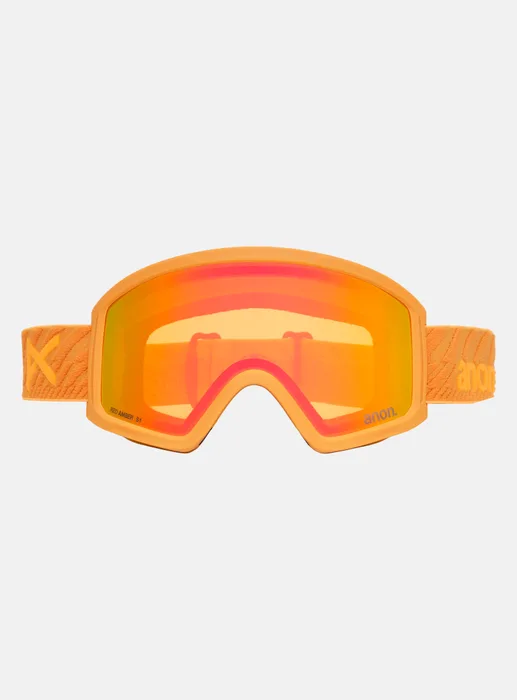
- Buy Anon Tracker 2.0 Goggles + MFI Face Mask A kid-sized, over-the-glasses goggle that prints the VLT and S category on every lens option and ships with a magnetic face mask. Amazon
- Buy Smith Daredevil Smith's youth medium-fit goggle, built to go over glasses, with a Fog-X anti-fog inner lens and a wide colour and lens range. Amazon
- It depends Giro Stomp A large youth frame that Giro sizes for 8 to 13 year olds, with Expansion View styling and an injection-molded cylindrical lens. Amazon
- Skip ZIONOR XMINI Kids Ski Goggles A frameless-look budget kids goggle with mirrored lenses, sold with almost none of the fit and lens information a parent needs. Amazon
What actually matters
- Lens darkness - A lens that is too dark in flat light hides bumps and ice. Insist on a VLT figure or an S category before you buy.
- Youth sizing - Kids faces vary a lot between ages 4 and 13. A stated size or age band, like a large youth frame for 8 to 13, saves a return.
- UV protection - Snow reflects sunlight, so the lens should block UV. The maker should state it, for example as 100% UV or 100% UVA/UVB.
- Over-the-glasses fit - OTG goggles have room and channels for glasses frames. Without them, glasses press into the face or the goggle will not seal.
- Helmet pairing - The goggle should sit flush under the helmet brim. A gap gives a cold forehead and a goggle pushed down presses on the nose.
- Anti-fog - A double lens with an anti-fog inner surface helps a lot. Kids tend to wipe the inside, which can damage the coating, so teach them not to.
- Strap and foam - A silicone-backed strap stays on the helmet, and soft multi-layer foam is kinder on small faces. Both are worth checking on the spec sheet.
The specs, in plain English
Green flags vs red flags
Green flags
- Each lens is labelled with a VLT percentage or an S category
- A stated youth size or age band
- UV protection stated in plain words on the maker page
- OTG called out if your child wears glasses
- A named helmet pairing or low-bridge option
Red flags
- Mirror colours with no VLT or category anywhere
- 'Fits kids and youth' with no size or age range
- No mention of glasses or helmet fit
- Most colourways sold out on the brand's own store
- A spec sheet that lists features but no lens information at all
Who's who: the brands
- Smith - Makes the youth medium Daredevil and designs its goggles to integrate with its own kids helmets.
- Giro - Its kids range runs from the Chico 2.0 for first-timers to the large youth Stomp for 8 to 13 year olds, designed around Giro helmets.
- Anon - Known for MFI magnetic face masks and for labelling lenses with VLT and S category.
- OutdoorMaster - A budget brand that lists the VLT on each lens option of its kids goggles and sells kids helmet and goggle bundles.
- ZIONOR - A budget brand selling frameless-look kids goggles with mirror lenses, with little lens or fit detail on the page.
How to read a listing without getting fooled
Start with the lens line in each variant name or spec table and look for a percentage and an S number, such as 32% / S2. If neither appears, check the brand's lens guide; if it is not there either, treat the tint as unknown. Next find the size wording: youth small, medium, large or an age band. Then look for three short phrases: a UV statement, over-the-glasses, and a named helmet pairing. Features like foam layers and venting are nice to have, but they come after those basics.
How much should you spend?
Budget kids goggles cover the basics of a double lens and a UV claim, but they often leave out lens darkness, sizing and fit details. The mid-range tier is where most families should shop, because brands like Smith and Giro add stated youth sizing, glasses-friendly frames and helmet pairing. The premium tier adds extras such as Anon's magnetic face mask and a low-bridge option, which are worth it if your child has a fit problem or you want lens numbers on every option. Spending more does not buy a lens that suits every condition, so pick the tint for where your child skis most.
Questions, answered
Can a child use an adult small goggle instead?
Sometimes, for older kids with larger faces. The check is the seal: no gaps at the cheeks, and the frame should not sit on the nostrils. If you are comparing adult options, our adult ski goggle comparison covers them. For younger children, a frame the maker sizes as youth is the safer starting point.
Is a mirrored lens darker than a plain one?
Not necessarily. The mirror coating reflects some light, but the VLT figure is what tells you how much gets through. Two mirror lenses of different colours can sit in different S categories. Go by the number, not the look.
How do I stop my kid's goggles fogging?
Keep the goggle on the helmet or face rather than on the forehead, where warm air rises into it. Do not let them wipe the inner lens, which can damage anti-fog coatings; ZIONOR, for one, warns against it. Dry the goggle at room temperature after skiing. A face mask that seals to the goggle also helps keep breath out.
Should I buy a clear lens for night or storm skiing?
A clear or very light lens, in the S0 to S1 range, is what you want for night skiing and heavy storms. Smith sells the Daredevil with a Clear lens option. For a single all-season lens, an S1 or light S2 is the safer choice for kids.
Or jump to the head-to-head: Anon Tracker 2.0 Goggles + MFI Face Mask vs Smith Daredevil.