Explained
Climbing Skins, Explained
After reading, you'll understand how plush type, width, length system, attachments and adhesive change how a climbing skin performs.
In this guide
First-time buyers often pick skins by brand or price and only find out later that they are too narrow, too short or grip poorly on their usual terrain. Spec sheets mix percentages of mohair and nylon, size codes and hardware names without explaining what any of it does. The good news is that only a handful of choices really matter. Once you know them, choosing a skin for your skis takes minutes.
The 30-second version
- Plush decides the feel, with nylon gripping best, mohair gliding best and blends sitting in between.
- Width comes from your ski, so buy at least as wide as the widest point and trim to leave the edges exposed.
- Fixed or cut-to-length, one trades setup time for a precise fit on any ski.
- Tip and tail hardware matter, because they keep snow out and decide how fast your transitions are.
- Glue needs care, so keep it clean, store skins on savers and keep them warm on cold days.
The products this guide is about
Our verdict on each, with the full reasoning on the companion review.
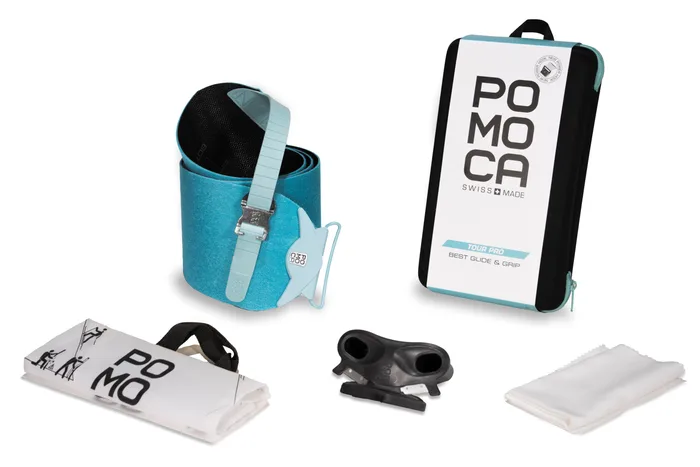
- Buy Pomoca Tour Pro A Swiss-made 65% mohair, 35% nylon skin that Pomoca lists at 224 g per skin and sells as a quick-trim Ready2climb set. Amazon
- Buy G3 Escapist Universal A cut-to-length nylon plush skin with G3's self-aligning steel tip hands, a trim tool and skin savers in the box.
- It depends Kohla Alpinist PRO Universal A 100% mohair skin from Tyrol in a universal length, with an interchangeable tip buckle, T-Bar 95 and the MultiClip tail.
- Skip Black Diamond Ascension Skins A durable nylon fixed-length skin with Gold Label glue and an STS tail, offered in one 135 mm width. Amazon
What actually matters
- Plush material - The fibres that grip the snow are nylon, mohair or a blend. Nylon grips best and wears longest, while mohair glides more freely and packs smaller.
- Glide and grip balance - Most skins trade one for the other. Pick grip if you skin steep or icy tracks and glide if you cover long, gentle approaches.
- Width - The skin should cover the base between your edges. Too narrow and you slip on traverses, so choose at least your ski's widest width and trim it.
- Length system - Fixed-length skins come in set sizes with hardware attached. Cut-to-length and universal skins are trimmed to your ski for an exact fit.
- Tip attachment - Loops, buckles or hands hook over the ski tip. A secure fit stops snow creeping under the skin and peeling it off.
- Tail attachment - Clips and adjustable straps hold the tail and set skin tension. Check that the system works with twin-tip or rounded tails if you have them.
- Adhesive - Glue holds the skin to the base between the tip and tail. Its cold-weather performance and how easily it rips apart decide how pleasant transitions are.
The specs, in plain English
Green flags vs red flags
Green flags
- The maker lists the plush composition as clear percentages.
- Several widths are offered so you can match your ski closely.
- A weight is published per skin or per size.
- Tip and tail hardware are named and described, with options for twin-tips.
- A trim tool, skin savers and setup instructions are included.
Red flags
- Only one width is offered for every ski type.
- No weight is listed anywhere on the page.
- Contradictory specs on the same product page.
- No information on the adhesive or how it performs in the cold.
- Plush described only as 'synthetic' with no material breakdown.
Who's who: the brands
- Pomoca - A Swiss skin maker producing skins since 1933, known for mohair blend skins and published glide and grip figures.
- G3 - A Canadian brand from British Columbia known for its self-aligning tip hardware and cut-to-length skins.
- Kohla - A Tyrolean skin maker offering 100% mohair and mohair-mix skins plus its own tip and tail clip systems.
- Black Diamond - A large climbing and ski brand whose Ascension nylon and Glidelite mohair-mix skins are widely sold.
How to read a listing without getting fooled
Start with the plush composition: a percentage of mohair and nylon tells you more about glide and grip than any marketing adjective. Next check the widths and length system against your skis, noting your ski's widest point and its length in centimetres. Then look at what tip and tail hardware is fitted and whether it suits your tip shape and any twin-tip tail. Look for a published weight and whether it is per skin, per pair or for a stated size, since makers report it differently. Finally, read what the page says about the adhesive and waterproofing, and whether a trim tool and skin savers are in the box.
How much should you spend?
Budget skins are usually nylon in a single width, with simple hardware and little detail on the spec sheet. The mid-range tier is where most tourers should shop, with durable nylon or mohair skins, better tip and tail systems and trim tools included. Premium skins add refined mohair blends, lighter weights and treatments aimed at glide and water resistance. Spending more mostly buys efficiency on the climb rather than safety, so match the tier to how often and how far you tour.
Questions, answered
Are glueless skins better than glue skins?
Glueless skins hold on with a reusable surface that sticks by suction or adhesion rather than traditional glue. Their appeal is easy cleaning and no glue residue on the base. The trade-off is that they can be more sensitive to cold, wet or dirty bases. All four skins in our comparison use glue.
How long do climbing skins last?
It depends on the plush, how often you tour and how you store them. Nylon generally lasts the longest, mohair the shortest, with blends in between. The glue usually needs refreshing before the plush wears out, and makers sell renewal kits for that.
Can I use one pair of skins on two pairs of skis?
Yes, if the skis are similar in width and length and the skin's tail system has enough adjustment. Cut the skin for the wider ski so it still covers the narrower one's base sensibly. Cut-to-length skins with adjustable tails make sharing easier.
Should I wax my climbing skins?
A skin wax applied to the plush helps stop snow balling up underneath, which is called glopping. It is most useful in spring or in changing temperatures. Several makers, including G3 and Kohla, sell skin wax for this.
Or jump to the head-to-head: Pomoca Tour Pro vs G3 Escapist Universal.