Explained
Smart Blind Motors, Explained
After reading, you'll know exactly which type of retrofit motor fits the blinds you already own, and which specs actually decide whether you'll be happy.
In this guide
Motorizing the blinds and shades you already own is far cheaper than buying custom motorized ones, but the biggest trap comes before you compare features: a motor built for a bead-chain roller shade simply will not fit a wand-tilt venetian blind. Most people also get surprised at checkout when a 'smart' motor turns out to need a separate hub to do anything smart. This guide decodes the mechanisms, the hub-and-Matter jargon, and the trade-offs so you buy the right type the first time.
The 30-second version
- Match the mechanism before anything else. bead-chain roller and cellular shades, wand-tilt venetian blinds, and in-tube tubular systems each need a completely different motor, and buying the wrong type is the costliest mistake.
- "Smart" usually means "plus a hub." many retrofit motors need a brand hub or bridge for voice control and away-from-home access, so budget for that hidden add-on before comparing sticker prices.
- Tilt is not the same as lift. some motors only rotate venetian slats open and closed, while others fully raise and lower the shade, so decide which motion you actually need.
- Quiet matters most in bedrooms. if a shade runs on a morning schedule, motor noise will bother you far more than any spec on the box.
- Power choice is a maintenance choice. rechargeable is fine for most, a solar panel on a bright window means near-zero upkeep, and wired is worth it only if you can hide a cable.
The products this guide is about
Our verdict on each, with the full reasoning on the companion review.
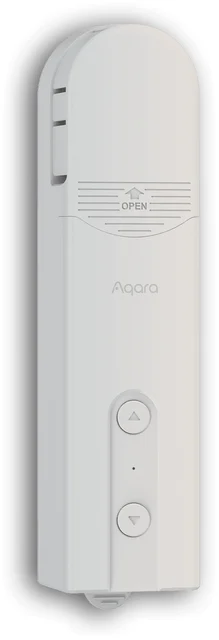
- Buy Aqara Roller Shade Driver E1 The rechargeable bead-chain motor that works with HomeKit, Alexa and Google through an Aqara hub.
- Buy SwitchBot Blind Tilt A low-cost, solar-topped way to make horizontal venetian blinds open and close on a schedule. Amazon
- It depends SOMA Smart Shades 3 A chain motor with a local HTTP API that suits privacy tinkerers, and costs more than the mainstream options.
- Skip MOES Matter-over-Thread Smart Roller Blind Motor (38mm) A bare tubular motor that is cheap on paper but effectively asks you to rebuild your shade from scratch.
What actually matters
- Covering compatibility is the first filter and the one that eliminates most options for you instantly, because a driver has to physically engage your bead chain, your tilt wand, or your shade tube.
- Motion type (tilt vs raise/lower) decides whether you get privacy scheduling only or full light control, and it is fixed by the mechanism you buy.
- Smart-home reach covers which of Apple Home, Alexa, Google Home and SmartThings the motor talks to, and whether that requires extra hardware you don't own yet.
- Install effort ranges from a two-minute clip-on to a weekend project of dismantling and rebuilding the shade around a new tube, so read what the install actually involves.
- Noise is the quiet dealbreaker owners only notice after living with a motor, especially on a scheduled bedroom shade.
- Power source (rechargeable battery, solar top-up, or wired) sets how often you'll think about the thing after installing it.
- Total cost including hubs is the honest number, because bridges and hubs quietly get added at checkout and can add a lot to the real price.
The specs, in plain English
Green flags vs red flags
Green flags
- The listing clearly states the exact covering it fits (bead-chain roller, cellular, or wand-tilt venetian) rather than vaguely saying 'blinds'.
- Installation is described as a clip-on or adhesive mount that takes minutes with no tools.
- Owner reports over months mention it staying quiet and reliable, not just working on day one.
- It supports Matter or lists the specific platforms and hub it needs, so you know the full setup before buying.
- A rechargeable battery lasts months per charge, or a solar accessory is offered for hands-off power.
Red flags
- The description hides that it's an in-tube tubular motor requiring you to rebuild the shade around a specific tube size.
- 'Works with Alexa and Google' is stated with no mention that a separate hub is required to get there.
- It's a generic, rebadged unit with thin support and inconsistent owner reports about quality control.
- The motor only tilts slats but the listing implies it can raise and lower the shade.
- No clear statement of noise level, and bedroom-use owners report an audible hum.
- Matter or platform support is promised broadly without naming the exact hardware revision or firmware needed.
Who's who: the brands
- Aqara - Mainstream smart-home brand; its bead-chain shade driver works with HomeKit, Alexa and Google through an Aqara hub.
- SwitchBot - Budget-friendly automation brand; makes a motor purpose-built for wand-tilt venetian blinds, with a solar panel included.
- SOMA - Niche, privacy-focused maker; a chain motor with a local HTTP API and Home Assistant support through its Connect bridge, which enthusiasts favor.
- MOES - Generic Tuya-based brand; sells in-tube tubular Matter motors that suit DIY rebuilders and are controlled through the Tuya Smart app.
How to read a listing without getting fooled
Start at the very top of the listing and find the word that names the mechanism: 'bead-chain' or 'continuous-loop' means a clip-on driver for roller and cellular shades, 'tilt' or 'wand' means a venetian-slat motor that will not lift, and 'tubular' or 'in-tube' means an install project that rebuilds the shade. Everything else is secondary until that word matches your window. Next, read the smart-home line critically: phrases like 'works with Alexa, Google and Apple Home' almost always carry an unwritten 'once paired with our hub,' so look for whether a hub or bridge is included or sold separately, and whether the motor speaks Matter directly. Treat marketing photos of a perfectly clean install with suspicion for tubular motors, and weight long-term owner comments about noise and reliability over the spec sheet.
How much should you spend?
Think in terms of what your window actually needs rather than chasing the lowest sticker. The cheapest tilt motors are genuine bargains for venetian blinds, but remember they only angle slats, so you're paying little because you're getting less motion, not a worse deal. Mid-range bead-chain drivers cost more but earn it with full raise-and-lower and broad platform support, and they're the sensible default for most homes. Premium local-control motors are worth the step up only if an open API and cloud-free operation are the whole point of your smart home; otherwise you're paying for features you won't use. The trap that wrecks value comparisons is the hub: a low motor price plus a required hub can quietly cost more than a pricier all-in option, so always add the hub or bridge into the number before deciding, and count solar accessories as a one-time cost that buys years of not recharging.
Questions, answered
Do smart blind motors need a hub?
Most do to reach their full potential. Brand-specific motors typically need that brand's hub or bridge for voice control, scheduling and away-from-home access, even if basic control works over Bluetooth up close. The exception is motors that speak Matter over Thread, which can join a Thread network through a Matter controller you may already own, no proprietary hub required. Always confirm what's in the box versus what's sold separately before buying.
Will a retrofit motor fit my blinds?
Only if it matches your mechanism. If your shade raises and lowers with a looped bead chain (common on roller, cellular and Roman shades), you want a clip-on chain driver. If you have horizontal venetian blinds with a tilt wand, you need a tilt motor instead. In-tube tubular motors fit almost any roller shade but require rebuilding it around a specific tube size. Identify your mechanism first, because no motor fits all three.
Can these motors fully raise and lower my shades, or only tilt them?
It depends on the type. Bead-chain drivers and tubular motors fully raise and lower the shade. Tilt motors for venetian blinds only rotate the slats open and closed, so they control light and privacy but cannot lift the blind up or down. Decide which motion you actually need, because it's fixed by the mechanism you buy.
Are smart blind motors loud?
It varies by model and mechanism. Few makers publish noise figures (SOMA lists 52 dB at its fastest speed, quieter at slower speeds), so recent owner comments are the main guide. Tilt motors doing a small job tend to be quiet, and generic tubular motors can vary unit to unit. If you'll run a bedroom shade on a morning schedule, prioritize a model owners describe as quiet.
Battery, solar, or wired: which power option should I choose?
For most people a rechargeable battery is plenty, with owners reporting months between charges. If a window gets steady daylight, a clip-on solar panel can mean you almost never recharge. Choose a wired version only if you can hide the cable and want to never think about power again. How often you recharge depends on how many times the shade moves each day and how much light a solar panel actually sees.
Or jump to the head-to-head: Aqara Roller Shade Driver E1 vs SwitchBot Blind Tilt.