Explained
Ski Touring Boots, Explained
After reading, you'll understand how touring boots trade weight, stride and stiffness, and which sole and insert standards match which bindings.
In this guide
First-time touring boot buyers usually shop the way they would for a resort boot, on flex and feel in the store, and miss the specs that decide whether the boot works on a skin track. Range of motion, listed weight and the sole standard matter as much as flex. The sole standard also decides which bindings you can use, and the names (tech, TLT, AT, GripWalk, ISO 9523) are easy to confuse. This guide explains each term so you can read a spec sheet with confidence.
The 30-second version
- Fit beats every spec, so start with last width and try boots on with the socks you will tour in.
- Weight adds up fast, because you lift each boot with every step of a climb, so compare listed weights and the sizes they refer to.
- Range of motion sets your stride, and more degrees of cuff travel make long approaches less tiring.
- The sole decides your bindings, so check the ISO 9523, GripWalk or tech insert listing against the binding maker's compatibility list.
- Hybrid boots are a compromise, skiing like a resort boot but climbing heavier, which suits occasional tourers more than regular ones.
The products this guide is about
Our verdict on each, with the full reasoning on the companion review.
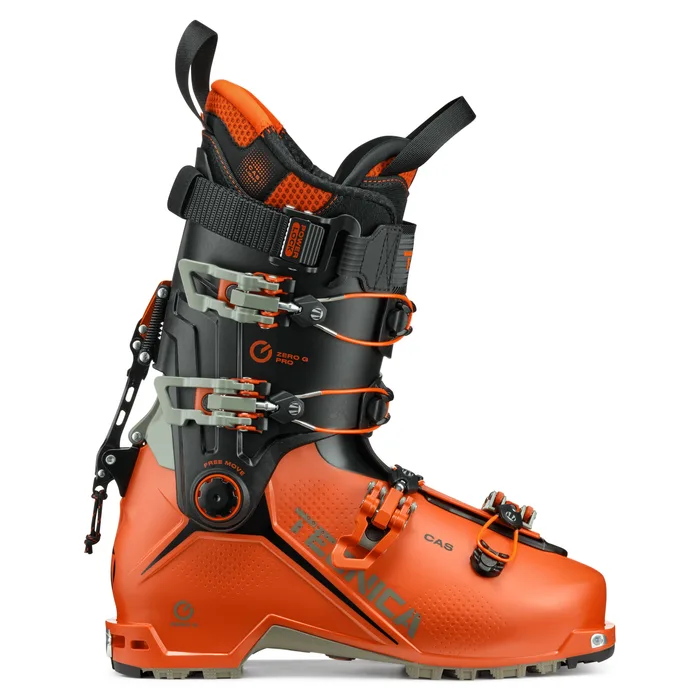
- Buy Tecnica Zero G Tour Pro A 130 flex touring boot that Tecnica lists at 1285 g with 65 degrees of cuff range of motion and a 99 mm last. Amazon
- Buy Dynafit Radical An all-round touring boot with a 110 flex, a 104 mm last, 60 degrees of cuff rotation and an ISO 9523 sole.
- It depends Scarpa Maestrale RS Scarpa's stiffest Maestrale, a 130 flex boot listed for both tech and AT bindings, at 1570 g per half pair in size 27. Amazon
- Skip Atomic Hawx Prime XTD 120 BOA A hybrid freeride boot with tech inserts and a BOA dial that Atomic lists at 2004 g per boot with 54 degrees of range of motion. Amazon
What actually matters
- Last width - the width of the boot's interior at the forefoot, given in millimetres. It is the best paper clue to whether a boot will fit before you try it on.
- Listed weight - usually given per boot for a reference size. Lighter boots save energy on every step, but check the size each maker weighed.
- Range of motion - how far the cuff swings in walk mode, in degrees. More range gives a longer, more natural stride on the skin track.
- Flex - a stiffness rating for the descent. Numbers vary by brand, so use them to compare within a brand and confirm by feel.
- Sole standard - the norm the sole is built to, such as ISO 9523 for touring soles or ISO 23223 for GripWalk. It decides which bindings will accept the boot.
- Tech inserts - metal fittings at the toe and heel that pin bindings clamp onto. A boot needs them to work in tech or pin bindings.
- Walk mechanism - the lock that frees the cuff for climbing and locks it for skiing. Look for one that is easy to switch with gloves on and clear of snow.
The specs, in plain English
Green flags vs red flags
Green flags
- The maker lists weight together with the size it was measured at.
- A range of motion figure is published for walk mode.
- The sole standard and inserts are named clearly on the spec sheet.
- The liner is heat-moldable and the shell can be adjusted by a shop.
- Multiple last widths or volumes exist within the same model family.
Red flags
- No weight is listed, or no size is given for it.
- Range of motion is described only as 'huge' or 'full' with no number.
- A boot marketed for touring that lists only a GripWalk sole and no tech inserts.
- A boot that feels comfortable in the shop only because it is a size too big.
- Binding compatibility is claimed loosely without naming a sole standard or binding system.
Who's who: the brands
- Tecnica - Its Zero G line covers touring boots from the Peak models to the Tour Scout and the stiffer Tour Pro.
- Dynafit - Known for tech bindings, with touring boots ranging from the light Speed and TLT X to the all-round Radical.
- Scarpa - Makes its touring boots in Italy, with the Maestrale line covering all-round and stiffer RS versions.
- Atomic - Offers Backland touring boots and Hawx XTD hybrid boots for resort and backcountry use.
How to read a listing without getting fooled
Start with the last width and volume label, because they tell you whether the shell can fit your foot. Then read weight and check whether a size is attached; per-boot figures for a reference size are the most useful. Find the range of motion in degrees, and note it is sometimes called cuff rotation. Read the sole and binding lines carefully: look for ISO 9523, GripWalk or ISO 23223, and the insert or binding system the maker names, then match that to the binding maker's own compatibility list. Treat the flex number as a guide within a brand rather than a universal scale, and look at shell and cuff materials to understand why one boot weighs more than another.
How much should you spend?
Touring boots span three rough tiers. Budget ($ · budget) boots are usually older designs, outlet stock or softer entry models. Mid-range ($$ · mid-range) boots such as all-round PU touring models cover most recreational touring well and are a sensible first pair. Premium ($$$ · premium) boots add lighter plastics such as Grilamid, carbon reinforcement, stiffer flex or more range of motion, and hybrid freeride boots with BOA dials and full fit systems also land here. Spending more makes sense if you tour often and will notice the weight, but a premium boot that does not fit is worse than a mid-range one that does.
Questions, answered
Can a touring boot be fitted like a resort boot?
Yes, many can. Touring boots often have thermoformable liners, and some shells can be heat-shaped or punched by a shop. Ask about fit options before buying, since lightweight shell plastics vary in how much they can be reworked.
Are touring boots warm enough?
Most are built with light liners, which can feel cooler than thick resort liners on cold lift rides. Some, like the Scarpa Maestrale RS, list an insulated zeppa. Good socks and a boot dryer between days help either way.
How do I care for touring boots after a trip?
Pull the liners out to dry overnight, clear snow and grit from the walk mechanism and inserts, and check buckles and straps for wear. Worn sole pads and damaged inserts affect how the boot sits in a binding, so have a shop check them if they look worn.
Can I tour in a regular alpine boot?
Standard alpine boots usually lack both a walk mode and tech inserts, so they do not work in pin bindings and climb poorly. Some hybrid bindings accept alpine soles, but touring in a stiff boot locked upright is hard work. A boot with a walk mode and the right sole standard is the better choice for regular touring.
Or jump to the head-to-head: Tecnica Zero G Tour Pro vs Dynafit Radical.