

Ski & Snowboard
The Best Ski Touring Boots: 4 Compared (and One to Skip)
Four alpine touring boots with tech inserts and a walk mode, compared on listed weight, cuff range of motion, flex, last width, sole standard and the binding systems each maker names.
The short version
The Tecnica Zero G Tour Pro is the best touring boot here for most backcountry skiers: Tecnica lists 1285 g, a 130 flex, 65 degrees of cuff range of motion and a Vibram touring sole to ISO 9523 with Dynafit tech inserts. The Dynafit Radical is the value pick, with a 110 flex, a roomier 104 mm last, 60 degrees of cuff rotation and an ISO 9523 sole at a lower price tier. The Scarpa Maestrale RS suits strong skiers who want a stiff 130 flex boot that Scarpa lists for both tech and AT frame bindings, but it is heavier than the Tecnica. Skip the Atomic Hawx Prime XTD 120 BOA if you plan to tour regularly: Atomic lists 2004 g per boot and 54 degrees of range of motion, a lot of weight and a short stride for long climbs. Have a shop that knows touring gear check binding compatibility before you buy. Best for: skiers who skin for their turns at least a few days a season and want one boot for the climb and the descent.
Our picks at a glance
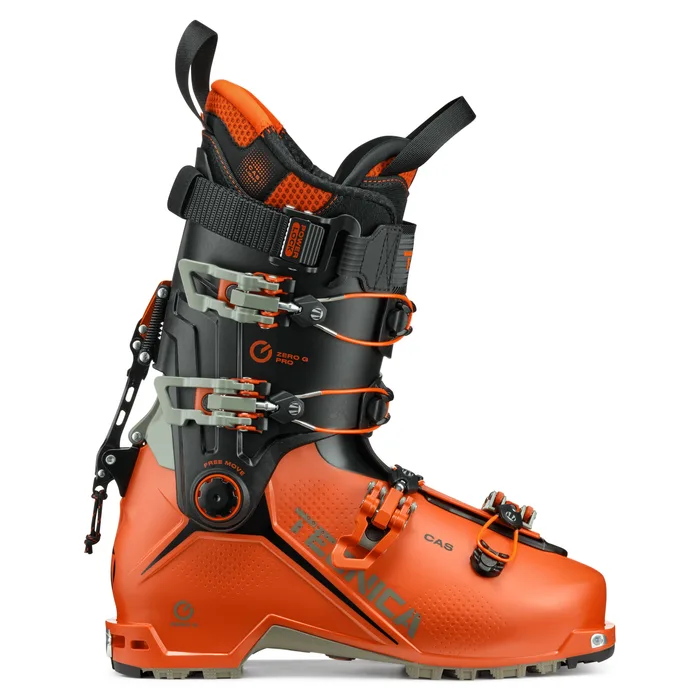
- Tecnica Zero G Tour Pro - Buy. A 130 flex touring boot that Tecnica lists at 1285 g with 65 degrees of cuff range of motion and a 99 mm last.
- Dynafit Radical - Buy. An all-round touring boot with a 110 flex, a 104 mm last, 60 degrees of cuff rotation and an ISO 9523 sole.
- Scarpa Maestrale RS - It depends. Scarpa's stiffest Maestrale, a 130 flex boot listed for both tech and AT bindings, at 1570 g per half pair in size 27.
- Atomic Hawx Prime XTD 120 BOA - Skip. A hybrid freeride boot with tech inserts and a BOA dial that Atomic lists at 2004 g per boot with 54 degrees of range of motion.
The verdict in 30 seconds
What mattered most
- Listed weight
- Flex
- Range of motion
- Last width
- Sole
- Binding system named by maker
A touring boot has two jobs that pull against each other: it has to walk uphill for hours without rubbing you raw, then lock down and drive a ski on the way back. The numbers that tell you how well a boot balances those jobs are listed weight, cuff range of motion, flex and the sole and insert standard, and makers publish most of them. We compared the Tecnica Zero G Tour Pro, Dynafit Radical, Scarpa Maestrale RS and Atomic Hawx Prime XTD 120 BOA using each maker's own spec sheet. If you only ski lifts, our resort ski boot comparison is the better place to start.
A 130 flex touring boot that Tecnica lists at 1285 g with 65 degrees of cuff range of motion and a 99 mm last.
Best for: Experienced backcountry skiers with average-width feet who want a stiff boot that still climbs well on long days.
- Tecnica lists 1285 g, a 130 flex and 65 degrees of range of motion, the strongest mix of stiffness, weight and stride in this group.
- The sole is a glued-on Vibram touring sole to ISO 9523 with Dynafit tech inserts, so it suits tech bindings, and other bindings only where the binding maker lists ISO 9523.
- The C.A.S. shell and Quick Instep are designed for fit work, and the C.A.S. Ultralight liner carries a Recco reflector.
- It sits in the premium tier.
- The 99 mm MV touring last will feel tight for wide forefeet.
- Tecnica does not state which size the 1285 g figure refers to, so compare weights across brands with care.
- There is no GripWalk sole listed, so check carefully before pairing it with an alpine binding.
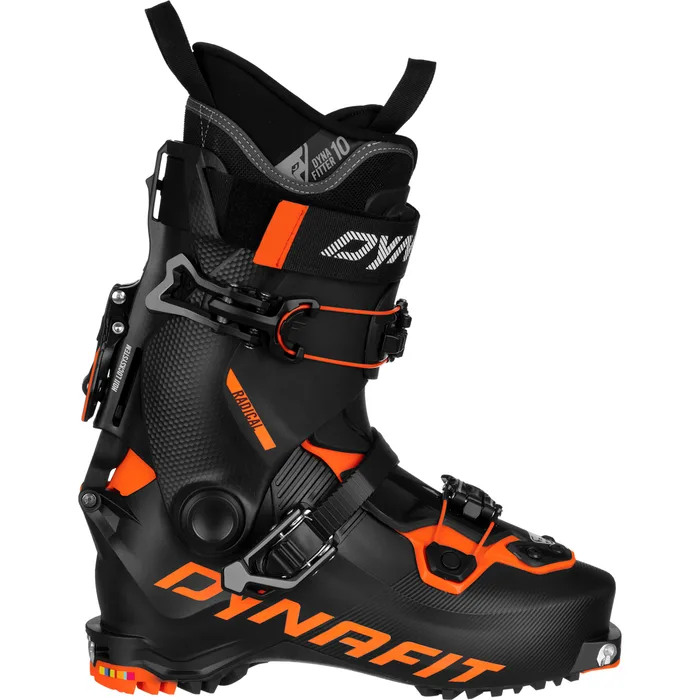
An all-round touring boot with a 110 flex, a 104 mm last, 60 degrees of cuff rotation and an ISO 9523 sole.
Best for: Newer tourers and skiers with wider feet who want a capable first touring boot at a mid-range price.
- The 104 mm last is the widest in this group, which helps skiers whose feet do not fit narrow touring shells.
- Dynafit lists 60 degrees of cuff rotation, a walk release on the forward lean and its Quick-Step-In boot-binding system.
- The UNI EN ISO 9523 sole marking and Pomoca Climb (TOUR) sole make it a straightforward match for touring bindings that accept that standard.
- At a listed 1520 g it is heavier than the Tecnica, partly because Dynafit uses PU for the shell and cuff.
- A 110 flex will feel soft to heavy or aggressive skiers on big skis.
- It uses a velcro power strap and the simpler HOJI Single Lock, where the Radical Pro steps up to a stiffer, lighter build.
- Dynafit does not state which size the listed weight refers to.
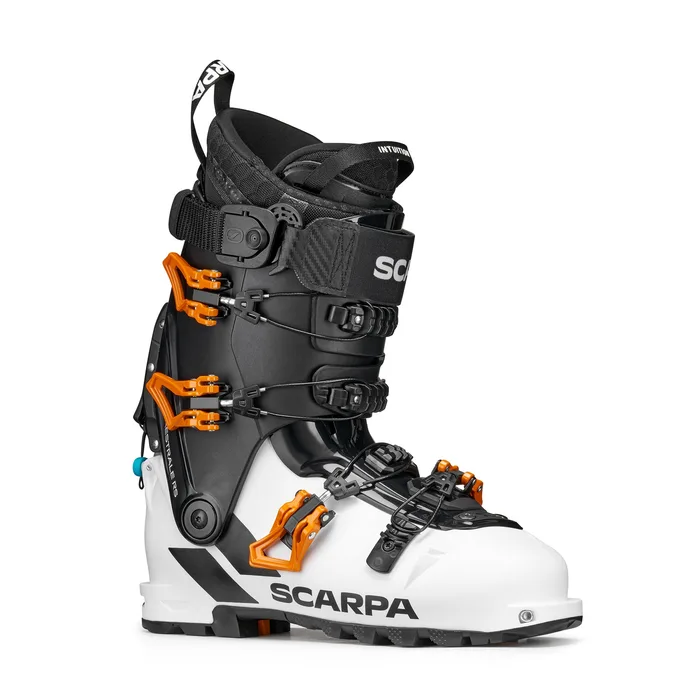
Scarpa's stiffest Maestrale, a 130 flex boot listed for both tech and AT bindings, at 1570 g per half pair in size 27.
Best for: Strong, heavier skiers who prioritise the descent or already own AT frame bindings, and accept extra weight on the climb.
- Scarpa lists the binding system as AT + TLT and says it works with both tech and AT bindings, useful if you already own a frame touring binding.
- The 130 flex Grilamid shell, Pebax Rnew cuff and Booster Active Power Strap are aimed at hard-charging descents.
- The thermoformable Intuition Pro Flex Performance liner and an insulated zeppa suit cold days and long tours.
- Its 1570 g per boot at size 27 is heavier than the Tecnica's listed 1285 g for the same 130 flex.
- Scarpa does not publish a range of motion figure for this version, so you cannot compare stride on paper.
- It sits in the premium tier, alongside the Tecnica.
- The 101 mm last sits between the Tecnica and the Dynafit, so very wide feet may still need shell work.
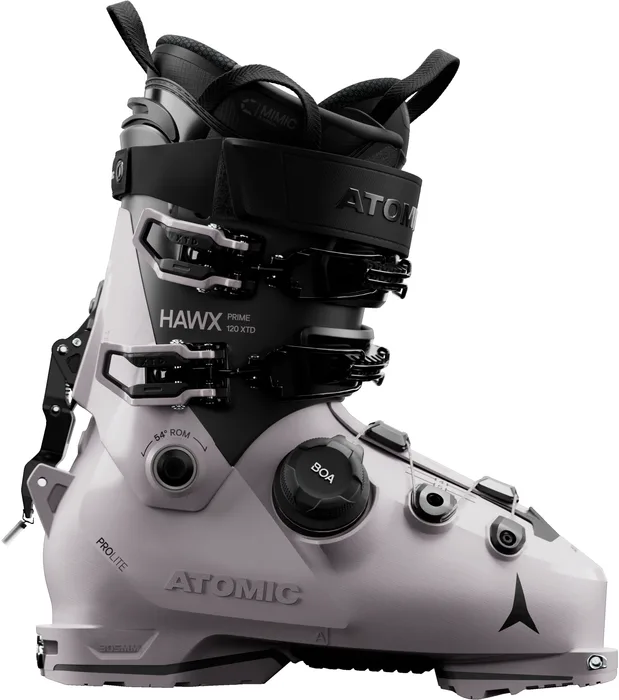
A hybrid freeride boot with tech inserts and a BOA dial that Atomic lists at 2004 g per boot with 54 degrees of range of motion.
Best for: Resort skiers who only skin occasionally and want one boot for GripWalk and tech bindings, not regular backcountry tourers.
- Atomic lists Complete Tech inserts for hybrid and TLT bindings plus GripWalk pads to ISO 23223, so one boot covers resort and touring bindings.
- The BOA Fit System, heat-moldable Mimic Platinum liner and Memory Fit shell give a lot of fit adjustment on a 100 mm last.
- Free/Lock 4.5 offers three forward lean settings, 13, 15 and 17 degrees.
- At 2004 g per boot (MP 26/26.5) it is over 400 g heavier per boot than the Scarpa Maestrale RS, which Scarpa weighs in a larger size.
- The listed 54 degrees of range of motion is the shortest here, against 60 to 65 degrees for the Dynafit and Tecnica.
- A PU shell and cuff help downhill feel but add weight you carry up every climb.
- It is priced in the premium tier, so you pay touring-boot money for a boot built mostly for the descent.
| Criteria | Tecnica Zero G Tour Pro Top pick | Dynafit Radical | Scarpa Maestrale RS | Atomic Hawx Prime XTD 120 BOA |
|---|---|---|---|---|
| Verdict | Buy it | Buy it | It depends | Skip it |
| Best for | Experienced backcountry skiers with average-width feet who want a stiff boot that still climbs well on long days. | Newer tourers and skiers with wider feet who want a capable first touring boot at a mid-range price. | Strong, heavier skiers who prioritise the descent or already own AT frame bindings, and accept extra weight on the climb. | Resort skiers who only skin occasionally and want one boot for GripWalk and tech bindings, not regular backcountry tourers. |
| Price tier | $$$ · premium | $$ · mid-range | $$$ · premium | $$$ · premium |
| Listed weight | 1285 g (size not stated) | 1520 g (size not stated) | 1570 g per boot, size 27 | 2004 g per boot, MP 26/26.5 |
| Flex | 130 | 110 | 130 | 120 |
| Range of motion | 65° | 60° cuff rotation | Not listed | 54° |
| Last width | 99 mm (MV touring) | 104 mm | 101 mm | 100 mm (MV) |
| Sole | Vibram touring, ISO 9523 | Pomoca Climb (TOUR), UNI EN ISO 9523 | Vibram Cayman LT, ISO 9523 | CT GripWalk pads, ISO 23223 |
| Binding system named by maker | Dynafit tech inserts | Dynafit Quick-Step-In | AT + TLT | Hybrid and TLT bindings, GripWalk |
| Shell / cuff | Grilamid / Grilamid and carbon | PU / PU | Grilamid / Pebax Rnew | PU / PU |
| Closure | 4 magnesium buckles, power strap | Buckles, HOJI Single Lock, velcro strap | 4 buckles, Booster strap | BOA Fit System |
Which one is right for you?
- Experienced backcountry skiers with average-width feet who want a stiff boot that still climbs well on long days. Buy it Tecnica Zero G Tour Pro
- Newer tourers and skiers with wider feet who want a capable first touring boot at a mid-range price. Buy it Dynafit Radical
- Strong, heavier skiers who prioritise the descent or already own AT frame bindings, and accept extra weight on the climb. It depends Scarpa Maestrale RS
- Resort skiers who only skin occasionally and want one boot for GripWalk and tech bindings, not regular backcountry tourers. Skip it Atomic Hawx Prime XTD 120 BOA
How we judged the field
Five things decide whether a touring boot works for you. Fit comes first, and the last width is the best paper clue to it. Listed weight matters because you lift each boot thousands of times on a climb. Cuff range of motion sets how long and natural your stride feels in walk mode. Flex tells you how much boot you have for the descent, though numbers are not standardised between brands. And the sole and insert standard decides which bindings the boot can go into, so we only repeat the binding systems each maker names on its own page.
The field splits into light touring boots, all-round touring boots and hybrid freeride boots that add tech inserts to an alpine-style shell. We picked a premium all-rounder that is both stiff and light, a mid-range all-rounder with a roomier last, a stiff descent-first boot with frame binding compatibility, and a popular hybrid that many resort skiers buy for touring. None of these repeat the boots in our resort ski boot comparison, which covers lift-served skiing.
Tecnica Zero G Tour Pro
Buy itThe Tecnica Zero G Tour Pro is the boot to beat in this group because it does not make you pick between climbing and skiing. Tecnica lists 1285 g, a 130 flex and 65 degrees of range of motion, which is the lowest listed weight, the stiffest flex and the most stride on paper here. The shell is Grilamid with Tecnica’s C.A.S. shape and Quick Instep, the cuff is co-injected Grilamid and carbon, and it closes with four light magnesium buckles with a touring lock out plus a 35 mm power strap. The sole is a glued-on Vibram touring sole to ISO 9523 with Dynafit tech inserts. The trade-offs are the premium price, a 99 mm MV touring last that will pinch wide feet, and a weight figure with no size attached. It is for experienced tourers with average-width feet who want one stiff, light boot for long climbs and serious descents.
Dynafit Radical
Buy itThe Dynafit Radical is the value pick and the easiest boot here to recommend to a first-time tourer. Its 104 mm last is the widest in this group, and Dynafit lists 60 degrees of cuff rotation, a forward lean of 11 degrees with a release for walking, and its Quick-Step-In boot-binding system. The sole is a Pomoca Climb (TOUR) sole marked UNI EN ISO 9523. The shell and cuff are PU, which explains a listed weight of 1520 g, and the 110 flex is softer than the Tecnica and Scarpa. Closure is buckles with the HOJI Single Lock and a velcro power strap; the Radical Pro, listed at 1400 g with a 120 flex and Grilamid shell, is the step up if you want more. For newer tourers, lighter skiers and anyone whose feet do not fit narrow touring shells, the Radical covers most days at a mid-range price.
Scarpa Maestrale RS
It dependsThe Scarpa Maestrale RS is a strong boot for a specific skier. Scarpa lists a 130 flex from a Grilamid shell and Pebax Rnew cuff, a 101 mm last, a Booster Active Power Strap and a thermoformable Intuition Pro Flex Performance liner, plus an insulated zeppa. Its binding system is listed as AT + TLT, and Scarpa says it works with both tech and AT bindings, which matters if you already own a frame touring binding. The sole is a Vibram Cayman LT to ISO 9523. The catch is weight: Scarpa lists 1570 g per boot in size 27, heavier than the Tecnica’s 1285 g at the same flex. Scarpa also does not publish a range of motion for this version, and it sits in the premium tier. It suits heavier or aggressive skiers who care most about the descent or own AT frame bindings, and it is the wrong boot if light weight is your priority.
Atomic Hawx Prime XTD 120 BOA
Skip itThe Atomic Hawx Prime XTD 120 BOA is a capable freeride boot, but it is a poor choice if touring is a regular part of your season. Atomic lists 2004 g per boot in MP 26/26.5, over 400 g per boot heavier than the Scarpa Maestrale RS, which Scarpa weighs in a larger size. Its 54 degrees of range of motion is the shortest here, against 65 degrees for the Tecnica and 60 for the Dynafit, so every stride on a long skin track is shorter and heavier. What it does well is versatility: Complete Tech inserts for hybrid and TLT bindings, GripWalk pads to ISO 23223, a BOA Fit System, a Mimic Platinum liner and a PU shell on a 100 mm last. That makes sense for resort skiers who skin a few times a season, but at a premium price a dedicated touring boot serves anyone who climbs often far better.
Sources
Specs in this review come from these pages.
- Tecnica Zero G Tour Pro product page (blizzard-tecnica.com)
- Dynafit Radical Ski Touring Boot Men product page (dynafit.com)
- Scarpa Maestrale RS (Updated) product page (us.scarpa.com)
- Atomic Hawx Prime XTD 120 BOA product page (atomic.com)
- Dynafit Radical Pro Ski Touring Boot Men product page (dynafit.com)
Tecnica Zero G Tour Pro vs Dynafit Radical: which should you buy?
The Tecnica Zero G Tour Pro and Dynafit Radical are both all-round touring boots with tech-ready ISO 9523 soles, but they suit different skiers. The Tecnica is stiffer (130 against 110), lighter on paper (1285 g against 1520 g, though neither maker names the size) and offers more listed range of motion (65 degrees against 60). It is built from Grilamid and carbon where the Radical uses PU, which explains much of the weight gap.
Choose on fit and ski style first. If your forefoot is wide, the Radical’s 104 mm last is likely to be the more comfortable starting point than the Tecnica’s 99 mm touring last, and its softer flex will suit lighter skiers and newer tourers. If you have average-width feet, ski aggressively or plan long days with a lot of vertical, the Tecnica is worth the premium. Either way, try them on with your touring socks and have a shop check the shell fit.
What to look for
- Last width first: match the boot’s listed last to your foot, because no feature makes up for a shell that does not fit.
- Listed weight and the size it refers to: several hundred grams per boot is a real difference on a long climb, but makers weigh different sizes.
- Range of motion: more degrees of cuff travel in walk mode means a longer, easier stride on the skin track.
- Sole and insert standard: check that the boot lists ISO 9523, GripWalk (ISO 23223) or tech inserts that match the binding you plan to use.
- Flex for your weight and style: a 130 flex suits strong skiers on big skis, while a 110 flex is friendlier for lighter skiers and new tourers.
- Shop fitting and binding setup: budget for liner molding and shell work, and let a certified shop mount the bindings and set the release value.
Our final take
For most skiers who earn their turns, the Tecnica Zero G Tour Pro is the boot to get: Tecnica lists it as the lightest and stiffest boot here, with the most range of motion. The Dynafit Radical is the smart value pick, especially for wider feet and first touring setups. The Scarpa Maestrale RS makes sense for strong skiers who want maximum descent performance or need AT frame binding compatibility, as long as they accept the weight. Skip the Atomic Hawx Prime XTD 120 BOA if you tour regularly, because its weight and short stride work against you on every climb. Then pair the boots with bindings and skins from our ski binding and climbing skin comparisons.
Questions, answered
Can I use a ski touring boot in my regular alpine bindings?
Only if the boot's sole matches a standard your binding accepts. The Tecnica Zero G Tour Pro, Dynafit Radical and Scarpa Maestrale RS list ISO 9523 touring soles, and many standard alpine bindings do not list that standard. The Atomic Hawx Prime XTD 120 BOA lists GripWalk pads to ISO 23223, which is why hybrid boots like it appeal to resort skiers. Check the sole standard on the boot and the compatibility list on the binding, and have a certified shop confirm the pairing and set the release value.
What does range of motion mean on a touring boot?
It is how far the cuff can swing forward and back when the boot is in walk mode, usually given in degrees. More range lets you take a longer, more natural stride on the skin track and makes flat approaches less tiring. In this group the Tecnica lists 65 degrees, the Dynafit lists 60 degrees of cuff rotation and the Atomic lists 54 degrees. Scarpa does not publish a figure for the current Maestrale RS.
How much does boot weight matter for ski touring?
A lot, because you lift each boot with every step for the whole climb. The spread in this group is large: Atomic lists 2004 g per boot for the Hawx Prime XTD 120 BOA, while Tecnica lists 1285 g for the Zero G Tour Pro. Makers weigh different sizes, so treat small gaps with caution, but a gap of several hundred grams is real. If most of your days are long climbs, weight should rank near the top of your list.
Do I need a stiff 130 flex boot for touring?
Not necessarily. A stiff boot helps heavier or aggressive skiers drive wide skis in variable snow, which is where the Tecnica Zero G Tour Pro and Scarpa Maestrale RS aim. A 110 flex like the Dynafit Radical is easier to flex for lighter skiers and newer tourers, and tends to be more forgiving on long climbs. Flex numbers are not standardised across brands, so try boots on and flex them in the shop.
Should I buy touring boots before or after the bindings and skins?
Boots first, because fit decides everything else and the boot sole sets which bindings you can use. Once you know the sole standard and inserts, pick bindings that list that boot standard; our ski binding comparison covers the main types. Skins are cut to the ski, so they come last, and our climbing skin comparison explains the glide and grip trade-offs. A certified shop should mount the bindings and set the release value.
Deciding between the top two? See our head-to-head: Tecnica Zero G Tour Pro vs Dynafit Radical.
More Ski & Snowboard reviews
 The Best Ski Tuning Kits: 4 Compared (and One to Skip)
 The Best Snowboard Bindings: 4 Compared (and One to Skip)
 The Best Snowboard Boots: 4 Compared (and One to Skip)
 The Best Ski and Snowboard Waxes: 4 Compared (and One to Skip)
 The Best All-Mountain Snowboards: 4 Compared (and One to Skip)
 The Best Splitboards: 4 Compared (and One to Skip)