Explained
Ski Mittens and Glove Liners, Explained
After reading, you'll understand how to read a mitten spec sheet, what a liner adds, and which features matter for your ski days.
In this guide
Ski mitten pages are full of brand names for insulation and waterproof inserts, and few say how warm the mitten actually is. First-time buyers often assume warm and waterproof come together, or that a liner is just a thin glove. Both ideas are incomplete. Once you know what each spec means, you can compare a mitten from one brand to another.
The 30-second version
- Mittens are usually warmer than gloves, but you give up finger dexterity.
- A waterproof insert matters more than an insulation name, because wet insulation loses warmth.
- A stated temperature or warmth rating helps, but only compare ratings from the same maker.
- A liner adds warmth and phone access, and it lets you take the outer mitten off.
- Check for a wrist leash and cuff length, because pages list them as separate features.
The products this guide is about
Our verdict on each, with the full reasoning on the companion review.
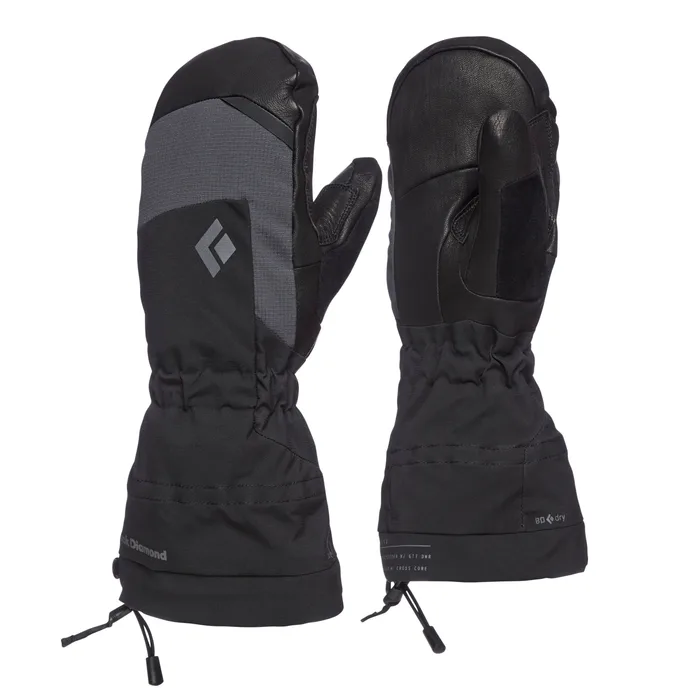
- Buy Black Diamond Mercury Mitts A waterproof, long-cuff mitten with a removable Primaloft Gold liner and a maker temperature range printed on the page.
- Buy Dakine Scout 2.0 Mitts A waterproof-insert mitten that ships with a removable touchscreen-compatible fleece storm liner and a removable wrist leash.
- It depends Hestra Touch Point Active 5-finger liner A thin polyester and elastane liner glove with conductive thumb and index finger, rated 3 out of 8 on Hestra's own warmth scale.
- Skip Burton Park Mittens A light, fleece-lined, water-resistant mitten that Burton frames for mild days and spring sessions.
What actually matters
- Insulation - this is the fill that traps heat, such as a synthetic like Primaloft Gold or a plain polyester fill. Look for the type and, if given, the weight.
- Waterproof insert - a layer inside the shell that blocks liquid water while letting some moisture out. Without it, wet snow can reach the insulation.
- Water-resistant shell - a coating or tight fabric that sheds light snow. It is not the same as waterproof and will eventually soak through.
- Removable liner - an inner layer you can take out to dry or wear alone. It makes the mitten adaptable.
- Touchscreen compatible - conductive material on the fingertips so a phone responds. On a mitten this is rarely practical, so look for it on the liner.
- Wrist leash - a strap that keeps the mitten attached to you. It helps on chairlifts and when you take a mitten off to use your hands.
- Gauntlet cuff - a long cuff that goes over the jacket sleeve to block snow, compared with an under-cuff design that tucks inside.
The specs, in plain English
Green flags vs red flags
Green flags
- A waterproof insert is named on the product page
- A stated temperature range or warmth rating from the maker
- A removable liner you can dry separately
- A wrist leash listed in the spec sheet
- A cuff length that matches how you ski
Red flags
- Only water-resistant on a mitten sold for cold days
- No insulation type or weight listed
- Marketing words like warm with no numbers
- Touchscreen claims that name no fingers
- A maker page that says mild days only for a winter mitten
Who's who: the brands
- Hestra - Sells mittens and liners with a numbered warmth scale from 1 to 8 on its product pages.
- Black Diamond - Lists a temperature range and a waterproof BD.dry insert on its Mercury Mitts.
- Dakine - Sells the Scout 2.0 Mitts with a removable touchscreen-compatible storm liner.
- Burton - Offers a range of mittens and glove liners with a lifetime warranty on its product pages.
- Outdoor Research - Sells modular mitt-and-liner systems, including the Mt. Baker GORE-TEX Mitt.
How to read a listing without getting fooled
Start with the insert, because it tells you if the mitten is waterproof or only water-resistant. Then look at the insulation type, weight if given, and any temperature or warmth rating. Check the liner details and whether it is removable or touchscreen compatible. Finish with the features list for a leash, a cuff style and a warranty. Anything missing from the list should be treated as not included, not assumed.
How much should you spend?
Budget mittens and liners are fine as spares or for mild days, and a thin liner is the cheapest way to add warmth and phone access. Mid-range mittens usually add a waterproof insert, a removable liner and a leash. Premium mittens add leather palms, better insulation and sometimes a stated temperature range. Spend for waterproofing first, since that is what protects the warmth you pay for.
Questions, answered
Should I buy a mitten or a glove with a liner?
If your hands get cold easily, a mitten usually helps because the fingers share warmth. If you need dexterity for straps and poles, a glove with a liner is easier. Some skiers wear a mitten on cold lifts and a glove on mild days. Both can take a liner.
Can I wash a liner glove?
Many liners are machine washable, and Hestra lists the Touch Point Active as washable. Follow the care label for temperature and drying. Washing helps a liner stay fresh because it sits against your skin.
Do I need hand warmers if I have a good mitten?
Not always, but they help on very cold days. Some mittens, like the Dakine Scout 2.0, list a heat pack pocket. See our best rechargeable hand warmers review for options.
How do I size a mitten?
Measure around your palm and the length of your hand, then use the maker's size chart. Sizes vary by brand, so use the chart on the product page. If you plan to wear a liner inside, check that there is enough room.
Or jump to the head-to-head: Black Diamond Mercury Mitts vs Dakine Scout 2.0 Mitts.