Explained
Snow Boots, Explained
After reading, you'll understand how temperature ratings, liners, rubber and sizing decide whether a snow boot keeps you warm and upright.
In this guide
Snow boots are sold on temperature ratings, and those ratings are set by each brand in its own way. Liners, rubber and fit decide how warm and safe a boot is in real use. Many people buy too small and end up cold. Here is how to read the listing.
The 30-second version
- Temperature ratings are brand-specific, so check what activity they assume.
- Removable liners dry overnight, which keeps boots warmer day to day.
- Cold-flexible rubber grips better, because hard rubber slides on ice.
- Size up for thick socks, since tight boots feel colder.
- Avoid final sale boots, unless you know your size.
The products this guide is about
Our verdict on each, with the full reasoning on the companion review.
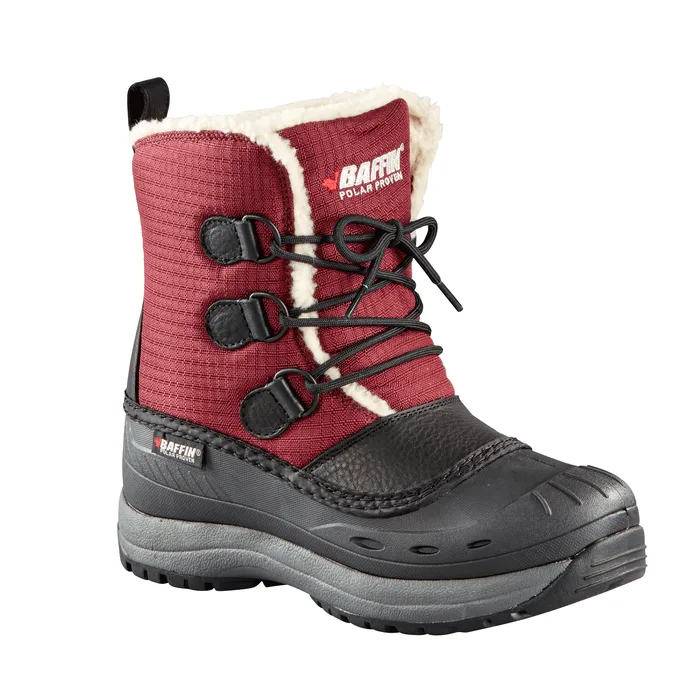
- Buy Baffin Tessa A women's winter boot with a removable inner boot and rubber built to stay flexible in the cold.
- Buy Muck Women's Arctic Sport II Mid Boot A pull-on neoprene and rubber boot with a wide comfort range and free returns.
- It depends KEEN Women's Revel III Waterproof Winter Boot A lace-up winter hiking boot with a breathable membrane and a cold-flexible outsole.
- Skip Kamik Snovalley 6 Winter Boots A leather and rubber boot rated to -40°C, sold as final sale with a fixed liner.
What actually matters
- Temperature rating - a brand guide, not a standard. Activity level changes everything.
- Liner - removable or fixed. Removable liners dry faster and can be replaced.
- Insulation - grams of synthetic insulation or felt. More grams are warmer but bulkier.
- Waterproofing - seam-sealed shells, rubber bases or membranes. Slush tests every seam.
- Outsole - cold-flexible rubber and deep lugs. Grip matters as much as warmth.
- Height - taller boots keep out deep snow. Shorter boots walk better.
- Fit and returns - leave room for socks. A return window protects you.
The specs, in plain English
Green flags vs red flags
Green flags
- A temperature rating tied to activity level.
- A removable liner.
- Named cold-weather rubber compounds.
- Published height and weight.
- Clear sizing advice and a return window.
Red flags
- Final sale with no returns.
- A fixed liner on a heavy-use boot.
- No temperature information at all.
- No sizing advice.
- A single dramatic rating with no context.
Who's who: the brands
- Baffin - A Canadian winter boot brand known for removable multi-layer liners and activity-based ratings.
- Muck - Known for pull-on neoprene and rubber boots for farm, chores and winter.
- KEEN - A footwear brand whose Revel line brings hiking-boot design to winter.
- Kamik - A Canadian maker of rubber and winter boots, including made-in-Canada models.
How to read a listing without getting fooled
Start with the temperature rating and look for how the brand defines it. Then check the liner, insulation and waterproofing, and the outsole rubber and tread. Look at the height, weight and closure, then the sizing advice. Finally, read the returns policy on the product page itself.
How much should you spend?
Budget snow boots often use fixed liners and basic rubber, fine for short trips outside. Mid-range boots add neoprene or better insulation, clearer ratings and good returns. Premium boots add removable multi-layer liners, cold-flexible rubber compounds and more precise ratings, and they suit long, active winter days.
Questions, answered
How do I dry snow boots?
Take out the liner and insoles if you can and dry them at room temperature. Stuff fixed-liner boots with newspaper or use a low-heat boot dryer. Avoid radiators and fires, which can crack rubber and leather.
Can I wear snow boots for hiking?
Short, snowy walks, yes. For longer hikes, a winter hiking boot with a laced, supportive fit walks better. Heavy snow boots tire your legs on long distances.
What socks should I wear with snow boots?
Merino or synthetic socks that wick sweat, not cotton. One good sock is better than two tight ones. Make sure the boot still has room.
Do snow boots need waterproofing spray?
Leather and suede boots benefit from regular treatment. Rubber and neoprene need only cleaning. Follow the maker's care advice.
Or jump to the head-to-head: Baffin Tessa vs Muck Women's Arctic Sport II Mid Boot.