Explained
Swim Goggles, Explained
After reading, you'll understand what the claims on a swim goggle page mean and which ones to check.
In this guide
Swim goggle listings are packed with short terms like gasket, photochromatic and polarized, and they rarely explain themselves. First-time buyers often choose on colour or brand and then find the goggle leaks or fogs. Most of those problems come down to a few details on the product page. This guide explains them.
The 30-second version
- Fit beats features, because a goggle that does not seal on your face fails whatever its lens does.
- Anti-fog is a claim to look for, since some makers state it and some say nothing.
- Lens colour should match where you swim, with clear for dim indoor pools and tinted or mirrored for bright light.
- UV protection matters outdoors, and a stated rating is better than none.
- Sizes exist for a reason, so a small or compact fit may help if standard goggles leak.
The products this guide is about
Our verdict on each, with the full reasoning on the companion review.
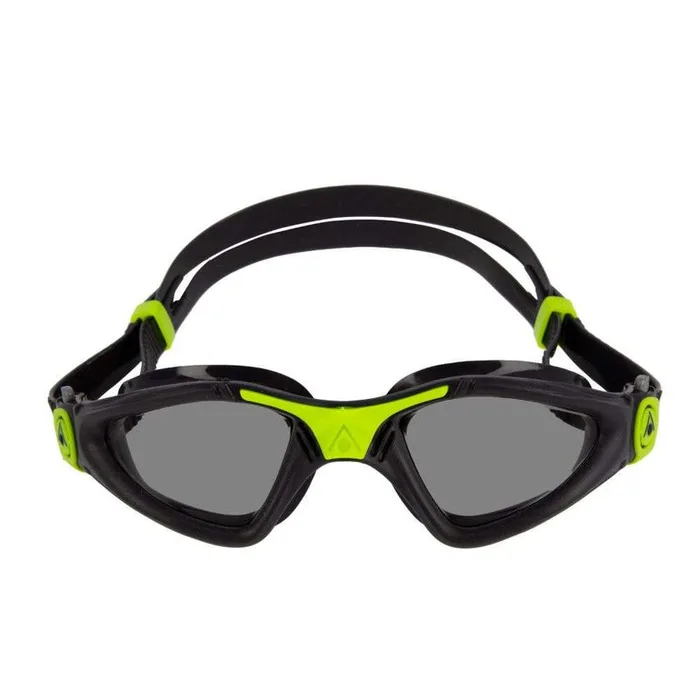
- Buy Aqua Sphere Kayenne An oversized-lens goggle with the widest lens menu in the field, including a photochromatic lens that adapts from cloudy to bright light.
- Buy Zoggs Predator The most complete set of stated claims here: anti-fog and UV protection on every lens, a silicone gasket, and two fit profiles.
- It depends TYR Special Ops 3.0 Polarized (Non-Mirrored) A polarized, non-mirrored goggle aimed at bright outdoor water, with embedded anti-fog and a DURAFIT silicone gasket.
- Skip Speedo Hydrosity 2.0 A cheap fitness goggle whose product page says almost nothing about the things that decide whether a goggle works.
What actually matters
- Seal - This is the soft rim that touches your face. If it does not fit your eye socket, water gets in, no matter how good the lens is.
- Anti-fog claim - Fog forms inside the lens as you warm up, and a coating slows it. Makers state it differently, so read the page.
- Adjustable nose bridge - A bridge you can change lets you match the gap between your eyes. A poor match is a common cause of leaks.
- Strap adjustment - A strap you can tighten without removing the goggles saves time. Quick buckles and pulley systems do this.
- Lens tint - Tint reduces the light reaching your eyes. Clear suits dim pools, and darker tints suit bright outdoor water.
- UV protection - A stated rating, such as 380nm, tells you the lens blocks a defined range. It matters mostly outdoors.
- Fit sizes - Small, regular or compact versions help different face shapes. A one-size goggle may not suit everyone.
The specs, in plain English
Green flags vs red flags
Green flags
- The page states an anti-fog claim.
- The seal type is named, such as a silicone gasket.
- Nose bridge and strap adjustments are described.
- Small or compact fits are offered.
- A UV protection figure is stated.
Red flags
- The page says nothing about anti-fog.
- The seal type is missing.
- Only one size is offered, with no adjustment detail.
- Lens options are not described.
- The description is mostly marketing words with no specifics.
Who's who: the brands
- Speedo - A large swim brand with a wide range from basic fitness goggles to racing models.
- TYR - Known for racing and triathlon goggles, including polarized and mirrored options.
- Aqua Sphere - Italian brand known for oversized lenses and photochromatic and polarized options.
- Zoggs - A UK brand known for the Predator range and a stated anti-fog and UV standard across its lenses.
- Arena - Italian brand with a large goggle range, from racing to fitness.
How to read a listing without getting fooled
Start with the product page and look for the seal type, the anti-fog statement, the lens options and the sizes. If a page lists a feature as a bullet, that is a claim. If it does not appear, assume the maker is not making it. Check whether each fact applies to the model or to the brand, since Zoggs states its anti-fog and UV claims for all its lenses. Then check the strap and nose bridge adjustment, because those decide fit more than any lens feature.
How much should you spend?
Budget goggles can work well for casual swims, but they often state fewer details, so you may not know what you are buying. Mid-range models usually add a named gasket, a fit choice and a stated anti-fog claim. Premium goggles tend to add lens options such as photochromatic or polarized and quick adjustment. Spend more only on the features you will use, and favour a goggle that states its claims clearly over one that is simply expensive.
Questions, answered
Should I wet the goggles before putting them on?
Most makers do not require it. A wet seal can slip, and a dry fit often sits better against the skin. Press the lenses to your eyes, then pull the strap over your head to check for leaks.
Why do my goggles keep leaking even when they feel tight?
Over-tightening can distort the seal. A poor nose bridge fit is a common cause, and so is the wrong size. Try loosening the strap, changing the nose bridge, or trying a smaller fit.
How often should I replace swim goggles?
There is no fixed figure from the makers on the pages we read. Replace them when the seal hardens or the strap loses stretch, or when the anti-fog coating stops working.
Can I wear goggles in open water?
Many people do, and Aqua Sphere describes the Kayenne as suited to a pool or open water. Choose a lens for the light you expect, and ensure the strap holds firmly.
Or jump to the head-to-head: Aqua Sphere Kayenne vs Zoggs Predator.