Explained
Trekking Poles, Explained
After reading, you will understand the handful of choices that actually decide whether a pole suits how you hike, and be able to decode any spec sheet.
In this guide
Trekking poles look nearly identical on the rack, so shoppers fixate on price and weight and miss the two choices that really matter: what the shaft is made of and how the pole packs down. Get those right, and everything else - locks, grips, baskets - falls into place. This guide translates the jargon so you can match a pole to your terrain instead of the marketing copy.
The 30-second version
- Material is the first fork in the road: aluminum bends and forgives on rough ground, while carbon is lighter and stiffer but more prone to cracking under a hard sideways hit.
- Pack style is the second: folding (Z-style) poles collapse to about the length of a forearm for travel, while telescoping poles offer a wider adjustment range and tend to be simpler and sturdier.
- Lever locks beat twist locks for reliability and glove-friendly use; twist locks can slip if you do not cinch them down firmly.
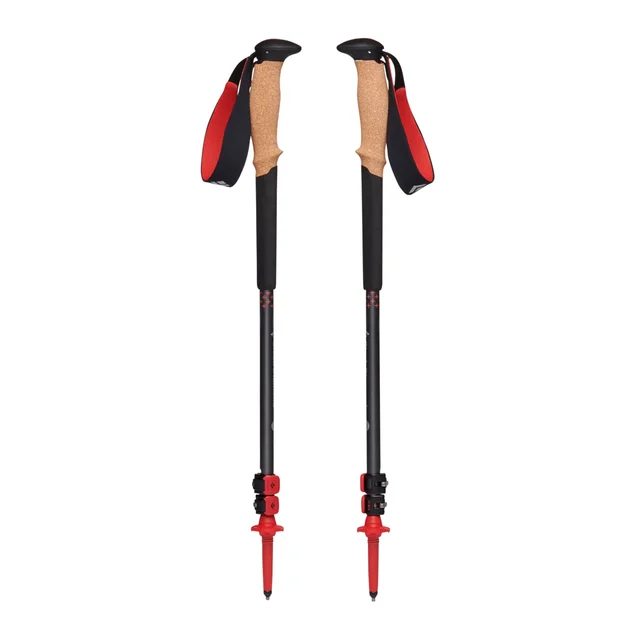
- Cork grips earn their keep on long, sweaty days by wicking moisture and molding to your hand, while foam is perfectly fine for shorter or occasional outings.
- The lightest poles trade away toughness, so be honest about your terrain before chasing grams - featherweight ultralight poles reward careful handlers and punish everyone else.
The products this guide is about
Our verdict on each, with the full reasoning on the companion review.
- Buy Black Diamond Pursuit Trekking Poles A bombproof aluminum all-rounder that quietly does everything well. Amazon
- Buy LEKI Black Series FX Carbon Trekking Poles A carbon Z-folder that collapses tiny without feeling flimsy.
- It depends Black Diamond Trail Back Trekking Poles Dependable aluminum at a friendlier price, as long as you skip the extras. Amazon
- Skip Gossamer Gear LT5 Three Piece Carbon Trekking Poles Astonishingly light, but too delicate and fiddly for most hikers.
What actually matters
- Shaft material - aluminum is forgiving and takes abuse for rough terrain and heavier hikers; carbon saves weight for those who will treat poles with some care.
- Pack style (folding vs telescoping) - decides whether the poles disappear into a daypack or carry-on, or ride bulky on the outside.
- Locking mechanism - the part most likely to frustrate you in the field; lever locks are generally more reliable and easier to work than twist locks.
- Grip material - cork, foam, or rubber changes comfort, sweat management, and cold-weather feel over a long day.
- Weight vs durability balance - grams saved almost always cost strength, so weigh the trade against how hard you are on gear.
- Adjustment range and sizing - a pole must reach the length that puts your elbow at roughly ninety degrees, and let you shorten for climbs and lengthen for descents.
- Serviceability and extras - replaceable sections, swappable baskets, and a field-adjustable lock tool extend a pole's useful life.
The specs, in plain English
Green flags vs red flags
Green flags
- Lever locks that clamp firmly and can be re-tensioned by hand or with a small tool
- A cork or quality foam grip with an extended grip zone for choking down on climbs
- A published, generous length-adjustment range that comfortably covers your height
- Replaceable sections and swappable baskets, signaling the maker expects the pole to last
- A material and pack style that honestly match your terrain rather than the lowest weight on the shelf
Red flags
- Ultralight carbon marketed on weight alone, with owner reports of cracking or babying required
- Twist locks that slip or need constant re-tightening under load
- A dense, non-wicking foam or bare plastic grip sold as a premium feature
- No mention of serviceability - sealed poles you cannot repair or re-tension
- A price that sits at flagship level for a pole with budget locks and grips
Who's who: the brands
- Black Diamond - A mountaineering mainstay known for durable aluminum poles and the trusted FlickLock lever system across price tiers.
- LEKI - A German specialist regarded for premium folding designs, comfortable cork grips, and reliable Speed Lock hardware.
- Gossamer Gear - An ultralight-focused maker whose featherweight carbon poles chase minimum grams for dedicated gram-counters.
- Cascade Mountain Tech - A value-driven brand widely known for affordable carbon and aluminum poles aimed at casual and budget hikers.
- REI Co-op - An outdoor retailer whose house-brand poles offer dependable, moderately priced options for everyday hikers.
How to read a listing without getting fooled
Start at the shaft: confirm whether it is aluminum or carbon and read that as your durability-versus-weight decision, not a quality ranking. Next find the pack style - telescoping for adjustment range and simplicity, folding for travel-sized packing - and check the collapsed length if space matters. Then look past the headline weight to the locking system, since a listing that brags about grams but stays vague about locks is often hiding a twist-lock or a flimsy build. Read the grip material plainly: cork and quality foam are comfort features, while bare plastic is a cost cut. Finally, scan for the boring-but-telling details - replaceable sections, included baskets, a field-adjustment tool - because a maker that mentions them expects the pole to survive real use.
How much should you spend?
Spending more mainly buys three things: a more comfortable grip, a more reliable lock, and better durability. Those matter most if you hike often or on demanding terrain, where a mid-to-upper-tier aluminum or tough folding carbon pole tends to be the value sweet spot. If you hike occasionally on maintained trails, a solid budget aluminum pole delivers most of the reliability for far less, and the extras you skip are genuinely optional. The place to be cautious is the bottom of the carbon market and any pole leaning on twist locks - that is where cheap poles most often disappoint, and where paying a little more prevents a lot of trailside frustration. Paying flagship prices only makes sense when packability, weight, and grip comfort are all priorities at once.
Questions, answered
Aluminum or carbon - which should I choose?
Aluminum is heavier but forgiving: it bends rather than snapping and shrugs off side impacts, rock plants, and heavy leaning, making it the safer pick for rough terrain and heavier hikers. Carbon is noticeably lighter and stiffer, ideal for long-distance and fast hiking, but more prone to cracking under a sharp sideways or twisting load. If in doubt, aluminum is the lower-risk choice; go carbon when saving weight genuinely matters and you will treat the poles with a little care.
Are folding or telescoping poles better?
Folding (Z-style) poles collapse much shorter, so they disappear into a pack or fit a carry-on, which is great for travel, scrambling, and stashing when not in use. Telescoping poles offer a wider length-adjustment range and tend to be simpler and sturdier, but they do not pack as small. Choose folding for packability and telescoping for adjustment range and low-fuss durability.
How do I size trekking poles correctly?
Stand with the tip on the ground and the grip in your hand; your elbow should sit at roughly a ninety-degree angle. Most adjustable poles cover a broad height range, so a single pair fits a wide span of users. On steep terrain, shorten the poles for climbs and lengthen them for descents, and favor a pole with easy, reliable locks so those on-the-fly changes are painless.
Do cork grips really matter?
For long or sweaty days, yes. Cork wicks moisture, resists slipping, and molds to your hand over time, which is why owners consistently prefer it over foam on all-day hikes. Foam grips are perfectly fine for shorter or occasional outings and help keep the price down, while rubber grips are best reserved for cold-weather use.
Are premium poles worth it over budget ones?
Often, but not always. Premium poles buy more comfortable grips, more reliable locks, and better durability, which pays off if you hike frequently or on demanding terrain. If you hike occasionally on maintained trails, a good value pole delivers most of the reliability for far less. The place to be cautious is cheap carbon and finicky locks, which are where budget poles most often disappoint.
Or jump to the head-to-head: Black Diamond Pursuit Trekking Poles vs LEKI Black Series FX Carbon Trekking Poles.