

Outdoors & Fitness
The Best Trekking Poles: 4 Compared (and One to Skip)
We compared four current trekking poles across aluminum vs carbon and folding vs telescoping on durability, weight, locks, grip, and packability.
The short version
For most hikers the Black Diamond Pursuit is the smart buy - durable 7075 aluminum, easy FlickLock+ levers, and a built-in hex tool for on-trail fixes. If you need to stuff poles in a pack or carry-on, the folding LEKI Black Series FX Carbon is the packable pick, folding to under 16 inches. On a tighter budget, the Black Diamond Trail Back is dependable value, though its foam grip and bulk hold it back. Skip the Gossamer Gear LT5 unless you are a careful, gram-counting ultralighter: it is featherweight but delicate, and its twist-locks are fiddlier than levers. Best for: hikers who want durable, comfortable poles that just work, with a packable carbon upgrade when weight and space matter.
Our picks at a glance
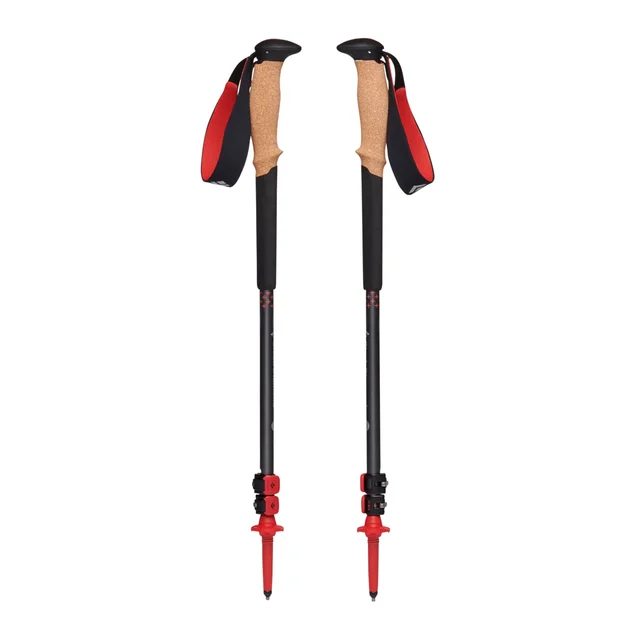
- Black Diamond Pursuit Trekking Poles - Buy. A bombproof aluminum all-rounder that quietly does everything well.
- LEKI Black Series FX Carbon Trekking Poles - Buy. A carbon Z-folder that collapses tiny without feeling flimsy.
- Black Diamond Trail Back Trekking Poles - It depends. Dependable aluminum at a friendlier price, as long as you skip the extras.
- Gossamer Gear LT5 Three Piece Carbon Trekking Poles - Skip. Astonishingly light, but too delicate and fiddly for most hikers.
The verdict in 30 seconds
What mattered most
- Material & durability
- Pack style
- Weight (per pair)
- Locking system
- Grip
- Packability
Trekking poles all look similar on a rack, but the split that matters is material (forgiving aluminum vs feather-light carbon) and pack style (telescoping vs folding). We compared each maker's product page to sort a durable do-everything aluminum pole, a packable carbon folder, a wallet-friendly value pick, and one ultralight darling most people should skip. Two clear buys, one it-depends, and one to avoid.
A bombproof aluminum all-rounder that quietly does everything well.
Best for: Hikers and backpackers who want one durable, low-fuss pole for rough, year-round terrain.
- 7075 aluminum shafts (30% pre-consumer recycled aluminum, per Black Diamond) built for rugged, multi-season use
- FlickLock+ soft-touch levers are large, glove-friendly, and easy to cinch
- Built-in hex tool lets you re-tension the locks in the field without carrying a multi-tool
- Comfortable cork grip with a foam extension for choking down on climbs
- Heavier than carbon rivals and bulky - they do not pack down small
- Some reviewers on Black Diamond's page say the lock can slip under weight
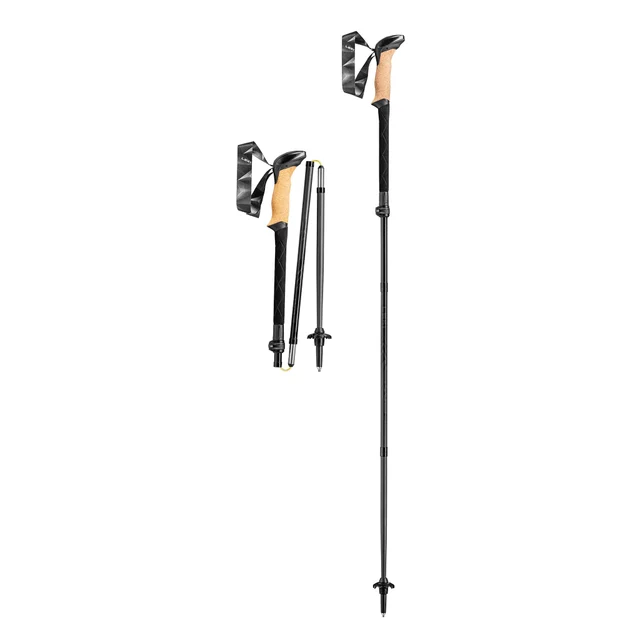
A carbon Z-folder that collapses tiny without feeling flimsy.
Best for: Backpackers, travelers, and mountaineers who need real packability without sacrificing toughness.
- Folds into three sections to under 16 inches, so they stash inside a daypack or a carry-on
- Carbon shafts with an internal CLD folding lock and a Speed Lock 2 Plus lever for adjustment
- Aergon Air grip with a natural cork surface and a rubberized grip head for descents
- Adjusts only between 110 and 130 cm, a narrower range than the telescoping poles here
- Heavier than the lightest dedicated carbon poles
- Folding designs add joints and moving parts, which is more to eventually wear or replace
- Sits at the top of the price ladder here
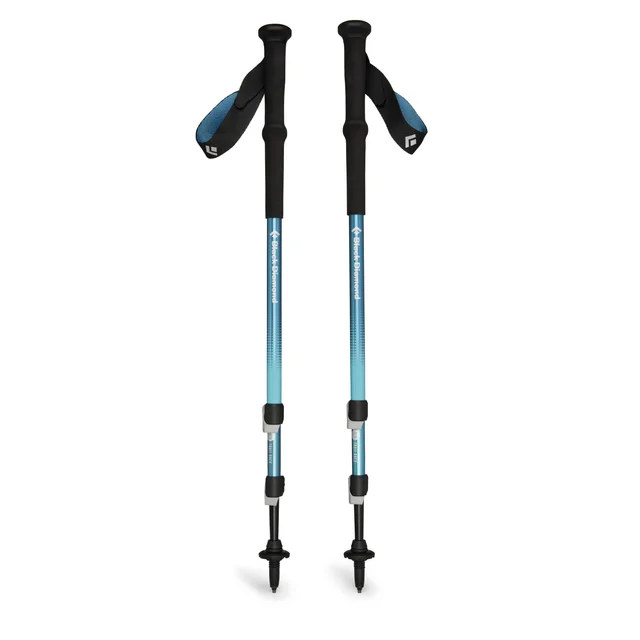
Dependable aluminum at a friendlier price, as long as you skip the extras.
Best for: Budget-minded, casual, and newer hikers who want reliable aluminum poles without paying premium prices.
- FlickLock lever locks and a three-section aluminum shaft
- Aluminum shafts at a mid-range price
- Simple and easy to live with, with nothing fussy to learn
- Dense foam grip is less comfortable and less sweat-wicking than cork
- Heavier and bulky when collapsed; no hex tool or premium extras
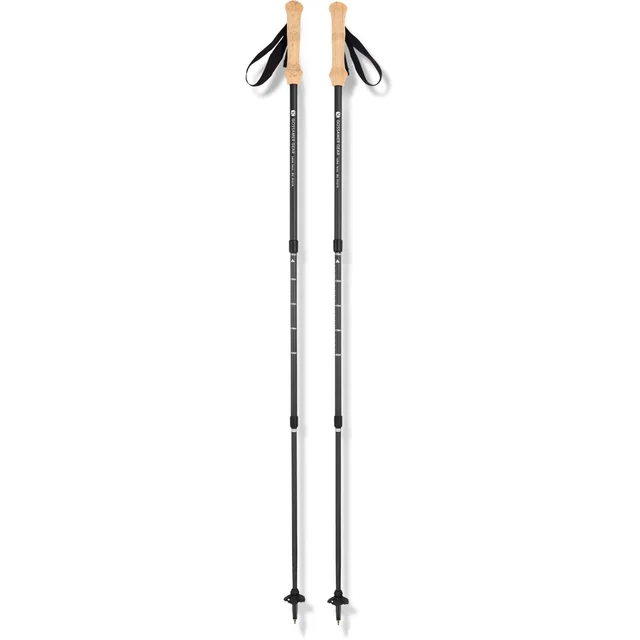
Astonishingly light, but too delicate and fiddly for most hikers.
Best for: Dedicated gram-counting ultralight thru-hikers and fastpackers who handle gear carefully.
- Among the lightest 3-piece poles, per Gossamer Gear, at 4.9 oz per pole, just under ten ounces for the pair
- Low-profile twist-lock shafts feel nimble in the hand
- Sections are individually replaceable, so a break need not mean a new set
- Ultralight carbon shafts reward careful handling
- Twist locks are fiddlier to set than lever locks
- Best kept to maintained trails, and not for leaning hard on rough terrain
- Premium price for a build you have to baby
| Criteria | Black Diamond Pursuit Trekking Poles Top pick | LEKI Black Series FX Carbon Trekking Poles | Black Diamond Trail Back Trekking Poles | Gossamer Gear LT5 Three Piece Carbon Trekking Poles |
|---|---|---|---|---|
| Verdict | Buy it | Buy it | It depends | Skip it |
| Best for | Hikers and backpackers who want one durable, low-fuss pole for rough, year-round terrain. | Backpackers, travelers, and mountaineers who need real packability without sacrificing toughness. | Budget-minded, casual, and newer hikers who want reliable aluminum poles without paying premium prices. | Dedicated gram-counting ultralight thru-hikers and fastpackers who handle gear carefully. |
| Price tier | $$$ · premium | $$$$ · flagship | $$ · mid-range | $$$ · premium |
| Material & durability | 7075 aluminum | Carbon | Aluminum | Ultralight carbon |
| Pack style | 3-section telescoping | 3-section folding (Z-pole) | 3-section telescoping | 3-section telescoping (twist) |
| Weight (per pair) | 495 to 535 g | Not published | 534 g | 4.9 oz per pole |
| Locking system | FlickLock+ levers + hex tool | Speed Lock 2 Plus + CLD fold | FlickLock levers | Twist locks |
| Grip | Cork + foam extension | Aergon Air cork | EVA foam + extension | Not published |
| Packability | 3-section telescoping | Folds to under 16 in | 61.5 cm collapsed | 23.5 in collapsed |
| Best use | Rugged all-around | Backpacking & travel | Casual & budget | Ultralight thru-hiking |
| Price tier | $$$ · premium | $$$$ · flagship | $$ · mid-range | $$$ · premium |
Which one is right for you?
- Hikers and backpackers who want one durable, low-fuss pole for rough, year-round terrain. Buy it Black Diamond Pursuit Trekking Poles
- Backpackers, travelers, and mountaineers who need real packability without sacrificing toughness. Buy it LEKI Black Series FX Carbon Trekking Poles
- Budget-minded, casual, and newer hikers who want reliable aluminum poles without paying premium prices. It depends Black Diamond Trail Back Trekking Poles
- Dedicated gram-counting ultralight thru-hikers and fastpackers who handle gear carefully. Skip it Gossamer Gear LT5 Three Piece Carbon Trekking Poles
How we judged the field
We do not run our own lab. Instead, we compared each maker’s own product page and weighed the criteria that decide whether a pole earns its place on your next hike. Durability came first, meaning the shaft material and how the lock works. From there we looked at weight, packed size, grip type, and the locking mechanism, the part most likely to frustrate you in the field. Finally we considered value: what you give up, and what you gain, at each price tier. The result is a deliberately mixed field spanning aluminum and carbon, and telescoping and folding designs, so you can match a pole to how you actually hike.
Black Diamond Pursuit Trekking Poles
Buy itThe Pursuit is the pole we would hand to almost anyone. Its 7075 aluminum shafts are made from 30% pre-consumer recycled aluminum, according to Black Diamond, and aluminum is the more forgiving material for rough, multi-season use. The FlickLock+ levers are soft to the touch and easy to work with gloves, and a 1.5 mm hex bit tool built into the shaft lets you re-tension a lock in the field. The cork grip with a foam extension lets you choke down on climbs. The trade-offs are weight and bulk: Black Diamond lists 495 g to 535 g per pair depending on size, heavier than carbon poles, and some reviewers on its page say a lock can slip under weight. For durable, do-everything performance, that is an easy compromise.
LEKI Black Series FX Carbon Trekking Poles
Buy itIf packability is what you are after, the Black Series FX Carbon is the pick. LEKI says it folds into three sections measuring less than 16 inches, so it tucks inside a daypack or a carry-on. The shaft is carbon with an internal CLD folding lock, adjustment is by a Speed Lock 2 Plus lever, and the Aergon Air grip has a natural cork surface with a rubberized head for descents. The catches are that it adjusts only between 110 and 130 cm, folding designs carry more joints and parts to eventually service, it is heavier than the lightest carbon poles, and it sits at the top of the price ladder here, which is why it is a runner-up rather than the outright pick for everyone.
Black Diamond Trail Back Trekking Poles
It dependsThe Trail Back is the value play, and for the right hiker it is plenty of pole. You get Black Diamond’s FlickLock lever locks and a three-section aluminum build at a mid-range price, with nothing fussy to learn. Where it shows its cost savings is the grip and the extras: the EVA foam grip with an extension is less sweat-wicking than cork on long, hot days, the poles weigh 534 g a pair and collapse to 61.5 cm, and there is no built-in hex tool. That makes it an easy recommendation for casual, occasional, and newer hikers, and an easy pass if you specifically want light weight, packability, or a cork grip.
Gossamer Gear LT5 Three Piece Carbon Trekking Poles
Skip itThe LT5 is popular with ultralighters, and its weight is the draw: 4.9 oz per pole, just under ten ounces for the pair, which Gossamer Gear says is among the lightest 3-piece poles around. The poles collapse to 23.5 inches, and replacement sections are sold separately. But for most hikers the drawbacks outweigh the grams. Ultralight carbon shafts reward careful handling, the twist-lock is a fiddlier design than a lever, and it is best treated as a pole for maintained trails rather than hard leaning on rugged ground. At a premium price for a pole you have to treat gently, it is a specialist’s tool, not a general recommendation. Buy it only if you are a careful, gram-counting thru-hiker who knows exactly what compromise you are making, otherwise skip it.
Black Diamond Pursuit vs LEKI Black Series FX Carbon: which should you buy?
These are the two strongest poles here, and the choice comes down to one question: do you value ruggedness and simplicity, or packability and weight? The Pursuit is the more foolproof pole, with aluminum shafts, glove-friendly FlickLock+ levers and a built-in hex tool to fix a loose lock anywhere. It is heavier and it does not pack small. The Black Series FX Carbon answers the packability problem, folding to under 16 inches, at the cost of a higher price, a narrower 110 to 130 cm adjustment range and a few extra grams versus dedicated ultralight poles. Pick the Pursuit as your default all-around pole; pick the LEKI when travel, scrambling, or stashing poles in a pack is a regular part of your hiking.
What to look for
- Material: Aluminum for forgiving durability on rough terrain and heavier loads; carbon for lower weight when you will treat poles with some care.
- Pack style: Folding poles collapse smallest for travel and scrambling; telescoping poles give a wider adjustment range and tend to be simpler and sturdier.
- Locks: Lever locks (like FlickLock+ and Speed Lock) are usually quicker to adjust than twist locks, which need to be cinched firmly.
- Grip: Cork wicks sweat and molds to your hand for long days; foam is fine for shorter or occasional hikes; add a foam extension if you climb often.
- Weight vs durability: The lightest carbon poles trade away toughness, so match the pole to your terrain before chasing grams.
- Extras that matter: A field-adjustable lock tool, interchangeable baskets, and replaceable sections all extend a pole’s useful life.
Our final take
Most hikers should buy the Black Diamond Pursuit: it is durable, comfortable, and refreshingly foolproof, and the hex tool quietly fixes the one thing that usually goes wrong with adjustable poles. If you travel, scramble, or simply want poles that disappear into a pack, the LEKI Black Series FX Carbon is the packable upgrade. Shoppers on a budget lose little with the Black Diamond Trail Back, provided they can accept a foam grip and extra bulk. And unless you are a meticulous, weight-obsessed thru-hiker, walk past the Gossamer Gear LT5. It is light on a scale, but too delicate and fussy to be your everyday pole.
Questions, answered
Aluminum or carbon - which should I choose?
Aluminum is heavier but forgiving: it bends rather than snaps and takes side-impacts, rock plants, and heavy leaning in stride, which is why it is the safer pick for rough terrain and heavier hikers. Carbon is noticeably lighter and stiffer, ideal for long-distance and fast hiking, but it is more prone to cracking under torsional or lateral stress. If in doubt, aluminum is the lower-risk choice; go carbon when saving weight genuinely matters and you will treat the poles with a little care.
Are folding or telescoping poles better?
Folding (Z-style) poles like the LEKI Black Series FX Carbon collapse much shorter, so they disappear into a pack or fit a carry-on - great for travel, scrambling, and stashing when not in use. Telescoping poles such as the Pursuit and Trail Back offer a wider length-adjustment range and tend to be simpler and sturdier, but they do not pack as small. Choose folding for packability, telescoping for adjustment range and low-fuss durability.
Do cork grips really matter?
For long or sweaty days, yes. Cork grips wick moisture, resist slipping, and mold to your hand over time, which is why many hikers prefer them over foam on all-day hikes. Foam grips, as on the Trail Back, are perfectly fine for shorter or occasional outings and help keep the price down. Rubber grips are best reserved for cold-weather use.
How do I size trekking poles correctly?
With the tip on the ground and the grip in your hand, your elbow should sit at roughly a ninety-degree angle. The telescoping poles here cover 100 to 140 cm, while the LEKI adjusts only from 110 to 130 cm. On steep terrain, shorten the poles for climbs and lengthen them for descents. The glove-friendly levers on the Pursuit make those on-the-fly changes easy.
Are premium poles worth it over budget ones?
Often, but not always. Premium poles buy you more comfortable grips, more reliable locks, and better durability, which pays off if you hike frequently or on demanding terrain. If you hike occasionally on maintained trails, a value pole like the Black Diamond Trail Back delivers most of the reliability for far less. The place to be cautious is cheap carbon and finicky locks, which are where budget poles most often disappoint.
Deciding between the top two? See our head-to-head: Black Diamond Pursuit Trekking Poles vs LEKI Black Series FX Carbon Trekking Poles.
More Outdoors & Fitness reviews
 The Best UV Protective Shirts: 4 Compared (and One to Skip)
  The Best Via Ferrata Sets: 4 Compared (and One to Skip)
  The Best Wheelbarrows & Garden Carts: 4 Compared (and One to Skip)
  The Best Women's Winter Parkas: 4 Compared (and One to Skip)
  The Best Winter Running Tights: 4 Compared (and One to Skip)
  The Best Golf Bags: 4 Compared (and One to Skip)