Explained
UV Protective Shirts, Explained
After reading, you'll understand what a UPF number means, what changes it, and how to spot a shirt that does not state one.
In this guide
Sun shirts look like ordinary athletic shirts, so first-time buyers often assume any technical fabric protects them. In fact only a printed UPF rating tells you what the fabric blocks. Fabric, color, fit and wetness all change the result, and makers differ on whether they say the rating lasts. Collars, hoods and thumb holes decide which skin is covered. This guide explains the terms so you can read a product page with confidence.
The 30-second version
- UPF is a fabric number, and a shirt that prints no number gives you nothing to check.
- UPF 50+ is the target, which the Skin Cancer Foundation says rates as excellent.
- Stretched or wet fabric protects less, so size for a relaxed fit.
- Wash claims are rare, and Coolibar is one maker that states a figure of up to 40 wash cycles.
- Shirts leave skin out, so a hat and sunscreen still matter.
The products this guide is about
Our verdict on each, with the full reasoning on the companion review.
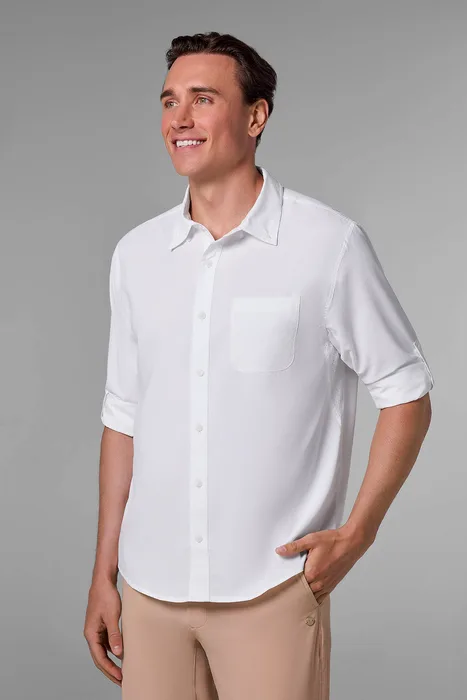
- Buy Coolibar Aricia Men's Long Sleeve Shirt A button-down travel and trail shirt rated UPF 50+ with a hidden sun flap at the collar.
- Buy Outdoor Research ActiveIce Spectrum Sun Long Sleeve Tee A stretchy polyester tee with a stated UPF 50+ rating and thumb holes, at the low end of the field.
- It depends Free Fly Men's Bamboo Lightweight Hoodie A soft bamboo-blend hoodie with full-neck coverage, but with a stated UPF of only 20+.
- Skip Simms Men's Guide Fishing Shirt A well-made fishing shirt whose maker page lists no UPF rating at all.
What actually matters
- UPF rating - This is the number that says how much UV the fabric blocks. A higher number means less reaches your skin, and 50+ is the top of the usual scale.
- Fabric blend - The fibers and weave decide how much light passes through. Synthetic knits and tight weaves are common in sun shirts, while thin cotton passes more.
- Wash durability - Makers rarely state how long a rating lasts. A wash claim, when printed, tells you the maker has thought about it.
- Fit - A shirt pulled tight across the shoulders stretches the weave and passes more light. A relaxed fit keeps the fabric in its tested state.
- Neck coverage - A collar flap, a hood or a crew neck each leave different skin exposed. Pick based on whether you wear a hat.
- Hand coverage - Thumb holes pull cuffs over the backs of your hands. These areas get a lot of sun on boats and trails.
- Color and ventilation - Darker or brighter colors can block more, and some makers give a different rating by color. Vents and light knits keep a long sleeve wearable in heat.
The specs, in plain English
Green flags vs red flags
Green flags
- A UPF number printed on the maker's own product page
- A listed fabric blend with percentages
- A stated wash or durability claim
- A collar flap, hood or thumb holes for neck and hands
- Fit described clearly with a size chart
Red flags
- Words like sun protection with no UPF number
- A blank or missing composition line
- Very thin, loose or all-cotton fabric
- A rating that varies by color with no explanation
- A fit so tight the fabric stretches across the shoulders
Who's who: the brands
- Coolibar - A sun-protection specialist that states UPF 50+ across its products and a wash cycle guarantee.
- Outdoor Research - An outdoor brand with a sun line that prints UPF ratings and fabric blends on product pages.
- Free Fly - A lifestyle fishing brand known for soft bamboo blend hoodies with lower stated ratings.
- Simms - A fishing brand with a wide range, including SolarFlex shirts that state UPF 50+.
How to read a listing without getting fooled
Start on the maker's own product page, not a retailer listing. Find the printed UPF number first, then the composition line, then any note about washing or color. Read the fit description and size chart, since a tight fit lowers protection. Check the collar or hood and whether the cuffs have thumb holes. If a page says sun protection or fast-dry with no number, treat the shirt as unrated, however good the pockets look. Compare the same details across shirts so you are judging like with like.
How much should you spend?
Sun shirts span the budget, mid-range and premium tiers. Budget tees from outdoor brands can state UPF 50+, so paying more is not required for the rating. Mid-range shirts add collars, vents and sometimes a wash claim. Premium fishing shirts add pockets and styling, and some do not print a rating, so confirm the number before you pay for the name.
Questions, answered
Is a dark shirt always safer than a white one?
Not always. The Skin Cancer Foundation says dark or bright colors absorb UV and help, but fabric and weave matter too. Some makers give a different rating by color, so check the page for the shade you are buying. A white shirt with a stated UPF 50+ beats a dark shirt with no rating.
Can I wear a cotton T-shirt instead?
You can, but it protects less. The Skin Cancer Foundation says a regular T-shirt can fall to a UPF of only 3 when wet. A rated synthetic shirt is the better choice for water days and sweaty hikes.
How do I wash a sun shirt?
Follow the care label. Coolibar advises cold water with gentle detergent, no bleach or fabric softener, and line drying. Heat and harsh products can wear a fabric faster. Replace a shirt that looks thin or has stretched out.
Do hoods and thumb holes really help?
They add coverage in places a basic shirt leaves open. A hood covers the neck and can fit over a cap, and thumb holes cover the backs of your hands. They are most useful on boats and open trails where sun hits from all angles.
Or jump to the head-to-head: Coolibar Aricia Men's Long Sleeve Shirt vs Outdoor Research ActiveIce Spectrum Sun Long Sleeve Tee.