Explained
Backpacking Tents, Explained
After reading this you will understand every number and buzzword on a backpacking tent spec sheet and know which ones actually matter for how you camp.
In this guide
A backpacking tent is a constant tug-of-war between four things that fight one another: how much it weighs, how much room it gives two people, how well it handles weather, and what it costs. The spec sheets are dense with jargon (trail weight, denier, freestanding, vestibules) and it is easy to buy on the wrong number. This guide decodes those terms so you can match a tent to the way you actually hike and camp.
The 30-second version
- Weight and livable space pull against each other. so the real skill is deciding how much comfort you are willing to carry rather than chasing the single lightest number.
- Freestanding versus trekking-pole is the biggest fork in the road, because it decides where you can pitch, how much you carry, and how much you spend.
- Two doors and two vestibules are close to essential for two people, since they end the climb-over-your-partner problem and keep gear out of the rain.
- Floor width at the foot matters more than peak height, because a sharply tapered floor is what makes a tent that sleeps two on paper feel cramped in reality.
- Lighter fabrics demand more care, so thin floors and canopies reward careful site selection or a footprint if you want them to last many seasons.
The products this guide is about
Our verdict on each, with the full reasoning on the companion review.
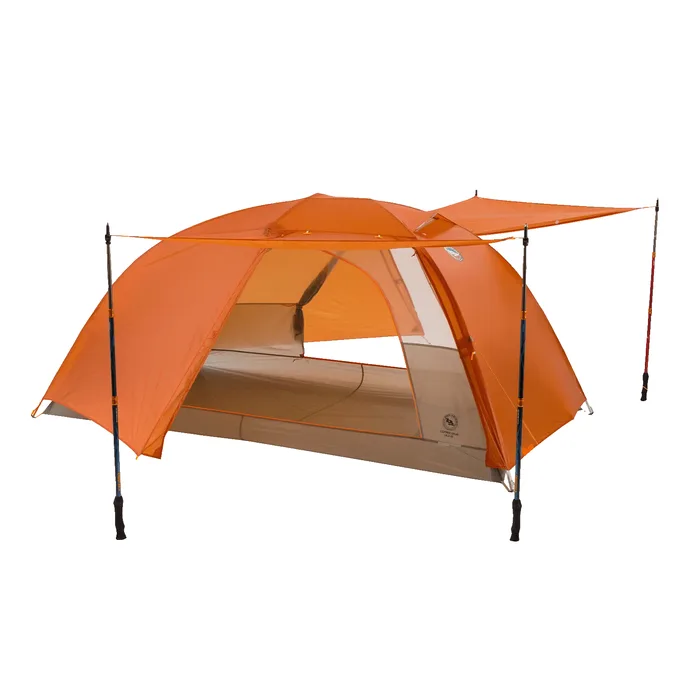
- Buy Big Agnes Copper Spur UL2 XL The roomy XL version of Big Agnes's best-known freestanding ultralight tent, with two doors and a 96 x 54 inch floor that fits two adults. Amazon
- Buy MSR Hubba Hubba LT 2 A symmetrical, storm-steady freestanding tent that is one of the roomiest in its weight range. Amazon
- It depends Durston X-Mid 2 A remarkably light, spacious trekking-pole tent that costs less than the freestanding leaders but asks you to bring poles.
- Skip NEMO Hornet OSMO 2P A well-built ultralight tent that most owners find genuinely cramped once two people and two pads are inside. Amazon
What actually matters
- Trail weight versus packed weight - the lightest headline number usually omits stakes, guylines, and the stuff sack, so compare like with like and expect real-world weight to sit higher.
- Freestanding versus trekking-pole design - freestanding tents pitch on rock, sand, or platforms without stakes; trekking-pole tents shave weight and cost but need stakeable ground and poles you already carry.
- Interior geometry - near-vertical walls and, crucially, floor width at the foot decide whether two adults on full-width pads genuinely fit.
- Doors and vestibules - for two people, two of each means separate entry and sheltered gear storage rather than one person crawling over the other.
- Weather protection - how the tent handles wind and rain depends on pole structure, fly coverage, and the gap between the fly and the ground.
- Packed size - a smaller pack volume matters nearly as much as weight when your pack is already full.
- Fabric durability - the denier of the floor and canopy tells you how much abuse the tent tolerates and how careful you need to be with your pitch.
The specs, in plain English
Green flags vs red flags
Green flags
- Two doors and two vestibules, so two people can enter and store gear independently
- A floor that stays reasonably wide at the foot rather than tapering sharply
- Near-vertical walls and a peak tall enough to sit up in for the tent's weight class
- A clearly stated packed weight, not just the flattering trail weight
- A design matched to your terrain: freestanding for variable ground, trekking-pole if you already carry poles and camp where stakes bite
Red flags
- A floor that tapers sharply from head to foot, which crowds two adults on full-width pads
- Only the minimum or trail weight advertised, with no packed weight to check against
- A very low headline weight achieved by shrinking the interior to near-solo dimensions
- Ultralight-denier fabrics marketed without any mention of careful pitching or a footprint
- A single tiny door and vestibule on a tent sold as a two-person shelter
Who's who: the brands
- Big Agnes - Known for livable, freestanding ultralight tents with boxy interiors, such as the Copper Spur line.
- MSR - Builds storm-steady, symmetrical freestanding tents that reviewers trust in wind, like the Hubba Hubba.
- Durston - A value-focused maker of light, roomy trekking-pole tents such as the X-Mid, popular with weight-conscious hikers.
- NEMO - Makes well-built ultralight shelters like the Hornet, though some two-person models run tight for two adults.
How to read a listing without getting fooled
Start by finding both the trail weight and the packed weight; if a listing shows only the lower minimum figure, assume real carry weight is higher and look for the honest number. Next, confirm the design type, because freestanding versus trekking-pole shapes everything else. Read the floor dimensions closely, especially the width at the foot, since that is where a two-person tent quietly becomes a one-and-a-half-person tent. Check that the door and vestibule count matches how many people will sleep inside. Note the fly-to-ground gap and fabric denier, which trade ventilation and weight against draft resistance and durability. Treat marketing adjectives like roomy or bombproof as prompts to go verify the underlying numbers, not as facts.
How much should you spend?
Backpacking tent cost is driven mostly by how many ounces the maker engineers out while keeping the tent livable and durable, so you are largely paying to save weight without sacrificing comfort. The value sweet spot for most people is a mid-tier freestanding tent that is genuinely comfortable for two, or a trekking-pole design if you already carry poles and want the lightest, most affordable option. Spending more is worth it when you hike far and often and will feel every ounce, or when you camp in demanding weather and want a proven structure. Spending more is not worth it when the premium buys only a small weight saving at the expense of interior room, or when a cheaper model already fits your terrain and trip length. Beware paying a premium price for a tent that is light because it is small.
Questions, answered
Do I really need a freestanding tent?
Not necessarily. Freestanding tents pitch on rock, sand, or wooden platforms without stakes, which is valuable in variable terrain. A trekking-pole tent is lighter and cheaper but needs stakeable, well-drained ground and poles you already carry, so choose based on where you camp.
How much should a good two-person backpacking tent weigh?
Current leaders land roughly between just under two pounds and three pounds trail weight. Under two pounds usually means a trekking-pole design or a tighter interior, while comfortable freestanding tents tend to cluster near the top of that range.
What is the difference between trail weight and packed weight?
Trail weight counts only the essentials, typically the tent body, fly, and poles, and is the number brands advertise. Packed weight includes stakes, guylines, and the stuff sack, so it is closer to what you actually carry. Compare packed weights to avoid surprises.
Why do some two-person tents feel too small?
Usually because the floor tapers sharply from head to foot and the walls slope inward. That geometry can leave two adults on full-width sleeping pads brushing the fabric, so check the floor width at the foot, not just the headline dimensions.
Will a lightweight tent hold up in a storm?
Good ones do. Freestanding tents with strong, symmetrical pole structures handle wind and rain well, and trekking-pole tents shed wind when staked out properly. Performance depends on the design and on pitching it tautly, so setup skill matters more than weight alone.
Are thin, low-denier fabrics a durability problem?
They can be. Very light floors and canopies puncture and abrade more easily, so choosing a smooth site or adding a footprint meaningfully extends their life. Treated with reasonable care, these tents still last many seasons.
Or jump to the head-to-head: Big Agnes Copper Spur UL2 XL vs MSR Hubba Hubba LT 2.