Explained
Ski Balaclavas, Explained
After reading, you'll understand how fabric, fit and coverage style change a balaclava, and which claims on a listing you can trust.
In this guide
A balaclava listing looks simple, but the claims can be vague. Warmth is rarely measured, fog claims are rare, and one size listings hide wide differences in fit. First-time buyers often pick on color and brand, then find the piece bulky under a helmet or sitting wrong against goggles. This guide explains the terms so you can read a product page critically.
The 30-second version
- Fabric sets the feel, with merino, polyester and fleece each behaving differently when you sweat.
- Thin beats thick under a helmet, because bulk at the temples and cheeks affects both comfort and goggle seal.
- Warmth words are not measurements, unless the maker publishes a number or a scale.
- Coverage style is a real choice, between a fixed hood, a hinged piece and a detachable face piece.
- Sizing is narrower than it looks, so check the stated head circumference on one size pieces.
The products this guide is about
Our verdict on each, with the full reasoning on the companion review.
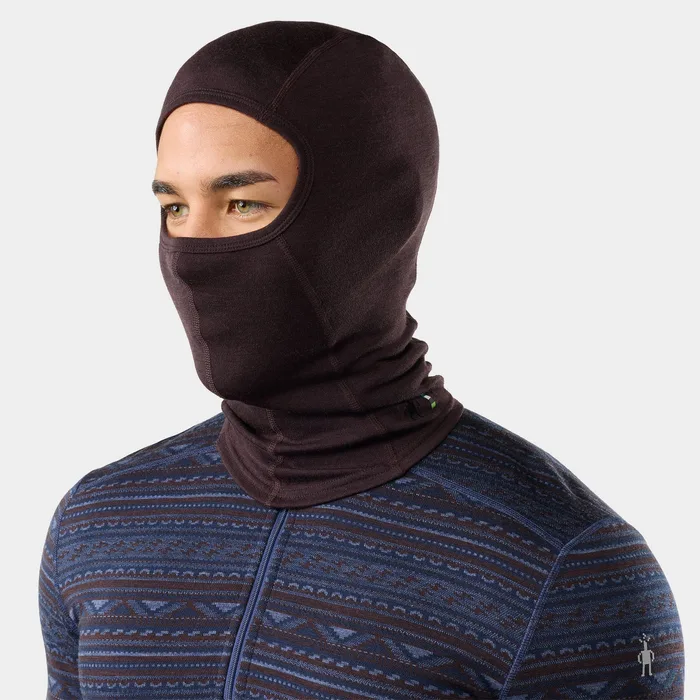
- Buy Smartwool Thermal Merino Balaclava A 100% merino, double-layered interlock knit balaclava with a stated care routine and a two-year satisfaction guarantee.
- Buy Turtle Fur Shellaclava (Comfort Shell) A synthetic double-layer hood with a micro fleece neck lining at a budget price and a stated weight of 2.8 ounces.
- It depends Seirus Magnemask Balaclava A full head, face and neck balaclava whose face piece detaches and re-attaches with magnetic seams.
- Skip Seirus Balaclava Prints A printed 200 weight Polartec fleece balaclava that converts between masque, hood and clava.
What actually matters
- Fabric content - This tells you how it will manage sweat and odor. Look for stated percentages, not just a trade name.
- Fabric weight - A gram or fleece weight indicates bulk. Heavier fabric adds warmth but takes room under a helmet.
- Layers - Double-layer designs add a second panel, often at the neck. They add warmth where wind hits, at the cost of some bulk.
- Face coverage style - Fixed hoods, hinged pieces and detachable face pieces trade simplicity for adjustability. Pick the one you will actually use.
- Sizing - Many balaclavas are one size. A stated head circumference lets you check fit before you buy.
- Breathability - Breath has to go somewhere. A piece that traps it near the nose can contribute to goggle fog.
- Care - Merino and synthetic pieces have different wash rules. Check the care label on the product page.
The specs, in plain English
Green flags vs red flags
Green flags
- A stated fiber percentage, such as 100% merino or 92% polyester and 8% spandex.
- A published weight or fabric weight.
- A stated head circumference range for one size pieces.
- Clear care instructions on the product page.
- A named guarantee or return policy with a time limit.
Red flags
- A trade name with no composition at all.
- The words thermal or warm with no number or scale.
- Claims of guaranteed fog-free goggles with no explanation.
- No sizing information beyond one size.
- A heavy convertible design sold as the best at everything.
Who's who: the brands
- Smartwool - Known for merino wool apparel and accessories, including a double-layered interlock knit balaclava.
- Turtle Fur - Known for a wide range of synthetic and fleece headwear, including multiple balaclava styles.
- Seirus - Known for a large range of balaclavas, headliners and magnetic mask designs.
- Outdoor Research - Known for balaclavas that show slider ratings for warmth, breathability and stretch.
- 686 - Known for snowboard-focused outerwear and hinged balaclavas, including collaboration prints.
How to read a listing without getting fooled
Start with the fabric line and look for a percentage, not just a trade name. Next, check for a stated weight or fabric weight, since that predicts bulk. Then look at sizing: a one size piece should come with a stated head circumference, and a multi-size piece with a size guide. Treat feature lists as hints, not proof. Words like warm, breathable and wicking appear on almost every listing, so favor pages that give numbers, care instructions and a guarantee. If a claim about fog or helmet fit is missing, assume none is being made.
How much should you spend?
Balaclavas fall into three rough tiers. The budget tier covers simple synthetic hoods and fleece pieces that do the basic job. The mid-range tier adds merino or more elaborate designs such as magnetic face pieces. The premium tier adds technical shell fabrics and tailored fit. Because none of the makers here publish numeric warmth ratings, paying more does not guarantee more warmth, so spend on fabric you prefer and fit you have checked.
Questions, answered
Can I wash a merino balaclava in a machine?
The Smartwool page lists machine wash cold on a gentle cycle and tumble dry low. Always follow the care label on your own piece. Merino generally prefers cooler washing and gentle drying, while polyester hoods are usually more forgiving.
How tight should a balaclava be?
Snug enough to stay in place under a helmet but not so tight that it pulls at your face or presses on your nose. Check the maker's head circumference or size guide. A fitted cut, like the Turtle Fur Shellaclava, may feel tighter than a looser knit.
Is a balaclava useful outside of skiing?
Yes, for cold, windy days on the bike, on a hike or around town. Some makers list UPF ratings, which can matter in bright snow. The main difference is that ski pieces are designed to sit under a helmet.
What is the difference between a balaclava and a neck gaiter?
A balaclava covers the head, face and neck in one piece, while a gaiter covers the neck and can be pulled up over the face. Gaiters are easier to vent. Balaclavas leave no gap between hood and collar. Our neck gaiter guide covers that route.
Or jump to the head-to-head: Smartwool Thermal Merino Balaclava vs Turtle Fur Shellaclava (Comfort Shell).