Explained
Bear Canisters, Explained
After reading this you'll know the difference between a canister being certified and being legal where you're going, how much volume you actually need, and which spec-sheet numbers are worth paying for.
In this guide
A bear canister is a rigid container that a bear can't open, chew through, or carry off, and in a growing number of parks and forests carrying one is not a suggestion but a permit condition. The category is unusual because the most important thing about a canister isn't how well it's built, it's whether the agency that manages your destination accepts it. Almost everything buyers get wrong here comes from confusing a national certification stamp with a local approved-container list, and those two things are not the same.
The 30-second version
- Certification and approval are two different things, and the one that decides whether you get turned around at a permit desk is the land manager's current published list, not the certification sticker.
- If the regulation says hard-sided, a certified fabric bag does not satisfy it no matter how good the fabric is, so read the exact wording rather than a summary.
- Budget volume by person-days, not by trip name, because toiletries, sunscreen, lip balm, and trash all have to go inside too, and that's the capacity everyone forgets to count.
- Diameter decides whether it rides inside your pack, so a narrower canister you can load horizontally beats a slightly lighter one that has to be strapped to the outside.
- A lid you can open cold, wet, and gloved is a safety feature, since owner reports consistently show people skip proper food storage on the exact nights an annoying canister is hardest to use.
The products this guide is about
Our verdict on each, with the full reasoning on the companion review.
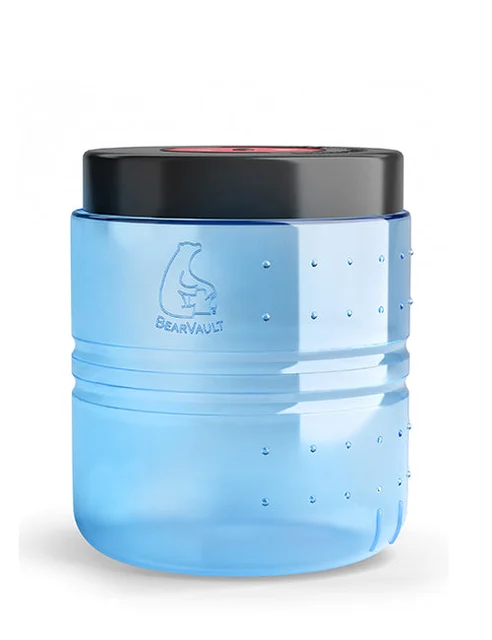
- Buy BearVault BV475 Trek The wide-mouth, see-through canister that covers the most trips and the most trailheads without a tool or a fight. Amazon
- Buy Ursack AllMitey Under ten ounces of Kevlar-reinforced fabric that stops bears and rodents, if the place you are going accepts it.
- It depends Counter Assault Bear Keg The most capacity and the toughest shell here, bought at a real cost in weight and bulk. Amazon
- Skip BearVault BV425 Sprint A well-made canister sized for a trip length most buyers do not actually take. Amazon
What actually matters
- Land-manager approval, not just certification. Interagency Grizzly Bear Committee (IGBC) certification is a national bear-resistance standard, and it's the right first filter. But it is not a permit. Individual national parks, national forests, wilderness areas, and state agencies publish their own approved-container lists, and those lists can be narrower than the IGBC list, can require hard-sided containers specifically, and can drop a model after local incidents. Check the current list for the exact unit you're entering, close to your trip date, because these lists change.
- Hard-sided versus soft-sided. A hard canister is rigid plastic that a bear can't crush or bite through; a soft container is high-strength fabric that you tie to a tree. Both types can hold certification, but a large share of the busiest destinations write their rules around rigid containers by name. Read the exact wording of the regulation rather than a summary, because 'bear-resistant container' and 'hard-sided canister' are not interchangeable phrases.
- Usable volume, not advertised volume. Marketing litres and packable litres differ. A domed lid, a narrow mouth, or a squat shape all cost you space you paid for. A useful planning figure from experienced backpackers is roughly 1.5 to 2 litres per person per day if you repackage into freezer bags and squeeze the air out, and noticeably less efficiency if you carry factory pouches and rigid bars.
- Volume per pound. This is the single number that separates a good canister from a mediocre one. Every canister is heavy; the question is how much food each pound buys you. The worst trades in the category are the smallest models, which shed only a few ounces while giving up close to half the capacity of the next size up.
- Diameter and length versus your pack. A narrower container is more likely to fit horizontally inside a larger pack, becoming part of the load. Wider or longer than that and it dictates your pack layout or rides outside, which is worse than the weight difference on the spec sheet.
- Lid mechanism and mouth width. Some lids open with press nubs or buttons and no tool; others need a coin or screwdriver in the slot. That sounds trivial and isn't: tool-free lids get opened every night, tool lids get skipped on the cold, wet, dark nights when storing food matters most. A wide mouth and translucent walls save you unpacking the whole thing to find breakfast.
- Long-term durability. Owner reports across seasons, not first impressions, are what reveal cracked lids, worn locks, hazed walls, and chewed fabric. A canister is a multi-year purchase that gets dropped, sat on, and occasionally worked over by an actual animal.
The specs, in plain English
Green flags vs red flags
Green flags
- The model appears by name on the current approved list for the specific park, forest, or wilderness you're entering, and the list has been updated recently.
- A clear IGBC certification number you can find in the listed specs, not just a vague claim that the product is 'bear-proof' or 'bear-tested'.
- A strong volume-to-weight ratio compared with siblings in the same product family, rather than the lightest model in a line.
- A diameter narrow enough to load horizontally inside your backpacking pack.
- A tool-free lid and a wide mouth, ideally with translucent walls so you can see what's inside.
- Multi-season owner reports that mention the container surviving drops, chewing, and being sat on, rather than only first-trip impressions.
Red flags
- Marketing that says 'bear-proof' or 'bear-safe' with no certification number and no mention of who tested it.
- A listing that leans on IGBC certification while staying quiet about hard-sided requirements, when the buyer's likely destination specifies rigid containers.
- A smallest-in-the-line model priced as the budget option: the ounces saved are usually tiny against the capacity lost, and most buyers replace it within a season or two.
- Advertised trip lengths with no note that scented toiletries and trash also have to fit inside, which is what quietly eats the capacity.
- Any suggestion to hang the canister from a rope or tie it off, which gives a bear leverage.
- Third-party sellers offering an unbranded 'bear canister' with no model name, since an unnamed container can't be matched against an approved list.
Who's who: the brands
- BearVault - The best-known maker of translucent polycarbonate canisters with tool-free screw-on lids, sold in a range of sizes from one-nighters up to long-trip volumes.
- Ursack - The main name in certified soft-sided bags, using cut-resistant fabrics; some models add a rodent-resistant layer, and all must be tied to a tree rather than left loose.
- Counter Assault - Best known for bear deterrent spray, and also makes a thick ABS canister aimed at maximum capacity and long-term abuse rather than low weight.
- Garcia - An old-school opaque, tool-opened cylinder often found in rental fleets; heavy, but very hard to kill.
- Wild Ideas (Bearikade) - Small-batch canisters handcrafted in California, aimed at weight-obsessed long-distance hikers, sold and rented direct at a large premium over plastic.
- Lighter1 - A small maker whose hard canister is built around an aluminum lid that doubles as a cooking pan; a niche pick, and one to verify against your destination's approved list.
How to read a listing without getting fooled
Start at the bottom of the listing, not the top. Find the model name and the certification number first, then go and check that exact model against the approved-container list published by the agency that manages your destination. Only after it clears that filter should you look at the marketing. Next, convert the advertised volume into person-days yourself using roughly 1.5 to 2 litres per person per day, and subtract space for toiletries, sunscreen, and trash rather than trusting the 'up to X days' claim, which assumes ideal repackaging. Then divide litres by pounds to compare models on equal terms, because a lighter canister that holds far less is usually a worse buy than a slightly heavier one that holds enough. Check the diameter against your pack's interior width before you check the height, since diameter is what determines whether the thing rides inside or outside. Finally, read the lid description carefully: phrases like 'requires a coin' or 'screwdriver slot' are describing your future in bad weather, and 'wide mouth' and 'translucent' are describing every morning you don't have to unpack the whole canister to find coffee. Ignore any claim of being 'bear-proof' with no test behind it, and be suspicious of any listing that talks about certification without ever naming the certifying body.
How much should you spend?
Bear canisters are a small category with a narrow spread, and the honest advice is that the mid-range hard-sided canister from a well-known maker is where the value sits for almost everyone. What drives cost is mostly material and volume: thick, abuse-resistant plastic and larger capacity cost more, and exotic materials like carbon fibre cost dramatically more for a modest weight saving. The cheapest option in any product line is usually the smallest one, and that is a trap, since the ounces it saves are small against the capacity it gives up and most buyers end up replacing it. Paying up is genuinely worth it in two situations: when you need a certified soft-sided bag because your destinations allow it and the weight saving changes how every mile feels, or when you need maximum durability for canoe trips, horse packing, and basecamps where a container gets thrown around for years. Paying up is not worth it if you're chasing the last few ounces on a canister you'll use a handful of nights a year, since the premium per ounce saved gets steep fast. Before committing at all, consider renting: ranger stations and outfitters near popular trailheads rent hard-sided canisters cheaply, which is the low-cost way to learn what size you actually need. And treat this as a multi-year purchase, because a well-chosen canister outlasts several packs.
Questions, answered
Is IGBC certification enough to make a canister legal everywhere?
No, and this is the single most common mistake in the category. IGBC certification means the container passed a live-bear test and is recognised nationally as bear-resistant, which makes it the right first filter. But individual parks, forests, wilderness areas, and state agencies publish their own approved-container lists, and those lists govern you. Some require hard-sided containers and exclude certified fabric bags entirely. Some have historically excluded specific models after local incidents. The practical answer is to check the current list for the exact unit you're entering, ideally within a few weeks of your trip.
Can I use a certified soft-sided bag where a bear canister is required?
Often not. Certification and acceptance are separate questions. Many high-use destinations write their regulations around hard-sided containers by name, and a fabric bag does not satisfy that wording regardless of what certification it holds. Manufacturers publish acceptance maps, which are a useful starting point, but treat the land manager's own current list as the authority. If the regulation says hard-sided, carry a rigid canister.
How much food actually fits in a bear canister?
Plan on roughly 1.5 to 2 litres per person per day if you repackage everything into freezer bags and squeeze the air out, and noticeably less if you carry factory packaging and rigid bars. That puts a mid-size canister at around five solo days and a large one at around three days for two people. The thing people forget to budget is that toothpaste, sunscreen, lip balm, trash, and anything else scented is usually required to go inside too, which quietly eats capacity you assumed was food space.
Where should the canister go at night?
On flat ground, well away from your tent and your cooking spot, and not near a cliff, a stream, or a steep slope where a bear can roll it somewhere you can't retrieve it. Don't tie a rope to it or hang it, since that gives a bear leverage. Where established sites provide metal food lockers, use the locker instead.
Should I rent a canister instead of buying one?
Renting makes good sense for a single trip, and many ranger stations and outfitters near popular trailheads rent hard-sided canisters cheaply. Buying wins once you expect two or three trips in bear country, or if you want a specific model rather than whatever's on the shelf. If you rent, confirm which model you'll get, because rental fleets often run older heavy designs, and reserve ahead in peak season.
Do canisters keep out anything other than bears?
Yes, and it matters more than most buyers expect. Rigid canisters keep chewing rodents out by design, and mice, chipmunks, and ground squirrels get at food on many trips where no bear shows up. Standard fabric bear bags stop bears but lose to rodents; only soft-sided models with a rodent-resistant layer address both. If you've ever woken up to a chewed food bag, that's the animal you're actually defending against most nights.
Or jump to the head-to-head: BearVault BV475 Trek vs Ursack AllMitey.