Explained
Bivy Sacks, Explained
After reading, you'll understand how to read a bivy spec sheet and tell a planned-use bivy from an emergency bag.
In this guide
Bivy listings pile up jargon: laminates, hydrostatic head, MVTR and hoops. First-time buyers often assume any waterproof cover works as a shelter. The bigger gap is between planned-use bivis and emergency film bags, which look similar but are built for different jobs. This guide covers the terms and where the numbers come from.
The 30-second version
- A bivy is a shell, so you still need a sleeping bag and a pad for warmth.
- Hydrostatic head and MVTR are ratings, best compared within one maker's range.
- A hoop buys headroom, and a flat design saves weight.
- Emergency film bags are backups, not planned shelters.
- Check the maker page, because a number that is not stated should not be assumed.
The products this guide is about
Our verdict on each, with the full reasoning on the companion review.
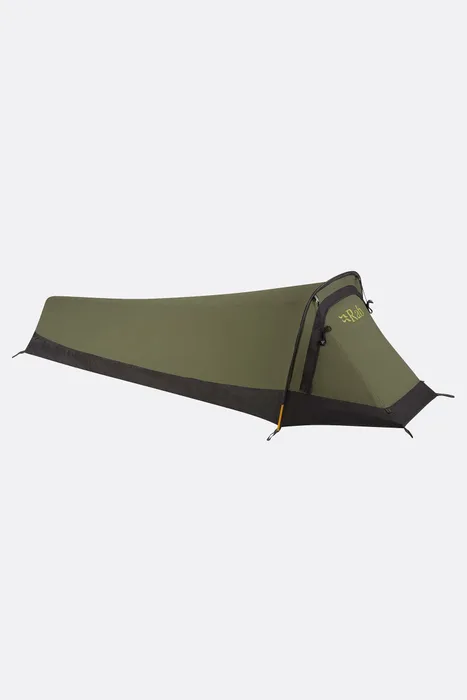
- Buy Rab Ridge Raider Bivi A hooped, freestanding single-skin bivi with a three-layer breathable shell and room to sit up.
- Buy Rab Storm Bivi A coated-nylon bivi with a stated spec sheet, sized for larger sleeping bags.
- It depends Rab Alpine Bivi The lightest shell in the group, built for alpine expeditions, with no stated hoop.
- Skip Titan Survival Emergency Sleeping Bag A reflective film bag that is fine as a backup and a weak substitute for a real bivy.
What actually matters
- Shell fabric - The fabric decides how well the bivy sheds rain and moves moisture. A named laminate with a stated denier is more checkable than a generic claim.
- Hydrostatic head - It is the stated waterproof rating, in millimeters of water column. Higher means more resistance, but only if the maker states it.
- MVTR - It stands for moisture vapor transmission rate, the stated breathability. A higher number means moisture can leave the shell more easily.
- Hooped or flat - A hoop holds fabric off your face and gives room to sit. A flat bivy is lighter but sits close.
- Weight and packed size - These decide whether a bivy is worth carrying instead of a tent. Look for maker-stated figures for the exact model.
- Stated use - Makers name uses like alpine expeditions or bikepacking. That tells you the conditions the design is aimed at.
- Stated limits - A page that names temperature limits and test methods lets you judge a claim. A page with none leaves you guessing.
The specs, in plain English
Green flags vs red flags
Green flags
- The maker names the shell fabric and denier.
- Hydrostatic head and MVTR are stated as numbers.
- Weight and packed size are given for the exact model.
- The page says whether the bivy has a hoop.
- A stated use that matches yours.
Red flags
- A page that says only waterproof with no rating.
- Heat claims with no test method.
- No limits or warnings on emergency gear.
- Weight listed without saying what is included.
- Reviews that praise the price but never mention a night out.
Who's who: the brands
- Rab - Lists a bivis category with hooped and flat models, and names the fabric and ratings on its pages.
- Outdoor Research - Lists Helium UL and Alpine XT bivies in its bivy sacks collection, with Pertex shell fabrics named.
- Terra Nova - Lists bivi bags including the Survival Bivi, Moonlite Lite Bivi and a hooped Jupiter Lite Bivi.
- Titan Survival - Sells reflective emergency sleeping bags and blankets for kits and go-bags.
How to read a listing without getting fooled
Start with the maker page, not a retail listing. Find the shell fabric name and denier, then the hydrostatic head and MVTR if given. Check weight against packed size, and see whether the page says hooped, freestanding or silent on structure. Look for the stated use and any limits. If a page leaves out a number, treat it as unknown. Reflective bags often list only weight, size and heat claims, so read those with extra care.
How much should you spend?
Budget tier covers reflective emergency bags, which are cheap and meant as backups. Mid-range covers coated-nylon bivis with stated waterproof ratings. Premium covers laminate shells and hooped designs with extra features. Spend more only when your use needs breathability or headroom, and do not pay premium prices for an emergency bag.
Questions, answered
What is the difference between a bivy and a bothy bag?
A bivy is a one-person shell that you sleep in, usually around a bag. A bothy bag is a group shelter you sit under. Terra Nova lists both categories on its site, so check which one a page is selling.
Do I need a groundsheet with a bivy?
Rab lists a bathtub base on its bivis, so the floor is built in. A footprint is an extra layer some people add for wear. Check the base fabric on the page, such as the 70D base on the Storm Bivi.
Is a heavier bivy more durable?
Not necessarily. Weight depends on the fabric, the hoop and the extras. Compare the stated denier and face fabric rather than the weight alone.
How do I clean a bivy?
Follow the care label from the maker, since the DWR finish and tape can be damaged by harsh treatment. Rinse mud off and dry it fully before storing it so it does not stay damp.
Or jump to the head-to-head: Rab Ridge Raider Bivi vs Rab Storm Bivi.