

Outdoors & Fitness
The Best Bivy Sacks: 4 Compared (and One to Skip)
We compared three Rab bivis and one reflective emergency bag on shell fabric, weight, packed size, hoop design and what the maker says each is for.
The short version
The Rab Ridge Raider Bivi is the best overall because Rab states a hoop, a three-layer breathable shell and a mesh door, so it works like a tiny tent. The Rab Storm Bivi is the value pick, with a coated nylon shell and a stated spec sheet for a much lower spend. The Rab Alpine Bivi depends: at 440 g it is the lightest here, but Rab does not state a hoop and it suits climbers who already own a bag and pad. Skip the Titan Survival Emergency Sleeping Bag as a planned bivy. It is a reflective film bag that is fine as a backup, but its page gives no test method and no limits. None of these replaces a sleeping bag or pad. Best for: backpackers and bikepackers who want rain protection lighter than a tent.
Our picks at a glance
- Rab Ridge Raider Bivi - Buy. A hooped, freestanding single-skin bivi with a three-layer breathable shell and room to sit up.
- Rab Storm Bivi - Buy. A coated-nylon bivi with a stated spec sheet, sized for larger sleeping bags.
- Rab Alpine Bivi - It depends. The lightest shell in the group, built for alpine expeditions, with no stated hoop.
- Titan Survival Emergency Sleeping Bag - Skip. A reflective film bag that is fine as a backup and a weak substitute for a real bivy.
The verdict in 30 seconds
What mattered most
- Type
- Weight (maker stated)
- Packed size
- Shell fabric
- Hydrostatic head stated
- Breathability stated (MVTR)
A bivy sack is a waterproof shell for your sleeping bag, and the useful ones range from a flat cover to a hooped one-person shelter. The field splits into planned-use bivis built from breathable laminates and emergency film bags meant as a last resort. We compared three Rab bivis from current maker pages with one reflective emergency bag, and left out models listed as out of stock when we looked. Specs here come only from what each maker states.
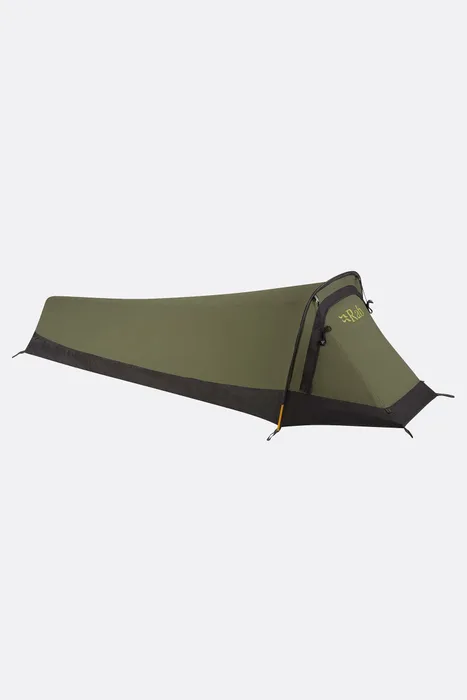
A hooped, freestanding single-skin bivi with a three-layer breathable shell and room to sit up.
Best for: Hikers and bikepackers who want rain protection and sitting room without carrying a tent.
- Rab states an overhead hoop at the head end plus a micro pole at the foot, so the fabric stays off your face.
- The 15D Pertex Shield Air shell is stated at 15,000 mm hydrostatic head and 20,000 g/m2/24h MVTR.
- A zipped entry with an internal mosquito mesh door, nine DAC V-stakes and three guy lines are included.
- At 890 g it weighs roughly double the Alpine Bivi.
- It packs to 32 x 15 cm, much bigger than a flat bivy.
- It is the most expensive way to avoid carrying a tent.
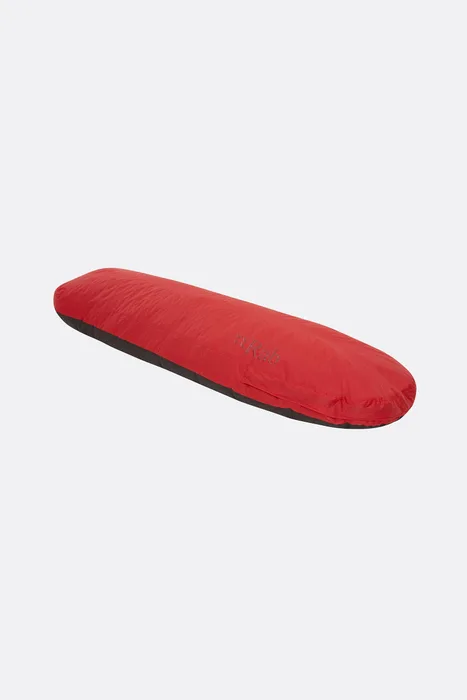
A coated-nylon bivi with a stated spec sheet, sized for larger sleeping bags.
Best for: Buyers who want a real waterproof bivy with published numbers and a lower spend than the laminate models.
- The 40D nylon top is stated at 10,000 mm hydrostatic head with a tougher 70D nylon base also stated at 10,000 mm.
- Rab says the 3D construction is meant to fit larger sleeping bags.
- It packs to 25 x 12 cm at 547 g, and the maker names bikepacking, mountaineering and multi-day treks as uses.
- The shell is a coated fabric stated at 10,000 g/m2/24h MVTR, below the laminate bivis from the same brand.
- The maker page does not say whether it has a hoop or pole.
- It is heavier than the Alpine Bivi by roughly 100 g.
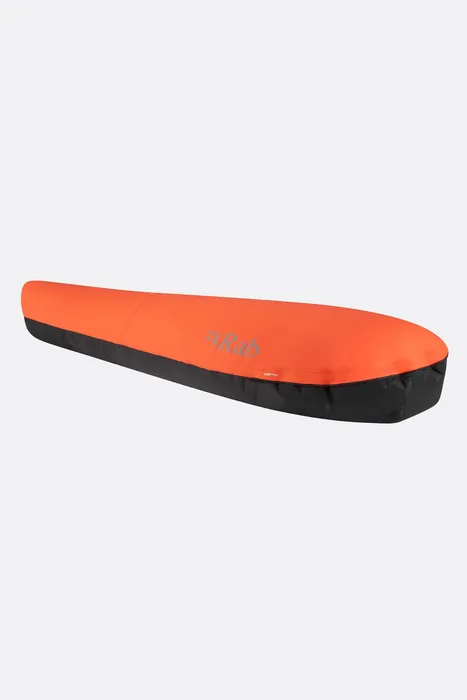
The lightest shell in the group, built for alpine expeditions, with no stated hoop.
Best for: Climbers and fast-and-light campers who already carry a bag and pad and want the least weight.
- It weighs 440 g (15.5 oz) and packs to 25 x 12 cm.
- It uses the same 15D Pertex Shield Air shell as the Ridge Raider, with the same 15,000 mm and 20,000 g/m2/24h ratings.
- Rab names multi-day alpine expeditions as the use and lists a bathtub base.
- The maker page does not say whether it has a hoop or pole, so plan for little headroom.
- The page lists no mesh door or bug screen.
- It is a premium spend for what is essentially a shell around a bag you already own.
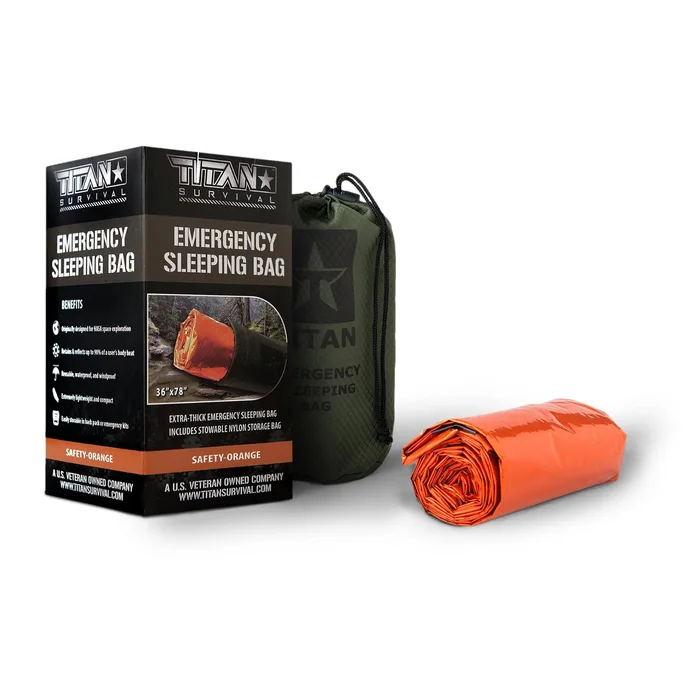
A reflective film bag that is fine as a backup and a weak substitute for a real bivy.
Best for: Someone building a cheap backup for a first aid or car kit, not a shelter to sleep in on purpose.
- It weighs 4.3 oz (120 g) including its stuff sack.
- It packs to 6 x 3.25 x 3.25 in, small enough for a go-bag or glovebox.
- The maker lists use as a liner, bivy cover, ground cover or distress signal, and it comes in safety orange.
- The page gives no test method behind its claims of retaining up to 90 percent of body heat and testing down to 40 degrees F.
- The page carries no safety warnings or limits.
- A film shell does not breathe like a laminate fabric, and the page does not address moisture build-up.
- Unrolled it measures 36 x 78 in, which the maker lists as designed for a single adult.
| Criteria | Rab Ridge Raider Bivi Top pick | Rab Storm Bivi | Rab Alpine Bivi | Titan Survival Emergency Sleeping Bag |
|---|---|---|---|---|
| Verdict | Buy it | Buy it | It depends | Skip it |
| Best for | Hikers and bikepackers who want rain protection and sitting room without carrying a tent. | Buyers who want a real waterproof bivy with published numbers and a lower spend than the laminate models. | Climbers and fast-and-light campers who already carry a bag and pad and want the least weight. | Someone building a cheap backup for a first aid or car kit, not a shelter to sleep in on purpose. |
| Price tier | $$$ · premium | $$ · mid-range | $$$ · premium | $ · budget |
| Type | Hooped single-skin bivi | Bivi, hoop not stated | Bivi, hoop not stated | Reflective film emergency bag |
| Weight (maker stated) | 890 g (31.4 oz) | 547 g (19.3 oz) | 440 g (15.5 oz) | 120 g (4.3 oz) with stuff sack |
| Packed size | 32 x 15 cm | 25 x 12 cm | 25 x 12 cm | 6 x 3.25 x 3.25 in |
| Shell fabric | 15D Pertex Shield Air, 3-layer | 40D nylon, PU coated | 15D Pertex Shield Air, 3-layer | Aluminized polyolefin film |
| Hydrostatic head stated | 15,000 mm | 10,000 mm | 15,000 mm | None stated |
| Breathability stated (MVTR) | 20,000 g/m2/24h | 10,000 g/m2/24h | 20,000 g/m2/24h | None stated |
| Stated dimensions | 240 x 80 cm, 60 cm head height | 230 x 80 cm | 230 x 80 cm | 36 x 78 in unrolled |
| Stated use | Hiking and biking without a tent | Mountaineering, bikepacking, multi-day treks | Multi-day alpine expeditions | Emergency heat retention and shelter |
Which one is right for you?
- Hikers and bikepackers who want rain protection and sitting room without carrying a tent. Buy it Rab Ridge Raider Bivi
- Buyers who want a real waterproof bivy with published numbers and a lower spend than the laminate models. Buy it Rab Storm Bivi
- Climbers and fast-and-light campers who already carry a bag and pad and want the least weight. It depends Rab Alpine Bivi
- Someone building a cheap backup for a first aid or car kit, not a shelter to sleep in on purpose. Skip it Titan Survival Emergency Sleeping Bag
How we judged the field
Five things matter in a bivy. First is the shell: the fabric and its stated waterproof rating (hydrostatic head) and breathability rating (MVTR), because a shell that keeps rain out but traps your breath leaves you damp anyway. Second is weight and packed size, since the point of a bivy is to carry less than a tent. Third is structure: hooped designs hold fabric off your face, flat designs do not. Fourth is the stated use, so an expedition bivy is not judged as an emergency bag. Fifth is whether the maker’s page states limits. For anything safety-adjacent, a number that is not on the maker page is left out.
The field splits into planned-use bivis built from laminates or coated nylon, and reflective film bags sold for emergencies. We picked three Rab bivis because their pages state fabric, weight, packed size and dimensions, and one film bag as a contrast. Outdoor Research lists a Helium UL Bivy and an Alpine XT Bivy, but both showed as out of stock when we looked, so they are not picks. Terra Nova and Mountain Equipment pages did not give enough verified detail to rank.
The Ridge Raider is the one to buy if you want a bivy that behaves more like a one-person shelter than a sleeping bag cover. Rab describes it as a freestanding, single-skin bivi with an overhead hoop at the head end and a short micro pole at the foot, so the fabric stays off your face and you can sit up and get dressed. The shell is 15D Pertex Shield Air, a three-layer laminate that Rab rates at 15,000 mm hydrostatic head and 20,000 g/m2/24h MVTR, over a bathtub base with taped seams. It adds a zipped entry with an internal mosquito mesh door, nine DAC V-stakes and three guy lines. The cost is size and weight: 890 g (31.4 oz) and a 32 x 15 cm pack, roughly double the weight of the Alpine Bivi. Rab states 240 cm length, 80 cm shoulder width and 60 cm head height. It suits hikers and bikepackers who want rain protection without a tent and will carry extra grams for room to breathe.
The Storm Bivi is the value pick because it keeps the useful parts of a mountain bivi and drops the premium laminate. Rab lists a 40D nylon top with a PU coating, 10,000 mm hydrostatic head and 10,000 g/m2/24h MVTR, over a tougher 70D nylon base also stated at 10,000 mm. That is a coated fabric, not a three-layer breathable laminate, so expect it to move less moisture than the pricier Rab bivis. Weight is 547 g (19.3 oz) and it packs to 25 x 12 cm, with a stated 230 cm length and 80 cm shoulder width. Rab says the 3D construction is meant to fit larger sleeping bags and names mountaineering, bikepacking and multi-day treks as uses. The maker page does not say whether it has a hoop or pole, so assume a flat design and plan for fabric close to your face. It is for the buyer who wants a real waterproof shell with a published spec sheet and a lower spend than the laminate models.
The Alpine Bivi is the lightest verified bivy in this group at 440 g (15.5 oz), and it packs to 25 x 12 cm. Rab uses the same 15D Pertex Shield Air three-layer shell as the Ridge Raider, with the same 15,000 mm and 20,000 g/m2/24h ratings, plus a 40D nylon lining. The page lists 230 cm length and 80 cm shoulder width, a sculpted shape and a bathtub base, and names multi-day alpine expeditions as the use. What it does not state is whether it has a hoop or pole, so we treat it as a low design. That is the trade: you save around 450 g against the Ridge Raider but give up the stated headroom and the mesh door the Ridge Raider lists. It also costs a lot for what is, in effect, a shell. It is right for climbers and fast-and-light alpine campers who already carry a bag and pad and want the minimum weight. It is wrong for anyone who dislikes confined spaces or expects to wait out days of rain inside.
Titan Survival’s Emergency Sleeping Bag is a reflective film bag, a different product from the other three. It is a fair buy as a few ounces in a kit and a weak choice as a bivy you plan to sleep in. The maker page says it is an aluminized polyolefin it also calls Mylar, 35 to 40 microns thick against what it calls a 19 micron industry average. It weighs 4.3 oz (120 g) with its stuff sack and unrolls to 36 x 78 in. The page claims the bag retains up to 90 percent of body heat and was tested down to 40 degrees F, but gives no test method. It lists uses as a liner, bivy cover, ground cover, poncho and signal, and carries no safety warnings or limits. A film shell does not breathe the way the laminate bivis do, so moisture can build up inside over a night, and the page does not address that. Keep one as a backup in a first aid or car kit. Do not substitute it for the shelter and sleep system you would otherwise carry.
Rab Ridge Raider Bivi vs Rab Storm Bivi: which should you buy?
The Ridge Raider and the Storm Bivi are both planned-use bivis, and the gap is structure and shell. The Ridge Raider adds a stated hoop, a laminate rated 15,000 mm and 20,000 g/m2/24h, a mesh door and more than 300 g of extra weight. The Storm Bivi uses coated nylon rated 10,000 mm and 10,000 g/m2/24h, with no stated hoop, and it is lighter at 547 g.
Choose the Ridge Raider if you will spend real hours inside: wet weather, long nights, a need to sit up. Choose the Storm Bivi if you want a waterproof cover for mostly short or fair-weather nights and care about spend. Either way, the bivy is only the shell, so match it to the sleeping bags and sleeping pads we cover separately.
What to look for
- Stated shell fabric: a maker that names the laminate and its denier is giving you something to check. A bare word like waterproof is not a spec.
- Hydrostatic head and MVTR: the first is the stated waterproof rating in millimeters, the second is the stated breathability. Compare them within the same brand’s listings.
- Hoop or flat: a hoop gives headroom and keeps fabric off your face, while a flat design is lighter. Check that the page actually states which one you are getting.
- Weight and packed size: the numbers should be stated by the maker, in the same units you are comparing, and for the exact model.
- Stated use: an expedition bivi, a bikepacking bivi and an emergency film bag are built for different jobs. Match the stated use to yours.
- Limits on the page: for emergency gear, a maker that states temperature limits and test methods is easier to trust than one that only lists claims.
Our final take
Buy the Ridge Raider if you want a bivy that you can actually live in, and the Storm Bivi if you want a waterproof shell for less. Pick the Alpine Bivi only if you are an alpine or fast-and-light user who knows a hoopless shell is what you want. Treat the Titan film bag as a backup you hope never to need, not as a shelter. A bivy does not replace a tent for long storms or a pad and bag for warmth, so budget for those first.
Questions, answered
Is a bivy sack warm enough on its own?
A bivy shell blocks wind and rain, and that keeps your sleeping bag working, but none of the Rab pages sell it as insulation. Warmth still comes from your sleeping bag and the pad under you, so pair a bivy with both. Our sleeping bags and sleeping pads reviews cover those pieces. The Titan film bag claims heat retention, but its page gives no test method.
Should I buy a hooped or a flat bivy?
A hoop lifts fabric off your face and gives room to sit up and change, which matters in several days of rain. Rab states a hoop and micro pole on the Ridge Raider. A flat design saves weight and packs smaller, and the Alpine Bivi and Storm Bivi pages do not state a hoop. If you expect to spend long hours inside, pay for the hoop.
Will I get condensation inside a bivy?
It can happen in any single-skin shelter, because your breath and body moisture have to escape through the fabric or vents. The three-layer shells here are stated at 20,000 g/m2/24h MVTR, against 10,000 for the coated Storm Bivi. Higher breathability helps but does not remove the problem. Open vents when conditions allow and keep your bag out of contact with the wall.
Can I use a reflective emergency bag as my bivy?
You can, but treat it as a backup. Titan's page lists uses such as bivy cover and liner, yet it states no limits and no test method for its heat claims. A film shell does not breathe the way the laminate bivis do, so moisture can collect inside. Carry one in a first aid or car kit, and see our first aid kits review for what else belongs there.
Is a bivy a replacement for a tent?
For one person on a dry-ish trip, yes, and you save weight. For long storms or sharing space, no. A tent gives room for gear, cooking in the entrance and a second person. Our backpacking tents review covers the alternative if you want that space.
Deciding between the top two? See our head-to-head: Rab Ridge Raider Bivi vs Rab Storm Bivi.
More Outdoors & Fitness reviews
 The Best Camp Cooksets: 4 Compared (and One to Skip)
  The Best Camp Cutlery: 4 Compared (and One to Skip)
  The Best Camp Mugs: 4 Compared (and One to Skip)
  The Best Camp Pillows: 4 Compared (and One to Skip)
  The Best Camp Showers: 4 Compared (and One to Skip)
  The Best Camp Towels: 4 Compared (and One to Skip)