

Outdoors & Fitness
The Best Balaclavas for Skiing and Snowboarding: 4 Compared (and One to Skip)
We compared four ski and snowboard balaclavas on fabric, layers, face coverage style, sizing, care and what the makers actually claim about warmth.
The short version
Smartwool's Thermal Merino Balaclava is the best overall because it is 100% merino in a double-layered interlock knit, with a clear care routine and a two-year guarantee. Turtle Fur's Shellaclava in Comfort Shell is the value pick, a 2.8 ounce synthetic hood with a micro fleece neck lining. The Seirus Magnemask Balaclava depends on how you ride, because its magnetic face piece is great if you pull your mask up and down all day and pointless if you do not. The Seirus Balaclava Prints is the one to skip, since its 200 weight fleece is bulky under a helmet and its claims are generic. None of the four makers states a numeric warmth rating for these models, so treat every warmth word as marketing. Best for: skiers and snowboarders who want a thin, helmet-friendly face cover for resort days.
Our picks at a glance
- Smartwool Thermal Merino Balaclava - Buy. A 100% merino, double-layered interlock knit balaclava with a stated care routine and a two-year satisfaction guarantee.
- Turtle Fur Shellaclava (Comfort Shell) - Buy. A synthetic double-layer hood with a micro fleece neck lining at a budget price and a stated weight of 2.8 ounces.
- Seirus Magnemask Balaclava - It depends. A full head, face and neck balaclava whose face piece detaches and re-attaches with magnetic seams.
- Seirus Balaclava Prints - Skip. A printed 200 weight Polartec fleece balaclava that converts between masque, hood and clava.
The verdict in 30 seconds
What mattered most
- Fabric
- Construction
- Stated weight
- Face coverage style
- Sizing
- Maker's warmth claim
A balaclava does three jobs at once: it blocks wind on your face, adds a little warmth under a helmet, and has to leave your goggles room to seal. Most listings promise all three and prove none, because warmth and fog-resistance claims are rarely measured. We picked four current balaclavas from makers with working product pages and compared the things they actually state. For neighbouring gear, see our guides to neck gaiters, beanies, ski helmets and ski goggles.
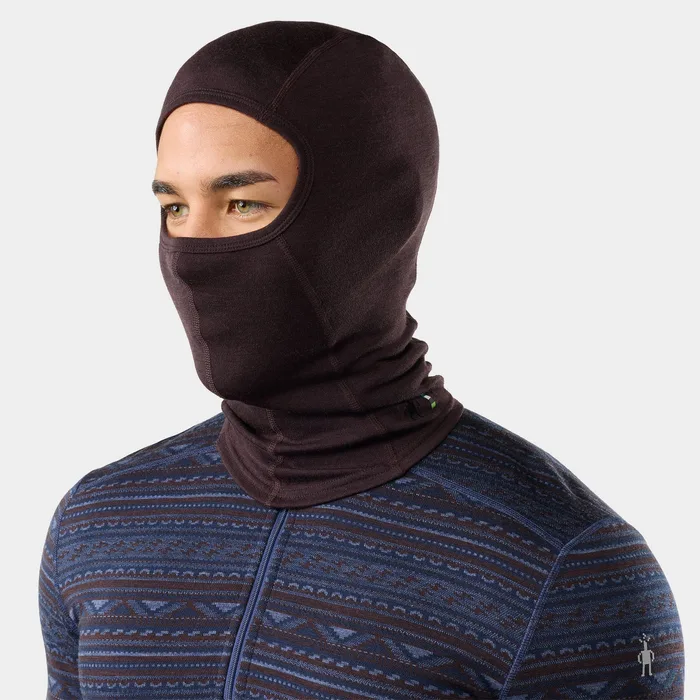
A 100% merino, double-layered interlock knit balaclava with a stated care routine and a two-year satisfaction guarantee.
Best for: Skiers and boarders who want a natural-fiber balaclava that stays comfortable and does not hold odor across a multi-day trip.
- The fabric is listed as 100% merino wool, so there is no synthetic blend to explain away and the maker describes it as odor resistant and moisture managing.
- The double-layered interlock knit is a single thin piece, which suits sliding under a helmet liner without much bulk.
- Smartwool lists clear machine-wash instructions and backs the product with a two-year guarantee and 30-day returns on unused items.
- It is sold in one size only, with a stated head circumference of 21.5 to 23.5 inches, so very small or large heads may not fit well.
- No gram weight or numeric warmth rating is published, so 'thermal' is a marketing word rather than a measurement.
- The page does not describe face coverage in detail, so you judge the mouth and nose panel from photos.
- Stock looked uneven on the product page, with some colors flagged as low or out of stock.
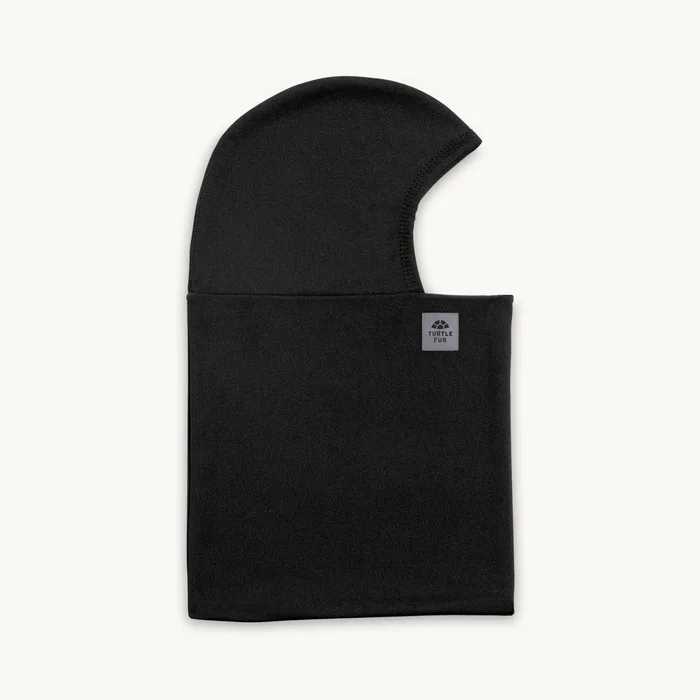
A synthetic double-layer hood with a micro fleece neck lining at a budget price and a stated weight of 2.8 ounces.
Best for: Anyone who wants a dependable synthetic balaclava for resort days without spending much.
- The shell is listed as 92% polyester and 8% spandex with a fully lined 100% polyester micro fleece neck, so you know exactly what you are wearing.
- At 2.8 ounces and described as wicking, breathable and quick drying, it is a practical choice for sweaty days on the hill.
- It sits at the budget end of the field, so replacing a lost or worn one is not a big decision.
- It is one size and listed as a fitted cut, so the size guide matters more than usual.
- The page makes no claim about goggle fogging or helmet compatibility.
- Care instructions are not given on the product page.
- There is no stated warmth rating, only the double-layer and fleece-neck description.
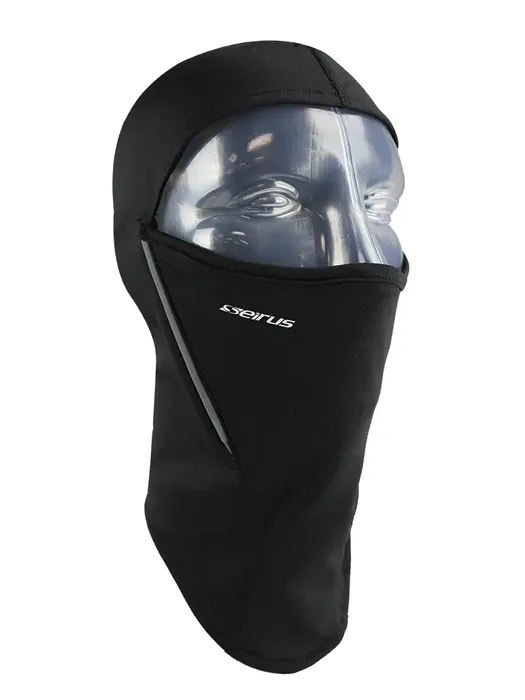
A full head, face and neck balaclava whose face piece detaches and re-attaches with magnetic seams.
Best for: Riders who constantly pull a mask down and up and would rather click it than stretch it.
- Magnetic seams let you pull the face piece down and snap it back, which helps when you want air on the chair lift and cover on the descent.
- The face piece is fixed at the bottom, so the maker says it cannot get away from you when it is open.
- It comes in three size bands (XS, SM/MD, LG/XL), which is more fit range than the one-size competitors.
- The only fabric information is the name Dynamax with dual-density micro denier Thermax, with no fiber percentages.
- Magnet type, strength and how it behaves with gloves are not described on the page.
- No warmth rating, weight or helmet and goggle claims are stated.
- A seam and a magnet add parts that a plain knit hood does not have, so there is more to snag or lose.
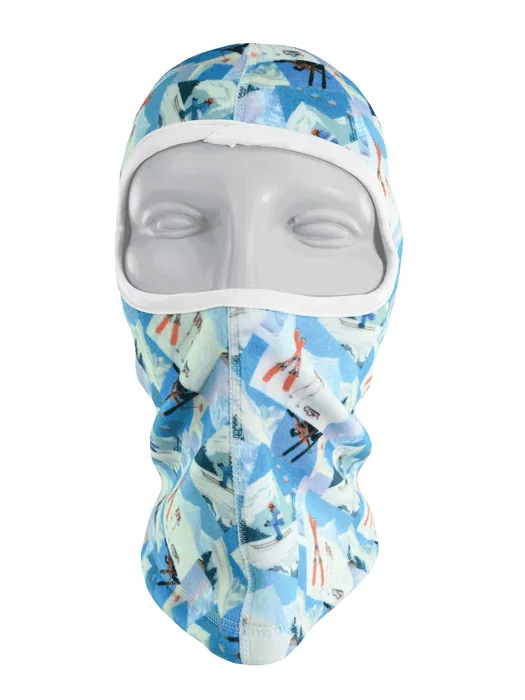
A printed 200 weight Polartec fleece balaclava that converts between masque, hood and clava.
Best for: People who want a fun pattern for casual cold days and do not mind the bulk.
- The maker lists it as Polartec fleece with 4-way stretch and flat seams, so it is not a shapeless novelty item.
- The three configurations (masque, hood, clava) give some flexibility in coverage.
- The prints are wide-ranging, which suits people buying for looks.
- The page lists the fleece at 200 weight, which is heavier than a thin knit and takes up more room under a helmet and around goggle foam.
- Stated claims are general (warm, wicking, breathable) with no warmth rating, weight or helmet and goggle claims to check against.
- The printed range is a styling choice and not a performance one, and the page gives no fit measurements in text.
- The 3-in-1 design is a trade-off, since a piece built to convert is rarely the best at any one fit.
| Criteria | Thermal Merino Balaclava Top pick | Shellaclava (Comfort Shell) | Magnemask Balaclava | Balaclava Prints |
|---|---|---|---|---|
| Verdict | Buy it | Buy it | It depends | Skip it |
| Best for | Skiers and boarders who want a natural-fiber balaclava that stays comfortable and does not hold odor across a multi-day trip. | Anyone who wants a dependable synthetic balaclava for resort days without spending much. | Riders who constantly pull a mask down and up and would rather click it than stretch it. | People who want a fun pattern for casual cold days and do not mind the bulk. |
| Price tier | $$ · mid-range | $ · budget | $$ · mid-range | $ · budget |
| Fabric | 100% merino wool | 92% polyester, 8% spandex shell; micro fleece neck lining | Dynamax dual-density micro denier Thermax (no percentages listed) | Polartec fleece, 200 weight |
| Construction | Double-layered interlock knit | Double layer, fleece-lined neck | Magnetic seams on a detachable face piece | Flat seams, 4-way stretch |
| Stated weight | Not listed | 2.8 oz | Not listed | Not listed (fabric weight 200) |
| Face coverage style | Full balaclava (photo shows eye opening and neck) | Fitted hood with fleece-lined neck | Full head, face and neck; face piece snaps down | Converts to masque, hood or clava |
| Sizing | One size, 21.5 to 23.5 in head | One size, fitted | XS, SM/MD, LG/XL | SM/MD, LG/XL |
| Maker's warmth claim | 'Thermal'; no rating | Double layer; no rating | 'Thin, warm'; no rating | 'Warm'; no rating |
| Goggle or helmet claim | None stated | None stated | None stated | None stated |
| Care and returns | Machine wash cold; 2-year guarantee | Care not on page; free returns | Care page linked | Care page linked |
Which one is right for you?
- Skiers and boarders who want a natural-fiber balaclava that stays comfortable and does not hold odor across a multi-day trip. Buy it Smartwool Thermal Merino Balaclava
- Anyone who wants a dependable synthetic balaclava for resort days without spending much. Buy it Turtle Fur Shellaclava (Comfort Shell)
- Riders who constantly pull a mask down and up and would rather click it than stretch it. It depends Seirus Magnemask Balaclava
- People who want a fun pattern for casual cold days and do not mind the bulk. Skip it Seirus Balaclava Prints
How we judged the field
Five things matter in a ski balaclava. Fabric comes first, because merino, polyester and fleece behave differently once you sweat. Fit under a helmet is second, since bulk at the temples and cheeks affects both comfort and goggle seal. Third is breathability and goggle fogging, where the key variable is where your breath goes. Fourth is face coverage style, from a plain hood to a hinged or detachable face piece. Fifth is the warmth claim the maker actually states, which for most balaclavas is a word, not a number.
The field splits into thin knit hoods (merino or polyester), heavier fleece pieces, and convertible or hinged designs with extra parts. We picked one from each of those groups, using only models whose maker pages we loaded, and leaned on what the pages state: fabric content, construction, weight, sizing and care. Several brands we looked at, including Outdoor Research and 686, had their balaclavas shown as out of stock or sold out at the time, so we did not pick them. Neighbouring gear such as neck gaiters, beanies, helmets and goggles is covered in our other guides.
The Smartwool Thermal Merino Balaclava is the cleanest answer to the fabric question in this field. The maker lists it as 100% merino wool in a double-layered interlock knit, and describes it as moisture managing, temperature regulating and odor resistant. That matters on a three-day trip, where a synthetic hood can start to smell by the second afternoon. The fabric is a single thin knit shaped as a balaclava, so it should layer under a helmet far more easily than a bulky fleece. The trade-offs are real. It comes in one size only, with a stated head circumference of 21.5 to 23.5 inches, so check the tape measure before buying. Smartwool publishes no gram weight and no numeric warmth rating, so the word thermal is a description, not a number. The upside is a clear care routine (machine wash cold, tumble dry low) and a two-year guarantee plus 30-day returns on unused items. Stock on the page looked uneven, so confirm your color before planning around it. It is for the person who wants natural fiber against the face and will pay a bit more for it.
The Turtle Fur Shellaclava in Comfort Shell is the sensible value pick. The shell is listed as 92% polyester and 8% spandex, and the neck is fully lined with 100% polyester micro fleece, so the thin hood covers the head and the extra layer sits where wind hits hardest. Turtle Fur states a weight of 2.8 ounces and tags it as moisture wicking, breathable and quick drying, which are the right qualities for a hood that spends the day under a helmet. It is a one size, fitted cut, and the maker links a size guide, so it is worth using before you order. There is no claim about goggle fogging or helmet compatibility, and no warmth rating, so expect a layer that cuts wind and adds modest warmth rather than a cold-weather specialist. Care instructions are not on the product page, so check the label. It is the one to buy if you want a reliable synthetic balaclava, possibly in more than one color, for resort days without a big spend.
The Seirus Magnemask Balaclava is the one with a gimmick that actually does something. The face piece uses magnetic seams, so you can pull it down and snap it back, and Seirus says it is fixed at the bottom so it cannot run away on you. The page calls it full head, face and neck protection, and describes it as thin, warm, wicking, wind-blocking and stretchy. The fabric is named only as Dynamax, a dual-density micro denier Thermax, with no percentages, so you cannot compare it to the others on fiber. Sizes run XS, SM/MD and LG/XL, which is helpful for smaller faces. Missing from the page are a warmth rating, a weight, magnet strength, and any statement about goggle fog or helmet fit. That makes it a bet on the mechanism. If you often pull a mask down to talk or breathe on the lift and then pull it up again, the magnets are the whole point. If you wear a balaclava pulled up all day, a plain knit does the same job with fewer parts.
The Seirus Balaclava Prints is the one to skip for most skiers, and the reasons are specific. The page lists it as Polartec fleece described as 200 weight, with 4-way stretch and flat seams. Fleece of that weight is a legitimate warm layer, but it is bulkier than a thin merino or polyester hood, and bulk is the thing you notice when a helmet liner, a balaclava and goggle foam all share the same few millimeters at your temples and cheeks. Seirus calls it breathable but gives no breathability measure and no claim about goggle fog, so the reader has to guess. The 3-in-1 design (masque, hood, clava) is flexible on paper, yet a piece built to convert is rarely the best at any one job, and the page gives no fit measurements in text. The prints, which run from retro ski scenes to florals, are a styling choice, not a performance one. It is fine for a casual cold walk, but for days of skiing it is outclassed by thinner pieces in this field.
Smartwool Thermal Merino Balaclava vs Turtle Fur Shellaclava (Comfort Shell): which should you buy?
The Smartwool and the Turtle Fur are close in spirit, as thin, single-purpose hoods. The Smartwool is 100% merino and costs more, with clearer care and guarantee terms. The Turtle Fur is a polyester blend with a micro fleece neck, 2.8 ounces by its maker’s own number, and costs far less. The Smartwool’s page gives no weight, so a direct weight comparison is not possible.
Choose the Smartwool if odor resistance over several days matters and your head fits the stated circumference range. Choose the Turtle Fur if you want a lower-cost, quick-drying synthetic you will not mind replacing. If you ski hard and sweat a lot, either is reasonable, since neither maker claims a goggle-fog benefit.
What to look for
- Fabric content: Look for a stated percentage, such as 100% merino or 92% polyester and 8% spandex, and be wary of a name with no composition.
- Fabric weight: A published gram weight or fleece weight tells you how bulky it will be under a helmet, and Seirus states 200 weight for its Prints fleece.
- Face coverage style: Decide whether you want a fixed hood, a hinged piece or a detachable face piece like the Seirus magnetic seams.
- Sizing range: A one size piece may fit a narrow band, as the Smartwool’s 21.5 to 23.5 inch stated head circumference shows, so measure your head.
- Warmth claims: Treat words like thermal or warm as descriptions unless the maker gives a number or a published scale.
- Care and guarantee: Machine-wash instructions and a stated guarantee, as Smartwool provides, are worth more than a long feature list.
Our final take
Buy the Smartwool Thermal Merino Balaclava if you want one thin, natural-fiber balaclava you can wear for days and wash easily. Buy the Turtle Fur Shellaclava if you want a documented synthetic hood at a budget price. Consider the Seirus Magnemask only if you really do pull your mask up and down all day. Skip the Seirus Balaclava Prints unless you want it for style and a casual cold day. None of the four states a numeric warmth rating, so judge them by fabric, weight and fit, and try them with your helmet and goggles before a big trip.
Questions, answered
Is merino or synthetic better for a ski balaclava?
It depends on what you value. Merino, like the Smartwool, is described by its maker as odor resistant and moisture managing, which helps over several days of wear. A polyester hood like the Turtle Fur is listed as quick drying and costs less. Neither maker publishes a measured warmth difference, so the choice comes down to odor, drying speed and budget.
Will a balaclava fit under my helmet?
A thin one usually does, but none of these four makers states a helmet-compatibility claim, so the safest approach is to try it with your own helmet and liner. Thin knit pieces like the Smartwool and Turtle Fur leave more room than the heavier Polartec fleece in the Seirus Prints. Helmet fit is also affected by how snug your adjustment dial is. See our ski helmet guide for fit basics.
Will a balaclava make my goggles fog?
It can if warm, moist breath escapes upward between your face and the goggle foam. A balaclava that sits low on the nose, or a face piece you can pull down, gives your breath somewhere else to go. None of the four makers here makes a fog claim, so rely on goggle venting and fit, which we cover in our ski goggles guide, and not on balaclava marketing.
What does the warmth rating on a balaclava mean?
For these four models, nothing numeric, because the maker pages give no warmth rating. Words like thermal and warm are descriptions, not measurements. Some makers elsewhere use sliders or fabric weights, which are more comparable, so look for a stated gram weight or a published scale when you can.
Should I buy a balaclava, a neck gaiter or a beanie?
A balaclava covers head, face and neck in one piece and has no gap at the collar. A neck gaiter and a beanie let you adjust each area separately and are easier to vent. If you ride in wind and cold daily, a balaclava is simpler. For mixed conditions, our neck gaiter and beanie guides cover the two-piece route.
Deciding between the top two? See our head-to-head: Smartwool Thermal Merino Balaclava vs Turtle Fur Shellaclava (Comfort Shell).
More Outdoors & Fitness reviews
 The Best Beach Tents: 4 Compared (and One to Skip)
  The Best Winter Beanies: 4 Compared (and One to Skip)
  The Best Bear Canisters: 4 Compared (and One to Skip)
  The Best Bear Spray: 4 Compared (and One to Skip)
  The Best Belay Devices: 4 Compared (and One to Skip)
  The Best Binoculars: 4 Compared (and One to Skip)