Explained
Tennis Rackets, Explained
After reading this, you'll be able to look at any racket spec sheet and know whether that frame will help your game or hold it back.
In this guide
A tennis racket listing reads like an engineering exam: head size in square inches, strung versus unstrung weight, balance points, stiffness ratings, string patterns. The trap most new buyers fall into is simple - they grab the cheapest oversized racket at a big-box store, and it teaches them habits (and elbow pain) they spend the next year undoing. The good news: only a handful of specs actually matter, and once you understand them, choosing well takes minutes.
The 30-second version
- Material is the first filter: a modern graphite frame is the single biggest upgrade over a cheap aluminum racket - better comfort, a bigger effective sweet spot, and strokes that carry over as you improve.
- Head size trades forgiveness for control: 100 to 110 square inches is the sweet spot for most adults; bigger heads add easy power but get harder to control as your swing speeds up.
- Weight and balance work together: pick the heaviest frame you can comfortably swing for an hour, and prefer even or head-light balance - head-heavy frames feel sluggish and stress the arm.
- Stiffness is the comfort spec: flexible frames absorb shock and are kinder to elbows; stiff frames feel crisp but transmit vibration, which matters a lot when you mishit often.
- Buy for where you're going, not where you are: the best beginner rackets are ones you won't need to replace - frames that support the topspin-based strokes coaches teach today.
The products this guide is about
Our verdict on each, with the full reasoning on the companion review.
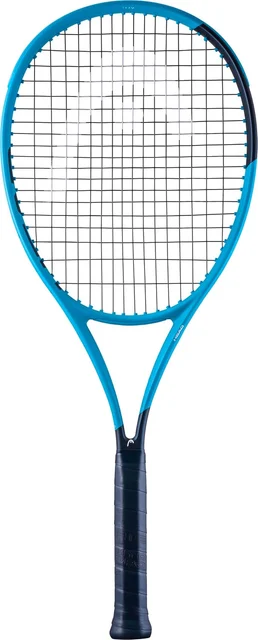
- Buy Head Boom Team 2026 The easiest serious racket to start on - light, forgiving, and built to grow with you. Amazon
- Buy Wilson Clash 100 v3 A comfort-focused performance racket built around flex - a frame you are unlikely to outgrow soon. Amazon
- It depends Babolat Evo Drive Lite Gen2 A light, pre-strung power frame that suits players who want free pace, less so anyone with a sensitive arm. Amazon
- Skip Wilson Tour Slam The big-box staple that owner reports say will hold your game back. Amazon
What actually matters
- Frame material - graphite (or a graphite composite) is the baseline for anyone who plays more than occasionally. Aluminum frames are cheap but stiff and harsh, and they are rare among adult performance rackets.
- Head size - the face area in square inches. Bigger means a larger sweet spot and more free power on off-center hits, but less precision once you develop a full, fast swing. Most adults do best between 100 and 110.
- Strung weight - how heavy the racket is with strings, roughly what you'll actually swing. Lighter frames are easier to accelerate but get pushed around by hard hitters; heavier frames are stable but tiring. Most adults land between light and medium-weight frames.
- Balance - where the weight sits along the frame. Head-light and evenly balanced rackets feel quick and maneuverable; head-heavy rackets feel powerful on slow swings but sluggish and arm-straining on fast ones.
- Stiffness - how much the frame bends at contact. Softer frames are dramatically more comfortable and forgiving on the elbow; stiffer frames give a crisp, direct feel and more raw power but transmit more shock.
- String pattern - how densely the strings cross. An open pattern (like 16x19) grips the ball longer and makes topspin easier to learn, which is exactly the stroke style coaches teach today.
- Grip size - the handle circumference. Too small and the racket twists in your hand; too big and your wrist tires. You should be able to fit a finger between your fingertips and palm when gripping.
The specs, in plain English
Green flags vs red flags
Green flags
- Graphite or graphite-composite construction, stated plainly in the listing
- Strung weight listed honestly, in the light-to-medium range for adult frames
- Even or head-light balance, or an explicit balance spec in the listing
- An open string pattern (such as 16x19) that supports learning topspin
- The same frame family appears in both beginner and advanced versions - a sign the platform has room to grow
- Current-generation frames from an established tennis brand, with owner reports spanning months of play
Red flags
- Aluminum frame marketed to adults as anything more than a casual toy
- 'Titanium' used as a buzzword on an ultra-cheap frame with no other material or stiffness detail
- Head-heavy balance combined with a big head and springy factory strings - power in the store, no control on court
- Only unstrung weight listed, or no weight, balance, or stiffness specs at all
- Sold only in one grip size, or the grip size isn't stated anywhere
- Owner reports repeatedly mentioning arm pain, vibration, or 'replaced it within months'
Who's who: the brands
- Head - Austrian giant with a full range from tour frames to friendly beginner rackets; its lighter 'Team' versions of pro frames are a classic starting point.
- Wilson - Major American tennis brand; known for both flexible, arm-friendly performance lines and - confusingly - cheap big-box rackets under the same logo.
- Babolat - French brand famous for spin-friendly, powerful frames; its aero-profiled rackets are hugely popular with juniors and topspin-heavy players.
- Yonex - Japanese maker with a distinctive squarish 'isometric' head shape that enlarges the sweet spot; strong reputation for build quality and comfort.
- Prince - The company that invented the oversize racket; less dominant today but still a source of forgiving, value-oriented graphite frames.
- Tecnifibre - Smaller French brand with a loyal following; known for comfortable, refined frames that punch above their market share.
How to read a listing without getting fooled
Start with the material line: if it says aluminum, stop reading - that's a casual-use racket regardless of what the marketing copy claims. On a graphite frame, find three numbers: head size, strung weight, and balance. A listing that gives you all three honestly is already a good sign; one that hides weight or only quotes unstrung figures is styling the frame to sound better than it plays. Treat glossy technology names as branding, not specs - every maker has proprietary acronyms, and what matters is the measurable result: how big the head is, how heavy it swings, how stiff it is. Be especially skeptical of 'power' claims on cheap rackets: in practice that means a stiff, head-heavy, springy frame that feels impressive on one slow swing in a store and uncontrollable in a real rally. Finally, check the grip size is stated and available in your size - a spec sheet that omits it is a spec sheet written for people who don't play.
How much should you spend?
Racket pricing splits into three tiers: cheap big-box aluminum frames, mid-range graphite, and premium performance frames. The step that matters most is the first one - from aluminum to any genuine graphite frame - because it transforms comfort, forgiveness, and how well your strokes develop. The value sweet spot for most new and improving players sits at the lower end of the premium performance tier: current-generation frames light enough to swing fast, forgiving enough to learn on, and good enough to keep for years. Spending more than that buys flagship pro models whose benefits mostly show up for advanced players with fast, refined swings. Spending less than genuine graphite money is the false economy: many players who stick with tennis replace a big-box racket quickly, which makes the cheapest racket the worst value in the store. One purchase, made once, beats two purchases made angry.
Questions, answered
What head size should a beginner choose?
Between 100 and 110 square inches for most adults. Bigger heads add forgiveness and free power but become harder to control as your swing gets fuller and faster. A very large head (115 square inches and up) suits compact, slow swings - often older or casual doubles players - but works against a developing topspin game.
How heavy should my racket be?
For most adults, somewhere between light and medium - roughly the range where you can swing freely for an hour without fatigue. The practical test: pick the heaviest frame you can comfortably accelerate. Too light and the racket gets pushed around by harder hitters; too heavy and your technique collapses when you tire. Balance matters as much as scale weight - head-light frames feel quicker than their weight suggests.
Is an expensive racket worth it for a beginner?
Within reason, yes. The jump from a stiff aluminum frame to a modern graphite one is dramatic and worth paying for. The jump from a solid performance frame to a flagship pro model mostly benefits advanced players. Aim for the first premium tier, not the top shelf.
Do I need to restring a new racket before playing?
No - factory strings are fine to start. Once you're playing regularly, a fresh restring at moderate tension noticeably improves feel and control. A common rule of thumb: restring as many times per year as you play per week.
What grip size do I need?
Most adults take one of the two middle sizes. Grip the handle in a forehand grip: you should be able to slide the index finger of your other hand into the gap between your fingertips and palm. When in doubt, size down - you can always build a grip up with an overgrip, but you can't shrink one.
When should I upgrade from my first racket?
When the racket, not your technique, is the limit: balls consistently flying long, a wobbly feel against harder hitters, or arm soreness after play. If you started on a modern graphite frame with room to grow, you may not need to upgrade for years - which is exactly why buying one is worth it. If you'd like a specific recommendation, our companion review compares four popular beginner-to-intermediate rackets head to head.
Or jump to the head-to-head: Head Boom Team 2026 vs Wilson Clash 100 v3.