Explained
Trail Cameras, Explained
After reading, you'll know which trail camera specs change what you see on the card and which are marketing numbers.
In this guide
A trail camera is a weatherproof, battery-powered camera that sits strapped to a tree and fires automatically when something moves in front of it. The category is split down the middle: cellular models send photos to your phone but need a paid data plan forever, while non-cellular models store everything on an SD card you retrieve yourself. Most of the confusion comes from spec sheets that lead with a giant megapixel number while burying the things that actually decide whether you get a clear photo of an animal or an empty frame of grass.
The 30-second version
- Connectivity is the first decision, not the last. Cellular means photos on your phone plus an ongoing plan; non-cellular means walking in to pull the card but never paying again.
- The subscription is part of the price. A cellular camera's plan renews every month for as long as you use it, so a cheaper camera on a pricier plan can end up costing more.
- Trigger speed and recovery time beat megapixels. How fast the camera fires and how quickly it can fire again decide whether you photograph the animal or the empty spot it just left.
- The big megapixel number on the box is usually interpolated. Software upscaling inflates the headline figure without adding real detail, so the true sensor resolution is the number that matters.
- Flash type decides whether game notices the camera. No-glow infrared is invisible, low-glow shows a faint red wink, and white flash gives color night photos at the cost of being obvious.
The products this guide is about
Our verdict on each, with the full reasoning on the companion review.
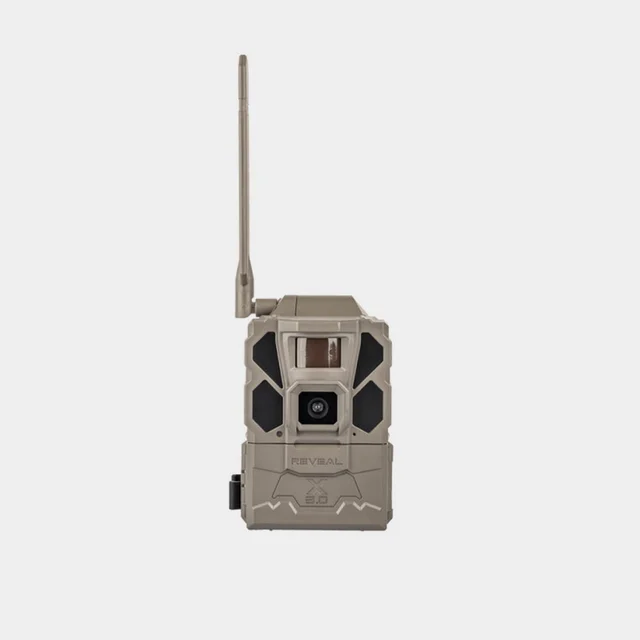
- Buy Tactacam Reveal X 3.0 The most well-rounded cellular camera here, with a genuinely reliable app and strong battery life.
- Buy Browning Dark Ops Pro X 1080 The value champion for anyone who doesn't need photos on their phone and never wants a subscription.
- It depends Moultrie Edge 3 A sharp, dual-network cellular camera that's a strong pick if you're happy on Moultrie's plan.
- Skip Spypoint Flex-M The cheap cellular entry point, but aging hardware and a fussy app make newer cameras a better buy.
What actually matters
- Connectivity and the ongoing plan shape everything else. Cellular cameras push images to an app in near-real time but require a recurring data plan tiered by how many photos you want each month. Non-cellular cameras have no recurring cost at all, as long as you can reach the camera to swap the card.
- Trigger speed and recovery time determine your hit rate. A fast trigger catches an animal crossing the frame instead of its tail, and a short recovery time means the camera is ready again before the next animal walks through.
- Detection range versus flash range is the mismatch that ruins night photos. Detection is how far out the sensor notices movement; flash range is how far the light actually reaches. If detection outruns the flash, you get triggered photos of darkness.
- Flash type controls stealth. No-glow infrared emits nothing visible and is the safest choice for pressured game; low-glow throws a faint red glow that most animals ignore; white flash produces color night images but announces the camera to animals and to people.
- True image quality, not the box number is what you judge. Real sensor resolution, lens quality, and night exposure decide whether you can identify an animal, and cheaper cameras almost always fall apart after dark first.
- Battery type and cold-weather runtime decide how often you visit. Lithium cells hold voltage in the cold far better than alkalines, and a camera that dies mid-season is a camera that recorded nothing.
- Weatherproofing, mounting, and theft protection keep the camera working and present. Look for a sealed housing and a solid latch, a mount that holds its aim in wind, and a lock slot or security box if the camera sits anywhere the public can reach.
The specs, in plain English
Green flags vs red flags
Green flags
- A stated native sensor resolution, not just a large interpolated headline number
- Detection range and flash range that are reasonably matched, so the camera can light what it detects
- Independent testing and owner reports that praise night image clarity, not just daytime sharpness
- A clear, tiered explanation of the cellular plan up front, or a plainly stated no-subscription design
- Documented battery runtime on lithium cells, plus a solar or external power option for long deployments
- A sealed, latching housing with a lock slot or a security box available for it
Red flags
- A giant megapixel claim with no native sensor resolution stated anywhere in the specs
- A long advertised detection range paired with a much shorter flash range
- Owner reports of a fussy app, slow photo delivery, or images that arrive out of order
- No mention of recovery time, which often means it is slow
- A free photo tier small enough that nearly everyone ends up on a paid plan anyway
- Reports of water intrusion, fogged lenses, or latches that fail after a season outdoors
Who's who: the brands
- Tactacam - Cellular-focused brand known for auto-connect carrier selection, a dependable app, and long battery life on lithium cells.
- Browning - Long-running non-cellular specialist praised for fast triggers and strong no-glow night images with no subscription attached.
- Moultrie - Broad lineup spanning budget to cellular, known for sharp daytime images, dual-network connectivity, and AI subject tagging.
- Spypoint - The mass-market cellular entry point, known for dual-SIM coverage and a small free photo tier, though app polish draws mixed owner reports.
- Stealth Cam - Value-oriented maker with a wide range of budget and cellular models, often bundled with mounts and cards.
- Bushnell - Optics brand with a long trail-camera history, generally aimed at reliable mid-range performance rather than headline specs.
How to read a listing without getting fooled
Start at the bottom of the spec sheet, not the top. The headline megapixel figure is usually interpolated, so hunt for the native sensor resolution; if the listing never states one, assume the real number is much smaller. Next, compare detection range against flash range, because a camera that senses movement farther than it can light will fill your card with black frames. Check whether trigger speed is quoted alongside recovery time, since a fast trigger with a slow recovery still misses the second animal. Treat battery claims as best-case figures taken in mild weather with mostly daytime stills, and mentally cut them for cold, video, and heavy night activity. For cellular models, find the plan page before you buy and read how tiers are counted, whether video costs extra, and whether the plan pauses in the off season; that recurring cost belongs in your budget from day one. Finally, look for the unglamorous details: a real weather seal, a mount that holds aim, an SD card class the camera actually supports, and a lock slot if the spot is not private.
How much should you spend?
Spend according to where the camera goes and how you will retrieve images. If you can walk to the camera regularly, a non-cellular model is the strongest value in the category: the good ones deliver excellent night images and a fast trigger for a one-time cost, and your only recurring expenses are batteries and a card. If the camera sits somewhere remote, or you want to know what moved through today rather than next weekend, a cellular model earns its keep, but budget the data plan as an ongoing line item and compare it across brands before you commit to hardware, because the plan will eventually outweigh the camera itself. The mainstream mid-range is where most buyers land: it buys a genuinely fast trigger, a usable flash range, and battery life measured in months, which is where the meaningful gains stop. Paying up beyond that mostly buys extra range, solar power, and app polish, which is worth it for hands-off, hard-to-reach sets and idle everywhere else. The more common mistake is going too cheap: bargain cameras tend to fail exactly where it counts, with soft night images, slow recovery, and housings that let water in after one season.
Questions, answered
Do all cellular trail cameras require a subscription?
Yes. A cellular camera pays for network use every time it sends an image, so it needs an active data plan. Plans are tiered by how many photos you get each month, and some brands include a small free allotment that most people outgrow. Treat the plan as a permanent part of ownership: over a season or two it can add up to more than the camera. If that bothers you, a non-cellular camera you check by hand has no recurring cost at all.
Why do my night photos come out black even though the camera triggered?
That is the classic detection-range versus flash-range mismatch. The motion sensor reached farther than the infrared light does, so the camera fired at an animal it could not illuminate. Move the camera closer to the trail, angle it along the path instead of across it so animals walk toward the lens, or lower the detection sensitivity so it stops triggering on distant movement it cannot light.
Is a higher megapixel camera worth paying for?
Usually not, because the number on the box is often interpolated. Software enlarges a smaller sensor image to hit an impressive figure, which produces bigger files without more real detail. Look for the native sensor resolution instead, and weigh lens quality and night exposure more heavily. A modest native resolution with a good lens and a well-matched flash will out-photograph an inflated spec sheet every time.
No-glow or low-glow flash: which should I choose?
Choose no-glow if staying undetected matters, such as watching pressured deer or placing the camera where you would rather people not notice it. It emits no visible light, though night images are typically a bit grainier and the range slightly shorter. Choose low-glow if you want brighter, cleaner night photos and can live with a faint red wink that most animals ignore. White flash is only for when you specifically want color night images and do not mind being obvious.
What batteries and memory card should I use?
Lithium AAs are the default recommendation, especially in cold weather, because they hold voltage as temperatures drop while alkalines fade quickly and can leave a camera dead mid-season. For storage, buy an SD card within the capacity and speed class the manufacturer lists, from a source you trust, and format it in the camera before the first deployment. Cards are almost never included, and cellular cameras still need one for local backup.
How do I keep the camera working and keep it from being stolen?
Mount it to a solid trunk at roughly chest height, angled slightly down and along the trail rather than straight across it, and clear branches from the detection zone so wind does not trigger false photos. Make sure the housing latches fully and the seal is clean, since water intrusion and fogged lenses are the most common ways a camera dies outdoors. If the spot is not on private, controlled ground, use the lock slot with a cable lock or a bolted security box, and set the camera high enough that it is not the first thing a passerby sees.
Or jump to the head-to-head: Tactacam Reveal X 3.0 vs Browning Dark Ops Pro X 1080.